Mehak
Mehak 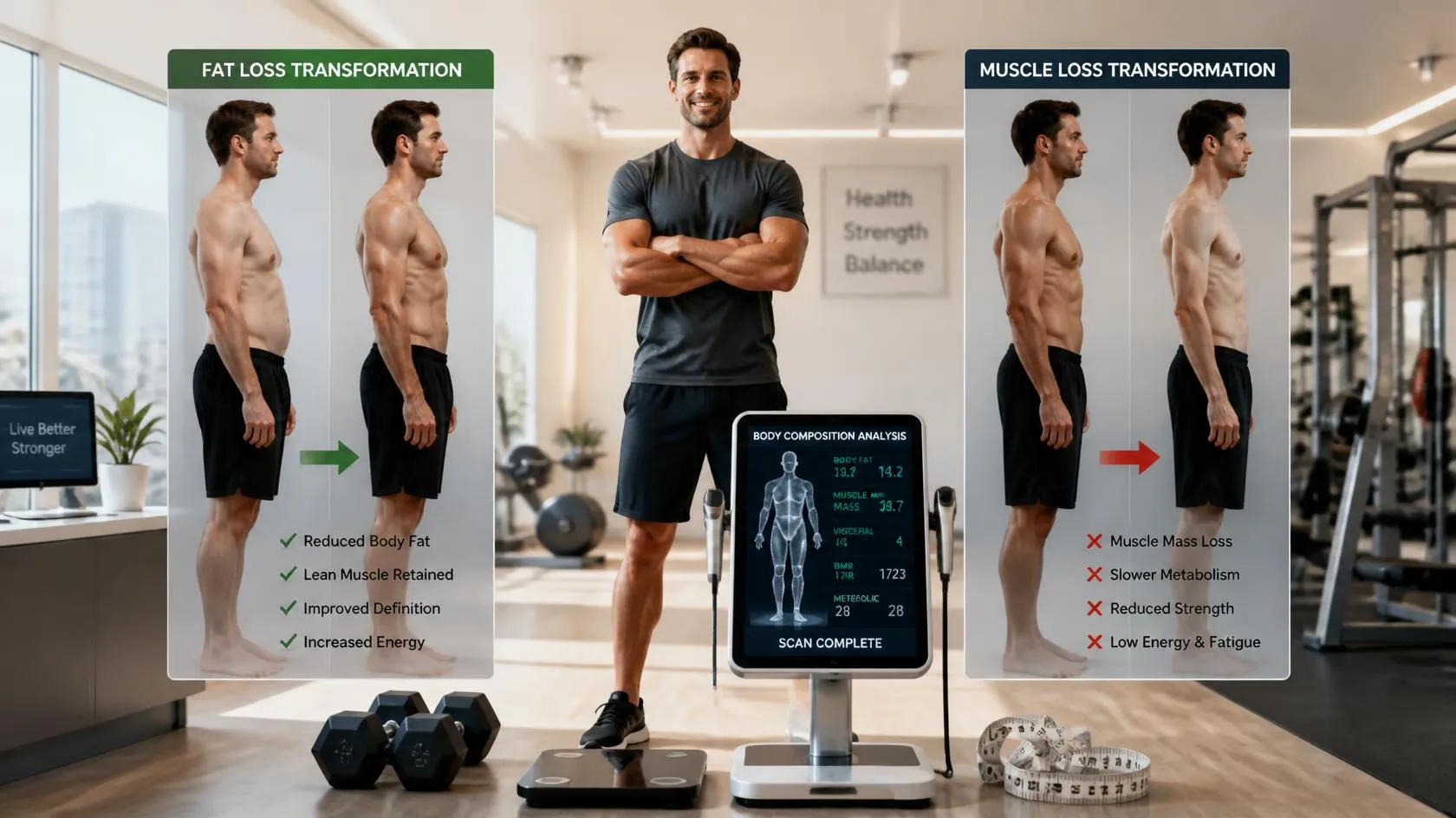
A visual comparison of fat loss and muscle loss, highlighting the importance of preserving lean muscle while reducing body fat through proper nutrition and exercise.
The number on the scale doesn’t reveal what you’re actually losing. Learn how to identify fat loss versus muscle loss, why body composition matters, and practical ways to preserve muscle while reaching your weight-loss goals.
Quick Answer
Healthy weight loss ideally comes from reducing body fat while maintaining as much muscle mass as possible. You can’t determine this from your weight alone. Instead, monitor changes in body measurements, strength, clothing fit, progress photos, and body composition assessments. Maintaining adequate protein intake and regular resistance training can help preserve muscle during weight loss.
Rapid weight loss often includes a combination of water, glycogen, body fat, and sometimes muscle tissue. Sustainable weight loss—typically around 0.5 to 1 kg (1–2 pounds) per week for many adults—is more likely to preserve lean muscle mass when combined with balanced nutrition and exercise. Individual results vary.
Why the Scale Doesn’t Tell the Whole Story
Many people judge their progress solely by the bathroom scale. However, your body weight includes much more than body fat. Daily fluctuations in hydration, food intake, glycogen stores, digestive contents, and muscle mass can all affect the number you see.
For example, two people may each lose 5 kilograms, but one may lose mostly body fat while the other loses a significant amount of muscle. Their long-term health, strength, and metabolism can be very different despite identical changes on the scale.
What Body Weight Includes
- Body fat
- Muscle mass
- Water
- Bones
- Organs
- Food and digestive contents
Healthy Weight-Loss Goals
- Reduce body fat.
- Maintain muscle.
- Improve fitness.
- Support long-term health.
- Build sustainable habits.
Fat Loss vs. Muscle Loss
Body fat is stored energy that the body can use when calorie intake is lower than energy needs. Muscle tissue, on the other hand, plays an essential role in movement, strength, posture, metabolism, and healthy aging. Losing excessive muscle during a diet can reduce physical performance and make it more difficult to maintain weight loss over time.
| Fat Loss | Muscle Loss |
|---|---|
| Usually improves body composition. | Reduces lean body mass. |
| Often improves waist measurements. | May reduce strength and endurance. |
| Supports long-term health when achieved gradually. | May slow metabolic rate if significant muscle is lost. |
| Typically desired during weight-loss programs. | Generally minimized through proper nutrition and exercise. |
Muscle supports daily movement, balance, bone health, and physical function. Preserving lean muscle while reducing excess body fat is a key goal of most evidence-based weight-management programs.
Understanding Body Composition
Body composition refers to the proportion of fat mass and lean mass in your body. Unlike body weight alone, body composition provides a clearer picture of overall health and fitness progress. Two people with the same height and weight can have very different body compositions.
Lean Body Mass Includes
- Muscles
- Bones
- Organs
- Water
- Connective tissues
Body Fat Includes
- Essential fat
- Stored fat
- Subcutaneous fat
- Visceral fat
A successful weight-loss journey focuses on improving body composition—not simply reducing the number on the scale. Losing fat while preserving muscle supports better strength, metabolism, and long-term health.
How to Tell If You’re Losing Fat or Muscle
Weight loss doesn’t automatically mean fat loss. During a calorie deficit, your body can lose water, glycogen, body fat, and sometimes muscle tissue. Looking at multiple indicators together provides a much clearer picture than relying on the scale alone.
Track your progress using several methods, including body measurements, progress photos, strength performance, clothing fit, and body composition assessments when available.
10 Signs You’re Primarily Losing Body Fat
Positive Indicators
- Your waist circumference decreases.
- Clothes fit more loosely.
- Your strength stays the same or improves.
- You continue performing well during workouts.
- Your muscles appear more defined.
More Good Signs
- Progress photos show improved body shape.
- Your body fat percentage trends downward.
- You maintain energy with balanced nutrition.
- Weight loss is gradual and consistent.
- You continue eating enough protein and exercising regularly.
Maintaining muscle while reducing body fat often leads to better physical performance, improved body composition, and more sustainable long-term results.
10 Signs You May Be Losing Muscle
Common Warning Signs
- Your strength declines noticeably.
- Weights that felt manageable become difficult.
- Your muscles appear smaller or flatter.
- You feel unusually weak.
- Your recovery takes longer than usual.
Additional Signs
- Weight drops very quickly.
- Your protein intake is consistently low.
- You stop resistance training.
- You follow an extremely low-calorie diet.
- You experience ongoing fatigue.
Fat Loss vs. Muscle Loss: Key Differences
| Indicator | Fat Loss | Muscle Loss |
|---|---|---|
| Strength | Usually maintained | Often decreases |
| Waist Measurement | Usually decreases | May change very little |
| Body Shape | More defined appearance | Less muscle definition |
| Workout Performance | Generally stable | Often declines |
| Energy | Usually maintained with proper nutrition | May decrease |
| Long-Term Goal | Desired outcome | Generally minimized |
Measure More Than Your Weight
The scale measures total body weight, not body composition. Recording additional measurements every few weeks can provide a better understanding of your progress.
Helpful Measurements
- Waist
- Hip
- Chest
- Upper arm
- Thigh
- Neck
Tracking Tips
- Measure at the same time of day.
- Use the same tape measure.
- Stand in the same position.
- Record measurements every 2–4 weeks.
Use Progress Photos
Progress photos often reveal gradual changes that may not be obvious from daily observations or scale readings. Wear similar clothing, use consistent lighting, and take photos from the front, side, and back.
Monthly comparison photos are usually more useful than checking every day, as body composition changes occur gradually.
Monitor Your Strength
If you’re maintaining or improving your performance in exercises such as squats, push-ups, rows, or deadlifts while gradually losing weight, you’re more likely to be preserving muscle mass.
| Exercise | Track |
|---|---|
| Squat | Weight and repetitions |
| Bench Press or Push-ups | Strength progress |
| Deadlift | Working weight |
| Pull-ups or Lat Pulldown | Repetitions completed |
| Walking or Running | Distance and pace |
Body Fat Measurement Methods
Several tools estimate body composition, each with different levels of accuracy. None are perfect, but they can be useful for tracking long-term trends when used consistently.
| Method | Advantages | Limitations |
|---|---|---|
| DEXA Scan | Highly detailed body composition analysis | Higher cost and limited availability |
| BIA Smart Scale | Convenient and affordable | Results vary with hydration status |
| Skinfold Measurements | Relatively inexpensive | Accuracy depends on the examiner’s skill |
| Tape Measurements | Simple and inexpensive | Doesn’t directly measure body fat percentage |
If you use a smart scale or another body composition tool, measure under similar conditions each time—such as the same time of day and hydration status—to improve consistency.
Don’t Ignore How You Feel
Healthy fat loss is often accompanied by stable energy, improved fitness, better movement, and increased confidence. Persistent fatigue, weakness, dizziness, or declining performance may indicate that your nutrition or training plan needs adjustment.
Positive Progress
- Better stamina
- Improved mobility
- Stable energy
- Consistent workout performance
- Improved confidence
Signs to Reassess
- Frequent fatigue
- Reduced strength
- Poor recovery
- Extreme hunger
- Rapid weight loss
How to Preserve Muscle While Losing Fat
The goal of healthy weight loss isn’t simply to lose kilograms—it’s to reduce body fat while maintaining as much lean muscle as possible. Research consistently shows that combining adequate protein intake, resistance training, moderate calorie reduction, and proper recovery offers the best chance of preserving muscle during weight loss.
Moderate calorie deficit + adequate protein + resistance training + quality sleep + consistency = the best strategy for preserving lean muscle while reducing body fat.
1. Eat Enough Protein
Protein supplies the amino acids your body needs to maintain and repair muscle tissue. Spreading protein intake across meals may also help support muscle protein synthesis throughout the day.
High-Protein Foods
- Chicken breast
- Turkey
- Fish
- Eggs
- Greek yogurt
- Cottage cheese
- Tofu
- Lentils and beans
Protein Tips
- Include protein with every meal.
- Choose lean protein sources most often.
- Pair protein with vegetables and whole grains.
- Stay hydrated throughout the day.
Individual protein needs vary depending on age, body size, health status, and activity level. A registered dietitian or healthcare professional can help determine your personal requirements.
2. Prioritize Resistance Training
Resistance training sends a signal to your body that muscle tissue is needed. Whether you use free weights, resistance bands, machines, or bodyweight exercises, regular strength training is one of the most effective ways to preserve muscle during a calorie deficit.
| Exercise | Primary Muscles |
|---|---|
| Squats | Legs and glutes |
| Push-ups | Chest, shoulders, triceps |
| Rows | Back and biceps |
| Deadlifts | Back, legs, core |
| Planks | Core stability |
3. Don’t Overdo Cardio
Cardiovascular exercise supports heart health and increases calorie expenditure. However, excessive cardio combined with a very low-calorie diet and insufficient recovery may increase the risk of losing muscle mass.
Great Cardio Options
- Brisk walking
- Cycling
- Swimming
- Jogging
- Rowing
Balance Your Routine
- Combine cardio with strength training.
- Allow recovery days.
- Increase activity gradually.
- Listen to your body.
4. Avoid Extreme Calorie Restriction
Very low-calorie diets may lead to rapid weight loss, but they also increase the likelihood of losing lean muscle mass. Gradual, sustainable weight loss is generally easier to maintain over the long term.
For many adults, gradual weight loss is more likely to preserve muscle than crash dieting. The ideal rate varies based on individual health needs and should be discussed with a healthcare professional when appropriate.
5. Prioritize Recovery and Sleep
Muscle repair occurs during recovery—not during workouts themselves. Poor sleep and inadequate recovery may negatively affect exercise performance, appetite regulation, and overall health.
Healthy Recovery Habits
- Sleep 7–9 hours each night.
- Stay hydrated.
- Take rest days.
- Stretch after workouts.
- Manage stress.
Benefits of Good Recovery
- Better workout performance.
- Improved muscle repair.
- More consistent energy.
- Reduced injury risk.
- Better long-term adherence.
Sample One-Day Muscle-Friendly Meal Plan
| Meal | Example |
|---|---|
| Breakfast | Greek yogurt with oats, berries, and almonds |
| Morning Snack | Apple with peanut butter |
| Lunch | Grilled chicken, quinoa, broccoli, and mixed salad |
| Afternoon Snack | Cottage cheese with fruit |
| Dinner | Baked salmon, roasted vegetables, and brown rice |
| Hydration | Water throughout the day |
Sample Weekly Workout Plan
| Day | Workout |
|---|---|
| Monday | Full-body strength training |
| Tuesday | 30–45 minute brisk walk |
| Wednesday | Upper-body strength workout |
| Thursday | Cycling or swimming |
| Friday | Lower-body strength workout |
| Saturday | Light activity, stretching, or yoga |
| Sunday | Recovery day |
Common Mistakes That Can Lead to Muscle Loss
Mistakes
- Skipping strength training.
- Eating too little protein.
- Following crash diets.
- Doing excessive cardio.
- Ignoring sleep and recovery.
- Expecting rapid results.
Better Alternatives
- Lift weights regularly.
- Eat balanced meals.
- Aim for gradual progress.
- Monitor strength levels.
- Stay consistent.
- Focus on long-term habits.
Successful weight management isn’t just about losing weight—it’s about improving body composition, protecting muscle, supporting overall health, and building habits you can maintain for years.
Myths vs. Facts About Weight Loss
| Myth | Fact |
|---|---|
| If you’re losing weight, it’s all body fat. | Weight loss can include body fat, muscle, water, and glycogen stores. |
| The bathroom scale tells the whole story. | The scale only measures total body weight, not body composition. |
| More cardio is always better. | Combining cardio with resistance training and proper nutrition is generally more effective for preserving muscle. |
| Skipping meals speeds up fat loss. | Skipping meals may make it harder to meet nutrient and protein needs and can increase hunger for some people. |
| You don’t need protein during weight loss. | Adequate protein intake helps support muscle maintenance and recovery. |
| Rapid weight loss is always healthier. | Gradual, sustainable weight loss is generally easier to maintain and may better preserve lean muscle. |
When Should You Speak With a Healthcare Professional?
Consider seeking personalized advice from a qualified healthcare professional or registered dietitian if you:
Medical Reasons
- Have diabetes or kidney disease.
- Are pregnant or breastfeeding.
- Take medications that affect weight.
- Have unexplained weight loss.
- Have concerns about nutrition.
Fitness Reasons
- Your strength declines significantly.
- You experience persistent fatigue.
- You struggle to recover after exercise.
- Your weight changes rapidly.
- You need an individualized nutrition plan.
A healthcare professional can assess your overall health, review your nutrition and exercise habits, and recommend a plan tailored to your needs and medical history.
Frequently Asked Questions
1. How can I tell if I’m losing fat instead of muscle?
Look at multiple indicators such as waist measurements, strength, progress photos, clothing fit, and body composition assessments instead of relying only on the scale.
2. Is rapid weight loss bad for muscle?
Rapid weight loss may increase the likelihood of losing lean muscle, particularly if protein intake and resistance training are inadequate.
3. Does lifting weights help preserve muscle?
Yes. Resistance training is one of the most effective strategies for maintaining muscle during weight loss.
4. Can I lose fat without losing muscle?
Many people can minimize muscle loss by combining a moderate calorie deficit, adequate protein, resistance training, and proper recovery.
5. Is protein important during weight loss?
Yes. Protein supports muscle maintenance, repair, and satiety.
6. Are smart scales accurate?
Smart scales provide estimates that can vary with hydration and other factors. They are often more useful for tracking trends than exact values.
7. How often should I weigh myself?
Many people prefer weighing themselves once or twice a week under similar conditions, but frequency depends on personal preference and goals.
8. Should I take progress photos?
Yes. Monthly photos taken in consistent lighting and clothing can help you notice gradual body composition changes.
9. What is the best way to measure body fat?
Methods such as DEXA scans, skinfold measurements, and bioelectrical impedance analysis (BIA) can estimate body composition, each with different strengths and limitations.
10. What is the healthiest weight-loss approach?
A balanced eating pattern, regular physical activity, adequate protein, sufficient sleep, and gradual progress form the foundation of healthy, sustainable weight management.
Focus on Body Composition, Not Just the Scale
The number on the scale is only one piece of the picture. By prioritizing nutritious foods, regular strength training, consistent physical activity, and healthy recovery habits, you can work toward reducing body fat while preserving valuable muscle mass.
References
- World Health Organization (WHO) – Healthy Diet and Physical Activity Guidance
- National Institutes of Health (NIH)
- American College of Sports Medicine (ACSM)
- Academy of Nutrition and Dietetics
- Harvard T.H. Chan School of Public Health – The Nutrition Source
- Mayo Clinic – Weight Management Resources
- Centers for Disease Control and Prevention (CDC)
This article is intended for educational purposes only and is not a substitute for professional medical advice, diagnosis, or treatment.
About the Author