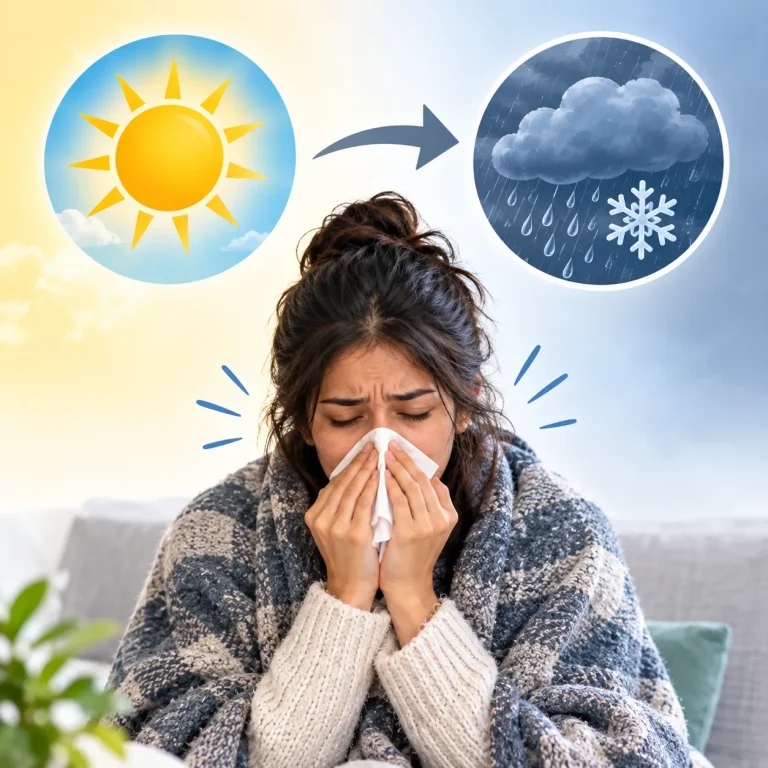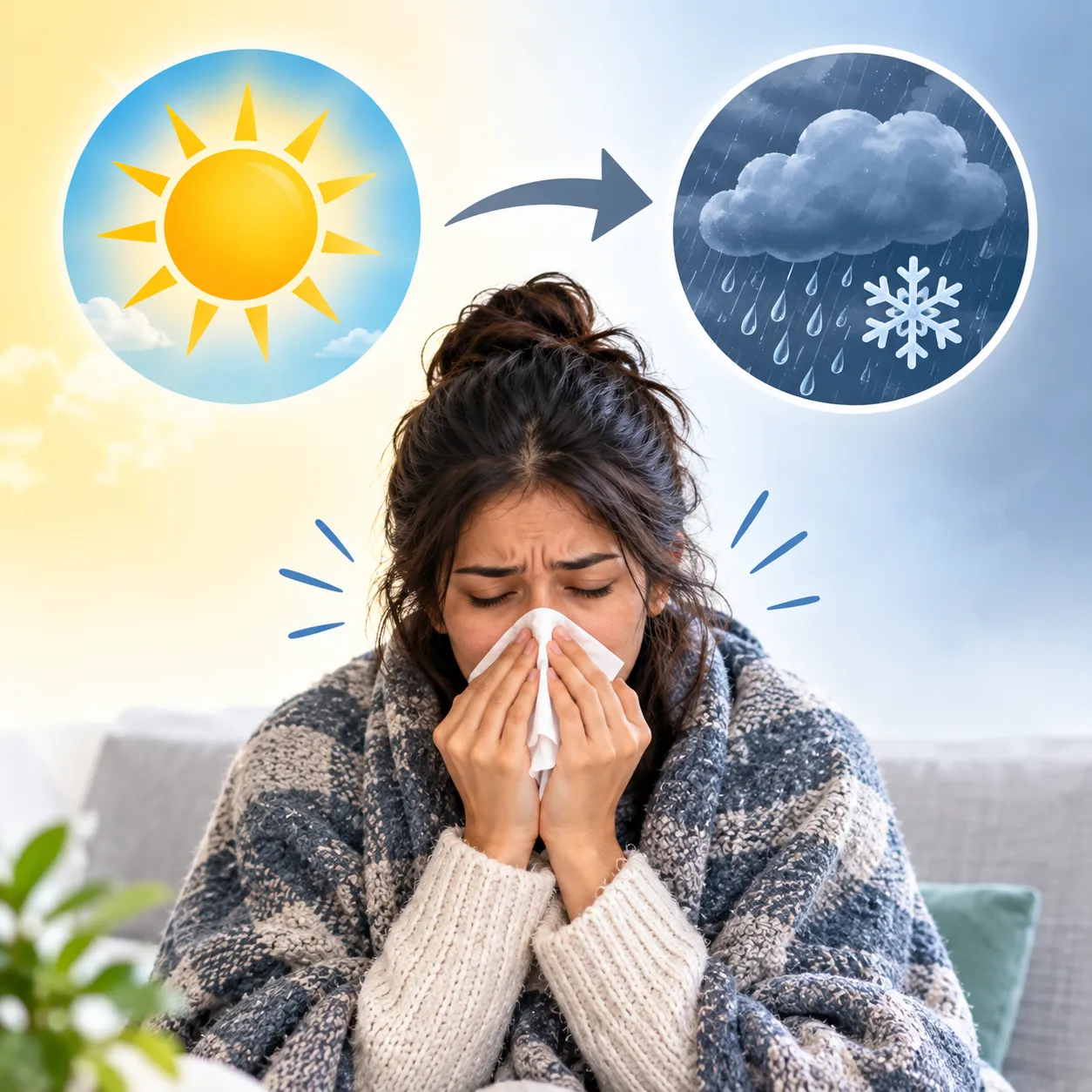
A woman experiencing cold symptoms during a sudden change in weather.
Many people notice sneezing, a runny nose, sore throat or congestion when the weather suddenly becomes cooler or the season changes. But does a change in temperature actually cause a cold?
Not directly. The common cold is caused by respiratory viruses. You can catch a cold at any time of year, although some respiratory viruses circulate more during particular seasons. Changes in temperature can also affect how much time people spend indoors and may irritate the nose and airways.
Quick Answer
If you get cold symptoms whenever the weather changes, the weather itself is probably not causing the infection. Different respiratory viruses cause colds, and exposure to those viruses is what leads to infection.
Seasonal changes may coincide with increased indoor contact, exposure to infected people and changes in air conditions. Allergies can also cause symptoms that look similar to a cold.
Why Do You Get Cold Symptoms When the Weather Changes?
The common cold is an infection of the upper respiratory tract caused by different respiratory viruses. More than 200 viruses can cause cold symptoms, with rhinoviruses among the most common causes.
Cold symptoms can include sneezing, a blocked or runny nose, cough, sore throat, headache and mild body aches. Symptoms often become noticeable a few days after exposure to a virus.
So why does the problem seem connected to changing weather?
- People may spend more time indoors during cooler weather.
- Indoor environments can mean closer contact with other people.
- Respiratory viruses can circulate more during certain seasons.
- Cold or dry air can irritate the nose and throat.
- Seasonal allergies can cause similar symptoms.
This means the timing can make it feel as though the weather caused your cold, even though a virus is responsible for the infection.
Does Cold Weather Itself Cause a Common Cold?
No. Cold temperatures do not create a common cold. A respiratory virus has to infect you for you to develop a viral cold.
However, cooler weather can change daily habits. People may spend more time inside homes, offices, classrooms and other enclosed spaces. Being around more people can increase opportunities for respiratory viruses to spread.
You can get a cold at any time of year. Some respiratory viruses, including influenza and RSV, tend to circulate more during winter, while other viruses that cause cold-like symptoms can circulate during other seasons too.
Why Do Respiratory Viruses Spread More Easily in Cooler Months?
Seasonal patterns differ between viruses, but respiratory infections often become more noticeable during cooler parts of the year.
One reason is human behavior. When temperatures fall, people often spend more time indoors. Schools, workplaces, public transport and other indoor spaces can bring people into closer contact.
Respiratory viruses can spread through droplets and close personal contact. Some can also spread when a person touches a contaminated surface and then touches their eyes, nose or mouth.
That does not mean every cold-weather exposure will result in illness. Your risk depends on the virus involved, your exposure and several individual factors.
Can Sudden Temperature Changes Affect Your Body’s Defenses?
A sudden change from warm to cool weather does not automatically weaken your immune system enough to cause a cold.
However, cold or dry air can make your nose and throat feel irritated. This can lead to symptoms such as a runny nose or discomfort even when you do not have a viral infection.
Your overall health also matters. Poor sleep, smoking, certain health conditions and a weakened immune system can increase the risk of respiratory infections or complications.
Therefore, instead of focusing only on temperature, it is more useful to consider your exposure to viruses and your overall health habits.
How Can You Tell a Cold From Flu or Allergies?
Colds, influenza and allergies can produce overlapping symptoms, so it is not always possible to identify the cause based only on how you feel.
| Feature | Common Cold | Flu | Allergies |
|---|---|---|---|
| Cause | Respiratory viruses | Influenza viruses | Allergens |
| Onset | Often gradual | Often more sudden | Linked to exposure |
| Sneezing | Common | Possible | Very common |
| Runny or blocked nose | Common | Possible | Common |
| Body aches | Usually mild | Often more noticeable | Usually absent |
| Itchy eyes | Less typical | Uncommon | Common |
| Fever | Usually mild or absent in adults | More common | Usually absent |
Flu generally causes more severe illness than a typical cold and tends to develop more quickly.
COVID-19 and RSV can also cause symptoms that look similar to a cold. If you are at higher risk of severe illness and develop respiratory symptoms, testing and early medical advice may be important.
What Can You Do to Reduce Your Risk of Getting Sick?
You cannot completely prevent every cold, but everyday habits can reduce your exposure to respiratory viruses.
Wash Your Hands
Wash your hands regularly with soap and water, especially after being in public places and before eating.
Avoid Touching Your Face
Try not to touch your eyes, nose or mouth with unwashed hands.
Improve Indoor Air
Good ventilation and cleaner indoor air can help reduce exposure to respiratory viruses.
Get Enough Sleep
Regular, adequate sleep supports general health and helps your body recover from daily stress.
Stay Active
Regular physical activity supports overall health. Choose activities that are comfortable for your fitness level and weather conditions.
Limit Close Contact When Sick
If someone has respiratory symptoms, reducing close contact can lower your chance of exposure.
Hand hygiene, covering coughs and sneezes, cleaning frequently touched surfaces and improving indoor air are among the measures recommended for reducing respiratory-virus exposure.
What Should You Do If You Already Have a Cold?
Most uncomplicated colds improve on their own. Antibiotics do not work against the viruses that cause common colds.
For symptom relief, you can focus on simple supportive care:
- Get enough rest.
- Drink enough fluids.
- Try warm liquids if they soothe your throat.
- Consider saline nasal rinses or sprays for congestion.
- Keep indoor air comfortably humid if it is very dry.
- Use over-the-counter medicines only according to the label and appropriate medical advice.
Rest, fluids, humidified air and saline nasal rinses may help some people feel more comfortable while a cold runs its course.
Do not take antibiotics simply because you have a cold. Antibiotics treat certain bacterial infections, not viral colds.
When Should You See a Doctor for Cold Symptoms?
A typical cold usually improves with time. However, some symptoms should not be ignored.
Consider medical advice if:
- Your symptoms are severe or getting worse.
- You have trouble breathing.
- You become dehydrated.
- A fever lasts longer than expected.
- Your symptoms continue for more than about 10 days without improvement.
- You start getting better and then develop worsening symptoms again.
- A chronic health condition becomes worse.
Frequently Asked Questions
Can changing weather make you sick?
Weather change itself does not cause a viral cold. Respiratory viruses cause colds, although seasonal changes can coincide with increased exposure to viruses or nasal irritation.
Why do I sneeze when the weather changes?
Temperature and humidity changes can irritate the nasal passages. Allergies can also cause repeated sneezing, particularly when symptoms occur after exposure to specific triggers.
Can cold air cause a runny nose?
Yes. Cold air can trigger a runny nose in some people because the nasal passages respond to changes in temperature and humidity. This does not necessarily mean you have a viral infection.
Why do I get sick every time the season changes?
You may be exposed to respiratory viruses more often during certain periods, or your symptoms may actually be related to seasonal allergies or nasal irritation. Repeated or unusual symptoms are worth discussing with a healthcare professional.
Is a sore throat normal with a cold?
Yes. A sore or scratchy throat is a common cold symptom. However, severe throat pain, difficulty swallowing or breathing, or symptoms that are getting worse should be medically assessed.
How long does a common cold usually last?
Many people recover within about one to two weeks, although the exact duration varies. Some symptoms, particularly cough, can last longer.
Conclusion
If you feel like you get a cold every time the weather changes, remember that the temperature itself is not the cause. Common colds are caused by respiratory viruses.
Seasonal changes can affect your daily routine, indoor exposure and the air around you, which may make respiratory symptoms more noticeable. Allergies can also mimic a cold.
Simple habits such as hand hygiene, better indoor ventilation, adequate sleep, regular activity and limiting close contact when someone is sick can help reduce your risk.
If symptoms become severe, last longer than expected or improve and then suddenly worsen, seek medical advice.
Related Reads
Sources & Evidence
- CDC: About Common Cold.
- Mayo Clinic: Common Cold, Symptoms and Causes.
- CDC: Manage Common Cold.
- NHS: Common Cold.
- CDC: Hygiene and Respiratory Virus Prevention.
Take Care of Your Health
Seasonal changes are a good reminder to pay attention to your sleep, hygiene, nutrition and daily routine. Small healthy habits can make it easier to manage everyday health throughout the year.
About the Author