July 28, 2026
Home » Fitness

Fitness

Find approachable fitness advice for building strength, improving mobility and staying active. Explore walking routines, home workouts and realistic exercise strategies for different fitness levels.

The right nutrition before and after exercise can improve workout performance, support muscle recovery, replenish energy stores, and help you reach your fitness goals. Learn what to eat, when to eat, and which foods work best for weight loss, muscle gain, endurance, and overall health.

Before a workout, eat easily digestible carbohydrates with a moderate amount of protein to provide energy and support performance. After exercise, consume protein together with carbohydrates to help replenish glycogen stores, support muscle repair, and promote recovery. Meal timing depends on the type, duration, and intensity of your workout.

Key Takeaway: No single food improves every workout. A balanced combination of carbohydrates, protein, healthy fats, proper hydration, and consistent meal timing provides the best support for exercise performance and recovery.

Why Pre and Post Workout Nutrition Matters

Exercise places demands on your muscles, energy stores, and hydration status. Proper nutrition helps fuel physical activity, reduces fatigue, supports muscle repair, and prepares your body for future workouts.

Whether your goal is weight loss, muscle gain, endurance training, or general fitness, choosing nutritious meals before and after exercise helps improve consistency and long-term results.

Best Pre-Workout Foods

A pre-workout meal should provide energy without causing stomach discomfort. Meals eaten two to three hours before exercise can be larger, while snacks eaten closer to training should be lighter and easier to digest.

Complex Carbohydrates

Oats, whole-grain bread, brown rice, quinoa, sweet potatoes, and fruits provide a steady source of energy for moderate to long workouts.

Lean Protein

Eggs, Greek yogurt, chicken breast, tofu, cottage cheese, or legumes help support muscle maintenance and recovery.

Easy-to-Digest Snacks

Bananas, apples, dates, rice cakes, or yogurt are convenient options before shorter workouts.

Hydration

Drink water throughout the day and begin your workout well hydrated. Hydration needs vary based on climate, exercise intensity, and individual sweat losses.

When Should You Eat Before Exercise?

Time Before WorkoutRecommended Meal
2–3 HoursBalanced meal with carbohydrates, lean protein, vegetables, and moderate healthy fats.
60–90 MinutesLight meal such as oatmeal with fruit, yogurt with berries, or toast with peanut butter.
30–45 MinutesSmall snack like a banana, dates, or a few whole-grain crackers if tolerated.

Best Post-Workout Foods

After exercise, your body begins repairing muscle tissue and restoring glycogen. Eating a combination of protein and carbohydrates after training can support recovery, especially after longer or higher-intensity workouts.

High-Quality Protein

Chicken, fish, eggs, Greek yogurt, tofu, paneer, lentils, and protein-rich dairy products provide amino acids needed for muscle repair.

Carbohydrate Sources

Rice, potatoes, oats, fruits, whole-grain bread, quinoa, and legumes help replenish energy stores used during exercise.

Colorful Vegetables

Vegetables provide vitamins, minerals, antioxidants, and fiber that support overall health and recovery.

Fluids & Electrolytes

Replace fluids lost through sweat by drinking water. Longer or more intense workouts may require electrolyte replacement depending on individual needs.

Best Foods for Muscle Gain

Building muscle requires consistent resistance training, adequate daily protein intake, sufficient overall calories, and quality recovery. Nutrient-rich foods provide the amino acids and energy needed to support muscle protein synthesis.

Chicken Breast

A lean source of high-quality protein that supports muscle repair and growth.

Eggs

Provide complete protein along with vitamins and minerals that support overall nutrition.

Greek Yogurt

Contains protein and calcium, making it a convenient recovery snack.

Salmon

Offers protein together with heart-healthy omega-3 fats.

Paneer & Tofu

Excellent vegetarian protein options that work well in balanced meals.

Beans & Lentils

Provide plant protein, complex carbohydrates, and fiber for sustained energy.

Best Pre & Post Workout Foods for Weight Loss

When weight loss is the goal, meals should provide enough energy for exercise while helping maintain a calorie deficit over time. Protein, fiber, and minimally processed foods can improve fullness and support recovery.

GoalPre-Workout MealPost-Workout Meal
Fat LossBanana with Greek yogurtGrilled chicken with vegetables
General FitnessOatmeal with berriesEggs with whole-grain toast
Muscle GainRice with chickenSalmon, rice, and vegetables
Endurance TrainingOats and fruitQuinoa with beans and vegetables

Healthy Indian Pre & Post Workout Meals

Pre-Workout Options

  • Banana with peanut butter
  • Vegetable poha
  • Oats with milk
  • Fruit with yogurt
  • Whole-wheat toast with peanut butter

Post-Workout Options

  • Moong dal with rice
  • Paneer bhurji with roti
  • Grilled chicken with vegetables
  • Rajma with brown rice
  • Greek yogurt with fruit

Vegetarian & Vegan Workout Foods

Plant-based diets can support exercise performance when they include a variety of protein-rich foods, whole grains, legumes, nuts, seeds, fruits, and vegetables.

Vegetarian Choices

  • Paneer
  • Greek yogurt
  • Milk
  • Eggs (if included)
  • Cheese in moderation

Vegan Choices

  • Tofu
  • Tempeh
  • Soy milk
  • Lentils
  • Chickpeas
  • Beans
  • Quinoa

Foods to Limit Before Exercise

Some foods may cause digestive discomfort or sluggishness when eaten immediately before a workout. Individual tolerance varies.

Limit Close to ExerciseReason
Large fried mealsSlow digestion
Very spicy foodsMay increase stomach discomfort
Large dessertsMay cause energy fluctuations
Heavy cream saucesHigher fat may slow stomach emptying
AlcoholCan impair hydration and performance
Hydration Reminder: Drink water consistently throughout the day instead of waiting until your workout begins. During prolonged or intense exercise, hydration needs increase and some people may benefit from beverages containing electrolytes.

Sample Daily Workout Nutrition Plan

TimeMeal Example
BreakfastOatmeal with berries and Greek yogurt
Mid-Morning SnackApple with almonds
Pre-WorkoutBanana with peanut butter (60–90 minutes before exercise)
Post-WorkoutGrilled chicken, brown rice, and vegetables
Evening SnackPlain yogurt with chia seeds

Common Pre & Post Workout Nutrition Mistakes

Many people focus on exercise while overlooking nutrition. Avoiding these common mistakes can improve workout performance, recovery, and long-term fitness results.

Skipping Meals Before Exercise

Training without enough energy may reduce performance and increase fatigue, especially during longer or high-intensity workouts.

Eating Too Much Right Before Training

Large meals immediately before exercise may cause bloating, stomach discomfort, or sluggishness.

Not Eating Enough Protein

Protein supports muscle repair and recovery after resistance and endurance exercise.

Ignoring Hydration

Even mild dehydration may negatively affect endurance, concentration, and physical performance.

Overusing Supplements

Most people can meet many of their nutrition needs through a balanced diet. Supplements should complement—not replace—healthy eating.

Inconsistent Meal Timing

Regular eating habits can make it easier to fuel workouts and recover consistently.

Workout Nutrition Myths vs Facts

Myth: You must eat immediately after every workout.

Fact: While post-workout nutrition is beneficial, the ideal timing depends on your previous meals, workout type, and overall daily nutrition.

Myth: Protein alone builds muscle.

Fact: Muscle growth also requires resistance training, adequate calories, recovery, and consistent exercise.

Myth: Exercising on an empty stomach burns more fat.

Fact: Fasted exercise may suit some people, but it is not necessary for fat loss and may reduce performance for others.

Myth: Sports drinks are necessary for everyone.

Fact: Water is sufficient for many workouts. Sports drinks are generally more useful during prolonged or high-intensity exercise with significant sweat loss.

Frequently Asked Questions

What should I eat before a workout?

Choose a meal or snack containing carbohydrates with moderate protein. Examples include oatmeal with fruit, yogurt with berries, or a banana with peanut butter.

What is the best post-workout meal?

A meal containing protein and carbohydrates, such as grilled chicken with rice and vegetables or Greek yogurt with fruit, supports recovery.

How long before a workout should I eat?

A larger meal is often eaten 2–3 hours before exercise, while a lighter snack may be suitable 30–90 minutes beforehand, depending on personal tolerance.

Is protein powder necessary?

Not necessarily. Many people can meet their protein needs through foods such as dairy products, eggs, fish, poultry, legumes, tofu, and soy foods.

Can I exercise on an empty stomach?

Some people tolerate fasted exercise well, while others perform better after eating. The best approach depends on your workout, health status, and personal preference.

How much water should I drink around workouts?

Hydration needs vary by person, environment, and exercise intensity. Drink fluids regularly before, during, and after exercise, replacing sweat losses when needed.

Fuel Your Workouts the Smart Way

Healthy pre- and post-workout nutrition supports better energy, improved recovery, and long-term fitness success. Focus on balanced meals, consistent hydration, and sustainable habits instead of quick fixes.

Explore Our Healthy Weight Loss Foods Guide

Sources & Further Reading

Medical Disclaimer: This article is for educational purposes only and is not a substitute for professional medical advice. Individual nutrition needs vary based on age, health conditions, medications, and fitness goals. Consult a qualified healthcare professional or registered dietitian for personalized guidance.


You do not need a 5 a.m. alarm or a two-hour ritual. Build a short sequence that protects sleep, reduces decisions and helps you begin meaningful work.

Quick answer: What is the best morning routine?

Wake after enough sleep, get daylight when practical, drink according to thirst, move briefly, review one to three priorities and begin the most meaningful available task before low-value digital input takes over. Prepare the night before and adapt the order to your chronotype, commute, caregiving and health needs.

The best routine is not the earliest routine

Waking at 5 a.m. is not inherently more productive than waking at 7 a.m. Productivity depends on sleep, alertness, workload, individual body clock and the kind of task. Cutting sleep to create a longer morning can impair attention, learning and reaction time.

Sleep comes first: CDC guidance says adults aged 18–60 generally need at least seven hours of sleep, while needs vary by age. If an early alarm reduces adequate sleep, move the routine later or make it shorter.

Five useful pillars of a productive morning

1. A consistent wake window

A reasonably regular sleep–wake schedule can support sleep timing. Shift workers should prioritise a protected sleep opportunity over conventional morning hours.

2. Light and orientation

Open curtains or spend a few minutes outdoors when safe. Daylight is a strong cue for the circadian system; exact timing needs differ.

3. Basic physical readiness

Use the bathroom, drink if thirsty, take prescribed medicines correctly and add gentle movement if it feels good.

4. A deliberate plan

Choose a small number of priorities based on impact and deadlines rather than copying the entire task list.

5. A clean work start

Define the first visible action, clear the workspace and delay nonessential notifications until after an initial focus block.

Optional, not mandatory

Meditation, journaling, reading, cold showers and elaborate breakfasts may help some people, but none is required for productivity.

A productive morning begins the night before

Ten-minute evening setup

  1. Check tomorrow’s fixed appointments and commute.
  2. Select the single most important task and define its first action.
  3. Place required files, books, clothes or gym shoes where they are visible.
  4. Prepare breakfast or lunch components when useful.
  5. Set a realistic bedtime and put the phone away from the pillow.

Preparation removes friction. It also prevents the morning from becoming a negotiation over what to do next.

Choose a routine that fits your available time

TimeSequenceBest for
15 minutes2 min orient and drink if thirsty → 3 min light/mobility → 5 min wash/dress → 2 min priorities → 3 min startParents, commuters, rushed days
30 minutes5 min light/water → 10 min movement → 10 min wash/breakfast prep → 5 min plan and startMost weekdays
60 minutes10 min wake/light → 20 min exercise → 15 min wash/food → 5 min plan → 10 min focus startPeople with protected time

The minutes are examples, not medical prescriptions. Keep the sequence simple: wake, prepare the body, choose direction and begin.

Morning routine for students

  • Wake with enough time to avoid rushing, without sacrificing needed sleep.
  • Pack the bag and choose clothes the previous night.
  • Review flashcards or practise recall for 15–25 minutes instead of passively rereading.
  • Write the day’s class, assignment and revision priorities.
  • Eat when hungry and choose a breakfast pattern that suits your schedule and health needs.

Teenagers need more sleep than adults. An extremely early study plan may be counterproductive if bedtime does not move earlier.

Morning routine for office commuters

  1. Protect a realistic wake time based on travel, not influencer schedules.
  2. Check only essential transport, weather and family messages.
  3. Use a short home routine and reserve reading or planning for public transport only when safe.
  4. At work, write the first deliverable before opening general chat or email.
  5. Batch low-value communication after an initial focus period when your role allows.

Morning routine for remote workers

Create a visible transition between home and work: change clothes, take a brief walk, close household tasks and arrive at a prepared desk. Set a start time and a first deliverable. Without a commute boundary, phone scrolling and chores can quietly consume the opening hour.

How to protect the first focus block

Define “done”

Replace “work on report” with “draft the opening and first chart.”

Remove obvious cues

Use Do Not Disturb, close extra tabs and keep the phone out of reach.

Use a bounded block

Start with 25–50 minutes, then pause. Longer is not always better.

Keep a capture note

Write distracting tasks down rather than switching immediately.

Water, caffeine and breakfast: what matters?

Water: Drink according to thirst and circumstances. There is no special productivity benefit to forcing excessive water immediately after waking.

Caffeine: Tea or coffee can increase alertness, but timing and tolerance differ. Avoid using caffeine to mask chronic sleep deprivation, and consider limiting it later in the day if sleep is affected.

Breakfast: Not everyone needs to eat immediately. If breakfast helps you, combine protein, fibre and a suitable carbohydrate—such as eggs with roti, curd with fruit and seeds, or poha with peas and peanuts. People with diabetes, pregnancy, medications or other conditions may need individual advice.

Should you avoid your phone completely?

A total ban is unnecessary for everyone. The issue is unplanned, open-ended use. Decide what is allowed: alarm, transport, calendar and urgent family messages may be essential; reels, news feeds and nonurgent email can wait until a defined time.

Practical rule: Use the phone as a tool before the first focus block, not as a destination.

Common morning-routine mistakes

MistakeBetter approach
Copying a celebrity scheduleDesign around your sleep, commute and responsibilities.
Adding ten new habitsStart with one anchor and one work-start cue.
Sacrificing sleepShorten the routine or prepare more at night.
Planning without startingEnd planning with a visible first action.
All-or-nothing thinkingKeep a five-minute minimum version for difficult days.
Calling exhaustion lazinessAssess sleep, workload, stress and health.

Build your routine in seven days

  1. Day 1: Track wake time, sleep and the first 30 minutes without changing anything.
  2. Day 2: prepare one item the night before.
  3. Day 3: add a light or movement cue.
  4. Day 4: choose one priority before messages.
  5. Day 5: run a 25-minute first focus block.
  6. Day 6: test the minimum version.
  7. Day 7: review what helped and remove what did not.

When low morning energy needs attention

Speak with a healthcare professional if you regularly wake unrefreshed despite adequate sleep opportunity, have loud snoring or breathing pauses, experience severe daytime sleepiness, fall asleep while driving, or have persistent low mood. A productivity routine cannot treat insomnia, sleep apnoea, anaemia, thyroid disease or other medical causes of fatigue.

The bottom line

The best morning routine for productivity protects sleep, reduces unnecessary decisions and creates a reliable path into meaningful work. It can take 15 minutes, begin after sunrise or happen in the afternoon for a night-shift worker.

Prepare at night, choose a few useful actions and keep a minimum version. Consistency comes from fit—not from making the routine impressive.

Frequently asked questions

What time should I wake up to be productive?

There is no universal time. Choose a wake time that fits obligations while allowing adequate sleep.

How long should a morning routine be?

It can be five to sixty minutes. The shortest repeatable version is often the best starting point.

Is waking at 5 a.m. necessary?

No. An early alarm is useful only when it suits your schedule and does not reduce sleep.

Should I exercise every morning?

Morning exercise is optional. Choose a safe time you can sustain and follow medical guidance when needed.

Should I check email after waking?

Check only what your responsibilities require. Delay nonurgent inbox use when it disrupts your priorities.

What if I am not a morning person?

Use mornings for preparation and schedule demanding work near your stronger alertness period when possible.

How do I make the routine consistent?

Prepare at night, use a stable cue, start with one or two actions and keep a minimum version.

Sources and further reading

Health note: General education only; adapt activity, food and sleep guidance to your health needs.

The best resource depends on the question: medical organisations are stronger for health facts, while experienced coaches can be better for practical training ideas. This list helps you choose without confusing popularity with expertise.

Quick list: Which health and fitness blogs are worth following?

For medically reviewed health explainers, start with Harvard Health, Mayo Clinic, Cleveland Clinic Health Essentials and NHS Better Health. For exercise standards, use ACSM and ACE Fitness. For approachable training, consider Nerd Fitness, Girls Gone Strong, Born Fitness and Runners Connect. Indian readers may also find HealthifyMe, FitandWell.in and Daily Life Journal practical, while Precision Nutrition and The Real Food Dietitians specialise in nutrition behaviour and recipes.

How we selected these blogs

This list was reviewed in July 2026. We considered identifiable authorship, relevant qualifications, citations, correction or review processes, practical usefulness, current publishing activity and clarity about commercial relationships. A hospital blog and an independent coach serve different purposes, so they are described rather than given a misleading universal score.

Inclusion is editorial, not a paid endorsement. A site can publish strong content in one area and weaker content elsewhere. Always evaluate the specific article, its author and its last review date.

Safety rule: Online content cannot examine you. Chest pain, fainting, severe breathlessness, neurological symptoms, major injury or a rapidly worsening condition needs appropriate medical care—not a blog workout.

Best blogs for reliable health explainers

1. Harvard Health Publishing

Best for: Evidence-focused explanations of common health topics.

Harvard Health Publishing draws on Harvard Medical School expertise and covers prevention, exercise, sleep, mental health and chronic disease. Articles are generally clear about limitations and work well as a starting point for questions to discuss with a clinician.

Keep in mind: Access to some content may require a subscription, and general articles do not replace personal care. Visit Harvard Health Blog.

2. Mayo Clinic

Best for: Symptoms, conditions, tests and treatment overviews.

Mayo Clinic offers patient-friendly medical information alongside healthy-lifestyle content. Its condition pages are more useful for medical orientation than influencer summaries.

Keep in mind: Do not use symptom lists to self-diagnose; many conditions overlap. Visit Mayo Clinic Healthy Lifestyle.

3. Cleveland Clinic Health Essentials

Best for: Accessible expert commentary on health and wellness.

Health Essentials covers exercise, food, sleep, mental wellbeing and medical concerns with named clinicians and specialists. Articles frequently answer practical questions in plain language.

Keep in mind: Check whether the quoted specialist’s field matches the claim. Visit Health Essentials.

4. NHS Better Health

Best for: Public-health guidance and beginner lifestyle tools.

The UK National Health Service provides straightforward information about activity, weight management, alcohol, sleep and mental wellbeing. Its guidance is built for public use rather than supplement sales.

Keep in mind: Service pathways are UK-specific, although much general guidance is broadly useful. Visit NHS Better Health.

Best professional fitness resources

5. ACSM Fitness Blog

Best for: Exercise science and professional perspectives.

The American College of Sports Medicine publishes content related to exercise, performance, public health and clinical fitness. It is valuable when you want the science behind training recommendations.

Keep in mind: Some content is written for professionals and may require more background knowledge. Visit ACSM Resources.

6. ACE Fitness

Best for: Exercise libraries and beginner-friendly fitness education.

The American Council on Exercise provides movement demonstrations, programme ideas and behaviour-change guidance. Its exercise library can help readers understand basic setup and terminology.

Keep in mind: A demonstration cannot correct your individual form or account for injury. Visit ACE Fitness Blog.

7. Girls Gone Strong

Best for: Women’s strength, pregnancy and inclusive coaching.

Girls Gone Strong focuses on strength and health education for women, with material for coaches and readers across life stages. Its content often avoids appearance-only definitions of fitness.

Keep in mind: Pregnancy, postpartum symptoms and pelvic-floor concerns may still require individual clinical care. Visit Girls Gone Strong.

Best practical training blogs

8. Nerd Fitness

Best for: Beginners intimidated by conventional fitness culture.

Nerd Fitness uses approachable language, pop-culture framing and simple training concepts. It can help people move from researching exercise to starting a manageable plan.

Keep in mind: The site also sells coaching; separate educational guidance from marketing. Visit Nerd Fitness.

9. Born Fitness

Best for: Practical strength, nutrition and myth correction.

Born Fitness combines training guidance with explanations of common fitness claims. It is useful for readers who prefer principles and sustainable behaviour over rapid transformations.

Keep in mind: Adapt generic programmes to experience, equipment and health status. Visit Born Fitness.

10. Runners Connect

Best for: Running plans, pacing and race preparation.

Runners Connect covers training structure, recovery, common mistakes and running performance. It is more focused than a general wellness site.

Keep in mind: Performance advice is not injury diagnosis. Persistent pain needs assessment. Visit Runners Connect.

Best nutrition-focused fitness blogs

11. Precision Nutrition

Best for: Nutrition behaviour and coaching concepts.

Precision Nutrition explains habits, appetite, meal structure and sustainable change. It is useful for understanding why rigid plans often fail and how small actions accumulate.

Keep in mind: Coaching education is not the same as medical nutrition therapy from a registered dietitian. Visit Precision Nutrition.

12. The Real Food Dietitians

Best for: Dietitian-developed recipes and meal prep.

This blog offers recipes, meal plans and practical nutrition content created by registered dietitians. Clear recipe categories help households find weeknight options.

Keep in mind: “Real food” should not make packaged convenience foods feel morally bad; individual recipes still need context. Visit The Real Food Dietitians.

Useful health and fitness blogs for Indian readers

13. HealthifyMe Blog

Best for: Indian foods, weight management and general fitness topics.

HealthifyMe’s blog covers familiar ingredients, Indian meals, exercise and health topics in an accessible format. Local examples can make guidance easier to apply.

Keep in mind: The company sells app and coaching services, and broad weight-loss content is not an individual medical plan. Visit HealthifyMe Blog.

14. FitandWell.in

Best for: India-specific beginner fitness, nutrition and yoga.

FitandWell.in describes its approach as evidence-informed and publishes around Indian routines, foods and schedules. It can be a useful discovery resource for locally relevant topics.

Keep in mind: Verify named authors, credentials and primary sources on each health claim, especially because the site is relatively new. Visit FitandWell.in.

15. Daily Life Journal

Best for: Practical English wellness guides for Indian readers.

Daily Life Journal covers nutrition, beginner workouts, sleep, mindfulness and everyday habits with India-relevant examples. Start with walking vs running, the 15-minute home workout or better sleep guide.

Keep in mind: Like any publication, it should clearly identify sources, review dates, authorship and medical limitations on health pages.

Choose by your goal

Your questionBest starting resourcesStill need a professional when…
What might this symptom mean?Mayo Clinic, Cleveland Clinic, NHSSymptoms are severe, persistent or worsening
How much activity is recommended?ACSM, ACE, NHSYou need clearance or clinical modification
How do I start strength training?ACE, Nerd Fitness, Girls Gone StrongPain, disability or pregnancy requires adaptation
How do I train for running?Runners ConnectInjury changes your gait or does not settle
How do I improve eating habits?Precision Nutrition, Real Food DietitiansYou have diabetes, kidney disease or an eating disorder
What fits an Indian routine?HealthifyMe, FitandWell.in, Daily Life JournalThe page makes diagnosis or treatment claims

How to judge a health or fitness article

  1. Identify the author: Look for a real name, relevant qualification and a clear biography.
  2. Check the reviewer: “Medically reviewed” should name the reviewer and review date.
  3. Follow the sources: Strong claims should link to guidelines, systematic reviews or original research.
  4. Match expertise to topic: A trainer is not automatically qualified to diagnose hormones, injury or nutrition disease.
  5. Find the limitations: Trustworthy pages explain who should modify the advice and when to seek care.
  6. Inspect commercial incentives: Supplements, apps, coaching and affiliate links should be disclosed.
  7. Check the date: Medical guidance and product recommendations can change.

Red flags to avoid

Guaranteed transformations

“Lose 10 kg in a month” or “reverse ageing” promises ignore individual variation and risk.

Diagnosis from one symptom

Fatigue alone does not prove low testosterone, thyroid disease, cortisol imbalance or deficiency.

Pain-through-everything advice

Sharp, escalating or function-changing pain is not evidence that a workout is working.

Supplement funnels

An article that creates fear and immediately sells the cure has a serious conflict of interest.

A smarter way to follow fitness content

Build a three-source library

  1. Choose one medical source for symptoms and safety.
  2. Choose one professional fitness source for exercise standards.
  3. Choose one practical coach or India-focused blog for motivation and implementation.
  4. Save one beginner programme instead of mixing five plans.
  5. Review progress after four weeks using energy, consistency, function and symptoms—not only body weight.

Limitations and update policy

Websites change editors, authors, ownership, paywalls and commercial priorities. Inclusion here does not endorse every article or product on a domain. Some resources use US or UK guidelines, healthcare systems and food examples that may require Indian adaptation.

This list was reviewed on July 20, 2026. Readers should recheck credentials, review dates, disclosures and the current scope of each site.

The bottom line

The best health and fitness blogs in 2026 are not interchangeable. Use Harvard Health, Mayo Clinic, Cleveland Clinic or NHS for dependable medical orientation; ACSM and ACE for exercise standards; and practical blogs for adaptable training ideas.

Choose a small, complementary set of sources. No website can replace emergency care, individual diagnosis, a physiotherapy assessment or personalised medical nutrition therapy.

Frequently asked questions

What is the most reliable health blog?

Large medical organisations such as Mayo Clinic, Cleveland Clinic, Harvard Health and NHS are useful starting points because they have identifiable clinical expertise and review processes.

Which fitness blog is best for beginners?

Nerd Fitness and ACE Fitness offer approachable beginner information. Choose exercises appropriate to your health and ability.

Which blog is best for Indian fitness advice?

HealthifyMe, FitandWell.in and Daily Life Journal offer India-relevant content, but each claim should still be checked for authorship and sources.

Can I trust medically reviewed content?

It is a positive sign only when the reviewer, qualification, date and review scope are transparent. It does not make an article personal medical advice.

Are influencer workout blogs safe?

Some offer useful ideas, but follower count does not prove expertise. Check qualifications, progression, contraindications and commercial incentives.

Can a blog create my workout plan?

A generic programme can provide structure, but injury, disability, pregnancy, chronic disease or performance goals may require individual coaching or clinical advice.

How often is this list updated?

The websites and selection criteria were reviewed on July 20, 2026. Sites can change, so verify current information before relying on it.

Selection sources

Editorial note: Links are for reader convenience. Inclusion does not mean every claim, product or programme on a listed site has been independently endorsed.


A 10-minute walk after meals can interrupt sitting, add practical activity and reduce the rise in blood glucose after eating. The strongest benefits come from repeating the habit—not from treating ten minutes as a magic number.

Quick answer: What are the benefits of walking for 10 minutes after meals?

Post-meal walking may reduce glucose excursions, interrupt sedentary time, add to weekly activity, make movement more consistent and support broader heart, metabolic and mental health when it becomes part of an active lifestyle. It is inexpensive and adaptable, but it does not cancel a meal, guarantee weight loss or replace diabetes treatment.

Evidence in context: Studies support post-meal movement, but many used different durations, including 15-minute walks. Ten minutes is a practical starting dose, not a universal optimum.

Eight benefits of a 10-minute post-meal walk

Glucose support

Working muscles can use more glucose after eating.

Less sitting

The walk breaks an otherwise sedentary period.

More activity

Short bouts accumulate across the day and week.

Easy habit cue

A regular meal reminds you when to begin.

1. It may reduce the post-meal glucose rise

Carbohydrate-containing meals raise blood glucose. During walking, working muscles need energy and can increase glucose uptake. Controlled studies have found smaller post-meal glucose excursions with walking than with remaining inactive.

The response varies with the meal, timing, intensity, fitness, diabetes type and medicines. A short walk supports management; it does not cure diabetes.

2. It interrupts prolonged sitting

Many people move directly from a dining chair to a sofa, desk or car. A walk replaces part of that low-movement period. WHO guidance emphasises that all activity counts and that adults should limit sedentary time.

3. It makes weekly activity easier to accumulate

One walk is ten minutes. Walking after three meals would produce 30 minutes in a day. Not every stroll reaches moderate intensity, but every safe movement break is more active than sitting.

4. It creates a reliable habit cue

“After dinner, I walk for ten minutes” is specific. The meal acts as a cue, which can make the behaviour easier to remember than a vague intention to exercise sometime.

5. It provides a low-cost starting point

Walking usually requires no membership, machine or complex programme. Indoor corridors, terraces, malls or marching at home can work when heat, rain, traffic or air quality makes outdoor walking unsafe.

6. It may reduce the sluggish feeling after a meal

Some people feel more alert after light movement than after immediately sitting or lying down. This is a subjective benefit and should not be confused with proof that walking “detoxes” the body or treats every digestive symptom.

7. It can support heart and metabolic health over time

Regular physical activity is associated with better cardiovascular and metabolic health. A ten-minute post-meal walk contributes when it helps you build a larger pattern that also includes adequate total aerobic activity and strength work.

8. It offers a mental transition

A brief walk can separate lunch from work or dinner from the evening. Outdoor light, movement and a change of setting may support mood for some people, but it is not a stand-alone treatment for anxiety or depression.

What research supports these benefits?

A Diabetes Care study found lower glucose excursions when meals were followed by walking instead of inactivity. Another trial in older adults at risk of impaired glucose tolerance found that three 15-minute walks, started 30 minutes after meals, improved 24-hour glucose control and were comparable with one 45-minute morning walk for the study outcome.

The CDC recommends starting with a clear goal such as a 10-minute walk after dinner and building gradually. Together, this evidence supports short post-meal activity while leaving room for individual differences.

When should you walk?

Start when you feel physically comfortable, often immediately or within about 10 to 30 minutes after eating. After a heavy meal, wait until fullness settles and use an easy pace. There is no single perfect minute for everybody.

SituationPractical approach
Small or normal mealBegin when comfortable and use a conversational pace.
Large or heavy mealWait longer and keep the walk gentle.
Hot or polluted conditionsUse a safe indoor route.
Joint pain or low fitnessStart with two to five minutes on a flat surface.
Insulin or hypoglycaemia riskFollow an individual glucose and medication plan.

How fast should you walk?

Begin at an easy-to-moderate pace that allows full sentences. You should not need to race. Build speed only if it feels comfortable and is appropriate for your health. Stop for chest pressure, faintness, severe breathlessness, unusual weakness or sharp pain.

A simple ten-minute routine

Comfort first

  1. Minutes 0–2: Start slowly and notice how you feel.
  2. Minutes 2–8: Use a steady, comfortable pace.
  3. Minutes 8–10: Ease down and finish calmly.

If ten minutes is too much, start with two or five. If it becomes easy, add another meal-time walk, a few minutes or a slightly brisker pace.

Does a ten-minute walk cause weight loss?

It adds energy expenditure and may support a broader weight-management plan, but one short walk is unlikely to produce substantial weight loss by itself. Body weight is influenced by food intake, total activity, sleep, medicines, health conditions and other factors.

Do not use a walk to “earn” food or punish yourself for eating. A sustainable routine is more useful than trying to erase a meal.

Does it improve digestion or bloating?

Gentle movement may feel comfortable and can support general bowel activity, but claims that a ten-minute walk accelerates digestion by an exact percentage are not well established. Persistent pain, reflux, diarrhoea, constipation or bloating needs assessment rather than more walking alone.

Safety for people with diabetes

Physical activity can lower blood glucose. People using insulin or medicines such as sulfonylureas may experience hypoglycaemia during or after activity.

  • Follow your clinician’s glucose-monitoring plan.
  • Know your personal signs of low glucose.
  • Carry fast-acting carbohydrate if advised.
  • Do not change insulin doses from an online article.
  • Check feet and footwear if neuropathy is present.
  • Follow sick-day guidance if glucose is very high or ketones are present.

Common post-meal walking myths

MythReality
It burns off everything you ateA short walk does not cancel a meal.
Exactly ten minutes is requiredIt is a convenient starting point; research uses varied durations.
Faster is always betterComfort and safety matter after eating.
It cures diabetesIt can support management but does not replace treatment.
Everyone must walk after all mealsOne consistent meal cue is a useful place to begin.

When to get medical advice

Ask a clinician before increasing activity if you have unstable heart or lung symptoms, frequent fainting, foot ulcers, serious balance problems, recent surgery, pregnancy complications or an exercise restriction.

Seek urgent help for chest pressure, fainting, severe breathlessness, sudden weakness or pain spreading to the arm, back, neck or jaw.

The bottom line

The most credible 10-minute walk after meals benefits are a smaller post-meal glucose excursion for some people, less sitting, more accumulated movement and an easier daily habit. Broader heart, metabolic and mood benefits depend on the walk becoming part of regular physical activity.

Related guides: diabetes plate guide, how to improve gut health, how to sleep better and mindfulness for beginners.

Frequently asked questions

Is walking for 10 minutes after meals beneficial?

Yes. It can reduce sitting, add activity and may reduce the post-meal glucose rise.

How soon after eating should I walk?

Begin when comfortable, often immediately or within about 10 to 30 minutes.

Does a post-meal walk lower blood sugar?

It can lower the glucose excursion, but the effect varies with the meal, person, timing, intensity and medicines.

Can walking after dinner help weight loss?

It adds activity and may support a broader plan, but ten minutes alone is unlikely to cause substantial weight loss.

Should the walk be slow or brisk?

Start at a comfortable conversational pace and build only if safe and well tolerated.

Can people with diabetes walk after meals?

Often yes, but those using insulin or medicines that cause low glucose need an individual safety plan.

Does walking indoors count?

Yes. An indoor corridor, mall or home route still provides movement.

Sources and further reading

Medical note: This article provides general education and does not replace individual exercise or diabetes advice.


This 15-minute home workout combines mobility, lower-body strength, pushing, core stability and low-impact cardio in a small space. Begin with the easiest version, protect good form and progress gradually.

Quick answer: What is a good 15-minute home workout?

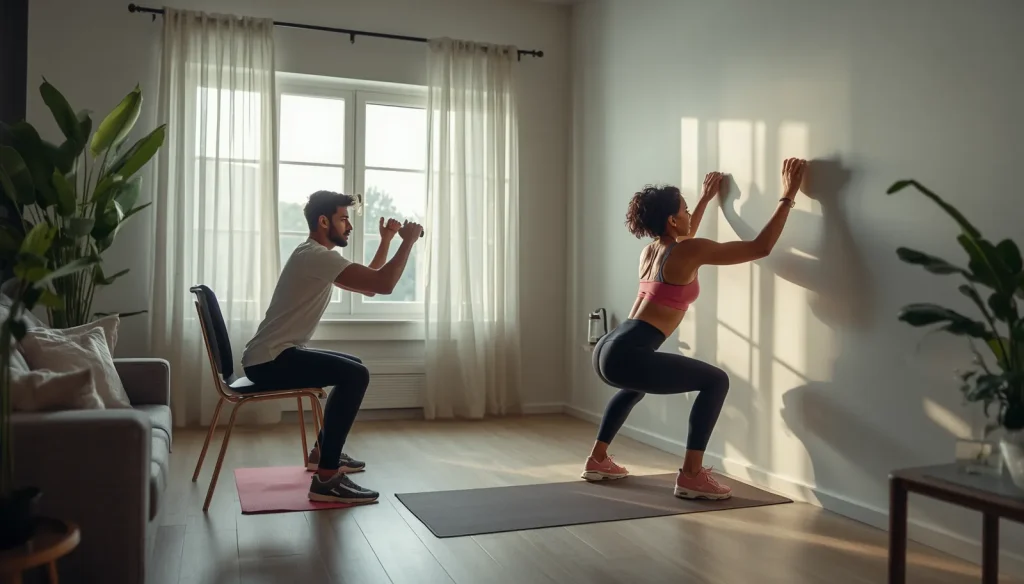
Warm up for three minutes, then complete two rounds of five movements: chair squat, wall push-up, supported reverse lunge or sit-to-stand, marching in place and bird-dog. Work for 40 seconds, rest for 20 seconds, and cool down for two minutes. Use a stable chair and stop for pain, dizziness, chest discomfort or unusual breathlessness.

Fifteen minutes is not a magic workout length. It is useful because it lowers the barrier to starting and can contribute to weekly activity. Adults are generally encouraged to work toward at least 150 minutes of moderate aerobic activity each week and muscle-strengthening activity on at least two days.

Before you begin: Clear the floor, check that the chair cannot slide, wear secure footwear if needed and keep water nearby. Do not exercise on a slippery rug or next to sharp furniture.

The complete 15-minute workout

3 min

Gentle warm-up and movement preparation.

10 min

Five exercises completed for two rounds.

2 min

Slow movement and comfortable cool-down.

0 equipment

Only a wall and stable chair are optional.

Minutes 0–3: Warm-up

  1. 60 seconds: Easy marching in place.
  2. 30 seconds: Shoulder rolls and gentle arm circles.
  3. 30 seconds: Hip hinges with hands on thighs.
  4. 30 seconds: Alternating heel taps in front.
  5. 30 seconds: Slow chair squats or sit-to-stands.

The warm-up should raise temperature slightly without exhausting you. Move within a comfortable range rather than forcing deep stretches.

Minutes 3–13: Two-round circuit

Perform each movement for 40 seconds, then rest or transition for 20 seconds. Complete all five exercises and repeat once.

ExerciseBeginner versionMain areas
Chair squatSit down with control and stand using the chairThighs, hips and glutes
Wall push-upHands on wall; move chest toward wallChest, shoulders and arms
Supported reverse lungeHold chair; or repeat sit-to-standsLegs, hips and balance
March in placeLow knees and comfortable arm movementCardio and coordination
Bird-dogFrom hands and knees; move one limb at a timeCore, back and control

Minutes 13–15: Cool-down

  1. Walk slowly in place for one minute.
  2. Take comfortable breaths without forcing deep inhalations.
  3. Use gentle calf, chest or hip stretches if they feel good.

How to perform each movement safely

Chair squat

Stand in front of a stable chair with feet around hip-to-shoulder width. Send the hips back, bend the knees and touch the chair with control. Push through the whole foot to stand. Use a higher seat or hands for assistance if needed.

Wall push-up

Place hands on a wall slightly wider than shoulders. Keep the body in a straight comfortable line, bend the elbows and bring the chest toward the wall. Press away. Step closer to make it easier.

Supported reverse lunge

Hold a stable support. Step one foot back, lower only as far as comfortable and return. If balance or knee comfort is a concern, use a split-stance mini bend or another set of chair squats.

March in place

Stand tall and lift one foot at a time. Keep the knees low for less impact. Increase arm movement or pace only when you can talk in short sentences without distress.

Bird-dog

From hands and knees, brace gently and slide one leg back. Add the opposite arm only if the torso stays controlled. Use a folded mat for knee comfort or perform a standing version with hands on a wall.

No-jumping, knee-friendly alternatives

Original movementLower-impact option
Fast march or high kneesHeel taps while holding a chair
Reverse lungesShallow sit-to-stands or standing leg extensions
Floor bird-dogStanding opposite arm-and-leg reach at a wall
Full squatPartial-range squat to a higher chair
Floor push-upWall or kitchen-counter push-up

“Knee-friendly” is individual. Mild muscle effort is expected; sharp pain, joint instability or increasing symptoms are signals to stop and modify.

How hard should the workout feel?

For a beginner, aim for light-to-moderate effort. During moderate activity, breathing becomes faster but conversation remains possible. Use a 0–10 effort scale and begin around 3–5 rather than trying to reach maximum intensity.

Good form should remain stable. If technique breaks down, slow the pace, reduce range, use the easier variation or extend rest.

A realistic weekly workout plan

Begin with recovery between sessions

  • Monday: 15-minute home workout.
  • Tuesday: Easy walk or mobility.
  • Wednesday: 15-minute home workout.
  • Thursday: Rest or light activity.
  • Friday: 15-minute home workout.
  • Saturday: Longer walk, cycling, yoga or enjoyable activity.
  • Sunday: Rest and review.

This schedule does not automatically meet every aerobic or strengthening guideline. Add activity gradually according to your fitness, recovery and health.

How to progress after two weeks

  1. First, improve movement control and consistency.
  2. Then increase work from 40 to 45 seconds.
  3. Add a third circuit only when recovery is good.
  4. Move wall push-ups to a lower surface.
  5. Increase squat or lunge range gradually.
  6. Add a light resistance band or household load only when safe.

Change one variable at a time. More speed, range, rounds and load added together can increase soreness and injury risk.

What can a 15-minute workout improve?

Short home workouts can contribute to strength, balance, coordination, cardiovascular activity and reduced sedentary time. Repeated sessions may also support mood, sleep and everyday function as part of regular physical activity.

Results depend on intensity, exercise selection, frequency, nutrition, sleep, health and progression. Fifteen minutes alone does not guarantee major weight loss, visible abs or complete fitness.

Can this workout help with weight loss?

It can add energy expenditure and preserve or build some muscle when progressed appropriately. However, body-weight change is influenced by food intake, total weekly activity, sleep, medicines and health conditions. Most people need a broader, sustainable plan.

Do not use exercise to punish yourself for eating. Build strength and activity while using a balanced nutrition plan.

How to exercise in a small Indian home

  • Use a space long enough to lie down only if floor exercises are included.
  • Replace floor work with standing variations when space is limited.
  • Use low-impact marching to reduce noise for neighbours.
  • Exercise near a wall for balance support.
  • Avoid balconies, wet tiles and unstable plastic stools.
  • During extreme heat, use ventilation, reduce intensity and choose a cooler time.

Who should get medical guidance first?

Moderate activity is safe for most people, but seek individual advice if you have heart or lung disease, uncontrolled blood pressure, frequent fainting, severe joint disease, a recent operation, pregnancy complications, foot ulcers, major balance problems or another exercise restriction.

Stop and seek urgent help for chest pressure, fainting, severe or unusual breathlessness, sudden weakness or pain spreading to the arm, back, neck or jaw. Stop and arrange assessment for persistent joint pain, swelling or neurological symptoms.

Common home-workout mistakes

MistakeBetter approach
Copying advanced speedUse controlled repetitions and an easier variation.
Skipping the warm-upPrepare the same joints and patterns used in the circuit.
Holding the breathBreathe continuously; exhale during the harder phase.
Training hard every dayInclude recovery and vary intensity.
Using an unstable chairPlace a solid chair against a wall.
Ignoring sharp painStop, modify and seek assessment if it persists.

The bottom line

This 15-minute home workout India plan offers a practical mix of strength, stability and low-impact cardio without equipment. Begin with two controlled rounds, use the easiest safe variation and allow recovery.

Build toward a larger weekly activity plan rather than expecting one short circuit to provide every fitness benefit.

Related guides: post-meal walking benefits, how to sleep better, diabetes plate guide and goal-setting techniques.

Frequently asked questions

Is a 15-minute home workout effective?

Yes, it can improve activity and fitness when performed consistently and progressed, but it may not meet the complete weekly exercise target alone.

Can beginners do this workout every day?

Beginners often benefit from recovery days. Light movement can be daily, while harder strength sessions may need space between them.

Can I do the workout without jumping?

Yes. Marching, heel taps, chair squats, wall push-ups and standing core work can keep it low impact.

Will 15 minutes help with weight loss?

It adds activity, but meaningful weight loss usually requires a broader nutrition and activity plan.

Do I need equipment?

No. A wall and a stable chair are enough for the beginner routine.

What if I have knee pain?

Use a smaller range and supported alternatives. Stop for sharp or worsening pain and seek professional assessment.

What is the best time for a home workout?

The best time is one you can repeat and that feels comfortable. Avoid exercising immediately after a heavy meal.

Sources and further reading

Medical note: This workout provides general education and does not replace individual exercise or rehabilitation advice.

A 10-minute walk after meals is a simple way to break up sitting and add activity to your day. Research suggests post-meal movement can reduce glucose excursions, but the effect varies and does not replace food choices, medicines or a complete exercise plan.

Quick answer: Is walking for 10 minutes after meals beneficial?

Yes. A gentle or moderate 10-minute walk can interrupt sitting, add to weekly activity and may reduce the rise in blood glucose after eating. Start when you feel comfortable—often within about 10 to 30 minutes—use a pace that allows conversation and stop if you feel pain, dizziness, chest discomfort or unusual breathlessness.

Ten minutes is not a magic biological threshold. Its value is practical: it is short enough to repeat and can be attached to breakfast, lunch or dinner. Three walks would add 30 minutes of movement to the day.

Keep expectations realistic: One walk will not cancel a large meal, “melt fat” or cure diabetes. Benefits come from a consistent pattern alongside appropriate nutrition, sleep, strength work and medical care.

Potential benefits of a post-meal walk

Glucose response

Working muscles can use glucose during activity.

Less sitting

Walking interrupts a long sedentary period.

Daily movement

Short bouts can accumulate across the week.

Habit cue

A meal provides a reliable reminder to move.

1. It may lower post-meal glucose excursions

Blood glucose commonly rises after a meal, especially one containing carbohydrate. During walking, muscles need energy and can increase glucose uptake. Small controlled studies have found better post-meal glucose patterns with walking than with continued inactivity.

This does not mean every person will see the same change. Meal composition, diabetes type, fitness, medicines, walk timing and intensity all matter.

2. It breaks up prolonged sitting

Going directly from a meal to a chair or bed can extend sedentary time. A short walk creates a movement break even on a day when a longer workout is not possible.

3. It helps you accumulate physical activity

Adults are generally encouraged to work toward at least 150 minutes of moderate-intensity activity each week, plus muscle-strengthening activity. Short walks can contribute, though a very gentle stroll may not count as moderate intensity.

4. It may support a regular routine

“After lunch, I walk for ten minutes” is clearer than “I should exercise more.” The meal acts as a cue, reducing the need to find a separate workout window.

5. Some people feel less sluggish

Light movement may feel more refreshing than immediately sitting. However, claims that walking “speeds digestion” or prevents every episode of bloating are too broad. Digestive symptoms have many causes.

6. It can support mood and general health

Regular physical activity can support sleep, mood, blood pressure, cardiovascular health and diabetes management. These broader benefits reflect an ongoing active lifestyle, not only the timing after meals.

What does the research say?

A Diabetes Care study in older adults at risk of impaired glucose tolerance found that three 15-minute walks performed after meals improved 24-hour glucose control and were comparable with one 45-minute morning walk for the study’s main outcome. Another study found lower glucose excursions when meals were followed by walking rather than inactivity.

These studies support the general idea of post-meal activity, but they do not prove that exactly 10 minutes is optimal for every person. Some trials used 15 minutes, controlled laboratory conditions or specific populations. The CDC nevertheless gives a 10-minute walk after dinner as a practical way to start being active.

Evidence summary: Post-meal walking is a useful, low-cost strategy with plausible glucose benefits. The strongest conclusion is “movement can help,” not “ten minutes guarantees a particular glucose drop.”

When should you walk after eating?

You can generally begin once you feel comfortable. For many people, that is immediately after finishing or within roughly 10 to 30 minutes. Research protocols vary, so there is no universal perfect minute.

  • After a small meal: You may be comfortable starting almost immediately.
  • After a large or heavy meal: Wait until fullness settles and keep the pace easy.
  • For glucose management: Consistency near the post-meal period may be more useful than waiting several hours.
  • With reflux: Gentle upright movement may suit some people, but bending, vigorous activity or individual trigger foods may worsen symptoms.

If you take insulin or medicines that can cause hypoglycaemia, timing needs individual planning with your diabetes team.

What pace should you use?

Start at a comfortable pace. A simple talk test is useful: you should be able to speak in full sentences. If your goal is moderate activity and it is medically appropriate, build toward a brisk pace that raises breathing while conversation remains possible.

SituationSuggested approachWhat to avoid
Beginner or deconditioned5–10 minutes at an easy paceSudden hills or race pace
Large mealWait until comfortable; stroll gentlyRunning or intense intervals
Diabetes on insulinFollow an individual glucose and medication planChanging insulin without guidance
Joint painFlat route, supportive footwear or indoor alternativesPushing through sharp pain
Hot weatherIndoor corridor or cooler time, appropriate hydrationMidday heat exposure

A simple 10-minute walking routine

  1. Minutes 0–2: Begin slowly and check how your body feels.
  2. Minutes 2–8: Use a comfortable-to-brisk pace appropriate for you.
  3. Minutes 8–10: Ease the pace and return calmly.

You do not need special equipment beyond safe footwear and a suitable route. A corridor, terrace, building compound or indoor march can work when air quality, darkness, traffic or heat makes outdoor walking unsafe.

Seven-day post-meal walking plan

Build consistency before speed

  1. Day 1: Walk five minutes after dinner.
  2. Day 2: Repeat for seven minutes.
  3. Day 3: Walk ten minutes after one meal.
  4. Day 4: Keep ten minutes and note your comfort.
  5. Day 5: Add a second five-minute post-meal walk.
  6. Day 6: Use ten minutes after two meals if well tolerated.
  7. Day 7: Choose the meal cue you can repeat next week.

If one 10-minute block is too much, begin with two or three minutes. If it is easy, increase pace or duration gradually rather than changing everything at once.

Important guidance for people with diabetes

Physical activity can lower blood glucose, but responses vary. People using insulin or sulfonylureas may be at risk of low blood glucose during or after activity.

  • Ask your clinician when and how often to check glucose.
  • Learn your personal symptoms of hypoglycaemia.
  • Carry fast-acting carbohydrate if your care plan recommends it.
  • Do not change medicine or insulin doses based only on this article.
  • Check footwear and feet regularly if you have neuropathy.
  • Stop and treat a low according to your established diabetes plan.

If glucose is very high, you feel unwell or ketones are present, exercise may be unsafe. Follow your diabetes team’s sick-day and exercise guidance.

Who should check with a clinician first?

Seek personalised advice before starting or increasing activity if you have unstable heart symptoms, severe lung disease, frequent fainting, poorly controlled diabetes, foot ulcers, major balance problems, recent surgery, pregnancy complications or exercise restrictions.

Stop walking and seek urgent help for chest pressure, fainting, severe breathlessness, sudden weakness, or pain spreading to the arm, back, neck or jaw. New persistent symptoms deserve medical assessment.

Common myths about walking after meals

MythReality
“It instantly burns the meal.”Energy balance is more complex, and a short walk does not erase food.
“Exactly 10 minutes is required.”Ten minutes is a practical dose; studies use different durations.
“The faster, the better.”Comfort and safety matter after eating. Vigorous exercise may not suit everyone.
“It cures diabetes.”Walking can support management but does not replace treatment.
“You must walk after every meal.”Start with one reliable meal and build according to your goals and health.

How to make the habit stick

  • Choose one meal with a predictable schedule.
  • Keep footwear near the dining area.
  • Use a 10-minute playlist or timer.
  • Walk with family or make a phone call while moving safely.
  • Choose an indoor backup route for heat, rain or pollution.
  • Track completed walks, not calories supposedly burned.
  • Resume at the next meal after a missed day.

The bottom line

A 10-minute walk after meals is a realistic way to reduce sitting and add movement. It may improve the post-meal glucose response, particularly when repeated consistently. Use a safe, comfortable pace and treat it as one part of an active lifestyle.

Related guides: how to improve gut health, foods for bloating, mindfulness for beginners and work-life balance tips.

Frequently asked questions

Is a 10-minute walk after eating enough?

It is a useful start and can contribute to weekly activity. Broader guidelines still encourage more total aerobic and strength activity when appropriate.

How soon after a meal should I walk?

Start when comfortable, often immediately or within about 10 to 30 minutes. There is no single perfect time for everyone.

Does walking after meals lower blood sugar?

It can reduce post-meal glucose excursions, but the effect varies with the person, meal, medicines, timing and intensity.

Is walking after dinner good for weight loss?

It adds activity and may support a weight-management plan, but a short walk alone is unlikely to cause substantial weight loss.

Can I walk after a heavy meal?

Wait until you feel comfortable and choose a gentle pace. Stop if you experience pain, nausea or other concerning symptoms.

Can people with diabetes walk after meals?

Often yes, but people using insulin or medicines that can cause low glucose need an individual safety and monitoring plan.

Does indoor walking count?

Yes. Walking in a corridor, mall or at home still provides movement and can be safer during heat, rain or poor air quality.

Sources and further reading

Medical note: This guide offers general education and does not replace individual exercise or diabetes advice.