Mehak
Mehak 
Mindfulness for beginners does not require an empty mind, a perfect posture or a long meditation. It begins by noticing present experience—breath, sensations, thoughts or surroundings—and returning gently when attention wanders.
Quick answer: How can a beginner practise mindfulness?
Sit or stand comfortably, choose one present-moment anchor and notice it for one minute. Your anchor could be natural breathing, sounds or the feeling of your feet on the floor. When your mind wanders, acknowledge it and return without criticism. That return is the practice.
Many people assume mindfulness means stopping every thought. That expectation makes the first attempt feel like failure. Minds think, remember, plan and react. Mindfulness asks you to notice that activity rather than eliminate it.
You can practise formally for a few minutes or informally while drinking tea, walking or listening. The aim is not permanent calm. It is greater awareness of what is happening before you respond automatically.
Remember: Wandering attention is not a failed session. Noticing the wandering and returning is the core skill.
What is mindfulness?
Mindfulness involves paying attention to present experience with openness and less automatic judgment. You might notice thoughts, emotions, body sensations, sounds, sights, smell or taste.
Attention
Choose what you are noticing in this moment.
Awareness
Recognise thoughts, sensations and emotions as they appear.
Return
Come back gently whenever attention moves elsewhere.
Choice
Create a small pause before reacting automatically.
Mindfulness can be secular or connected with spiritual and contemplative traditions. You do not need to adopt a particular belief system to practise basic present-moment awareness.
Mindfulness vs meditation
Mindfulness is a quality of awareness. Meditation is a structured practice that may be used to develop it. You can meditate mindfully, but you can also be mindful while washing dishes or speaking with someone.
| Mindfulness | Meditation |
|---|---|
| Can occur during everyday activities | Usually has a defined practice period |
| Focuses on awareness of current experience | May use mindfulness, a mantra, imagery or another technique |
| Can last a few seconds | Often uses a timer or guided session |
| Does not require closing the eyes | May be practised with eyes open or closed |
What benefits can mindfulness offer?
Research has examined mindfulness and meditation for stress, anxiety, depression, pain and sleep. Some people report improved awareness and coping, but results vary across practices, programmes and individuals.
Greater awareness of automatic habits
You may notice that you open an app when bored, tense your shoulders during emails or rush through meals. Awareness creates an opportunity to choose differently.
A pause during stress
Mindfulness may help you notice signs of stress before reacting. It does not remove the deadline or solve an unsafe environment, but it can support a more deliberate response.
Better connection with ordinary moments
Attention to taste, sound, movement or conversation can help you experience activities that normally happen on autopilot.
A different relationship with thoughts
You can learn to recognise “I will fail” as a thought rather than an unquestionable fact. Mindfulness does not require replacing it with forced positivity.
Evidence limit: Mindfulness is not a cure for anxiety, depression, trauma, ADHD, insomnia or chronic pain. It may be one part of appropriate care.
A two-minute mindful breathing practice
- Choose a stable position. Sit, stand or lie down if safe.
- Keep your eyes open with a soft gaze or close them if comfortable.
- Notice where the breath is easiest to feel.
- Let breathing follow its natural rhythm; do not force deep breaths.
- When attention wanders, silently note “thinking” or “wandering.”
- Return to one breath.
- At the end, notice your body and surroundings before moving.
If focusing on breathing increases anxiety, use sounds, colours in the room or the feeling of your feet as the anchor instead.
Six simple mindfulness practices
1. Five-senses check-in
Notice five things you can see, four physical sensations, three sounds, two smells and one taste. Adjust the numbers as needed. This is an attention exercise, not a guaranteed treatment for panic.
2. Mindful tea or water
Before the first sip, notice the cup, temperature, smell and movement of your hand. Taste one sip without checking your phone.
3. Mindful walking
Walk at a safe, natural pace. Feel the contact of each foot with the ground and notice surrounding sounds. Keep visual awareness of traffic, stairs and other hazards.
4. One-minute body scan
Move attention from the feet upward. Notice pressure, warmth, tension or numbness without forcing relaxation. Stop if the practice feels overwhelming.
5. Thought labelling
When a thought appears, use a neutral label such as planning, remembering, worrying or judging. Then return to your anchor.
6. Mindful listening
During one conversation, listen without preparing your reply. Notice the urge to interrupt and return attention to the speaker.
A seven-day mindfulness plan for beginners
Start small
- Day 1: Notice five natural breaths.
- Day 2: Practise one mindful sip of tea or water.
- Day 3: Complete a two-minute breathing or sound practice.
- Day 4: Walk mindfully for three minutes.
- Day 5: Label thoughts for two minutes.
- Day 6: Listen mindfully during one conversation.
- Day 7: Repeat the most useful practice and choose a cue for next week.
You do not need to add time every day. Consistency with a short, tolerable practice can be more useful than forcing a long session you avoid.
How to practise mindfulness in daily life
- Take one aware breath before opening email.
- Feel your feet when waiting in a queue.
- Eat the first three bites without a screen.
- Notice shoulder and jaw tension during work.
- Pause before replying to a difficult message.
- Listen to one familiar song without multitasking.
- Use handwashing as a sensory cue.
Attach mindfulness to something you already do. This removes the need to remember an entirely new routine.
Common mindfulness mistakes
| Mistake | More useful approach |
|---|---|
| Trying to empty the mind | Notice thoughts and practise returning. |
| Forcing slow, deep breathing | Let the breath stay natural or choose another anchor. |
| Expecting instant calm | Measure awareness, not a particular emotion. |
| Starting with 30 minutes | Begin with one to five minutes. |
| Using mindfulness to tolerate harm | Address the unsafe situation and seek support. |
| Judging every distraction | Treat each return as a repetition of the skill. |
Mindfulness when you feel anxious
Closing the eyes and focusing inward can increase distress for some people. Keep your eyes open, shorten the practice and orient to external details such as colours, shapes and sounds.
Do not hold the breath or force large inhalations. If dizziness, panic, dissociation or traumatic memories increase, stop and reconnect with the room. Consider guidance from a trauma-informed mental-health professional.
When mindfulness may need adaptation
Meditation is generally considered low risk, but uncomfortable experiences can occur. A practice may not be appropriate in the same form for everyone.
- Use movement instead of sitting still if stillness feels unsafe.
- Practise with eyes open if closing them increases distress.
- Choose external sounds instead of internal body sensations.
- Use a shorter session or guided professional programme.
- Do not meditate while driving or operating machinery.
- Do not replace prescribed treatment with mindfulness.
Seek professional support for persistent anxiety, low mood, sleep problems, trauma symptoms or impaired daily functioning. In an immediate safety crisis, contact local emergency services and a trusted person.
How to make mindfulness a habit
- Choose one practice rather than several.
- Link it to a reliable cue, such as morning tea.
- Set a minimum of one minute.
- Track completion, not perfect calm.
- Keep the method accessible on busy days.
- Review after two weeks and adjust.
Missing a day does not erase progress. Begin again at the next cue.
The bottom line
Mindfulness for beginners is simple: notice present experience, recognise when attention wanders and return with less judgment. You do not need special equipment, an empty mind or a long session.
Start with one minute and choose an anchor that feels safe. Use mindfulness as a supportive skill, not a substitute for necessary medical, mental-health or practical action.
Related guides: digital detox benefits, burnout vs laziness, how to sleep better and work-life balance tips.
Frequently asked questions
How do I start mindfulness as a beginner?
Choose one anchor such as natural breathing, sounds or your feet on the floor. Notice it for one minute and return gently whenever attention wanders.
How long should a beginner practise mindfulness?
One to five minutes is enough to start. There is no need to force a long session.
Do I need to stop all thoughts?
No. Thoughts are expected. The practice is noticing them and returning attention without excessive judgment.
Can mindfulness reduce anxiety?
Some people find mindfulness helpful for managing stress or anxiety, but it does not replace professional care and can feel uncomfortable for others.
Should I close my eyes?
No. Keep your eyes open with a soft gaze if that feels safer or more comfortable.
What if focusing on my breath makes me anxious?
Stop focusing on breathing and use an external anchor such as sounds, colours or the contact of your feet with the floor.
Is mindfulness the same as meditation?
Mindfulness is present-moment awareness. Meditation is a structured practice that may be used to develop mindfulness.
Sources and further reading
- NCCIH: Meditation and mindfulness effectiveness and safety
- NHS: Mindfulness
- NHS: How to meditate for beginners
Mental-health note: This article provides general education and does not replace individual assessment, diagnosis or treatment.

Digital detox benefits may include fewer distractions, more time for sleep and movement, and greater awareness of technology habits. A useful detox creates intentional boundaries rather than rejecting technology completely.
Quick answer: What are the digital detox benefits?
A planned screen break may reduce interruptions, prevent late-night scrolling, create time for physical activity and help you notice which apps support or drain you. Results depend on what you stop, what replaces it and whether problematic habits return afterward.
Phones and computers support work, learning, healthcare, navigation and relationships. Therefore, screen use is not automatically unhealthy. Problems arise when a digital habit displaces sleep, movement, responsibilities or meaningful contact, or when it repeatedly leaves you distressed.
A digital detox can last ten minutes, an evening or a weekend. The most sustainable version targets a specific problem and keeps essential access available.
What does a digital detox mean?
A digital detox is a planned period of reducing or pausing selected technology use. It might involve social media, news alerts, gaming, work messages or all non-essential screens.
It does not require throwing away your phone. For many people, a complete shutdown is unrealistic because they need devices for employment, caregiving, disability access, education or safety.
Better goal: Ask whether technology serves your priorities. Do not judge wellbeing only by the total number of screen hours.
Potential digital detox benefits
Fewer interruptions
Muting non-essential notifications can reduce attention switching during focused work.
More room for sleep
A screen boundary can prevent content, messages or work from delaying bedtime.
More movement
Replacing passive scrolling with walking, stretching or household activity reduces sitting time.
Intentional connection
Device-free conversations may make it easier to listen and respond without interruption.
1. Better awareness of automatic habits
A temporary pause exposes triggers. You may reach for the phone during boredom, stress, uncertainty or a difficult task. Noticing the trigger makes a more precise solution possible.
2. More control over attention
Alerts, badges and infinite feeds compete for attention. Removing low-value prompts can protect uninterrupted time. However, a detox does not treat ADHD or guarantee perfect concentration.
3. A calmer bedtime routine
Night-time screen use may delay sleep because the activity is stimulating, emotionally engaging or simply takes time. Bright light can also affect circadian timing. Effects vary, especially among adults, so test a realistic boundary rather than assuming every screen affects everyone equally.
4. Reduced exposure to distressing content
Constant news, harassment, comparison or upsetting recommendations can affect mood. Curating feeds, blocking abusive accounts and limiting news checks may work better than abandoning every platform.
5. Time for offline activities
The strongest digital detox benefits may come from the replacement activity. Reading, movement, hobbies, rest and supportive conversation can provide value that scrolling displaced.
Signs you may need a screen reset
- You check notifications automatically during conversations or tasks.
- Scrolling regularly delays sleep.
- Online content repeatedly leaves you agitated, inadequate or exhausted.
- You neglect meals, movement, work or relationships because of device use.
- You feel unable to stop despite intending to do so.
- You use a phone while driving or in other unsafe situations.
One sign does not prove addiction. Still, loss of control, serious impairment or intense distress deserves support from a qualified mental-health professional.
A practical seven-day digital detox plan
Make one change each day
- Day 1: Check your device-use report without judging yourself.
- Day 2: Turn off one category of non-essential notifications.
- Day 3: Create a device-free meal or 30-minute focus block.
- Day 4: Remove one distracting app from the home screen.
- Day 5: Put the phone outside reach during your wind-down routine.
- Day 6: Replace 30 minutes of scrolling with a chosen offline activity.
- Day 7: Review what helped and keep only useful boundaries.
You do not need to increase every restriction. The aim is to learn which changes improve daily functioning without creating unnecessary isolation.
How to reduce screen time when work requires screens
Separate required use from optional use. A designer may need eight hours on a computer yet still benefit from fewer social notifications and a clear end to the workday.
| Problem | Practical boundary |
|---|---|
| Constant work messages | Set response windows and communicate availability. |
| Distracting phone checks | Place the phone out of reach during one focus block. |
| Eye discomfort | Look away regularly, blink, adjust glare and seek eye care if symptoms persist. |
| Back-to-back meetings | Add short movement or audio-only breaks when appropriate. |
| Late-night work | Choose a shutdown cue and write tomorrow’s first task before logging off. |
Digital detox benefits for sleep
A pre-bed screen boundary can help when messages, videos or work keep you awake. Start with 30 minutes and use that time for a shower, gentle stretching, reading on paper or preparing for tomorrow.
Night mode changes colour temperature but does not stop stimulating content or late bedtime. Persistent insomnia, loud snoring, breathing pauses or severe daytime sleepiness needs medical assessment.
Can a social media detox improve mental wellbeing?
Some people feel calmer after pausing feeds that trigger comparison, conflict or compulsive checking. Others lose valuable community and support. Your outcome depends on the platform, content, relationships and reasons for use.
Before deleting an account, try unfollowing distressing sources, muting keywords, disabling recommendations or setting scheduled check-in times. Keep direct routes to supportive people.
Digital boundaries for families
Children’s needs differ by age, development and family context. Adults should model the behaviour they request. Device-free meals, consistent bedtime routines and shared decisions are often more workable than punishment.
Consider content, context and what screen use replaces, not only minutes. Co-use high-quality media when possible and discuss privacy, advertising, harassment and unsafe contact. Families should seek paediatric guidance for age-specific concerns.
When a digital detox needs adaptation
Devices may provide communication aids, reminders, maps, symptom tracking, hearing or vision support, remote healthcare and social access. Removing these tools can reduce independence.
Protect essential features. Reduce only the functions that create the identified problem. A person who relies on online community should plan alternative connection before taking a break.
Common digital detox mistakes
- Changing everything overnight: Start with one trigger or time window.
- Leaving an empty gap: Plan a replacement activity.
- Using shame: Apps are designed to capture attention; boundaries are skills, not a moral test.
- Ignoring work and safety needs: Keep essential contacts and tools accessible.
- Returning without a plan: Decide which notifications, apps and time limits remain.
- Expecting treatment: A detox does not cure anxiety, depression, ADHD or insomnia.
How to maintain digital detox benefits
At the end of the break, compare sleep, mood, focus, movement and relationships with your usual pattern. Keep the smallest boundary that produced a meaningful difference.
- Allow notifications only from people and services that need immediate access.
- Keep distracting apps off the first home screen.
- Use scheduled news and email checks.
- Charge the phone away from the bed if safe and practical.
- Review digital habits monthly or after a major routine change.
When to seek professional help
Talk with a mental-health professional if device use causes serious conflict, financial harm, unsafe behaviour, missed responsibilities or repeated loss of control. Seek help if online activity involves gambling, self-harm content, exploitation, harassment or substance use.
If reducing a device removes your main support network, plan replacement contact first. In an immediate safety crisis, contact local emergency services and a trusted person.
The bottom line
Digital detox benefits do not require a technology-free life. A targeted pause can reveal automatic habits and create space for sleep, focus, movement and relationships.
Choose one problem, set one boundary and select a useful replacement. Then review the result and build a sustainable digital routine.
Frequently asked questions
How long should a digital detox last?
Start with a specific block such as 30 minutes, one evening or one weekend. Duration matters less than targeting a real problem.
Do I need to stop using all devices?
No. Keep essential work, safety, accessibility and relationship tools.
Can a digital detox cure anxiety?
No. It may reduce particular triggers, but persistent anxiety deserves evidence-based professional care.
Will reducing screens improve sleep?
It may help when content, work or scrolling delays bedtime. Sleep problems can also have other causes.
What should I do instead of scrolling?
Choose an activity that fits the need: rest for fatigue, conversation for loneliness, movement for inactivity or a clear first step for avoidance.
Are screen-time tracking apps useful?
They can reveal patterns, but the numbers need context. Focus on whether use displaces important activities.
How often should I take a digital detox?
Use short resets whenever habits stop matching your priorities, then maintain the boundaries that help.
Sources and further reading
- WHO: Physical activity and sedentary behaviour
- NIH NHLBI: Sleep deprivation and deficiency
- American Academy of Pediatrics: Media and children
Note: This article provides general education and does not replace individual mental-health, sleep or medical care.

Learning how to manage anxiety does not mean eliminating every anxious feeling. The goal is to respond more safely, reduce its impact and get professional help when anxiety disrupts daily life.
Quick answer: How can you manage anxiety?
Slow your breathing, orient yourself to the present, reduce avoidable stimulants and take one manageable action. Over time, regular sleep, movement, supportive relationships and evidence-based therapy can help. Seek professional care when anxiety persists, worsens or interferes with work, study, sleep or relationships.
Everyone feels anxious sometimes. Anxiety can alert you to risk and prepare your body to act. However, intense or persistent fear and worry may become difficult to control. It can also affect concentration, sleep, relationships and everyday decisions.
This guide offers coping tools rather than a cure. Physical conditions and medicines can also cause anxiety-like symptoms, so a qualified professional should assess new, severe or unexplained symptoms.
What anxiety can feel like
Thoughts
Repeated worry, worst-case predictions, difficulty concentrating or a sense that something bad will happen.
Body sensations
A racing heart, sweating, trembling, nausea, tense muscles, dizziness or shortness of breath.
Emotions
Fear, irritability, restlessness, dread or feeling constantly on edge.
Behaviour
Avoiding people, places or tasks; repeatedly seeking reassurance; or using alcohol to cope.
These symptoms can occur in anxiety, but they are not specific to it. Chest pain, fainting, severe breathing difficulty or new neurological symptoms need urgent medical assessment.
How to manage anxiety in the moment
1. Slow the exhale
Breathe gently rather than taking large, forceful breaths. Try inhaling comfortably and making the exhale slightly longer. Repeat for one or two minutes. Stop if the exercise makes you dizzy or more distressed.
2. Use a grounding exercise
Name five things you can see, four you can feel, three you can hear, two you can smell and one you can taste. Grounding redirects attention to your current surroundings. It does not need to make anxiety disappear to be useful.
3. Label the experience
Say, “I am noticing anxiety” instead of “I am in danger.” This creates a little distance between the feeling and the conclusion your mind is drawing.
4. Choose one small next step
Drink water, sit somewhere safe, message a trusted person or complete the first two minutes of the task you are avoiding. Small action can interrupt helplessness.
Remember: A coping technique can reduce intensity, but it does not prove that every symptom is harmless. Seek medical help when symptoms are severe, unusual or accompanied by warning signs.
Daily habits that may reduce anxiety symptoms
Keep a regular sleep routine
Use a steady waking time, create a short wind-down routine and reduce late caffeine if it affects sleep. Anxiety and poor sleep can reinforce each other. Persistent insomnia deserves professional advice.
Move your body regularly
Walking, cycling, dancing, yoga and other activities can support mental and physical health. Start gradually, especially if you have a health condition or have been inactive.
Eat regularly and notice caffeine
Long gaps between meals can feel uncomfortable for some people. Large amounts of caffeine may increase palpitations, restlessness and sleep problems. Reduce it gradually if you use it heavily.
Limit alcohol and avoid recreational drugs
Alcohol may feel calming briefly, but it can worsen sleep and anxiety later. Do not use alcohol, sedatives or unprescribed medicines as anxiety treatment.
Maintain supportive contact
Tell one trusted person what you are experiencing and what would help. You can ask for listening, company at an appointment or support with a practical task.
How to manage anxious thoughts
Trying to suppress every worry often makes it return more strongly. Instead, write the worry down and separate problems you can act on from possibilities you cannot resolve today.
A simple worry check
- Name it: What exactly am I predicting?
- Check it: What evidence supports and challenges that prediction?
- Plan it: Is there one useful action I can take?
- Release it: If no action is possible now, return attention to the present task.
You can also schedule a short “worry period” earlier in the evening. When worry appears outside that time, note it and postpone reviewing it. This approach takes practice and may work best with guidance from a therapist.
Reduce avoidance carefully, not abruptly
Avoidance brings short-term relief, yet it can teach the brain that the situation is dangerous. Evidence-based exposure therapy helps people face fears gradually and safely. It should follow a structured plan.
Do not force yourself into overwhelming situations or attempt trauma exposure alone. A trained mental-health professional can help set a suitable pace, particularly for panic disorder, obsessive-compulsive disorder, trauma or severe phobias.
Professional treatment for anxiety
Effective treatment is available. A clinician may assess symptoms, duration, medical history, medicines, substance use and how anxiety affects functioning. Treatment depends on the type of anxiety and individual preferences.
Psychological therapy
Cognitive behavioural therapy has strong evidence across several anxiety disorders. It can teach people to examine thinking patterns, change coping behaviours and approach feared situations gradually. Other approaches may also help, depending on the diagnosis.
Medication
A qualified prescriber may recommend medication. Some antidepressants can treat anxiety disorders, although benefits and side effects vary. They often take time to work and should not be started, stopped or changed without medical guidance.
Benzodiazepines can cause dependence and are generally unsuitable for routine long-term treatment. Never combine sedating medicines with alcohol, and never use another person’s prescription.
When to seek professional help
Arrange an appointment with a doctor, psychologist or psychiatrist when anxiety lasts for weeks, keeps returning, causes substantial distress or interferes with sleep, study, work, relationships or leaving home.
Also seek help if you experience repeated panic attacks, use substances to cope, have intrusive thoughts, develop restrictive eating patterns or cannot manage important responsibilities. Early support can prevent symptoms from becoming more disruptive.
Urgent help and crisis support
Get immediate help if you may harm yourself or someone else, feel unable to stay safe, have made a suicide plan or attempt, experience severe confusion, or cannot complete essential daily activities. Call India’s emergency number 112, go to the nearest emergency department, or ask a trusted person to stay with you. India’s Tele-MANAS mental-health helpline can be reached at 14416 or 1-800-891-4416. If you are outside India, use your local emergency or crisis service.
Do not remain alone while immediate help is being arranged. Move away from weapons, medicines or other items you could use to hurt yourself, and share honestly what is happening.
How to support someone with anxiety
- Listen without telling them to “just relax.”
- Ask what support would be useful.
- Offer help finding a qualified professional.
- Encourage small steps without forcing exposure.
- Take threats of self-harm seriously and contact urgent support.
- Maintain your own boundaries and wellbeing.
Common mistakes to avoid
- Expecting instant control: Anxiety skills improve through repetition.
- Avoiding every trigger: Avoidance can strengthen fear over time.
- Using alcohol or sedatives: They can worsen symptoms and create new risks.
- Stopping medication suddenly: Always consult the prescriber.
- Assuming every symptom is anxiety: New or severe physical symptoms require assessment.
- Waiting for a crisis: You can seek care before symptoms become unbearable.
A seven-day starter plan
- Day 1: Record triggers, thoughts, sensations and responses.
- Day 2: Practise gentle breathing for two minutes while calm.
- Day 3: Take a short walk or choose suitable movement.
- Day 4: Reduce one avoidable source of caffeine.
- Day 5: Use the four-step worry check.
- Day 6: Speak with a trusted person.
- Day 7: Review the effect on daily life and decide whether to arrange professional support.
This plan is not treatment for an anxiety disorder. Use it to build awareness and identify the kind of support you may need.
The bottom line
Learning how to manage anxiety takes time, practice and appropriate support. Slow breathing, grounding exercises and small practical actions may reduce anxiety during difficult moments. However, persistent or severe symptoms may require therapy, medication or support from a qualified mental-health professional.
You do not need to wait until anxiety becomes a crisis. A qualified professional can help you understand the symptoms and build a personalised plan.
Frequently asked questions
Can anxiety be cured permanently?
No responsible source can promise a permanent cure. Many people manage anxiety effectively with therapy, lifestyle support and, when appropriate, medication.
How can I calm anxiety quickly?
Try gentle breathing, grounding and one small practical action. Seek medical help for severe or unfamiliar physical symptoms.
What is the 5-4-3-2-1 grounding method?
Notice five things you see, four you feel, three you hear, two you smell and one you taste.
Does caffeine make anxiety worse?
It can increase restlessness, palpitations and sleep problems in some people. Reduce heavy intake gradually.
When should I see a therapist?
Seek support when anxiety persists, causes distress, drives avoidance or interferes with daily life.
Should I stop anxiety medication when I feel better?
No. Discuss any dose change with the prescriber because sudden stopping can cause withdrawal or returning symptoms.
Is a panic attack dangerous?
Panic attacks feel frightening, but similar symptoms can have physical causes. Seek urgent assessment for new chest pain, fainting or severe breathing difficulty.
Sources and further reading
- World Health Organization: Anxiety disorders
- National Institute of Mental Health: Anxiety disorders
- NHS: Generalised anxiety disorder
Medical disclaimer: This content provides general education. It does not diagnose an anxiety disorder or replace individual care from a qualified professional.
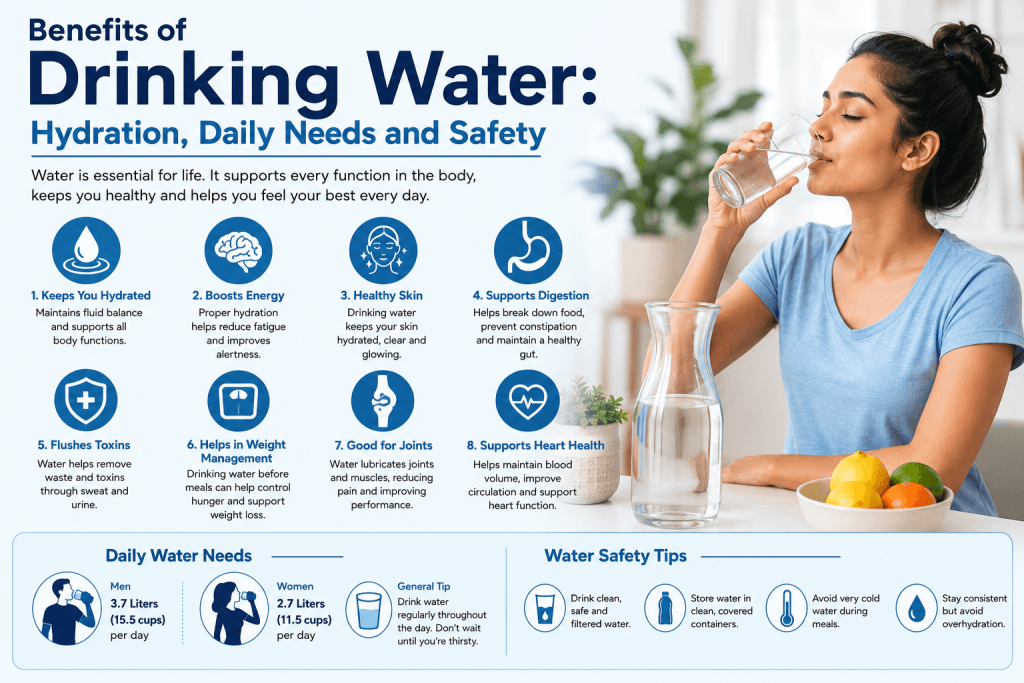
Benefits of drinking water include supporting temperature control, circulation, digestion, waste removal and normal physical and mental performance. The right amount, however, varies from person to person.
Quick answer: What are the benefits of drinking water?
Water helps regulate body temperature, maintain blood volume, transport nutrients, form saliva and joint fluid, support digestion, and remove waste through urine and sweat. Drinking enough also helps prevent the headache, tiredness and reduced concentration that dehydration may cause.
Your body contains water in every cell. It forms much of your blood, saliva, sweat, urine and the fluid around joints. You continually lose it through breathing, sweating, urination and bowel movements, so regular replacement matters.
More is not always better. Hydration means maintaining balance—not forcing a fixed number of litres or drinking until urine stays completely colourless.
How water supports normal body functions
Temperature control
Sweat carries heat away from the skin as it evaporates. Hot weather and exercise increase fluid loss.
Circulation
Water contributes to blood volume, helping the circulatory system transport oxygen and nutrients.
Digestion and stools
Fluid helps food move through the digestive tract. Adequate fluid works with dietary fibre to support softer stools.
Waste removal
The kidneys use water to make urine and regulate fluid and electrolyte balance.
Other benefits of drinking water come from what it replaces. Choosing water instead of sugary beverages can reduce added sugar and calorie intake without relying on a special “detox” product.
How much water should you drink each day?
No single target suits everyone. The NHS uses six to eight cups or glasses of fluid a day as a general guide, not a strict prescription. Total hydration also comes from food and drinks such as milk, tea and coffee.
Your needs may rise during hot or humid weather, prolonged physical activity, fever, pregnancy, breastfeeding, vomiting or diarrhoea. Body size, diet, medicines and medical conditions also affect the appropriate amount.
A practical check: Thirst and pale-yellow urine often suggest adequate hydration. Urine colour can also change because of vitamins, medicines and foods, so it is a clue rather than a diagnostic test.
People with heart failure, kidney disease, advanced liver disease or certain hormone disorders may receive an individual fluid limit. Follow that advice instead of a general online target.
Signs you may not be drinking enough water
Early dehydration can cause thirst, a dry or sticky mouth, darker urine, less frequent urination, headache, tiredness or muscle cramps. Children and older adults may not communicate thirst clearly, so caregivers should also watch behaviour and urine output.
Seek urgent medical care for confusion, fainting, inability to keep fluids down, very little or no urine, rapid breathing, a weak rapid pulse, or signs of severe illness. Babies with markedly fewer wet nappies, no tears or unusual sleepiness need prompt assessment.
Hydration, energy and concentration
Dehydration can make exercise feel harder and may reduce attention, mood or alertness. Replacing lost fluid can restore normal function, but water is not a stimulant and does not create unlimited energy.
For ordinary daily activity, water usually works well. During long, intense exercise or heavy sweating, people may also lose sodium and other electrolytes. The correct replacement depends on duration, conditions and individual risk.
Benefits of drinking water for digestion
Adequate fluid supports normal digestion and helps fibre do its job. Increasing fibre without enough fluid may worsen bloating or constipation for some people. Increase both gradually if your usual intake is low.
Water does not “flush toxins” from the bowel. Your liver, kidneys, lungs and digestive system manage waste continuously. Persistent constipation, blood in stool, severe pain or unexplained weight loss needs medical assessment.
Water, tea, coffee and flavoured drinks
| Drink | Practical guidance |
|---|---|
| Plain water | A low-cost, sugar-free default for most people. |
| Tea and coffee | They contribute fluid. Moderate caffeine according to tolerance and pregnancy guidance. |
| Milk | Provides fluid plus nutrients; choose a suitable type for your needs. |
| Juice and sugary drinks | They provide fluid but may add substantial free sugar; keep portions limited. |
| Lemon or infused water | Useful if flavour helps you drink, but it is not a detox or fat-burning treatment. |
| Sports drinks | Usually unnecessary for short or light activity; may help in selected prolonged-exercise situations. |
Simple ways to drink enough
- Drink with meals and when thirsty.
- Carry a clean reusable bottle when away from home.
- Drink before, during and after activity according to heat and sweat loss.
- Add mint, cucumber or citrus if you prefer flavour.
- Offer fluids regularly to children and older adults during hot weather.
- Increase intake gradually rather than consuming a large volume at once.
The most useful benefits of drinking water come from consistent, appropriate intake. A bottle with time markings can serve as a reminder, but its schedule should not override thirst, comfort or medical advice.
Hydration during vomiting or diarrhoea
Vomiting and diarrhoea remove water and electrolytes. Take small, frequent sips if larger drinks trigger nausea. An oral rehydration solution contains a measured balance of glucose and salts and may work better than plain water when losses are significant.
Use a properly prepared commercial oral rehydration product or follow local clinical advice. Young children, older adults and anyone with ongoing symptoms can deteriorate quickly.
Can you drink too much water?
Yes. Drinking excessive water faster than the kidneys can remove it may dilute sodium in the blood, causing hyponatraemia. Symptoms can include nausea, headache, confusion, weakness or seizures.
Safety note: Do not force litres of water rapidly for a cleanse, challenge or weigh-in. Confusion, seizures or severe headache after heavy fluid intake requires emergency care.
Common hydration myths
“Everyone needs exactly eight glasses”
It is a memorable guide, not a universal biological requirement. Climate, activity, food and health alter needs.
“Clear urine always means perfect hydration”
Persistently colourless urine may simply reflect high intake. Pale yellow is a more practical general aim for many healthy adults.
“Water detoxes the body and burns fat”
Water supports organs that process waste, but it does not perform a special cleanse. Replacing caloric drinks may support weight management; water itself does not melt fat.
“Caffeinated drinks always dehydrate you”
Tea and coffee still contribute to fluid intake. Large caffeine doses can cause side effects, so moderation remains sensible.
The bottom line
The main benefits of drinking water involve maintaining normal physiology and preventing dehydration. Use thirst, pale-yellow urine, activity and weather as everyday guides, while recognising that illness and medical conditions can change the plan.
Choose water often, increase fluids when losses rise, and avoid forcing excessive amounts. Seek personalised advice when symptoms persist or a clinician has prescribed a fluid restriction.
Frequently asked questions
Does drinking water improve skin?
Correcting dehydration may improve dryness related to low fluid intake, but drinking extra water has not been shown to cure acne, pigmentation or other skin conditions.
Is warm water better than cold water?
Both hydrate. Choose the temperature that feels comfortable and encourages appropriate intake.
Does lemon water have extra benefits?
It adds flavour and a small amount of nutrients, but it does not detox the body or cause meaningful fat loss by itself.
Can tea and coffee count toward hydration?
Yes. They contribute fluid, although caffeine tolerance and pregnancy limits still matter.
Should I drink water even when I am not thirsty?
Regular access and routine drinking help during heat, exercise, pregnancy, illness and older age. Do not force excessive volumes.
When should I use an electrolyte drink?
It may help after significant vomiting, diarrhoea or prolonged heavy sweating. Use the right product and seek clinical advice for vulnerable people or ongoing symptoms.
Sources and further reading
- NHS: Water, drinks and hydration
- NIH: Hydrating for health
- MedlinePlus: Dehydration
- MedlinePlus: Fluid and electrolyte balance
Medical note: This article provides general education and does not replace diagnosis or individual medical care.
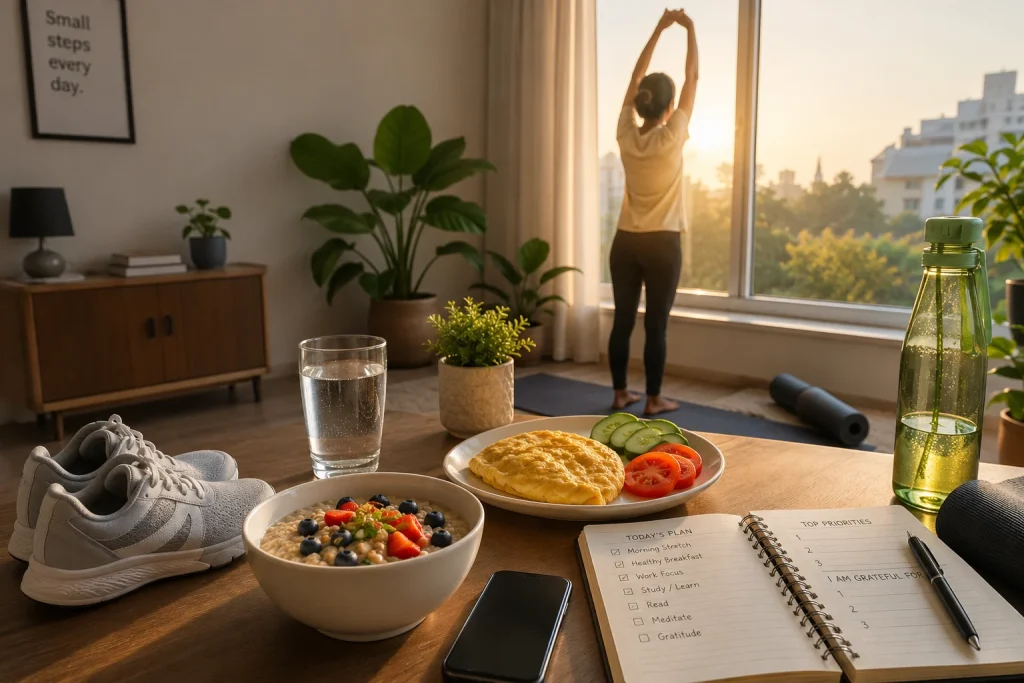
A healthy morning routine does not require a 5 a.m. alarm, expensive supplements or a perfect two-hour schedule. Start with consistent sleep, daylight, fluid, movement and one realistic priority.
Quick answer: What makes a morning routine healthy?
A healthy routine begins the night before. Aim for enough sleep, wake at a reasonably consistent time, get natural light, drink according to thirst, move your body and eat a balanced breakfast if you are hungry. Choose one or two priorities rather than copying an unrealistic influencer schedule.
Morning habits can shape how organised and alert you feel, but they do not determine your worth or guarantee productivity. Work shifts, caregiving, health conditions, school schedules and sleep needs all affect what a realistic morning looks like.
The best routine is one you can repeat without sacrificing sleep. If waking earlier means sleeping less, the routine may work against your health.
Benefits of a healthy morning routine
A predictable sequence reduces the number of decisions you make immediately after waking. It can also create space for behaviours that support sleep timing, physical activity, nutrition and stress management.
More predictable mornings
A simple sequence can reduce rushing and make essential tasks easier to remember.
Circadian support
Light and darkness strongly influence circadian rhythms. Outdoor morning light can help reinforce daytime signals.
More daily activity
A short walk or mobility session contributes to weekly physical activity without requiring a full workout.
Clearer priorities
Choosing one important task can prevent messages and notifications from controlling the first part of your day.
Evidence boundary: A morning routine supports healthy behaviours; it does not “balance every hormone,” detox the body or guarantee weight loss. Avoid precise claims about cortisol, dopamine or metabolism unless they match strong human evidence.
Step 1: Build your healthy morning routine the night before
A useful morning depends on adequate sleep. The CDC advises adults to maintain consistent sleep times, and most healthy adults need at least seven hours. Individual needs vary.
- Choose a bedtime that allows enough sleep before your required wake time.
- Prepare clothes, medication, breakfast ingredients or a work bag in advance.
- Place the alarm away from the pillow if repeated snoozing causes problems.
- Keep the bedroom dark, quiet, cool and comfortable when possible.
- Reduce unnecessary late-night tasks instead of stealing time from sleep.
Step 2: Use a consistent wake-up window
You do not need to wake at 5 a.m. A consistent window that fits your work and family obligations matters more than an impressive time on the clock.
Try keeping wake time within a manageable range across most days. Large weekend shifts can make Monday harder. Shift workers need a different strategy and should protect their main sleep period rather than forcing a conventional morning schedule.
Step 3: Get natural light after waking
Light and darkness provide major signals to the circadian system. If possible, open the curtains and spend a few minutes outdoors after waking. A short walk, balcony break or time near a bright window may fit your routine.
Outdoor conditions, season, latitude, skin sensitivity and eye conditions differ. Do not stare directly at the sun. Use appropriate sun protection when exposure becomes longer or UV levels are high.
Step 4: Rehydrate without detox claims
Water is a simple morning choice. Drink according to thirst, climate, physical activity and medical guidance. You do not need warm water, lemon, copper vessels or a fixed number of glasses to “flush toxins.”
Tea, coffee, milk and other drinks can contribute to fluid intake. People with heart, kidney or other conditions may need individual fluid limits.
Step 5: Add five to twenty minutes of movement
Choose movement that matches your health, ability and schedule. Options include walking, gentle yoga, mobility exercises, body-weight movements, cycling or household activity.
The World Health Organization recommends that adults accumulate 150 to 300 minutes of moderate aerobic activity per week, or an equivalent amount of vigorous activity. A short morning session contributes to that total, but it does not need to contain the entire weekly target.
| Time available | Movement idea | Intensity |
|---|---|---|
| 5 minutes | Joint mobility and gentle stretching | Light |
| 10 minutes | Brisk walk around the block | Light to moderate |
| 15 minutes | Body-weight circuit with rest | Adjustable |
| 20 minutes | Walk, yoga or cycling | Adjustable |
Stop and seek medical guidance if activity causes chest pain, fainting, severe breathlessness or another concerning symptom.
Step 6: Give your mind a quiet transition
You do not need a long meditation session. Two to five quiet minutes can help you transition from sleep to the day.
- Take slow, comfortable breaths without forcing a pattern.
- Write one sentence about how you feel.
- Pray or reflect according to your beliefs.
- List one thing you appreciate.
- Sit with tea without opening social media.
These practices support reflection but do not treat anxiety or depression on their own. Seek professional help when emotional symptoms persist or interfere with daily life.
Step 7: Delay reactive phone use
Checking urgent messages may be necessary for some jobs and families. The goal is not a universal “no-phone rule.” Instead, prevent low-value notifications from deciding your first action.
Try turning off nonessential alerts, moving social apps off the home screen or setting a ten-minute buffer before scrolling. Use the phone intentionally for music, a timer, weather or a planned task if that helps.
Step 8: Build a balanced breakfast when hungry
Not everyone needs breakfast at the same time. If you eat in the morning, combine protein, fibre-rich carbohydrates and fruit or vegetables where practical.
| Breakfast | What it includes |
|---|---|
| Vegetable poha with curd | Carbohydrate, vegetables and protein |
| Besan chilla with vegetables | Pulse-based protein, fibre and vegetables |
| Oats with milk or curd, nuts and fruit | Whole grain, protein, fat and fruit |
| Eggs with wholegrain toast and fruit | Protein, carbohydrate and fruit |
| Idli with sambar | Fermented grain-legume food with lentils and vegetables |
| Paneer or tofu wrap | Protein, vegetables and a grain base |
Choose portions based on appetite and health needs. People managing diabetes, kidney disease, food allergies or digestive conditions may need personalised guidance.
Step 9: Choose one important priority
A long list can create pressure before the day begins. Write one essential task and two smaller tasks. If the day becomes unpredictable, the main priority remains visible.
Keep the plan specific. “Work on report for 25 minutes” is easier to start than “be productive.” Include appointments, travel time and caregiving rather than planning as if the day contains no interruptions.
Step 10: Make the routine easy to repeat
Use a minimum version for busy days. A routine that survives stress works better than one that collapses whenever time is short.
- Attach a new habit to something you already do.
- Keep walking shoes, water and breakfast basics easy to access.
- Change only one or two habits at a time.
- Track completion for awareness, not punishment.
- Review the routine after two weeks and remove steps that add little value.
Healthy morning routine plans for different schedules
15-minute routine
- Open curtains or step outside: 2 minutes
- Drink water if thirsty: 1 minute
- Mobility or walking: 5 minutes
- Wash and get ready: 5 minutes
- Write one priority: 2 minutes
Prepare breakfast or a portable option the night before if your morning is rushed.
30-minute routine
- Daylight and water: 5 minutes
- Walk or mobility: 10 minutes
- Wash and dress: 8 minutes
- Balanced breakfast: 5 minutes
- Plan one priority: 2 minutes
60-minute routine
- Daylight and quiet transition: 10 minutes
- Movement: 20 minutes
- Wash and dress: 10 minutes
- Balanced breakfast: 15 minutes
- Plan the day: 5 minutes
Adapt the routine to real life
For students
Prepare books and clothes at night. Use the morning for light, breakfast and a short review rather than last-minute all-night study.
For office workers
Protect travel time, pack breakfast if necessary and add walking around the commute. Avoid building a routine that makes you late.
For parents and caregivers
Choose a shared minimum routine. Five quiet minutes before others wake may help, but sleep remains more valuable than forcing extra early time.
For shift workers
Your “morning” begins when you wake, even if the clock says afternoon. Protect sleep, use appropriate light timing and follow occupational-health guidance.
Common morning-routine mistakes
- Sacrificing sleep: Waking earlier is not healthy when bedtime stays unchanged.
- Changing everything at once: Too many new steps create friction.
- Copying another person: Their work, health and family situation may differ.
- Using detox products: A routine does not require juices, powders or supplements.
- Ignoring pain or exhaustion: Persistent symptoms need assessment, not more discipline.
- Treating missed days as failure: Restart with the next available step.
The bottom line
A healthy morning routine should support sleep, light exposure, movement, nourishment and realistic planning. It should not demand perfection or rely on unsupported wellness claims.
Begin with two anchors: a consistent wake window and a five-minute movement or daylight habit. Add other steps only after those feel stable.
Practical takeaway: Protect sleep first, make the routine short enough for difficult days and measure success by consistency rather than complexity.
Frequently asked questions
What is the healthiest morning routine?
A useful routine includes adequate sleep, a consistent wake time, natural light, fluid according to thirst, suitable movement, balanced food when hungry and a realistic daily priority.
What time should I wake up?
Choose a time that fits your obligations and still allows enough sleep. There is no universally healthiest wake-up time.
Do I need to wake at 5 a.m.?
No. Waking at 5 a.m. offers no special benefit if it reduces sleep or conflicts with your work and family schedule.
Should I drink warm water immediately after waking?
Plain water at a comfortable temperature is sufficient. Warm water is optional and does not detox the body or automatically increase metabolism.
How long should a healthy morning routine take?
It can take 10 to 60 minutes. The best length is one you can maintain without rushing or sacrificing sleep.
Is breakfast necessary every morning?
Needs vary. If you eat breakfast, choose a balanced meal that suits your appetite, schedule and medical needs.
Is morning exercise better than evening exercise?
The best time is the one you can follow safely and consistently. Morning movement is convenient for some people, while others perform better later.
How can I maintain my routine on busy days?
Use a minimum version with daylight, water if thirsty, five minutes of movement and one written priority.
Sources and further reading
- CDC/NIOSH: Consistent sleep times and healthy sleep
- NIH: Circadian rhythms and environmental signals
- WHO: Physical activity and sedentary behaviour guidelines
- NHS: Eating a balanced diet
Medical note: This article provides general wellness information and does not replace personalised advice from a qualified healthcare professional.
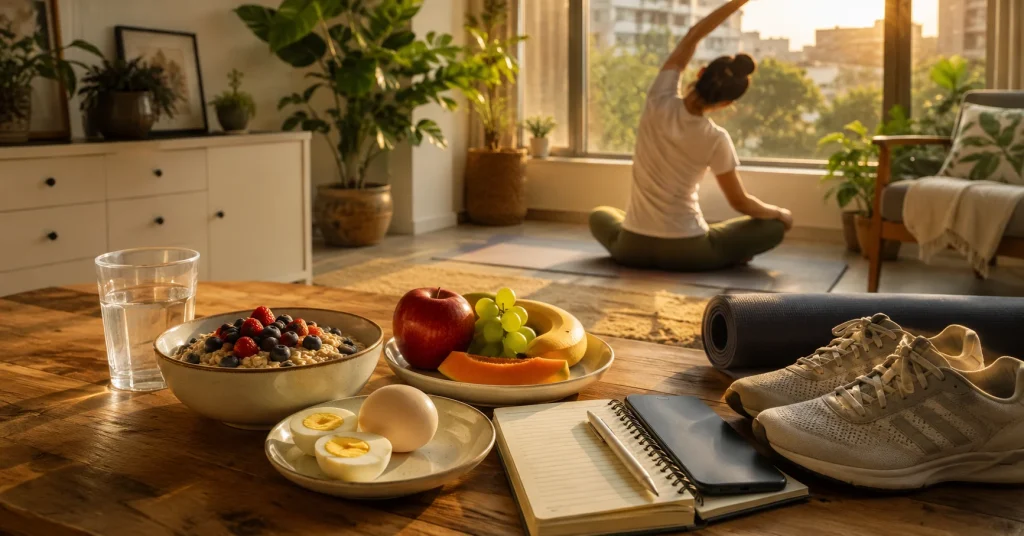
Daily healthy habits work best when they fit real life. Start with sleep, balanced food, movement, hydration and preventive care, then make each action small enough to repeat.
Quick answer: Which daily healthy habits matter most?
Prioritise adequate sleep, varied food, regular movement, less sitting, appropriate hydration, tobacco avoidance, limited alcohol, stress support, social connection, oral care and recommended preventive services. You do not need to perfect all of them at once.
Daily healthy habits do not come from a detox challenge or a flawless morning. Instead, daily healthy habits develop through small actions repeated over weeks and months. It develops through patterns repeated across weeks and years. Genetics, income, housing, work, healthcare access and the local environment also shape what a person can realistically do.
Use this guide as a menu, not a test. Select one habit that solves a current problem and practise its smallest version first.
How to build daily healthy habits that last
Reduce the starting effort
A five-minute walk creates less resistance than a one-hour workout plan.
Define the action
“Eat fruit with lunch” is clearer than “eat healthier.”
Prepare the environment
Keep walking shoes, water and useful ingredients easy to reach.
Create a minimum version
Busy-day options keep a habit alive when the full plan is impossible.
Important: Healthy behaviour can lower risk and support wellbeing, but it cannot guarantee disease prevention. Symptoms, diagnoses and treatment decisions require appropriate healthcare.
1. Protect a consistent sleep schedule
Sleep supports attention, mood, safety and physical health. Most healthy adults need at least seven hours, although individual needs vary. Try to keep bedtime and wake time within a consistent range.
- Set a wind-down reminder before bedtime.
- Keep the room dark, quiet, cool and comfortable.
- Reduce late caffeine if it disrupts sleep.
- Seek medical advice for loud snoring, breathing pauses or persistent insomnia.
2. Build balanced meals instead of following detox diets
A healthy diet includes a variety of foods while limiting excessive salt, free sugars, saturated fat and industrial trans fat. Build meals around vegetables or fruit, protein, fibre-rich carbohydrates and suitable fats.
| Meal component | Indian examples |
|---|---|
| Vegetables or fruit | Seasonal sabzi, salad, fruit, cooked greens |
| Protein | Dal, beans, curd, paneer, tofu, eggs, fish or chicken |
| Fibre-rich carbohydrate | Roti, brown rice, oats, millet or potato with skin |
| Healthy fat | Nuts, seeds or moderate amounts of unsaturated oil |
3. Move regularly throughout the week
The WHO recommends 150 to 300 minutes of moderate aerobic activity per week for adults, or an equivalent amount of vigorous activity. Muscle-strengthening activity on at least two days also matters.
Start below that target if needed. Walking, cycling, dancing, sport, yoga, household work and active transport all count as movement.
4. Break up long periods of sitting
Exercise does not erase every effect of sitting for most of the day. Stand, walk or stretch briefly when your work permits. Use calls, water breaks or transitions between tasks as cues.
A timer can help, but there is no need to interrupt focused work every few minutes. Choose a practical interval and vary your posture.
5. Drink enough fluid without forcing litres
Fluid needs change with climate, activity, pregnancy, illness and health conditions. Water is a practical default, but milk, tea, coffee and other drinks can contribute.
Use thirst, urine pattern and medical guidance rather than a universal fixed amount. People with heart or kidney conditions may need specific limits.
6.Practise a short stress-management habit
Stress cannot always be removed, but small actions may reduce overload. Try slow breathing, journaling, prayer, time outdoors, a short walk or a conversation with someone you trust.
These habits do not replace treatment for anxiety, depression or trauma. Seek professional support if distress persists, affects functioning or includes thoughts of self-harm.
7.Maintain supportive relationships
Social connection can support wellbeing. Send a message, share a meal, join a community activity or schedule a regular call. Quality matters more than collecting contacts.
Healthy relationships include respect and boundaries. Connection should not require tolerating abuse, coercion or unsafe behaviour.
8. Use screens with intention
Technology supports work, learning and connection, yet constant alerts can fragment attention. Turn off low-value notifications, set app boundaries and create screen-free moments around sleep or meals when useful.
Avoid rigid screen rules that conflict with disability tools, caregiving or work. Focus on how use affects sleep, movement, mood and responsibilities.
9. Avoid tobacco and limit alcohol
Not using tobacco is one of the most important health choices. If you use tobacco, evidence-based cessation support can improve the chance of quitting.
Alcohol carries health risks. People who do not drink do not need to start for health reasons. Those who drink should follow applicable guidance and avoid alcohol during driving, pregnancy, unsafe medicine combinations or situations requiring alertness.
10. Care for your teeth and gums
Brush with fluoride toothpaste twice daily, clean between teeth as advised and attend dental care based on individual need. Oral pain, bleeding or swelling deserves attention.
Limit frequent sugary drinks and snacks. How often teeth meet sugar and acid matters, not only the total amount.
11. Keep up with preventive healthcare
Recommended vaccinations, screenings, blood-pressure checks and dental appointments depend on age, sex, medical history, pregnancy, family history and location.
Keep a simple record of medicines, allergies, vaccinations and family history. Ask a clinician which services apply rather than ordering every test independently.
12. Review one habit each week
Weekly review turns vague intentions into useful feedback. Ask what worked, what created friction and what needs a smaller version.
- Did the habit happen on most intended days?
- Was the cue easy to notice?
- Did time, cost or environment block it?
- Can preparation make it easier?
- Should you pause this habit and choose a more relevant one?
A realistic seven-day habit-building plan
Week one: build the foundation
- Day 1: Choose one health area and define a two-minute action.
- Day 2: Attach it to an existing routine.
- Day 3: Prepare the environment.
- Day 4: Complete the minimum version on a busy day.
- Day 5: Notice how the habit affects energy, mood or schedule.
- Day 6: Repeat without increasing difficulty.
- Day 7: Review and decide whether to continue.
Example: After lunch, walk for five minutes. Keep shoes ready near the door. On a busy day, walk indoors for two minutes.
How to Track Daily Healthy Habits Without Obsession
Use a calendar tick, notebook or simple phone reminder. Track whether the action happened, not every health metric. Body weight, sleep scores and wearable data can fluctuate and may not reflect meaningful daily change.
Stop tracking if it increases anxiety, disordered eating or compulsive exercise. A healthcare professional can help build a safer plan.
Common mistakes
- Starting ten habits together: Change one or two at a time.
- Depending on motivation: Make the cue and environment do more work.
- Using punishment: Missing one day does not require restriction or excessive exercise.
- Ignoring barriers: Cost, pain, disability and caregiving require adaptation.
- Expecting instant results: Many benefits develop gradually.
- Replacing medical care: Habits support care; they do not replace it.
The five-minute minimum routine
When energy or time is low, use this minimum:
- Drink water if thirsty.
- Walk or move for two minutes.
- Add one fruit or vegetable to a meal.
- Message one supportive person.
- Set a bedtime reminder.
This routine does not meet every health recommendation. It keeps momentum until you can return to a fuller plan.
The bottom line
Daily healthy habits should improve your life without demanding perfection. Sleep, nutritious food, movement, hydration, supportive relationships and preventive care provide a stronger foundation than detoxes or extreme challenges.
Choose one of these daily healthy habits, connect it to an existing routine and repeat it consistently for one week before adding another healthy habit.
Practical takeaway: Consistency matters, but flexibility keeps consistency possible.
Frequently asked questions
What are the most important daily healthy habits?
Prioritise adequate sleep, balanced food, movement, less sitting, hydration, tobacco avoidance, stress support, relationships, oral care and preventive services.
How many habits should I start at once?
Start with one or two. Adding many changes together makes it harder to identify what works and why a plan fails.
How long does a healthy habit take to form?
There is no universal number of days. Difficulty, frequency, environment and personal circumstances all affect how automatic a behaviour becomes.
Is walking every day enough exercise?
Walking is valuable, but adults also benefit from muscle-strengthening activities. The appropriate plan depends on ability and medical needs.
How much water should I drink daily?
Needs vary with climate, activity and health. Drink according to thirst and follow medical guidance if you have a condition affecting fluid balance.
What should I do after missing a habit?
Restart at the next opportunity. Do not punish yourself or double the behaviour to compensate.
Can healthy habits prevent every disease?
No. Healthy behaviours can reduce some risks and support wellbeing, but genetics, environment and other factors also matter.
What is the easiest healthy habit to start?
Choose an action linked to your current need, such as a five-minute walk, a consistent wake time or adding vegetables to one meal.
Sources and further reading
- WHO: Everyday actions for better health
- CDC: Preventing chronic diseases
- WHO: Physical activity and sedentary behaviour
- CDC: About sleep
- WHO: Healthy diet
Medical note: This article provides general education and does not replace personalised medical care.
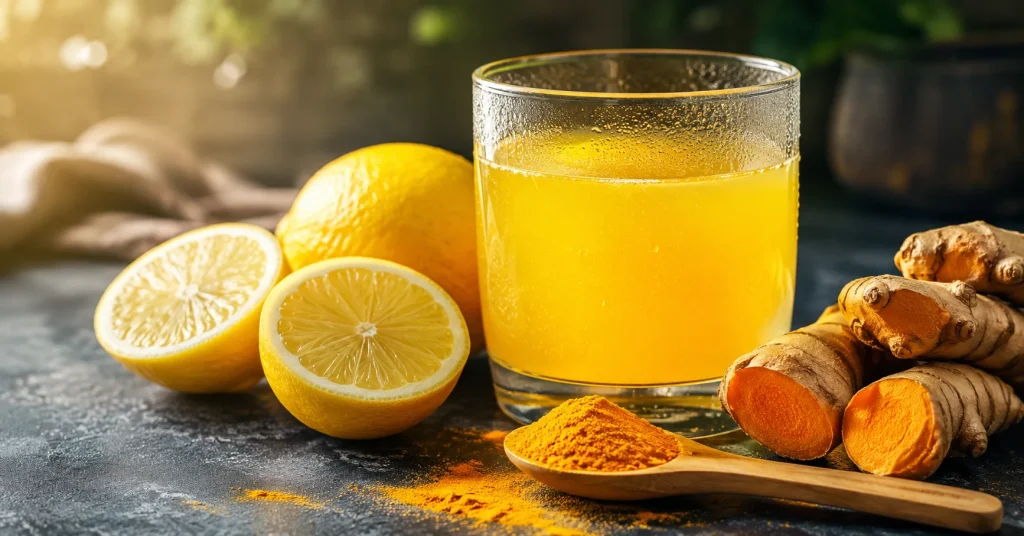
This golden drink may help you drink more water and adds flavour, vitamin C and turmeric compounds. However, it is not a detox cure—and daily use can irritate the stomach or teeth in some people.
Quick answer
If you drink lemon turmeric water daily, the most predictable effect is better fluid intake—provided you enjoy it and it replaces a sugary drink. Lemon contributes some vitamin C, while turmeric supplies curcumin and related compounds. Yet the small culinary amounts used in water have not been shown to “detox” the body, melt fat or prevent disease. Frequent acidic sipping can affect tooth enamel, and turmeric may cause reflux or digestive upset.
Lemon turmeric water has become a popular morning ritual. The recipe looks wholesome: water, fresh lemon juice and a pinch of bright yellow turmeric. Social posts often attach much bigger promises to it, from rapid weight loss to “liver cleansing.”
The ingredients are real foods, but that does not make every claim true. The effects depend on the amount used, your overall diet, how often you sip it and your health conditions. Here is what is realistic—and what is marketing.
What you may notice in the first few days
You may drink more fluid
Flavour can make plain water more appealing. If this drink encourages you to begin the day with a glass of fluid, hydration is its clearest benefit. That benefit comes mainly from the water, not a special reaction between lemon and turmeric.
If it replaces sweet tea, soda or a sugary café drink, it may also reduce added sugar and calories. If you add honey or sugar freely, that advantage becomes smaller.
Your stomach may feel different
Some people enjoy the warm, tart drink and feel comfortable after it. Others develop burning, nausea, reflux, loose stools or stomach discomfort. The National Center for Complementary and Integrative Health notes that oral turmeric can cause nausea, acid reflux, stomach upset, diarrhoea or constipation.
Do not interpret irritation as proof that the drink is “working.” A healthy routine should not require you to tolerate persistent pain or digestive symptoms.
Your urine may look more yellow
Turmeric pigments can stain cups, utensils and sometimes the mouth. A colour change alone does not show that toxins are leaving the body. Dark urine accompanied by fatigue, poor appetite, nausea or yellow skin needs medical attention, especially if you use concentrated turmeric or curcumin products.
What may happen after several weeks
A daily habit can be useful when it supports a healthier pattern. For example, preparing lemon turmeric water may act as a cue to eat breakfast, take a walk or choose water more often. Those surrounding behaviours may matter more than the drink itself.
There is not enough evidence to promise a specific long-term result from a home recipe. Most turmeric studies investigate measured extracts or supplements, not a pinch of kitchen turmeric mixed into lemon water. Results from concentrated products cannot be assumed to apply to this drink.
| Popular claim | What the evidence supports | Verdict |
|---|---|---|
| It improves hydration | The water hydrates. Flavour may help some people drink it consistently. | Realistic |
| It provides vitamin C | Lemon contains vitamin C, but the amount depends on how much juice you add. | Realistic |
| It reduces inflammation | Curcumin is being studied, but evidence is insufficient for broad health claims, especially for small food amounts in water. | Uncertain |
| It detoxes the liver | No good evidence shows this drink removes unspecified toxins. The liver and kidneys already process waste. | Unsupported |
| It causes weight loss | It may help only if it replaces a higher-calorie drink and supports a sustained energy deficit. | Indirect at best |
| It prevents illness | No beverage guarantees immunity or prevents disease. Overall diet, vaccination, sleep and medical care matter. | Unsupported |
Potential benefits of lemon turmeric water
1. A simple hydration routine
Keeping the recipe simple makes it a low-calorie alternative to many packaged drinks. Hydration supports normal body functions, but you do not need lemon or turmeric to make water effective.
2. A modest contribution of vitamin C
Vitamin C is essential for collagen production, antioxidant functions, immune function and absorption of non-heme iron. Citrus fruits are recognised food sources. However, a squeeze of lemon is only one part of daily intake. Peppers, kiwi, broccoli, strawberries and other fruits and vegetables can provide substantial amounts too.
3. Turmeric as a culinary ingredient
Turmeric contains curcumin and other compounds that researchers continue to study. Early findings are promising for limited outcomes, but NCCIH says there is not enough evidence to reach definitive conclusions for most health conditions. Culinary turmeric can still be part of a varied diet without being treated as medicine.
4. It may replace a less nutritious drink
This is the most practical route to benefit. Unsweetened lemon turmeric water may lower added-sugar intake when it replaces soda or a heavily sweetened beverage. It does not cancel the effects of the rest of the diet.
What lemon turmeric water does not reliably do
It does not “flush toxins”
“Detox” is often used without naming a toxin, dose or measurable outcome. Your liver, kidneys, lungs and digestive system continually manage normal waste. A beverage may support hydration, but it does not scrub organs clean.
It does not burn belly fat
No drink targets fat from one area. Body weight changes through longer-term patterns involving food intake, physical activity, sleep, medication, hormones and health conditions. Replacing a sugary drink can help reduce calories; adding lemon and turmeric does not independently melt fat.
It does not cure inflammation
Inflammation is a broad biological process, not one condition. Laboratory findings about curcumin do not prove that a home drink treats arthritis, digestive disease or another inflammatory condition. A diagnosis and appropriate care matter.
It does not “alkalise” your blood
The body tightly regulates blood pH. Foods can affect urine chemistry, but a lemon drink does not meaningfully reset blood pH in a healthy person. Claims that you need an alkaline drink to correct your blood usually oversimplify human physiology.
Possible side effects of drinking it daily
Tooth-enamel erosion
Lemon juice is acidic. The American Dental Association reports that frequent exposure to acidic foods and drinks is associated with erosive tooth wear. Risk depends on frequency and contact time, so sipping the drink slowly throughout the day can be harder on teeth than drinking one diluted serving.
- Dilute the lemon juice well.
- Do not swish or hold it around your teeth.
- Consider a straw positioned behind the front teeth.
- Rinse your mouth with plain water afterwards.
- Do not brush immediately after an acidic drink; the ADA recommends rinsing with water instead.
Reflux and digestive discomfort
The lemon’s acidity and turmeric may aggravate heartburn or a sensitive stomach. Reduce the amount, take it with food or stop if symptoms recur. Persistent reflux deserves professional assessment.
Turmeric-related safety concerns
Food-level turmeric differs from concentrated curcumin supplements. NCCIH reports that enhanced-bioavailability curcumin formulations have been linked with liver damage in some people. It also advises medicine users to discuss herbal products with a healthcare professional because harmful interactions can occur.
Ask a clinician before making it a daily habit if you take prescription medicine, use blood-thinning treatment, have gallstones or biliary disease, have liver disease, are pregnant or breastfeeding, or are preparing for surgery. Avoid treating this drink as a substitute for prescribed care.
A sensible lemon turmeric water recipe
Gentle daily version
- 250–300 ml warm or room-temperature water
- 1–2 teaspoons fresh lemon juice
- A small pinch to 1/8 teaspoon culinary turmeric powder
- Add the lemon juice and turmeric to water.
- Stir well. Turmeric does not fully dissolve, so stir again while drinking.
- Drink it with or after food if you have a sensitive stomach.
- Rinse your mouth with plain water afterwards.
Optional: Add ginger or a small amount of honey for taste. Honey adds sugar and calories. Black pepper can alter the absorption of some substances, so it is not essential and may be unsuitable with certain medicines.
Start with less, not more. A stronger yellow colour does not mean a stronger health benefit. Do not copy supplement-sized doses into a daily drink.
Is morning or empty stomach better?
There is no strong evidence that drinking it first thing in the morning or on an empty stomach unlocks special benefits. The best time is when it feels comfortable and fits your routine. If it triggers nausea or heartburn before breakfast, have it with food or choose plain water.
Should you drink lemon turmeric water every day?
It can be a pleasant daily drink for a healthy adult who tolerates it, uses a modest culinary amount and protects their teeth. It is optional, not essential.
Continue if it helps you drink water and you enjoy it without symptoms. Modify or stop if it causes reflux, stomach upset, dental sensitivity or other unwanted effects. Seek personalised advice if you use medicine or have a relevant health condition.
Bottom line: Treat lemon turmeric water as flavoured water—not a detox, medicine or shortcut. Its value comes from hydration, modest ingredients and the healthier choices it may replace.
Frequently asked questions
Can I drink lemon turmeric water daily?
Many healthy adults can tolerate a diluted drink made with a small culinary amount. Daily use is not suitable for everyone, especially people with reflux, dental erosion, biliary or liver conditions, pregnancy concerns, or possible medicine interactions.
Does lemon turmeric water detox the body?
No reliable evidence shows that it removes unspecified toxins. Water supports hydration, while the liver and kidneys perform the body’s normal waste-processing functions.
Can it reduce belly fat?
It does not target belly fat. It may indirectly support weight goals if an unsweetened serving replaces a higher-calorie drink, but overall diet and activity patterns determine the result.
Is it better on an empty stomach?
No clear evidence shows an empty-stomach advantage. People prone to nausea or reflux may tolerate it better with or after food.
How much turmeric should I add?
For a home drink, use a small culinary amount, such as a pinch to 1/8 teaspoon in a full glass of water. More is not automatically better. Supplements and concentrated extracts require separate safety consideration.
Can lemon water damage teeth?
Frequent acidic exposure can contribute to enamel erosion. Dilute it, avoid prolonged sipping or swishing, rinse with plain water and avoid brushing immediately afterwards.
Sources and further reading
- NCCIH: Turmeric—Usefulness and Safety
- NIH Office of Dietary Supplements: Vitamin C
- American Dental Association: Dental Erosion
- American Dental Association: Nutrition and Oral Health
Medical note: This article provides general education and does not replace diagnosis or advice from a qualified healthcare professional.

Fruit juice can provide fluid and nutrients, but it cannot whiten your natural skin tone or erase pigmentation. Here is a realistic guide to choosing juice while protecting your teeth, blood sugar and overall health.
Quick answer: fruit juices for glowing skin
The best fruit juices for glowing skin can contribute water, vitamin C and other plant nutrients, but no juice can safely whiten your natural skin colour. Orange, amla, pomegranate, watermelon and papaya drinks may complement a balanced diet. However, juice alone does not treat dark spots, melasma or acne marks. Whole fruit and daily sun protection are more important.
Searches for the “best fruit juice for skin whitening” often lead to dramatic promises. A glass of orange or pomegranate juice may be nutritious, but it cannot switch off melanin production or produce a guaranteed lighter complexion in a few weeks.
A better goal is healthy-looking, well-supported skin. Nutrition can contribute to normal collagen production, hydration and antioxidant intake. However, skin appearance also reflects genetics, sun exposure, sleep, stress, hormones, medical conditions and skincare.
Can fruit juice whiten your skin?
No good evidence shows that drinking a particular juice changes a person’s natural skin tone. Melanin is the pigment that gives skin, hair and eyes their colour. Its production is influenced by genetics, hormones, inflammation and ultraviolet exposure—not by a single morning drink.
People sometimes use “whitening” when they actually mean reducing dullness or improving uneven pigmentation. These are different goals. Hydration and nutrient intake may help skin look healthier, but dark spots or melasma need appropriate assessment and care.
Important distinction: Supporting healthy skin is not the same as bleaching skin. The World Health Organization warns that some skin-lightening products contain hazardous mercury. Avoid unregulated products and seek dermatological advice for pigmentation concerns.
How fruit juices for glowing skin support nutrition
Vitamin C and normal collagen production
Vitamin C is required for collagen synthesis and also functions as an antioxidant. Citrus fruits, peppers, kiwi, strawberries and broccoli are recognised food sources. Juice can contribute vitamin C, but more juice is not automatically better.
Fluid intake
Juice contains water and can contribute to total fluid intake. Still, plain water is usually a better everyday hydration choice because it contains no free sugars and does not expose teeth to fruit acids.
A varied dietary pattern
Skin cannot be nourished by one “beauty drink.” A varied diet supplies protein, essential fats, vitamins and minerals. Whole fruits, vegetables, pulses, nuts, seeds, dairy or suitable alternatives, eggs, fish and other protein sources can all play a role according to your dietary preferences.
Six best fruit juices for glowing skin nutrition
These fruit juices for glowing skin are not ranked as treatments. Instead, they are examples of nutrient-containing drinks that can fit into a balanced diet in modest portions.
Orange juice
Orange juice supplies vitamin C. Choose unsweetened juice, keep the serving small and drink it with a meal rather than sipping it throughout the day.
Amla drink
Amla is naturally tart and contains vitamin C. Commercial amla drinks may contain added sugar, salt or concentrated ingredients, so check the label and dilute when appropriate.
Pomegranate juice
Pomegranate contains polyphenols and other plant compounds. That does not make its juice a proven treatment for pigmentation or skin disease.
Watermelon blend
Watermelon has a high water content and can make a refreshing unsweetened blend. Eating the fruit preserves more of its natural structure and fibre.
Papaya smoothie
Papaya provides vitamin C and carotenoid compounds. Blend the edible fruit rather than straining it if you want to retain more fibre.
Tomato juice
Tomatoes contain vitamin C and lycopene. Choose a low-salt version and do not treat it as a replacement for sunscreen.
What each drink can and cannot do
| Drink | Realistic contribution | Claim to avoid |
|---|---|---|
| Orange | Vitamin C and fluid | “Erases dark spots” |
| Amla | Vitamin C and tart flavour | “Permanently whitens skin” |
| Pomegranate | Plant compounds and fluid | “Fights pigmentation from within” |
| Watermelon | Water and food nutrients | “Deeply hydrates skin cells” |
| Papaya | Vitamin C and carotenoids | “Exfoliates skin when you drink it” |
| Tomato | Vitamin C and lycopene | “Replaces sun protection” |
Whole fruit or fruit juice: which is better?
Whole fruit is usually the stronger everyday choice because it retains fibre and requires chewing. Juice is easier to consume quickly, so portions can become large without feeling filling.
The NHS advises limiting the combined total of fruit juice and smoothies to 150 ml a day. Juicing releases sugars from the fruit’s cellular structure. Even unsweetened juice is sugary and frequent exposure can contribute to tooth decay.
- Choose whole fruit most often.
- Keep juice to one small glass.
- Drink it with a meal.
- Avoid added sugar, syrup and excessive honey.
- Do not sip acidic juice over several hours.
- Rinse your mouth with plain water afterwards.
Can juice remove dark spots, acne marks or melasma?
Diet alone is not a recognised treatment for hyperpigmentation. Dark patches can follow acne, irritation, sun exposure, hormonal changes or another skin condition. The right approach depends on the cause.
The American Academy of Dermatology explains that effective dark-spot care begins with sun protection. It recommends broad-spectrum, water-resistant SPF 30 or higher. Tinted sunscreen containing iron oxide can also help protect darker skin tones from visible light, which may worsen dark spots.
See a dermatologist when pigmentation is new, rapidly changing, widespread, itchy, painful or persistent. Professional evaluation can distinguish melasma and post-inflammatory hyperpigmentation from other conditions.
How to drink fruit juices for glowing skin safely
- Keep the portion modest: Use approximately 150 ml or less.
- Skip added sweeteners: The fruit already contributes sugar.
- Have it with food: This is kinder to teeth than prolonged sipping and may fit better into a balanced meal.
- Rotate foods: Do not rely on the same juice for all nutrients.
- Watch symptoms: Citrus and acidic drinks may worsen reflux or mouth sensitivity.
- Consider personal needs: People managing diabetes, kidney disease, medicine interactions or digestive conditions should seek individual guidance.
Small papaya-orange smoothie
- ½ cup ripe papaya
- ¼ cup peeled orange segments
- ¼ cup plain water
- Optional: a small piece of fresh ginger
- Blend until smooth without straining.
- Serve a small portion with breakfast.
- Do not add sugar or honey unless specifically needed.
Why this version? It retains more fruit pulp than clear juice. It is still not a skin treatment, and portion size matters.
Common mistakes to avoid
Promising results in four to eight weeks
No responsible source can guarantee that a juice will lighten skin or remove marks within a fixed timeframe.
Drinking juice on an empty stomach
There is no proven skin advantage. People with acidity or reflux may feel worse when drinking tart juice without food.
Applying lemon juice directly to skin
Do not turn a nutrition article into a topical DIY recommendation. Lemon juice may irritate skin, and citrus exposure combined with sunlight can cause reactions in some people.
Replacing meals with “beauty juice”
Juice lacks the balanced protein, fat, fibre and energy that a complete meal can provide. Repeated meal replacement may reduce rather than improve nutritional quality.
The bottom line
There is no best fruit juice for skin whitening because juice cannot safely change your natural skin tone. When people search for fruit juices for glowing skin, the realistic goal should be better overall nutrition—not a lighter complexion. A small unsweetened serving can contribute fluid and nutrients, particularly vitamin C, but whole fruit is generally the better everyday choice.
For healthier-looking skin, focus on a varied diet, adequate sleep, appropriate hydration and consistent sun protection. Seek dermatological advice for persistent pigmentation instead of relying on a drink.
Practical takeaway: Choose one small serving with a meal, avoid added sugar and measure success by overall nutrition—not by promises of lighter skin.
Frequently asked questions
Which fruit juice is best for glowing skin?
No single juice is best. A small unsweetened serving of orange, amla, pomegranate or a pulpy fruit blend can contribute nutrients. A varied diet and whole fruit matter more.
Can orange juice remove dark spots?
Orange juice provides vitamin C but is not a treatment for dark spots. Sun protection and cause-specific dermatological treatment are more relevant.
Can fruit juice whiten natural skin colour?
No reliable evidence shows that fruit juice safely changes natural skin colour. Avoid products or content promising permanent whitening.
How much fruit juice can I drink daily?
A practical upper limit is one small 150 ml serving of juice and smoothies combined, preferably with a meal.
Is whole fruit better than juice?
Usually, yes. Whole fruit retains fibre and is more filling. Juice is easier to overconsume and exposes teeth to free sugars and acids.
Should I drink juice on an empty stomach?
There is no proven skin benefit. Drink it with a meal if that feels more comfortable, especially if you experience reflux or acidity.
Sources and further reading
- American Academy of Dermatology: How to fade dark spots
- NHS: Fruit juice portions and free sugars
- NIH Office of Dietary Supplements: Vitamin C
- WHO: Mercury in skin-lightening products
Medical note: This article provides general nutrition information and does not replace advice from a dermatologist, doctor or registered dietitian.

Samay Raina net worth figures circulating online are estimates, not audited disclosures. This guide separates public career facts from modeled income, property speculation and unsupported asset claims.
Quick answer: What is Samay Raina’s net worth in 2026?
Samay Raina has not publicly confirmed his net worth. Recent media reports place the estimate broadly around ₹140 crore to ₹215 crore, but the figures are derived from third-party analytics and assumptions—not audited financial statements. His visible earning channels include YouTube, live comedy, sponsorships, memberships and creator-led entertainment.
not officially verified
The phrase “Samay Raina net worth” attracts confident answers, but personal wealth is not the same as views, gross ticket sales or estimated creator revenue. Raina has not published a balance sheet showing cash, investments, property, business interests, debts and taxes.
The honest answer is therefore a range with a warning. NDTV reported estimates reaching approximately ₹215 crore, while Outlook Luxe cited a base estimate near ₹150 crore and a possible upper range of ₹215 crore. These reports provide context, not proof of his actual wealth.
Our methodology: We label a fact “confirmed” only when it is visible through an official channel, event listing or direct public record. Media calculations are labelled “estimated.” Property prices, monthly income and asset lists without reliable documentation are labelled “unverified.”
Samay Raina net worth estimate: what is actually known?
| Claim | What can be supported | Status |
|---|---|---|
| Exact net worth | No audited or personal disclosure located | Unverified |
| ₹140–215 crore range | Reported by media using third-party estimates | Estimated |
| YouTube channel | Official public channel with a large audience | Confirmed |
| International live shows | Venue and ticket listings document performances | Confirmed |
| Monthly personal income | No reliable public disclosure | Unverified |
| Mumbai residence | Publicly shown; ownership and value not established | Partly known |
Net-worth websites often multiply estimated YouTube revenue and add assumed property or sponsorship values. That approach can miss production costs, agency commissions, venue shares, staff salaries, taxes, loans and private investments.
How does Samay Raina make money?
YouTube advertising
Videos and livestreams can generate advertising revenue. The exact amount depends on monetised views, geography, content type and advertiser demand.
Stand-up comedy tours
Ticketed shows create gross revenue, but venues, ticketing platforms, production, travel, taxes and team costs must be paid before profit is known.
Sponsorships
Creators may be paid for integrations and campaigns. Raina’s individual contracts and fees are private, so specific deal values should not be invented.
Memberships and live support
Channel memberships, Super Chats and similar tools can produce recurring revenue, subject to platform fees, taxes and audience activity.
Chess collaborations
Chess entertainment expanded his audience and created opportunities for streams, partnerships, appearances and sponsored events.
Creator-led entertainment
Comedy specials and digital formats can generate attention and commercial opportunities, although project-level profit is not public.
Raina’s official YouTube channel and verified venue listings confirm a significant public audience and active comedy business. They do not reveal his take-home earnings. For example, Madison Square Garden listed his February 2026 “Still Alive” event, confirming the performance but not the artist’s final financial share.
Samay Raina YouTube income: why estimates vary
YouTube earnings cannot be calculated accurately from public view counts alone. Not every view is monetised, and revenue per thousand views changes by audience location, video format, season, advertiser demand and rights status.
Third-party dashboards often publish extremely wide ranges because they do not know the channel’s real advertising rates, platform deductions or expenses. They may also mix Shorts and long-form views, even though monetisation patterns differ.
Therefore, a public YouTube estimate should be described as modeled gross revenue—not verified income and certainly not net worth.
Samay Raina net worth per month: can income be calculated?
No reliable public figure establishes Samay Raina’s monthly personal income in 2026. Creator revenue is irregular. A month containing a major tour, sponsored campaign or viral upload can look very different from a quieter production month.
Gross receipts are also not salary. A responsible calculation would require:
- Platform statements and actual monetised views
- Tour contracts, ticket allocations and venue splits
- Sponsorship invoices and agency commissions
- Production, travel, staffing and legal costs
- Business and personal taxes
- Investment income, liabilities and ownership details
Because these records are private, claims of a precise monthly amount should be treated cautiously.
Samay Raina house price and property
Samay Raina has publicly appeared in a tour of a Mumbai duplex-style residence with a terrace and sea view. This supports descriptions of the visible home, but it does not prove the purchase price, present market value, ownership structure or outstanding loan.
NDTV’s coverage discusses the home’s design, rooms, terrace and personal objects. It does not provide a verified property valuation. As a result, claims that the residence is worth a particular number of crores should remain labelled as speculation unless backed by property documents or a direct disclosure.
Privacy note: This article does not publish a private address or speculate about precise location. Public-interest reporting about a celebrity’s career does not justify exposing residential details.
Samay Raina assets: cars, investments and businesses
Online articles frequently list luxury cars, investments and property without linking to an original source. Appearance in a vehicle, house tour or promotional video does not automatically prove ownership.
| Asset category | Responsible conclusion |
|---|---|
| Residence | A Mumbai home has been publicly shown; exact ownership and value remain private. |
| Cars | Do not publish a collection or price without traceable evidence of ownership. |
| Investments | No verified public portfolio or company valuation is available. |
| Production rights | Digital projects may have commercial value, but ownership and valuation are not publicly documented. |
| Cash and savings | Private and not independently verifiable. |
Why Samay Raina net worth figures differ online
- Revenue gets confused with wealth. A successful show can generate high sales without producing equal personal profit.
- View-based calculators use assumptions. Actual advertising rates and monetised views are private.
- Sponsorship fees are confidential. Reported creator rates may not reflect real contracts.
- Property claims are often copied. Repetition across websites does not turn an unsourced valuation into fact.
- Expenses and liabilities are ignored. Tours and productions require significant spending.
- Old numbers remain online. Estimates from different dates are compared as though they describe the same financial moment.
Career facts that explain the estimate
Raina’s public career combines stand-up comedy, online video and chess entertainment. His official channel documents the scale of his digital work, while event listings confirm major live performances. His 2026 “Still Alive” special also illustrates how he can release long-form work directly to a large audience.
These milestones reasonably suggest multiple revenue channels and significant brand value. They do not allow outsiders to calculate his personal net worth with precision.
Final verdict on Samay Raina net worth in 2026
The most defensible answer is that Samay Raina’s net worth is not officially known. Media estimates broadly place it between ₹140 crore and ₹215 crore, but readers should not interpret that range as audited fact.
His public career supports the existence of several earning channels: YouTube, live comedy, sponsorships, memberships, chess collaborations and creator-led projects. Exact monthly income, property value, car ownership, investments and liabilities remain private.
Bottom line: Use ₹140–215 crore only as a media-reported estimate. The verified story is the scale and diversity of his creator business—not an exact personal fortune.
Frequently asked questions
What is Samay Raina’s net worth in rupees in 2026?
Recent media estimates broadly range from ₹140 crore to ₹215 crore. Samay Raina has not publicly confirmed this figure, and no audited financial disclosure is available.
Is Samay Raina’s net worth officially confirmed?
No. Published figures come from media reports and third-party analytics rather than a personal financial statement.
How much does Samay Raina earn per month?
There is no verified monthly-income figure. Revenue varies across videos, tours, sponsorships, memberships and projects, while expenses and taxes are private.
What is the price of Samay Raina’s house?
A Mumbai residence has been shown publicly, but its purchase price, current value and ownership details have not been reliably confirmed.
What property does Samay Raina own?
Public coverage shows a Mumbai home, but reliable documentation of his complete property holdings is not available.
How does Samay Raina make money?
His visible income channels likely include YouTube advertising, live comedy, brand partnerships, memberships, audience support and creator-led entertainment.
Does Samay Raina earn money from YouTube?
His official channel is eligible for common creator monetisation opportunities, but actual advertising, membership and livestream earnings are private.
What are Samay Raina’s known assets?
No complete verified asset list exists. A residence has been publicly featured, but precise property value, vehicles, investments and liabilities remain unconfirmed.
Sources and transparency
- NDTV: Reported Samay Raina net-worth estimate
- Outlook Luxe: Net-worth range and income discussion
- Samay Raina’s official YouTube channel
- Madison Square Garden: 2026 event listing
- NDTV: Publicly featured Mumbai home
- YouTube: Partner Program overview
Editorial note: Net-worth reporting is inherently approximate when a person has not disclosed audited finances. Figures were checked on 10 July 2026 and are clearly separated from confirmed public facts.

Researchers connect several ginger health benefits with natural compounds such as gingerol and shogaol. Human studies support a few uses, particularly some forms of nausea and menstrual pain. However, many popular claims remain uncertain.
Quick answer: What are the main ginger health benefits?
Research suggests ginger may help reduce pregnancy-related nausea, ease the severity of menstrual cramps and modestly improve some knee osteoarthritis symptoms. Evidence for motion sickness, post-surgery nausea, chemotherapy-related nausea, weight loss and disease prevention is less certain. Ginger can also cause heartburn, abdominal discomfort or diarrhoea and may interact with medicines.
Ginger is the underground stem, or rhizome, of Zingiber officinale. People use it fresh, dried, powdered, pickled and in concentrated supplements. Several bioactive compounds create its sharp aroma and warming taste.
Not every ginger product is equivalent. A slice in food or tea differs from a standardised extract used in a clinical trial. Therefore, readers should not automatically apply supplement-study findings to a cup of ginger water.
How to read this guide: “May help” means human evidence suggests a possible benefit. It does not mean ginger cures the condition, works for everyone or should replace appropriate medical care.
What is gingerol?
Gingerol is a family of pungent compounds found prominently in fresh ginger. Researchers have studied 6-gingerol most often. Drying or heating converts some gingerols into related compounds called shogaols. Ginger also contains paradols, zingerone and aromatic oils.
Laboratory research shows that these compounds can influence antioxidant and inflammatory pathways. These observations help scientists form hypotheses, but activity in cells or animals does not prove a clinical benefit in people.
Gingerol benefits: what the science can support
Discussions of gingerol benefits often blend laboratory mechanisms with clinical outcomes. Human trials usually test whole ginger powder or extracts containing several compounds, not isolated gingerol alone. It is therefore more accurate to discuss the health effects of studied ginger preparations while explaining gingerol’s possible role.
| Claim | Evidence summary | Confidence |
|---|---|---|
| Pregnancy-related nausea | Research suggests ginger may help some people; professional guidance remains important. | Promising |
| Menstrual cramps | Supplements might reduce pain severity, although formulations and studies vary. | Promising |
| Knee osteoarthritis | Some symptom improvement is possible, but much of the research is low quality. | Limited |
| Motion sickness | Most studies have not shown a reliable benefit. | Not supported |
| Chemotherapy nausea | It is uncertain whether ginger adds meaningful benefit to standard treatment. | Uncertain |
| Weight loss | Research does not justify treating ginger as a stand-alone weight-loss solution. | Uncertain |
Ginger health benefits supported by human research
Pregnancy-related nausea
NCCIH reports that ginger may help nausea and vomiting associated with pregnancy. Pregnant people should still discuss supplements with their healthcare professional.
Menstrual cramps
Research suggests ginger supplements might reduce cramp severity. It should not delay evaluation of severe, new or disabling pelvic pain.
Knee osteoarthritis symptoms
Oral supplements might provide modest symptom relief for some people. Study quality is inconsistent, and topical ginger has not shown the same evidence.
Flavour without much sodium
Fresh ginger adds strong flavour to soups, vegetables, tea and marinades. This culinary benefit can make balanced meals more appealing without promising a medical effect.
Ginger for nausea and vomiting
Nausea has many causes, so researchers assess each condition separately. Ginger may help pregnancy-related nausea. Most studies have not found it reliably helpful for motion sickness. Evidence remains uncertain for nausea after surgery or during chemotherapy.
People receiving chemotherapy or preparing for an operation should speak to their clinical team before adding concentrated supplements. They should continue standard anti-nausea treatment unless their clinician recommends a change.
Ginger for menstrual cramps
Systematic reviews suggest oral ginger preparations may reduce pain in primary dysmenorrhea. Still, products, amounts and study methods differ. Seek assessment if pain becomes severe, suddenly worsens, causes fainting, occurs between periods or accompanies unusually heavy bleeding.
Ginger for knee osteoarthritis
Some studies report improvements in knee pain or function with oral ginger supplements, but NCCIH notes that much of this research is poor quality. Consider ginger only as a possible complementary option. Do not use it to replace exercise therapy, weight management when relevant, medication or clinical care.
Gingerol benefits: laboratory findings versus human evidence
Researchers often explain potential gingerol health benefits through antioxidant and anti-inflammatory mechanisms. In experiments, gingerol and related compounds can affect signalling molecules involved in oxidative stress and inflammation.
However, a compound can behave differently after digestion, absorption and metabolism. The concentration used in a laboratory dish may not be achievable through food. Human outcomes depend on the preparation, dose, health condition and study quality.
Therefore, well-designed human trials must establish the most credible gingerol benefits. Laboratory antioxidant activity alone cannot prove a meaningful result in people.
For this reason, writers should not turn “contains antioxidants” into “prevents cancer,” “detoxes the liver” or “cures inflammation.” Those conclusions go beyond the evidence.
Popular ginger claims that need more evidence
Weight loss and metabolism
Some trials have studied ginger in metabolic health, but results do not establish it as a reliable fat-burning treatment. A ginger drink may be useful when it replaces a sugary beverage, yet the calorie difference—not a detox effect—is the practical mechanism.
Immunity
Ginger contains biologically active compounds, but no food guarantees protection from infections. Vaccination, sleep, adequate nutrition, hygiene and appropriate medical care remain more important.
Cancer prevention or treatment
Laboratory studies of gingerol do not show that eating ginger prevents or treats cancer in humans. People undergoing cancer treatment should discuss supplements with their oncology team.
Digestive “detox”
Traditional practices use ginger for digestive discomfort, but vague detox claims do not describe measurable medical outcomes. Ginger may also worsen heartburn or irritate the digestive tract in some people.
Ginger health benefits by form: fresh, dried or supplements
| Form | Typical use | What to remember |
|---|---|---|
| Fresh ginger | Cooking, tea, soups and marinades | Provides gingerols in a food-level preparation. |
| Dried ginger | Spice blends, baking and tea | Drying changes the relative amounts of gingerols and shogaols. |
| Ginger tea | Flavoured beverage | Strength varies and should not be equated with a clinical-trial extract. |
| Powder or capsules | Concentrated supplement use | Check the label; products and doses are not interchangeable. |
| Standardised extract | Research or supplement products | May contain a controlled concentration not achievable in food. |
There is no single universally appropriate ginger dose for every purpose. Trial amounts vary, and stronger products can increase side effects. Use the product label and seek professional advice for therapeutic supplement use.
How to get ginger health benefits through your diet
You do not need a concentrated supplement to include ginger in a balanced routine. Many people can explore ginger health benefits through modest culinary amounts while avoiding the stronger exposure and greater uncertainty associated with high-dose products.
- Grate fresh ginger into lentils, vegetables or soup.
- Add thin slices to hot water for a mild unsweetened drink.
- Use ginger with garlic and spices in marinades.
- Stir a small amount into oatmeal or a smoothie.
- Choose unsweetened ginger tea instead of sugary packaged drinks.
- Avoid assuming that a stronger or more pungent serving is healthier.
Simple ginger tea
- 250 ml water
- 2–3 thin slices of fresh ginger
- Optional: lemon wedge for flavour
- Bring the water to a gentle boil.
- Add the ginger and simmer for 5–8 minutes.
- Strain and allow it to cool to a comfortable temperature.
Note: This is a culinary drink, not a standardised treatment dose. Lemon may aggravate reflux, and honey adds sugar.
Ginger side effects and safety
Many oral research studies have used ginger without serious problems, but “natural” does not mean risk-free. NCCIH lists possible effects including:
- Abdominal discomfort
- Heartburn
- Diarrhoea
- Mouth or throat irritation
Stop or reduce use if symptoms repeatedly follow ginger. Seek urgent medical help for signs of a serious allergic reaction, such as breathing difficulty or swelling.
Medicine interaction warning: If you take prescription medicine, use multiple supplements, are preparing for surgery, are pregnant or breastfeeding, or have a significant medical condition, consult a qualified healthcare professional before using concentrated ginger products.
Who should ask a healthcare professional first?
- People who take medicines that could interact with herbal products
- Anyone considering high-dose or concentrated ginger supplements
- Pregnant people using ginger specifically for nausea
- People who are breastfeeding, because safety data are limited
- People preparing for surgery or a medical procedure
- Anyone with persistent nausea, pain, bleeding or unexplained digestive symptoms
Persistent symptoms deserve evaluation. Nausea can signal pregnancy, infection, migraine, medication effects or another condition. Joint pain and menstrual pain also have many possible causes.
Ginger health benefits: the final evidence-based verdict
The best-supported ginger health benefits relate to pregnancy-associated nausea, menstrual cramps and possibly knee osteoarthritis symptoms. Evidence quality and product forms vary, so no result comes with a guarantee.
Gingerol helps explain some of ginger’s biological activity, but laboratory mechanisms do not prove that ginger treats disease. Culinary ginger can be a flavourful part of a varied diet. Concentrated supplements deserve more caution.
Practical takeaway: Use ginger as food first. Treat supplements as active products, check for interactions and do not replace prescribed care with a home remedy.
Frequently asked questions
What are the main ginger health benefits?
Human research suggests ginger may help pregnancy-related nausea, menstrual-cramp severity and some knee osteoarthritis symptoms. Evidence for many other claims is uncertain.
What is gingerol?
Gingerol is a group of pungent compounds found mainly in fresh ginger. 6-Gingerol is the most studied. Heating and drying can convert some gingerols into related shogaols.
What are gingerol benefits?
Gingerol shows antioxidant and inflammation-related activity in laboratory research. Most human studies test whole ginger preparations, so researchers cannot always separate isolated gingerol benefits from the effects of other compounds.
Can ginger help with nausea?
It may help pregnancy-associated nausea. Evidence for motion sickness, chemotherapy-related nausea and post-surgery nausea is less convincing or uncertain.
Can I consume ginger every day?
Many people tolerate culinary amounts. Daily concentrated supplements are different and may cause heartburn, diarrhoea or interactions. Ask a professional if you take medicine or have a health condition.
Is fresh ginger better than ginger powder?
They contain different proportions of gingerols and shogaols. Neither is universally better; the appropriate form depends on the recipe or studied use.
Does ginger burn belly fat?
Ginger is not a proven stand-alone fat-burning treatment. Weight change depends on longer-term diet, activity, sleep, health and medication factors.
Who should avoid ginger supplements?
People taking medicine, preparing for surgery, pregnant or breastfeeding, or managing significant health conditions should seek personalised guidance before using concentrated products.
Sources and further reading
- NCCIH: Ginger—Usefulness and Safety
- Nutrients: Therapeutic health effects of ginger
- Critical review of ginger antioxidant and anti-inflammatory evidence
- NIH Office of Dietary Supplements: Botanical resources
Medical note: This article provides general education and does not replace diagnosis, treatment or advice from a qualified healthcare professional.