July 28, 2026
Home » Lifestyle

Lifestyle

Discover practical lifestyle ideas for a more organised, productive and enjoyable life. Explore home tips, beauty, hair care, work habits and simple solutions for everyday living.


Healthy relationships are built through trust, communication, respect, emotional support, and shared growth. Learn practical relationship tips that strengthen emotional connection, resolve conflicts, and help couples build long-lasting, meaningful partnerships.

Quick Answer

Healthy relationships are based on mutual respect, trust, honest communication, emotional support, healthy boundaries, and shared commitment. Strong relationships are not perfect—they grow stronger when partners communicate openly, solve problems together, and continue supporting each other’s personal growth.

Key Takeaway: Healthy relationships require daily effort rather than occasional grand gestures. Small acts of kindness, honest conversations, appreciation, and respect create lasting emotional bonds.

What Is a Healthy Relationship?

A healthy relationship is one where both partners feel respected, emotionally safe, appreciated, and supported. Instead of trying to control each other, healthy couples encourage personal growth while building a strong partnership based on trust and understanding.

Healthy relationships exist between romantic partners, spouses, family members, friends, and colleagues. Although every relationship is unique, the strongest ones often share similar characteristics including honesty, empathy, communication, reliability, and mutual respect.

Why Healthy Relationships Matter

Better Mental Health

Supportive relationships help reduce stress, improve emotional resilience, and provide comfort during difficult times.

Improved Physical Health

Positive social connections are associated with healthier lifestyle habits, better sleep, and improved overall well-being.

Higher Happiness

Feeling valued and emotionally connected contributes to greater life satisfaction and long-term happiness.

Personal Growth

Healthy partners motivate one another to learn, improve, and achieve personal and shared goals.

Top Qualities of a Healthy Relationship

Trust

Trust develops through honesty, consistency, reliability, and keeping promises over time.

Respect

Healthy couples respect each other’s opinions, feelings, boundaries, and personal values even during disagreements.

Communication

Open conversations help partners understand each other’s emotions, expectations, and concerns before problems become larger.

Emotional Support

Being available during both successes and challenges strengthens emotional security and trust.

15 Healthy Relationship Tips for a Stronger Bond

Healthy relationships are built through everyday habits rather than occasional romantic gestures. The following practical tips can help couples strengthen trust, improve communication, and create a lasting emotional connection.

1. Communicate Honestly

Talk openly about your feelings, expectations, and concerns. Honest conversations reduce misunderstandings and strengthen emotional intimacy.

2. Listen Without Interrupting

Active listening helps your partner feel respected and understood. Focus on understanding before responding.

3. Build Trust Daily

Trust grows through honesty, consistency, reliability, and following through on commitments.

4. Respect Personal Boundaries

Every healthy relationship includes individual space, privacy, personal interests, and independence.

5. Spend Quality Time Together

Even simple activities like cooking, walking, or enjoying meals together strengthen emotional connection.

6. Express Appreciation

Small words like “thank you” and “I appreciate you” help partners feel valued and respected.

7. Support Personal Goals

Encourage each other’s education, career growth, hobbies, and personal achievements.

8. Solve Problems Together

View challenges as shared problems instead of blaming each other.

9. Learn to Compromise

Healthy compromise allows both partners to feel heard while finding practical solutions.

10. Handle Conflict Respectfully

Disagreements are normal. Avoid insults, shouting, sarcasm, or bringing up unrelated past mistakes.

11. Celebrate Small Wins

Recognize birthdays, achievements, promotions, and personal milestones together.

12. Practice Forgiveness

Forgiveness helps relationships move forward after honest accountability and meaningful change.

13. Maintain Emotional Intimacy

Share your thoughts, dreams, fears, and experiences regularly to deepen your emotional bond.

14. Continue Growing Together

Learn new skills, travel, read books, or set shared goals to keep the relationship engaging.

15. Never Stop Showing Kindness

Simple daily acts of kindness often have the greatest long-term impact on relationship satisfaction.

How to Improve Communication in a Relationship

Strong communication creates emotional safety and reduces unnecessary conflict. Couples who communicate openly are generally better equipped to solve problems together.

Communication Tip: Use “I” statements instead of blaming language. For example, say “I feel hurt when…” rather than “You always…” to encourage constructive conversations.
Healthy CommunicationUnhealthy Communication
Listening activelyInterrupting frequently
Speaking calmlyShouting or insulting
Showing empathyDismissing emotions
Finding solutions togetherTrying to “win” arguments
Being honestKeeping secrets or avoiding discussions

Why Healthy Boundaries Matter

Boundaries help maintain respect, independence, and emotional well-being. Setting healthy boundaries is not about creating distance—it is about building mutual understanding and preventing resentment.

Emotional Boundaries

Respect each other’s feelings without expecting one partner to solve every emotional challenge.

Time Boundaries

Balance quality time together with personal interests, friendships, and self-care.

Digital Boundaries

Respect privacy regarding phones, passwords, and online communication unless both partners agree otherwise.

Financial Boundaries

Discuss spending habits, savings goals, and financial expectations honestly.

Green Flags vs Red Flags in Relationships

Green FlagsRed Flags
Mutual respectControlling behavior
Open communicationConstant lying
Emotional supportManipulation
Healthy independenceExtreme jealousy
Trust and honestyVerbal or physical abuse
Shared decision-makingIgnoring personal boundaries
Remember: Every relationship experiences disagreements. However, ongoing abuse, intimidation, manipulation, or controlling behavior are not normal or healthy and should be addressed appropriately.

Common Relationship Mistakes to Avoid

Even strong relationships experience challenges. Recognizing unhealthy patterns early allows couples to improve communication and strengthen their connection before small issues become major conflicts.

Poor Communication

Avoiding difficult conversations often creates misunderstandings and emotional distance.

Taking Each Other for Granted

Express appreciation regularly instead of assuming your partner already knows how you feel.

Trying to Change Your Partner

Healthy relationships encourage growth without forcing someone to become a different person.

Ignoring Small Problems

Address concerns respectfully before they develop into long-term resentment.

Healthy Tips for Long-Distance Relationships

Long-distance relationships require additional planning and intentional communication. Trust and consistency become even more important when partners live apart.

Stay Connected

Schedule regular calls or video chats that work for both partners.

Be Honest

Share your feelings openly instead of hiding frustrations or worries.

Create Shared Goals

Discuss future plans and celebrate milestones together.

Build Trust

Consistency, honesty, and reliability help maintain emotional security over distance.

Daily Habits That Strengthen Relationships

Relationship Success Checklist

  1. Say “thank you” every day.
  2. Give your full attention during conversations.
  3. Spend quality time together without distractions.
  4. Respect personal space and independence.
  5. Resolve disagreements calmly.
  6. Celebrate each other’s achievements.
  7. Practice empathy before reacting.
  8. Laugh together often.
  9. Support each other’s goals.
  10. End the day with appreciation and kindness.

Healthy Relationship Myths vs Facts

Myth: Perfect couples never argue.

Fact: Healthy couples disagree, but they resolve conflicts respectfully.

Myth: Love alone solves every problem.

Fact: Strong relationships also require communication, trust, patience, and commitment.

Myth: Jealousy proves love.

Fact: Excessive jealousy often reflects insecurity rather than healthy affection.

Myth: Your partner should know what you’re thinking.

Fact: Honest communication is essential because no one can read minds.

Frequently Asked Questions

What makes a healthy relationship?

Mutual trust, honest communication, respect, emotional support, shared values, and healthy boundaries are key characteristics of healthy relationships.

How can couples improve communication?

Practice active listening, speak honestly, avoid blame, stay calm during disagreements, and focus on solving problems together.

Why is trust important in a relationship?

Trust creates emotional security and allows both partners to feel safe, respected, and confident in the relationship.

How do you maintain a long-term relationship?

Prioritize communication, appreciation, quality time, shared goals, and mutual respect while continuing to grow individually and together.

Can unhealthy relationships become healthy?

Some relationships improve through honest communication, accountability, and professional counseling. However, abusive or unsafe relationships require specialized support and safety planning.

Build a Stronger Relationship Every Day

Healthy relationships grow through trust, kindness, respect, and consistent communication. Small positive actions repeated every day often have the greatest impact over time.

Read Our Trust Building Guide

Sources & Further Reading

Disclaimer: This article is for educational purposes only and does not replace professional mental health, relationship, or medical advice.


Soft living is a rejection of needless struggle—not a promise of a stress-free life. It means designing more rest, choice, boundaries and ordinary pleasure within your actual responsibilities and resources.

Quick answer: What is a soft living lifestyle?

Soft living is an intentional approach that prioritises peace, rest, comfort, boundaries and meaningful enjoyment instead of treating constant hardship as proof of worth. In practice, it may mean simplifying routines, reducing unnecessary pressure, asking for help and protecting recovery. It is not the absence of work, responsibility, ambition or difficult emotion.

What does “soft life” mean?

The phrase is now used for a life with less avoidable stress and more ease. Online, it can appear as expensive travel, beautiful homes and spa days. But the underlying idea is broader: you do not need to glorify exhaustion, perform strength at all times or earn every moment of rest through suffering.

The trend gained mainstream visibility through Nigerian and broader Black social-media communities, particularly among women rejecting “struggle culture” and expectations of endless resilience. As the phrase spread, its social context was often reduced to a luxury aesthetic. A respectful interpretation remembers both its cultural roots and its focus on agency.

What soft living is—and is not

Soft living can beSoft living is not automatically
Reducing avoidable pressureA completely stress-free existence
Resting before total exhaustionIgnoring every responsibility
Setting respectful boundariesControlling other people’s behaviour
Choosing simpler systemsBuying an expensive aesthetic
Accepting help and interdependenceExpecting others to carry all your work
Redefining success personallyGiving up every challenging goal

Seven pillars of a realistic soft life

Enough rest

Protect sleep, breaks and recovery before the body forces a stop.

Clear boundaries

Define availability, capacity and what you will no longer absorb.

Simpler systems

Reduce repeated decisions, clutter and unnecessary steps.

Financial steadiness

Choose comfort that does not create debt, secrecy or future panic.

Supportive connection

Build reciprocal relationships where needs and limits can be spoken.

Ordinary pleasure

Notice music, food, sunlight, conversation, nature and unhurried moments.

Flexible ambition

Pursue meaningful work without making output the only measure of worth.

Start with a “hard life” audit

Before adding rituals, find the friction already consuming energy. For one week, notice:

  • Which tasks repeat because there is no simple system?
  • Which notifications or people treat every issue as urgent?
  • Where are you saying yes from fear, guilt or habit?
  • Which standards matter to you, and which are performed for approval?
  • What creates recovery: silence, company, movement, nature, prayer, play or sleep?
  • Which pressures are personal choices, and which come from work, money, discrimination, caregiving or health?

Do not individualise structural problems. A better evening routine cannot fix unsafe work, inadequate income, discrimination or lack of healthcare. Personal changes can help, but collective and professional solutions may also be necessary.

15 low-cost soft living practices

Morning

  • Delay nonessential notifications for ten minutes.
  • Prepare one item the night before.
  • Choose one priority, not ten.
  • Use natural light and a calm drink.

Work or study

  • Clarify deadlines instead of assuming urgency.
  • Batch messages when the role permits.
  • Take a genuine meal break.
  • End by writing tomorrow’s first step.

Home

  • Create a basket for commonly misplaced items.
  • Repeat a few easy meals.
  • Share chores explicitly.
  • Keep one surface uncluttered.

Evening

  • Lower light and stimulation.
  • Wear comfortable existing clothes.
  • Choose one free pleasure.
  • Let a nonurgent task wait.

A soft but functional daily routine

TimeGentler optionWhy it helps
After wakingOrient yourself before opening feeds or work chat.Reduces immediate reactive mode.
First work blockStart with one defined task and silence nonessential alerts.Creates clarity without frantic multitasking.
MiddayEat away from work when possible and move briefly.Adds physical and mental separation.
AfternoonAsk what truly must be finished today.Separates urgency from anxiety.
End of workRecord unfinished tasks and close the workspace.Supports psychological detachment.
Before sleepUse a short, repeatable wind-down.Signals that effort has ended for the day.

Soft living while keeping a career

A soft life does not require quitting your job. Work recovery research suggests that psychological detachment during nonwork time is linked with well-being, while exhaustion can make detachment increasingly difficult. Practical boundaries may include:

  • Agreeing on the channel used for genuine emergencies
  • Clarifying what “urgent” means with a manager or client
  • Removing work email from a personal home screen
  • Using an end-of-day note so unfinished tasks do not have to be mentally rehearsed
  • Taking annual leave and breaks available to you
  • Documenting workload problems rather than silently compensating forever

Not every worker controls their hours or availability. Use the boundaries your role safely permits, seek organisational support where possible and avoid advice that could risk employment or income.

Soft living without financial self-sabotage

Luxury can be pleasurable, but debt-driven consumption often moves stress into the future. Before a “soft life” purchase, ask: Do I want the object, the image or the feeling it represents? Can I create part of that feeling another way?

Desired feelingLower-cost version
ComfortClean bedding, repaired clothing, a favourite homemade meal
BeautyRearrange a corner, use flowers or greenery already available
EscapeA local walk, library visit, picnic or no-phone hour
CareAsk for practical help, attend a health need or rest
StatusPause before buying and identify whose approval is being pursued

Include savings, insurance, debt payments and care responsibilities in your definition of ease. Financial stability may look less photogenic than luxury, but often creates more durable softness.

Create a softer home without redecorating

  • Reduce friction where it happens: hooks by the door, medicines near the correct cue and chargers in one place.
  • Keep frequently used objects accessible instead of designing only for appearance.
  • Lower harsh light at night when safe and practical.
  • Create one comfortable seat or corner, not a full room makeover.
  • Use a short closing routine: dishes, essential preparation and then stop.
  • Share domestic labour clearly; one person’s soft life should not depend on another person’s invisible exhaustion.

Soft living in relationships

Healthy softness includes reciprocity. Ask for help directly, listen to another person’s capacity, say no without unnecessary cruelty and repair mistakes. Comfort does not require avoiding every difficult conversation.

Boundary scripts

  • “I cannot take this on today. I can help for 20 minutes on Saturday.”
  • “I stop checking work messages at 8 p.m.; call if it is genuinely urgent.”
  • “I want to discuss this, but not while we are shouting. Let us pause and return at 6.”
  • “I cannot lend that amount. I can help you look at other options.”

Boundaries describe what you will do; they are not threats designed to control someone else. Abuse, coercion and violence require safety-focused support, not softer communication alone.

Soft living versus avoidance

Some stress protects what matters: attending a medical appointment, having a necessary conversation, learning a skill or completing a responsibility. Soft living should reduce needless suffering around the action, not always remove the action.

If you are avoiding…Add softness by…
A health appointmentBooking a convenient time, bringing support and writing questions.
A difficult work taskDefining the first ten-minute step and asking for clarification.
A money problemReviewing one account with a trusted person or qualified adviser.
A relationship conversationChoosing a safe time and preparing one clear request.
ExerciseSelecting a suitable, enjoyable form and starting below your maximum.

A 7-day soft living reset

Day 1: Notice friction

List three recurring stressors and distinguish controllable, influenceable and currently uncontrollable factors.

Day 2: Remove one unnecessary demand

Cancel, decline, automate or simplify one low-value commitment.

Day 3: Protect recovery

Schedule a real break or earlier wind-down without turning it into another performance goal.

Day 4: Ask for help

Make one specific, reasonable request and allow the other person to answer honestly.

Day 5: Create financial ease

Cancel an unused subscription, automate a small payment or plan an affordable pleasure.

Day 6: Practise ordinary joy

Spend 20 minutes on music, nature, reading, cooking, play or conversation without documenting it.

Day 7: Keep three changes

Choose one boundary, one easier system and one recovery practice for the next month.

Common soft life myths

  • “Soft living is laziness.” Rest and efficient systems can support responsible action.
  • “It requires wealth.” Money affects access to ease, but many practices involve time, boundaries and reducing friction.
  • “You must eliminate all stress.” That is neither realistic nor always desirable.
  • “A soft life is only feminine.” Rest, dignity and sustainable effort are human needs.
  • “You should quit anything difficult.” Meaningful goals can be challenging without requiring needless suffering.
  • “Self-care fixes burnout.” Workload, safety, discrimination and resources may require organisational or structural change.

When softness needs professional support

If exhaustion, low mood, panic, sleeplessness, hopelessness or loss of interest persists or disrupts daily functioning, a calmer routine may help but should not be the only response. Seek assessment from a qualified health professional.

Likewise, do not label severe withdrawal, inability to complete basic care or risky spending as a lifestyle choice without considering underlying illness. If you or someone else is in immediate danger in India, call 112 or the relevant local emergency service.

The bottom line

A soft living lifestyle is most useful when it replaces unnecessary struggle with rest, boundaries, support and simpler systems. It does not require a luxurious home, perfect mornings or abandoning ambition.

Start with one source of friction. Make the next action gentler, not invisible; sustainable, not performative; and fair to both you and the people around you.

Frequently asked questions

What is a soft living lifestyle?

It is an intentional approach that prioritises rest, ease, boundaries and meaningful enjoyment rather than glorifying constant struggle.

Where did the soft life trend originate?

It gained visibility through Nigerian and broader Black social-media communities, particularly women rejecting struggle culture and expectations of endless resilience.

Is soft living the same as being lazy?

No. It can include responsible work while reducing unnecessary pressure and protecting recovery.

Do I need money to live a soft life?

Money affects access to comfort, but boundaries, simpler systems, rest and ordinary pleasures do not require a luxury aesthetic.

Can I practise soft living with a full-time job?

Yes. Use role-appropriate boundaries, clearer priorities, breaks and an end-of-work routine without risking essential duties.

How is soft living different from avoiding problems?

Soft living reduces needless suffering around a necessary action; avoidance repeatedly delays the action and may create greater harm.

How can I start soft living today?

Remove one unnecessary demand, simplify one repeated task and protect one short period of genuine recovery.

Sources and further reading

Well-being note: General education only. Personal routines cannot replace medical care, workplace protections, financial advice or safety support.

Shared bathrooms, kitchen duties, school schedules and caregiving can make mornings unpredictable. Build a routine around coordination, flexible anchors and enough sleep—not perfect silence.

Quick answer: How can you manage a morning routine in a joint family?

Choose two or three personal anchors, coordinate shared spaces the night before, divide recurring duties clearly and keep a minimum routine for busy days. Protect adequate sleep instead of automatically waking before everyone. A routine can move around family needs while its core actions—hygiene, suitable food, preparation and one personal priority—remain stable.

Why ordinary morning advice fails in a joint family

Most online routines assume one person controls the bedroom, bathroom, kitchen, noise and schedule. In a joint family, these resources are shared. A child may need help, an older adult may need medicine, school tiffins may take priority and a guest can change the plan overnight.

The solution is not to treat family members as interruptions. Build a system that includes shared needs while protecting small, clearly communicated blocks of personal time.

You do not need to wake first. If an earlier alarm reduces adequate sleep, the routine is costing more than it gives. Adults aged 18–60 generally need at least seven hours of sleep.

Six principles for a workable routine

Use anchors, not a minute-perfect schedule

Base habits on events such as waking, finishing bathroom time, serving tea or children leaving for school.

Coordinate bottlenecks

Discuss bathroom, kitchen, ironing and vehicle needs before the morning rush.

Rotate invisible work

Planning, reminders and clean-up should not automatically fall to one woman or one caregiver.

Create a minimum version

On difficult days, keep basic hygiene, medicine, food and one useful personal action.

Prepare quietly at night

Set out clothes, bags, documents and breakfast components to reduce morning decisions.

Respect different chronotypes

One person may focus early while another works better later. Family fairness does not require identical schedules.

Hold a 10-minute family logistics meeting

Decide these five things

  1. Who needs the bathroom and kitchen at fixed times?
  2. Which school, work, transport and medical timings cannot move?
  3. Which tasks can be completed the previous night?
  4. Which duties rotate, and who is the backup?
  5. Which short personal-time blocks should the family protect?

Keep this practical rather than emotional. A visible weekly schedule near the kitchen can reduce repeated reminders, but it should not become a tool for policing adults.

The night-before setup

  • Check school, office, appointment and transport timings.
  • Pack bags, chargers, keys, medicines and identity documents.
  • Choose clothes and prepare uniforms.
  • Soak, chop or portion food safely where useful.
  • Agree who will prepare tea, breakfast or tiffins and who will clean up.
  • Set one personal priority for the next day.
  • Protect a realistic bedtime.

Food preparation should follow safe refrigeration and storage practices. Do not leave high-risk cooked foods at room temperature overnight.

Three flexible joint-family routine templates

Available timePersonal anchorsShared-family anchors
15 minutesWash, prescribed medicine, two-minute mobility, name one priorityCheck shared schedule and carry prepared food/bag
30 minutesHygiene, light movement, suitable breakfast, five-minute planningComplete one assigned kitchen or caregiving task
60 minutes20-minute walk/workout, hygiene, food, 10-minute focus startPrepare or share breakfast, school or elder-care duties

The order can change. If the bathroom is busy, begin with planning or a quiet activity; if the kitchen is crowded, use a prepared breakfast later.

Solve shared-space bottlenecks

One bathroom

Give fixed-departure members priority slots. Move shaving, hair care or ironing to another space or time when possible.

Busy kitchen

Create separate preparation and cooking zones. Keep frequently used items accessible and assign clean-up.

Limited quiet

Use earplugs where safe, a balcony, terrace or short outdoor walk. Quiet is helpful, not mandatory.

Shared bedroom

Use a vibrating alarm or low-volume cue and prepare clothes outside the room to protect others’ sleep.

Divide morning work fairly

A routine cannot be healthy if one person wakes early to serve everyone while others preserve uninterrupted personal time. List visible and invisible tasks: meal planning, buying groceries, packing bags, remembering medicines, waking children, transport coordination and cleaning.

TaskPrimary personBackupPreparation
Breakfast/tiffinRotate or assign by scheduleNamed adultMenu and ingredients ready
ChildrenParent/caregiver AParent/caregiver BUniform and bag packed
Older adult medicineNamed responsible adultSecond adultClinician-approved organiser/reminder
Kitchen clean-upPerson not cookingRotationClear sink at night
Vehicle/keysFirst driverSecond driverFuel and keys checked

Adapt responsibilities to age, ability, work hours and consent. Children can have suitable tasks, but they should not carry adult caregiving burdens.

Protect personal time without creating conflict

Ask for a specific block and explain what it supports: “From 6:45 to 7:05, I need uninterrupted study time. I will handle breakfast clean-up after 7:15.” A concrete request is easier to coordinate than “Nobody lets me have time.”

Offer mutual protection. If one adult receives 20 minutes to exercise, another should have a comparable block at a time that fits their needs.

When women carry most of the morning load

In many homes, women manage cooking, children, elders and everyone’s schedule before beginning paid work. Calling this a “routine problem” hides the unequal workload. Track every morning task for one week, then redistribute ownership—not only occasional help.

“Helping” is different from sharing responsibility. Ownership includes noticing, planning, performing and following up without repeated instructions.

Routine for students in a joint family

  • Pack books, uniform and charging devices at night.
  • Use a fixed study cue rather than waiting for complete silence.
  • Keep headphones or ear protection safe and age-appropriate.
  • Review with active recall for 15–25 minutes rather than passive rereading.
  • Protect age-appropriate sleep; teens generally need more sleep than adults.
  • Tell the family about important exam weeks and request a specific quiet window.

Routine for working professionals

  1. Check commute and fixed meetings the night before.
  2. Prepare clothes, lunch components, keys and work bag.
  3. Choose the first work deliverable before general inbox use.
  4. Share recurring home tasks based on actual weekly capacity.
  5. Use commute time only for safe activities; never work or read while driving.

Routine for parents and caregivers

Build two versions: one when the dependent person sleeps or cooperates, and one when they need immediate attention. Your minimum routine might be prescribed medicine, basic hygiene, a portable breakfast and three slow breaths. That is not failure.

Caregiver exhaustion, persistent low mood, anger, hopelessness or inability to function deserves support from family and healthcare professionals.

Simple breakfast coordination

OptionNight-before stepMorning step
Vegetable poha/upmaChop safely and measure dry ingredientsCook and add a protein side
Eggs or paneer with rotiPrepare dough/vegetables safelyCook fresh
Curd, fruit and seedsRefrigerate componentsAssemble just before eating
Besan chillaPrepare dry mix or batter safelyAdd vegetables and cook
Leftover dal with roti/riceRefrigerate promptlyReheat thoroughly once

Breakfast is optional for some adults, but children and people with diabetes, pregnancy or specific medicines may need individual timing advice.

Phone rules that work for a family

  • Allow essential alarms, transport, school and medical communication.
  • Delay open-ended social feeds until key tasks are underway.
  • Create one phone-free shared meal when practical.
  • Do not monitor another adult’s device as a routine-management tool.
  • Use a shared family group only for relevant logistics, not constant commentary.

How to handle morning conflict

Do not solve a repeated logistics problem during the peak rush. Note it and discuss it later when people are calmer. Describe the observable issue, its impact and a specific request:

“The bathroom was occupied from 7:00 to 7:30, so two people missed transport. Can we try 15-minute slots tomorrow and review after three days?”

Avoid insults, shouting and blaming one person’s character. If home conflict includes threats, control or violence, treat it as a safety issue rather than a scheduling problem.

The five-minute emergency routine

  • Take prescribed medicine correctly.
  • Complete essential hygiene.
  • Carry a safe, suitable food option if needed.
  • Check keys, phone and required documents.
  • Name the one task that must happen next.

Keep this version for late alarms, illness, guests, family emergencies and travel days.

A seven-day reset

  1. Day 1: record the actual morning without changing it.
  2. Day 2: identify the biggest shared-space bottleneck.
  3. Day 3: move one task to the previous evening.
  4. Day 4: assign one duty and one backup clearly.
  5. Day 5: protect a 15-minute personal block for two family members.
  6. Day 6: test the minimum routine.
  7. Day 7: review what reduced stress and remove what added pressure.

Common mistakes

MistakeBetter approach
Waking earlier while sleeping lateProtect sleep and shorten the routine.
Expecting complete silenceUse flexible locations and cue-based habits.
Giving all coordination to one personAssign ownership and backups visibly.
Adding ten personal habitsChoose two anchors and a minimum version.
Changing the plan every dayKeep stable cues while allowing timing to move.
Calling family needs interruptionsPlan shared and personal responsibilities together.

The bottom line

A morning routine in a joint family succeeds through coordination, fairness and flexibility—not by defeating the household with an earlier alarm. Protect sleep, prepare at night, solve shared-space bottlenecks and keep a small personal anchor.

Review the system as work, school, health and caregiving needs change. A good family routine makes essential tasks clearer while preserving dignity and personal space.

Frequently asked questions

Do I need to wake before everyone?

No. Wake at a time that allows adequate sleep and fits your responsibilities.

How can I get personal time in a joint family?

Request a specific short block, explain its purpose and protect comparable time for others.

What if the bathroom is always busy?

Create priority slots for fixed departures and move nonessential grooming to another time or space.

How should morning duties be divided?

List visible and invisible tasks, assign ownership and a backup, and rotate where practical.

Can a routine work without complete quiet?

Yes. Use event-based cues, alternate spaces and a short minimum version.

What is a good routine for busy parents?

Prioritise sleep, medicine, hygiene, portable food and one small personal action; prepare at night.

How long does a routine take to become a habit?

There is no fixed timeline. Research shows large individual variation, often extending beyond two months.

Sources and further reading

Health note: General lifestyle guidance only. Adapt sleep, food, activity and caregiving routines to individual needs.

Balance is not giving every part of life equal time each day. It is meeting essential needs often enough—sleep, food, movement, focused work, connection and recovery—while adapting when life changes.

Quick answer: How do you create a balanced daily life?

Start with five anchors: a reasonably consistent sleep schedule, regular nourishing meals, some daily movement, one protected focus period and one recovery or connection period. Add habits gradually. Track consistency across a week—not perfection within every day.

What balance really means

Real life is seasonal. A deadline may temporarily demand more work; illness may make rest the priority; caring for children or parents can reshape the day. A useful definition of balance is sustainable attention to important needs over time.

Your routine should protect basic health while leaving room for responsibilities, relationships, pleasure and the unexpected.

Use a weekly view: One inactive day, takeaway meal or late night does not make life unhealthy. Repeated patterns matter more than isolated choices.

12 healthy habits for daily balance

1. Keep a consistent wake-time range

A regular wake time helps anchor sleep, meals and activity. It does not need to be exact, and waking early is not inherently superior. Protect enough sleep first; most adults need at least seven hours.

2. Get light and movement after waking

Open curtains, step outside when safe or take a short walk. Light supports the sleep–wake rhythm, while gentle movement creates an active start. Shift workers can treat the period after their main sleep as morning.

3. Eat regular, balanced meals

Build meals from vegetables or fruit, a suitable protein, fibre-rich carbohydrate and an appropriate fat. Indian examples include dal, sabzi and roti; curd rice with vegetables; or eggs with whole-grain toast and fruit.

4. Hydrate according to need

Drink regularly and use thirst, climate, activity and medical advice as guides. Water is a simple default, while unsweetened drinks and foods also contribute fluid. Kidney or heart conditions may require individual limits.

5. Move often, not only during workouts

Short walks, stairs, household tasks and standing breaks reduce uninterrupted sitting. Work toward 150–300 minutes of moderate activity per week, or an equivalent vigorous combination.

6. Strengthen muscles twice a week

Strength supports bone, glucose control and independence. Use bodyweight, bands, weights or adapted movements. Start with a 15-minute home workout.

7. Protect one focused-work block

Choose one task, silence avoidable notifications and work for 25–60 minutes. “Draft two paragraphs” is clearer than “finish everything.”

8. Create boundaries around availability

Decide when ordinary work messages stop and which requests can wait. Boundaries prevent work from occupying every open minute. Use these work-life balance tips.

9. Schedule deliberate recovery

Recovery can be quiet breathing, prayer, reading, music, gardening, a walk or beginner mindfulness. Rest does not need to become another performance goal.

10. Maintain one meaningful connection

Send a message, share a meal or call a friend. Social health is not measured by follower count, and introverts may prefer fewer, deeper interactions.

11. Make tomorrow easier tonight

Prepare clothes, pack a bag, note the first task and place breakfast ingredients visibly. Small environmental changes reduce decisions when energy is low.

12. Review without judging yourself

Once a week ask what gave you energy, what created friction and which habit is too large. Adjust the system instead of labelling yourself lazy.

Daily anchors and weekly targets

AreaDaily anchorWeekly view
SleepConsistent wake range and enough opportunityNotice patterns, not one imperfect night
FoodRegular meals with protein and plantsVariety across food groups
MovementBreak sitting and walk when practicalAerobic target plus two strength days
WorkOne protected priority blockReview workload and boundaries
RelationshipsOne meaningful interactionCreate deeper connection time
RecoveryA few low-demand minutesInclude a longer restorative period

The minimum viable routine

On difficult days, shrinking a habit is often better than abandoning it.

Movement

Five minutes of walking or mobility.

Nutrition

Add fruit, curd, eggs, sprouts or dal to an easy meal.

Focus

Complete one 10-minute task and note the next step.

Connection

Send one honest message.

Recovery

Sit without input and take five slow breaths.

Sleep

Protect wake time and begin winding down slightly earlier.

A flexible sample day

Adjust the clock to your life

  • After waking: Light, hygiene, water if thirsty and two minutes of movement.
  • First meal: Include protein, fibre and fruit or vegetables.
  • Work start: Write the most important task before non-essential messages.
  • During work: Move briefly every 30–60 minutes when practical.
  • After a meal: Try a 10-minute walk.
  • Evening: Connect, prepare tomorrow and reduce stimulating input before bed.

Seven-day balanced-life reset

  1. Day 1: Record sleep, meals, sitting, work and energy without judgement.
  2. Day 2: Choose a consistent wake-time window.
  3. Day 3: Add one 10-minute movement break.
  4. Day 4: Improve one familiar meal with protein or vegetables.
  5. Day 5: Protect one 25-minute focus block.
  6. Day 6: Contact one person and create an hour with fewer notifications.
  7. Day 7: Remove one unrealistic rule and repeat two useful habits.

Common obstacles and practical responses

“I have no time”

Use transitions and fragments: a ten-minute walk, vegetables added to a ready meal or one focus block before meetings. Time scarcity can be real, so prioritise essentials rather than decorative routines.

“My schedule changes daily”

Attach habits to events instead of clock times: move after the first meal and plan after opening the laptop.

“I lose motivation”

Reduce the habit, prepare the environment and track completion rather than waiting to feel inspired. Learn how to develop a growth mindset.

“Family responsibilities come first”

Combine needs through shared walks, simple meals and household quiet time. Ask for specific help before exhaustion becomes overwhelming.

Balance myths that create pressure

“Every day must be equal”

Balance appears across time; different days can serve different priorities.

“A routine fixes burnout”

Habits cannot repair an unsafe workload, harassment or chronic understaffing.

“Self-care means spending”

Sleep, boundaries, movement and connection do not require luxury products.

“Missing once ruins progress”

Restarting at the next opportunity is part of a durable system.

When habits are not enough

Persistent exhaustion, low mood, anxiety, sleep disruption or inability to function may need professional assessment. Seek urgent help for chest pain, severe breathlessness, fainting, signs of stroke or thoughts of self-harm.

Workplace problems may require workload changes, leave or safety support—not better time management. Medical conditions, pregnancy, disability and caregiving deserve appropriate adaptations.

The bottom line

A balanced daily life is a flexible system that repeatedly protects sleep, nourishment, movement, focused work, relationships and recovery.

Begin with two anchors and keep a minimum version for hard days. Review the week with curiosity and seek help when the problem is larger than a habit.

Frequently asked questions

What are the most important habits for a balanced life?

Prioritise sleep, balanced meals, movement, work boundaries, meaningful connection and recovery.

How do I balance work and personal life?

Set availability, protect focused work, create a transition out of work and schedule personal priorities.

How long does it take to build a healthy routine?

There is no fixed number of days. Focus on repetition rather than a deadline.

What should I do when I miss my routine?

Restart at the next opportunity or complete a smaller minimum version.

How much exercise is needed each week?

Adults generally aim for 150–300 minutes of moderate aerobic activity or an equivalent vigorous combination, plus strength work twice weekly.

Can a routine prevent burnout?

Habits support recovery but cannot fix excessive demands, low control or unsafe work alone.

How can shift workers create balance?

Anchor habits to the period after your main sleep and recurring events around the actual schedule.

Sources and further reading

Note: This guide is general education. Adapt routines for health conditions, disability, pregnancy, shift work and professional advice.

A useful morning does not require waking at 5 AM, drinking a miracle tonic or completing a two-hour ritual. Start with light, basic hydration, gentle movement and one clear priority.

Quick answer: What should you do first thing in the morning?

Get out of bed safely, open the curtains or spend a little time in outdoor light, drink if thirsty, move gently and decide the first important task. Avoid letting notifications choose the mood of your day. You do not need lemon water, cold exposure, fasting or an elaborate routine to have a healthy morning.

A realistic first 10 minutes

The 2–2–2–2–2 routine

  1. Minutes 0–2: Sit up, place your feet on the floor and open the curtains.
  2. Minutes 2–4: Drink some water if thirsty and use the bathroom.
  3. Minutes 4–6: Take slow breaths and notice how you feel.
  4. Minutes 6–8: Move your shoulders, hips and ankles or walk around the room.
  5. Minutes 8–10: Write the one task that matters most today.

No perfect order: Parents, caregivers, commuters, people with disabilities and shift workers may need a different sequence. A routine is a tool, not a moral test.

10 helpful first-thing habits

1. Wake at a reasonably consistent time

A regular wake time helps anchor the sleep–wake cycle. It does not need to be identical to the minute, but large swings can make mornings harder. Protect enough sleep before setting an ambitious alarm; most adults need at least seven hours.

2. Get light soon after waking

Open curtains and, when practical and safe, step outdoors or take a short walk. Natural light earlier in the day helps signal daytime to the body clock. Do not stare directly at the sun, and remember that cloudy outdoor light can still be useful.

3. Hydrate normally—not competitively

Drink according to thirst, climate, activity and medical advice. There is no universal requirement to drink a litre immediately after waking. Tea, coffee, milk and water can all contribute to fluid intake; kidney or heart conditions may require an individual fluid plan.

4. Delay the notification flood

If possible, keep news, email and social media closed for the first 10–20 minutes. Use the phone for an alarm or essential messages, but prevent other people’s urgency from automatically becoming your first priority.

5. Move gently

A few minutes of walking, mobility or stretching can reduce stiffness and create a transition into the day. Morning exercise is optional; the best exercise time is one you can sustain. Try a beginner 15-minute home workout if it fits.

6. Take prescribed medicines correctly

Follow the label and your clinician’s instructions. Some medicines need food, an empty stomach or separation from supplements. Do not copy an influencer’s medicine or supplement timing.

7. Choose breakfast based on your needs

Breakfast is helpful for many people but is not compulsory for every healthy adult. If you eat it, include a protein source, fibre-rich carbohydrate and fruit or vegetables—for example eggs with whole-grain roti, oats with yogurt, or poha with peas and peanuts.

8. Name one priority

A short written priority reduces the need to renegotiate the whole day. Make it concrete: “draft the first page” works better than “be productive.” Add routine tasks only after the main item is clear.

9. Add a minute of mental quiet

Prayer, journaling, breathing or beginner mindfulness can create a pause before activity. It does not need to empty the mind or eliminate stress.

10. Prepare tomorrow the night before

A calm morning often begins with an evening decision: clothes ready, bag packed, breakfast ingredients visible and the phone away from the pillow. Better mornings are usually designed, not won through willpower.

Choose a routine for your real life

Available timeSimple routineWhat to skip
2 minutesLight, three slow breaths, name one priorityPhone scrolling
10 minutesLight, water if thirsty, mobility, written priorityComplicated wellness rituals
30 minutesAdd a walk, breakfast or quiet planningTrying to complete every habit
With childrenPrepare essentials at night; use shared breakfast and daylightComparing with solo routines
Shift workTreat the period after your main sleep as “morning” and manage light around your scheduleForcing a conventional 5 AM routine

Popular morning claims checked

“Wake at 5 AM to succeed”

Unsupported. Sleep duration, schedule fit and consistency matter more than a prestigious clock time.

“Lemon water detoxes”

It provides fluid and flavour but does not uniquely remove toxins. Plain water is also fine.

“Never check your phone”

Not realistic for everyone. Create intentional limits while keeping essential accessibility, care or work needs.

“Cold showers boost immunity”

They may feel alerting, but evidence does not justify treating them as a necessary immune or hormone intervention.

Morning mistakes that often backfire

  1. Cutting sleep to create routine time: A 5 AM alarm is not healthy if bedtime stays at midnight.
  2. Adding ten new habits at once: Begin with one anchor and repeat it.
  3. Using caffeine instead of investigating fatigue: Persistent tiredness deserves attention.
  4. Skipping needed food or medicine: Follow your individual health plan, not a trend.
  5. Making one disrupted morning a failure: Restart at the next available moment.

Build the habit in seven days

One layer at a time

  1. Days 1–2: Keep the same achievable wake-time window.
  2. Day 3: Add curtains or outdoor light.
  3. Day 4: Add two minutes of movement.
  4. Day 5: Keep notifications closed for ten minutes.
  5. Day 6: Write one priority.
  6. Day 7: Review what helped and remove what felt performative.

What if mornings always feel unusually hard?

Occasional grogginess is common. Seek professional advice if you regularly get enough opportunity for sleep but still have severe daytime sleepiness, loud snoring with gasping, morning headaches, persistent low mood or difficulty functioning. Sleep apnoea, insomnia, medication effects and other conditions can need assessment.

For a fuller evening and sleep plan, read how to sleep better at night. If work invades every morning and evening, use these work-life balance tips.

The bottom line

The most useful thing to do first thing in the morning is to create a gentle transition from sleep into your real day. Light, basic hydration, a little movement and one clear priority cover most of what an effective routine needs.

Start small enough to repeat. A ten-minute routine you follow is more valuable than a two-hour routine that steals sleep and disappears after three days.

Frequently asked questions

What is the healthiest thing to do first thing in the morning?

There is no single required action, but getting light, meeting basic hydration needs and moving gently are useful for many people.

Should I drink water immediately after waking?

You can drink if thirsty, but there is no universal amount required immediately. Fluid needs vary with climate, activity and health.

Should I exercise before breakfast?

It is optional. Choose timing that feels comfortable and supports consistent exercise; some people need food first.

Is waking at 5 AM healthier?

Not inherently. An early wake time is useful only when it fits your obligations and still allows adequate sleep.

Is it bad to check your phone in the morning?

Not automatically. The concern is unplanned scrolling or stressful notifications taking control of attention.

Do I have to eat breakfast?

No universal rule suits everyone. If you eat breakfast, choose a balanced meal; follow individual advice for diabetes, pregnancy or medication timing.

How long should a morning routine be?

As long as it remains useful and sustainable. Two to ten minutes can be enough for a strong basic routine.

Sources and further reading

Note: This article provides general lifestyle education. Adjust routines for disability, pregnancy, shift work and medical advice.

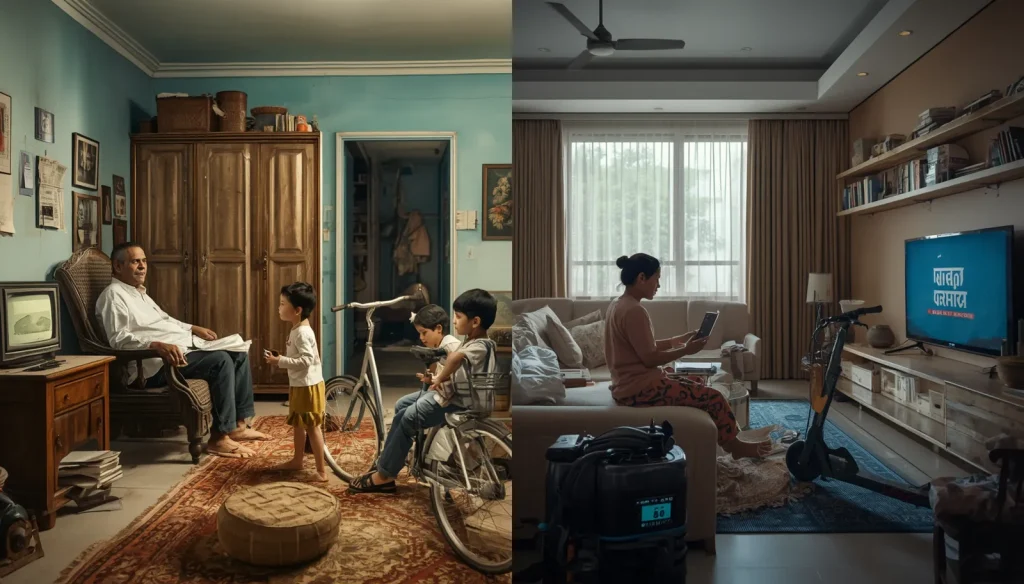
India moved from letters, landlines and appointment television to smartphones, instant payments and on-demand media. Yet the story is not a simple journey from “slow and healthy” to “fast and stressful”—change differs by region, class, gender and generation.

Quick answer: How has Indian lifestyle changed since 1980?

Daily life has become more connected, urban, service-oriented and screen-mediated. Communication is instant, payments are digital, entertainment is on demand, education and work extend online, and consumer choice is wider. At the same time, screen exposure, sedentary work, information overload, privacy risks and blurred work-life boundaries have created new pressures.

Any comparison between 1980 and 2026 must begin with a warning: there was no single Indian lifestyle then, and there is none now. A farming household, a small-town shopkeeper and a metropolitan professional experienced 1980 differently. That diversity remains in 2026.

Better comparison: Treat each period as a range of lived experiences. Technology reached households at different times, and access still does not guarantee equal benefit.

1980 and 2026 at a glance

AreaTypical experience in 1980Common experience in 2026
CommunicationLetters, telegrams, limited landline accessSmartphones, messaging, video calls and social media
PaymentsCash, cheques and in-person bankingUPI, cards, apps and cash together
EntertainmentRadio, cinema and limited televisionStreaming, gaming, short video and creator media
ShoppingLocal markets and limited brandsLocal shops, malls, quick commerce and e-commerce
WorkMore paper, fixed locations and manual processesDigital workflows, platforms, hybrid work and automation
TravelFewer private vehicles and slower bookingMore vehicles, app-based mobility and online booking
InformationNewspapers, radio, books and word of mouthSearch, social feeds, video and AI tools

1. Communication: waiting became instant

In 1980, personal communication often depended on letters, postcards, telegrams and access to a landline. Long-distance calls could be costly or require planning. News from relatives travelled at the speed of the postal or telephone network.

By 2026, a low-cost smartphone can combine calls, camera, map, bank, television, newspaper and office. TRAI reported more than one billion broadband subscriptions in India by late 2025. The gain is obvious: families separated by migration can see each other daily.

The trade-off is permanent reachability. Messages arrive during meals, work and rest. Scam calls, misinformation, harassment and privacy loss are also part of modern communication.

2. Family and social life: connection changed shape

Many households in 1980 organised life around extended family, neighbourhoods, religious institutions, schools and workplaces. Shared spaces and fewer private screens could create more unplanned interaction, although this did not guarantee harmony or personal freedom.

In 2026, migration for education and work has spread families across cities and countries. Video calls preserve contact, while social platforms create communities around hobbies, identity and profession. People can find support beyond geography.

However, digital connection can coexist with loneliness. Family groups may exchange messages all day while members in the same room look at separate screens.

3. The home: from manual routines to connected convenience

Household work in 1980 was more physically demanding where appliances and reliable utilities were limited. Refrigeration, washing machines, mixers, gas connections, water supply and television were not equally available.

By 2026, appliances, delivery services and digital payments reduce time spent on many tasks for households that can afford them. Food, medicines, transport and repairs can be arranged through a phone.

Convenience is not evenly distributed, and unpaid domestic labour remains gendered. Technology can reduce a task without automatically redistributing responsibility.

4. Food: more choice, more processing

Meals in 1980 were often shaped more strongly by local crops, season, household cooking and regional markets. Choice could be limited, and food safety, refrigeration or nutrition access varied widely. Nostalgia should not hide undernutrition or unequal distribution within families.

In 2026, supermarkets, cold chains, restaurants, delivery apps and national brands offer far greater variety. Regional food travels across the country, while international ingredients are easier to obtain.

The same system also makes ultra-processed snacks, sugar-sweetened drinks and large restaurant portions constantly available. Modern India faces multiple nutrition problems at once, including undernutrition, micronutrient deficiency and diet-related chronic disease.

5. Work: from paper files to digital platforms

Many offices in 1980 relied on registers, typewriters, physical files and in-person approvals. Manufacturing, agriculture, trade and government employment were organised without email or cloud systems. A workday was not necessarily easier; manual processes could be slow and hierarchical.

In 2026, email, messaging, cloud software, video meetings, digital marketplaces and AI tools connect work across locations. Remote and hybrid work are possible for some occupations, while delivery, ride-hailing and freelance platforms created new forms of earning.

The boundary between home and work has weakened. Digital monitoring, after-hours messages, insecure platform work and rapid skill change create new forms of stress.

6. Education: scarce information became abundant

Students in 1980 depended heavily on textbooks, teachers, libraries, coaching and broadcast education. Information scarcity could make a good teacher or library especially valuable. Access varied sharply by gender, caste, income, disability and location.

Students in 2026 can use online classes, digital libraries, videos, simulations and AI-assisted tools. A learner in a small town may access lectures from leading institutions.

Information abundance creates a new problem: judging quality. Distraction, copied assignments, misinformation and unequal devices or connectivity can weaken the promised benefit.

7. Money and shopping: the cash economy gained a digital layer

Cash dominated everyday purchases in 1980. Banking required physical visits, paperwork and patience. Consumer choice centred on local stores, ration shops, markets and a smaller range of brands.

In 2026, UPI, cards and mobile banking make small and large transactions immediate. E-commerce and quick commerce compete with neighbourhood shops, while comparison and reviews change buying decisions.

Ease of payment can reduce friction so effectively that spending becomes less visible. Digital fraud, misleading loans, subscription charges and data profiling require new financial literacy.

8. Transport and travel: mobility expanded

Public transport, bicycles, walking and limited private vehicles shaped much of 1980. Booking a railway journey or planning long-distance travel involved in-person information and paper tickets.

By 2026, online booking, navigation, ride-hailing, highways, metro systems and wider vehicle ownership have increased mobility. Travel planning takes minutes, and real-time maps reduce uncertainty.

Growth also brought congestion, air pollution, road injury risk and long commutes. A faster vehicle does not always produce a shorter or calmer journey.

9. Entertainment: from shared schedules to personal feeds

Radio, records, cinema and limited television schedules made entertainment more collective in 1980. People watched or listened at the same time, and scarcity could turn a programme or film into a shared cultural event.

In 2026, streaming platforms, podcasts, gaming, music apps and short videos offer near-infinite choice. Individuals can follow niche creators and watch at any time.

Personalisation also fragments attention. Autoplay and recommendation systems are designed to keep people engaged, making stopping a deliberate skill.

10. Health and healthcare: access and risk both changed

India in 1980 faced major burdens from infectious disease, maternal and child health problems, undernutrition and limited access to specialised care. Healthcare experiences varied enormously by geography and income.

By 2026, diagnostics, medicines, teleconsultation, specialised hospitals and public-health capacity have expanded. People can search symptoms, book tests and access health information quickly.

At the same time, sedentary work, tobacco, air pollution, unhealthy diets, diabetes, cardiovascular disease and mental-health stress demand attention. Online misinformation and self-treatment add another risk.

11. Women’s lives: greater opportunity, uneven freedom

Compared with 1980, more women in 2026 have access to education, professional careers, banking, digital networks and public conversation. Technology can support entrepreneurship, remote work, safety tools and communities.

Progress remains uneven. Unpaid care work, workplace inequality, online abuse, mobility restrictions and safety concerns continue. A smartphone can expand access without removing social barriers.

12. Childhood: more tools, less unsupervised space

Many children in 1980 spent more leisure time outdoors or in mixed-age neighbourhood groups because digital entertainment did not exist. But childhood also included fewer educational resources, less recognition of learning differences and uneven healthcare.

Children in 2026 have interactive learning, global media and instant communication, but also face screen overuse, online safety risks, advertising and academic pressure. The challenge is not to recreate 1980; it is to preserve play, sleep, movement and real relationships inside modern life.

A typical day: illustrative, not universal

Moment1980 illustration2026 illustration
MorningRadio/newsprint, household chores, local commutePhone alarm, notifications, app-based commute
Work or schoolPaper notes, physical files, in-person instructionCloud documents, messaging, digital classrooms
ShoppingLocal market with cashLocal shop, mall or delivery app with UPI
CommunicationLetter, planned call or face-to-face visitContinuous messaging and video calls
EveningNeighbourhood activity, radio or scheduled TVStreaming, gaming, social feeds and video calls

Was life better in 1980 or 2026?

There is no honest one-word answer. 1980 may represent slower communication, more repair and fewer screens, but it also involved less access to information, services and choice for many people. 2026 offers convenience, connection and opportunity, but also more digital pressure, consumption and sedentary time.

Worth preserving

Repair, local relationships, shared time and slower attention.

Worth keeping

Medical progress, education access, digital payments and communication.

Worth reducing

Pollution, discrimination, preventable disease and information scarcity.

Worth redesigning

Screen habits, work boundaries, consumption and urban mobility.

How to combine the best of both eras

  1. Use digital payments and tools, but review spending weekly.
  2. Keep one screen-free shared meal each day where possible.
  3. Walk for short local journeys when safe.
  4. Repair or reuse before replacing useful items.
  5. Schedule focused time without notifications.
  6. Use online learning, then practise the skill offline.
  7. Maintain local relationships alongside digital communities.
  8. Protect sleep from late-night streaming and work messages.
  9. Verify health and news claims before sharing.
  10. Choose convenience intentionally instead of automatically.

Limits of this comparison

This article compares broad patterns, not every household. Some technologies described as “2026 life” remain inaccessible or undesirable to many people. Some habits associated with 1980 continued for decades and remain today.

Statistics on subscriptions, households and internet use measure access, not the quality, affordability or purpose of use. Memory also favours emotionally meaningful moments and may understate past inconvenience or inequality.

The bottom line

The biggest 1980 vs 2026 lifestyle changes in India are the rise of digital connectivity, faster services, greater consumer choice and the movement of work, learning, payments and entertainment onto screens.

The useful question is not which year wins. It is which older habits deserve protection and which modern tools improve life without taking over attention, health or relationships.

Related guides: work-life balance tips, mindfulness for beginners, how to sleep better and the value of a degree in 2026.

Frequently asked questions

What is the biggest lifestyle change in India since 1980?

The spread of digital connectivity has transformed communication, payments, work, learning, shopping and entertainment at the same time.

Was life healthier in India in 1980?

Not universally. Some people moved more and ate fewer processed foods, but infectious disease, undernutrition and limited healthcare access were larger problems.

How has family life changed?

Migration and smaller households changed daily interaction, while messaging and video calls help families remain connected across distance.

How has food changed since 1980?

Choice, refrigeration, restaurants and delivery expanded, alongside wider availability of ultra-processed foods and larger portions.

How has work changed?

Paper and location-bound processes increasingly gave way to digital workflows, platforms, automation and some remote or hybrid work.

What older habits are still useful?

Repairing items, shared meals, local relationships, walking and periods of undistracted attention remain valuable.

Is the digital divide over in 2026?

No. Access, affordability, skills, language, disability and quality of connection still shape who benefits.

Sources and further reading

Method note: The comparisons describe broad social and technological patterns. Individual experiences vary substantially across India.


Better sleep is rarely about one perfect bedtime trick. It comes from strengthening your body clock, protecting enough time for sleep and changing habits that keep the brain alert in bed.

Quick answer: How can I sleep better tonight?

Keep tomorrow’s wake time consistent, dim lights and reduce stimulating activity during the final hour, avoid late caffeine and a heavy meal, make the room dark, quiet and comfortable, and go to bed when sleepy. If you remain awake and frustrated, leave the bed for a calm activity in dim light and return when sleepier.

An occasional poor night is normal. Sleep becomes a health concern when difficulty falling asleep, staying asleep or waking too early persists and affects daytime functioning. The right solution may be a routine change, treatment of another condition or cognitive behavioural therapy for insomnia.

Safety first: Do not drive or operate machinery when sleepy. Severe sleepiness can impair reaction time and judgment even when you believe you can “push through.”

How much sleep do adults need?

The CDC states that adults aged 18–60 generally need at least seven hours, while needs and recommended ranges vary with age. Quality and regularity matter alongside duration. Some adults naturally need more than seven hours.

Duration

Enough total sleep for your age and needs.

Quality

Sleep that is reasonably continuous and restorative.

Timing

A schedule aligned with work, daylight and your body clock.

Daytime function

Alertness, mood and performance when awake.

Do not judge your sleep only by one wearable score. Consumer devices estimate sleep indirectly and can create unnecessary worry. How you function and patterns over time are more useful.

12 ways to sleep better at night

1. Anchor your wake-up time

Wake at roughly the same time every day, including after a poor night. A stable wake time helps regulate the sleep-wake rhythm. Large weekend lie-ins can make Sunday night harder.

2. Get daylight early in the day

Natural light, especially earlier in the day, helps set the body clock. Open curtains, step outdoors or take a morning walk when safe. Light needs vary, and people with eye conditions or light-sensitive disorders should seek tailored advice.

3. Build sleep pressure with daytime activity

Regular physical activity supports sleep and overall health. Choose a time you can maintain. If vigorous late-evening exercise keeps you alert, move it earlier; gentle stretching or walking may still feel comfortable.

4. Set a caffeine cut-off

Caffeine can remain active for hours and appears in coffee, tea, cola, energy drinks, chocolate and some medicines. If sleep is difficult, experiment with stopping caffeine at least six hours before bed—or earlier if you are sensitive.

5. Do not use alcohol as a sleep aid

Alcohol may make you drowsy initially but can fragment sleep later, worsen snoring and sleep apnoea, and increase night-time urination. Reducing or avoiding it near bedtime may improve sleep quality.

6. Keep dinner comfortable

A very large, spicy or high-fat late meal may worsen fullness or reflux. Finish the main meal earlier where practical. A small snack may be reasonable if hunger keeps you awake, depending on your health and meal plan.

7. Create a 30-to-60-minute wind-down

Use the same sequence each night: lower lights, finish work, prepare for tomorrow, wash, read or listen to calm audio. The routine should reduce stimulation rather than become another performance target.

8. Reduce bright light and engaging screen use

Light can delay the body clock, while messages, games and work can keep the mind activated. Put devices away or reduce brightness and stimulating content before bed. The behavioural content matters as well as “blue light.”

9. Make the bedroom sleep-friendly

Use curtains, an eye mask, earplugs or steady background sound if helpful. Keep the room comfortably cool, choose bedding that suits you and silence unnecessary notifications. There is no universal perfect temperature.

10. Go to bed when sleepy, not merely tired

Tiredness can mean low energy; sleepiness means you are likely to doze. Spending long periods awake in bed can train the brain to associate bed with worry and effort.

11. Stop forcing sleep

If you are awake and becoming frustrated, get out of bed and do something quiet in dim light. Return when sleepier. Avoid clock-watching and stimulating tasks. This principle is part of stimulus control used in CBT-I.

12. Put worries on paper earlier

Set aside 10–15 minutes before the wind-down to list worries and tomorrow’s next actions. The aim is not to solve every problem at night, but to give planning a defined time outside bed.

A simple evening routine

Time before bedSuggested actionPurpose
3–6 hoursAvoid caffeine; finish vigorous exercise if it disrupts youReduce stimulation
2–3 hoursFinish a large meal and most alcoholReduce reflux and fragmented sleep
60 minutesDim light, finish work, lower screen stimulationBegin mental transition
20 minutesWash, read, breathe slowly or listen to calm audioCreate a repeatable cue
At bedtimeEnter bed when sleepyStrengthen the bed-sleep link

These timings are experiments, not rigid rules. Track what changes sleep consistently rather than trying to optimise every minute.

What to do when you wake during the night

  1. Do not repeatedly check the clock.
  2. Keep lights low and avoid scrolling.
  3. Use a calm activity if you are alert or frustrated.
  4. Return to bed when sleepiness returns.
  5. Keep the normal wake time the next morning.

Do not eat a large meal, begin work or drive because you cannot sleep. Frequent waking may be related to pain, reflux, menopause, medicines, urination, breathing disorders or other conditions that need treatment.

Should you nap?

Naps can help some people, especially shift workers or those recovering from sleep loss, but late or long naps may reduce night-time sleep pressure. If insomnia is a problem, test a short early-afternoon nap or avoid naps temporarily while working with a clinician.

A seven-day sleep reset

Change the strongest cues first

  1. Day 1: Choose a realistic fixed wake time.
  2. Day 2: Get morning daylight and daytime movement.
  3. Day 3: Set a caffeine cut-off.
  4. Day 4: Create a 30-minute wind-down sequence.
  5. Day 5: Make the room darker, quieter and comfortable.
  6. Day 6: Practise leaving the bed if wakefulness becomes frustrating.
  7. Day 7: Review the sleep diary and keep the two most helpful changes.

One week may improve a disrupted routine, but chronic insomnia usually needs a longer, structured approach. Do not compress sleep opportunity aggressively on your own.

When sleep hygiene is not enough: CBT-I

Cognitive behavioural therapy for insomnia (CBT-I) is usually recommended as the first treatment for long-term insomnia. NHLBI describes it as a structured six-to-eight-week programme that may include sleep education, cognitive strategies, relaxation, stimulus control and carefully managed sleep restriction.

Sleep restriction is more complex than simply staying up late. It can temporarily increase sleepiness and may be unsafe for some people, including those with certain seizure, bipolar, fall-risk or driving concerns. Use professional guidance.

Melatonin, magnesium and sleep aids

Melatonin

Melatonin is more clearly useful for particular body-clock problems than as a universal sedative. Product quality and dose vary, and it can interact with medicines or cause next-day drowsiness. Ask a clinician before use in pregnancy, children or chronic illness.

Magnesium

Evidence for routine magnesium supplementation in otherwise healthy people with insomnia is limited. It may cause diarrhoea and can be unsafe with significant kidney disease.

Antihistamine sleep aids

Some over-the-counter products cause sedation but can lead to tolerance, dry mouth, constipation, urinary problems, confusion or falls—especially in older adults. “Available without prescription” does not mean risk-free.

Herbal products

Valerian, lavender and mixed herbal products have inconsistent evidence and variable quality. They can cause side effects or interactions. Avoid combining sleep products with alcohol or sedating medicines without advice.

Conditions that can disturb sleep

PatternPossible issueNext step
Loud snoring, choking, witnessed pausesObstructive sleep apnoeaMedical sleep assessment
Urge to move the legs at nightRestless legs syndromeReview medicines and possible iron status
Burning or sour taste when lying downRefluxClinical and meal-timing review
Persistent worry or low moodAnxiety or depressionMental-health assessment and support
Very early waking with reduced need for sleep and high energyPossible mood episodePrompt clinical evaluation
Rotating or overnight workShift-work sleep disruptionTailored light, timing and safety plan

When to see a doctor

Seek medical advice when sleep problems last for weeks or months, occur at least several nights a week, affect work, study, mood or safety, or do not improve with basic changes. Arrange assessment for loud snoring, breathing pauses, morning headaches, restless legs, unusual night behaviours or overwhelming daytime sleepiness.

Get urgent help if sleep loss occurs with suicidal thoughts, hallucinations, dangerous confusion, chest pain, severe breathing difficulty or several nights of little sleep accompanied by unusually high energy, agitation or risky behaviour.

Common sleep mistakes

MistakeBetter approach
Going to bed hours early after a poor nightKeep the wake time stable and go to bed when sleepy.
Watching the clock repeatedlyTurn the display away and reduce calculations.
Using alcohol to fall asleepUse a non-alcohol wind-down routine.
Spending long frustrated hours in bedUse stimulus-control principles.
Starting several supplements togetherReview causes, medicines and evidence with a clinician.
Assuming snoring is harmlessSeek assessment when snoring includes pauses, choking or sleepiness.

The bottom line

To learn how to sleep better at night, begin with a stable wake time, morning light, daytime movement, earlier caffeine cut-off and a repeatable wind-down. Make the bedroom comfortable and leave the bed when wakefulness becomes frustrating.

If insomnia persists, CBT-I and evaluation for underlying conditions are more useful than endlessly adding sleep hacks or supplements.

Related guides: mindfulness for beginners, 10-minute walk after meals, cortisol supplements guide and work-life balance tips.

Frequently asked questions

How can I fall asleep faster?

Keep a consistent wake time, reduce evening stimulation and enter bed when sleepy. If you remain awake and frustrated, leave for a calm activity and return when sleepier.

What is the best time to sleep?

There is no universal clock time. Choose a schedule that allows enough sleep and can remain reasonably consistent with your obligations and body clock.

How many hours of sleep do adults need?

Adults aged 18–60 generally need at least seven hours, though individual needs and recommended ranges vary by age.

Should I use my phone before bed?

Bright light and engaging content can delay sleep. Reduce brightness, stimulation and screen use during the wind-down period.

Is melatonin safe every night?

It is not suitable for everyone, and long-term use, dose and product quality require individual review with a clinician.

What should I do if I wake at 3 a.m.?

Avoid clock-watching. If alert or frustrated, use a quiet activity in dim light and return to bed when sleepy.

When should insomnia be treated professionally?

Seek help when it persists, impairs daytime life or safety, or occurs with snoring, breathing pauses, restless legs, mood symptoms or other health concerns.

Sources and further reading

Medical note: This article provides general education and does not replace assessment or treatment from a qualified health professional.

Samay Raina net worth figures circulating online are estimates, not audited disclosures. This guide separates public career facts from modeled income, property speculation and unsupported asset claims.

Quick answer: What is Samay Raina’s net worth in 2026?

Samay Raina has not publicly confirmed his net worth. Recent media reports place the estimate broadly around ₹140 crore to ₹215 crore, but the figures are derived from third-party analytics and assumptions—not audited financial statements. His visible earning channels include YouTube, live comedy, sponsorships, memberships and creator-led entertainment.

₹140–215 croremedia-reported range
not officially verified

The phrase “Samay Raina net worth” attracts confident answers, but personal wealth is not the same as views, gross ticket sales or estimated creator revenue. Raina has not published a balance sheet showing cash, investments, property, business interests, debts and taxes.

The honest answer is therefore a range with a warning. NDTV reported estimates reaching approximately ₹215 crore, while Outlook Luxe cited a base estimate near ₹150 crore and a possible upper range of ₹215 crore. These reports provide context, not proof of his actual wealth.

Our methodology: We label a fact “confirmed” only when it is visible through an official channel, event listing or direct public record. Media calculations are labelled “estimated.” Property prices, monthly income and asset lists without reliable documentation are labelled “unverified.”

Samay Raina net worth estimate: what is actually known?

ClaimWhat can be supportedStatus
Exact net worthNo audited or personal disclosure locatedUnverified
₹140–215 crore rangeReported by media using third-party estimatesEstimated
YouTube channelOfficial public channel with a large audienceConfirmed
International live showsVenue and ticket listings document performancesConfirmed
Monthly personal incomeNo reliable public disclosureUnverified
Mumbai residencePublicly shown; ownership and value not establishedPartly known

Net-worth websites often multiply estimated YouTube revenue and add assumed property or sponsorship values. That approach can miss production costs, agency commissions, venue shares, staff salaries, taxes, loans and private investments.

How does Samay Raina make money?

01 · YOUTUBE

YouTube advertising

Videos and livestreams can generate advertising revenue. The exact amount depends on monetised views, geography, content type and advertiser demand.

02 · LIVE SHOWS

Stand-up comedy tours

Ticketed shows create gross revenue, but venues, ticketing platforms, production, travel, taxes and team costs must be paid before profit is known.

03 · BRANDS

Sponsorships

Creators may be paid for integrations and campaigns. Raina’s individual contracts and fees are private, so specific deal values should not be invented.

04 · COMMUNITY

Memberships and live support

Channel memberships, Super Chats and similar tools can produce recurring revenue, subject to platform fees, taxes and audience activity.

05 · CHESS

Chess collaborations

Chess entertainment expanded his audience and created opportunities for streams, partnerships, appearances and sponsored events.

06 · PROJECTS

Creator-led entertainment

Comedy specials and digital formats can generate attention and commercial opportunities, although project-level profit is not public.

Raina’s official YouTube channel and verified venue listings confirm a significant public audience and active comedy business. They do not reveal his take-home earnings. For example, Madison Square Garden listed his February 2026 “Still Alive” event, confirming the performance but not the artist’s final financial share.

Samay Raina YouTube income: why estimates vary

YouTube earnings cannot be calculated accurately from public view counts alone. Not every view is monetised, and revenue per thousand views changes by audience location, video format, season, advertiser demand and rights status.

Third-party dashboards often publish extremely wide ranges because they do not know the channel’s real advertising rates, platform deductions or expenses. They may also mix Shorts and long-form views, even though monetisation patterns differ.

Therefore, a public YouTube estimate should be described as modeled gross revenue—not verified income and certainly not net worth.

Samay Raina net worth per month: can income be calculated?

No reliable public figure establishes Samay Raina’s monthly personal income in 2026. Creator revenue is irregular. A month containing a major tour, sponsored campaign or viral upload can look very different from a quieter production month.

Gross receipts are also not salary. A responsible calculation would require:

  • Platform statements and actual monetised views
  • Tour contracts, ticket allocations and venue splits
  • Sponsorship invoices and agency commissions
  • Production, travel, staffing and legal costs
  • Business and personal taxes
  • Investment income, liabilities and ownership details

Because these records are private, claims of a precise monthly amount should be treated cautiously.

Samay Raina house price and property

Samay Raina has publicly appeared in a tour of a Mumbai duplex-style residence with a terrace and sea view. This supports descriptions of the visible home, but it does not prove the purchase price, present market value, ownership structure or outstanding loan.

NDTV’s coverage discusses the home’s design, rooms, terrace and personal objects. It does not provide a verified property valuation. As a result, claims that the residence is worth a particular number of crores should remain labelled as speculation unless backed by property documents or a direct disclosure.

Privacy note: This article does not publish a private address or speculate about precise location. Public-interest reporting about a celebrity’s career does not justify exposing residential details.

Samay Raina assets: cars, investments and businesses

Online articles frequently list luxury cars, investments and property without linking to an original source. Appearance in a vehicle, house tour or promotional video does not automatically prove ownership.

Asset categoryResponsible conclusion
ResidenceA Mumbai home has been publicly shown; exact ownership and value remain private.
CarsDo not publish a collection or price without traceable evidence of ownership.
InvestmentsNo verified public portfolio or company valuation is available.
Production rightsDigital projects may have commercial value, but ownership and valuation are not publicly documented.
Cash and savingsPrivate and not independently verifiable.

Why Samay Raina net worth figures differ online

  1. Revenue gets confused with wealth. A successful show can generate high sales without producing equal personal profit.
  2. View-based calculators use assumptions. Actual advertising rates and monetised views are private.
  3. Sponsorship fees are confidential. Reported creator rates may not reflect real contracts.
  4. Property claims are often copied. Repetition across websites does not turn an unsourced valuation into fact.
  5. Expenses and liabilities are ignored. Tours and productions require significant spending.
  6. Old numbers remain online. Estimates from different dates are compared as though they describe the same financial moment.

Career facts that explain the estimate

Raina’s public career combines stand-up comedy, online video and chess entertainment. His official channel documents the scale of his digital work, while event listings confirm major live performances. His 2026 “Still Alive” special also illustrates how he can release long-form work directly to a large audience.

These milestones reasonably suggest multiple revenue channels and significant brand value. They do not allow outsiders to calculate his personal net worth with precision.

Final verdict on Samay Raina net worth in 2026

The most defensible answer is that Samay Raina’s net worth is not officially known. Media estimates broadly place it between ₹140 crore and ₹215 crore, but readers should not interpret that range as audited fact.

His public career supports the existence of several earning channels: YouTube, live comedy, sponsorships, memberships, chess collaborations and creator-led projects. Exact monthly income, property value, car ownership, investments and liabilities remain private.

Bottom line: Use ₹140–215 crore only as a media-reported estimate. The verified story is the scale and diversity of his creator business—not an exact personal fortune.

Frequently asked questions

What is Samay Raina’s net worth in rupees in 2026?

Recent media estimates broadly range from ₹140 crore to ₹215 crore. Samay Raina has not publicly confirmed this figure, and no audited financial disclosure is available.

Is Samay Raina’s net worth officially confirmed?

No. Published figures come from media reports and third-party analytics rather than a personal financial statement.

How much does Samay Raina earn per month?

There is no verified monthly-income figure. Revenue varies across videos, tours, sponsorships, memberships and projects, while expenses and taxes are private.

What is the price of Samay Raina’s house?

A Mumbai residence has been shown publicly, but its purchase price, current value and ownership details have not been reliably confirmed.

What property does Samay Raina own?

Public coverage shows a Mumbai home, but reliable documentation of his complete property holdings is not available.

How does Samay Raina make money?

His visible income channels likely include YouTube advertising, live comedy, brand partnerships, memberships, audience support and creator-led entertainment.

Does Samay Raina earn money from YouTube?

His official channel is eligible for common creator monetisation opportunities, but actual advertising, membership and livestream earnings are private.

What are Samay Raina’s known assets?

No complete verified asset list exists. A residence has been publicly featured, but precise property value, vehicles, investments and liabilities remain unconfirmed.

Sources and transparency

Editorial note: Net-worth reporting is inherently approximate when a person has not disclosed audited finances. Figures were checked on 10 July 2026 and are clearly separated from confirmed public facts.