Mehak
Mehak 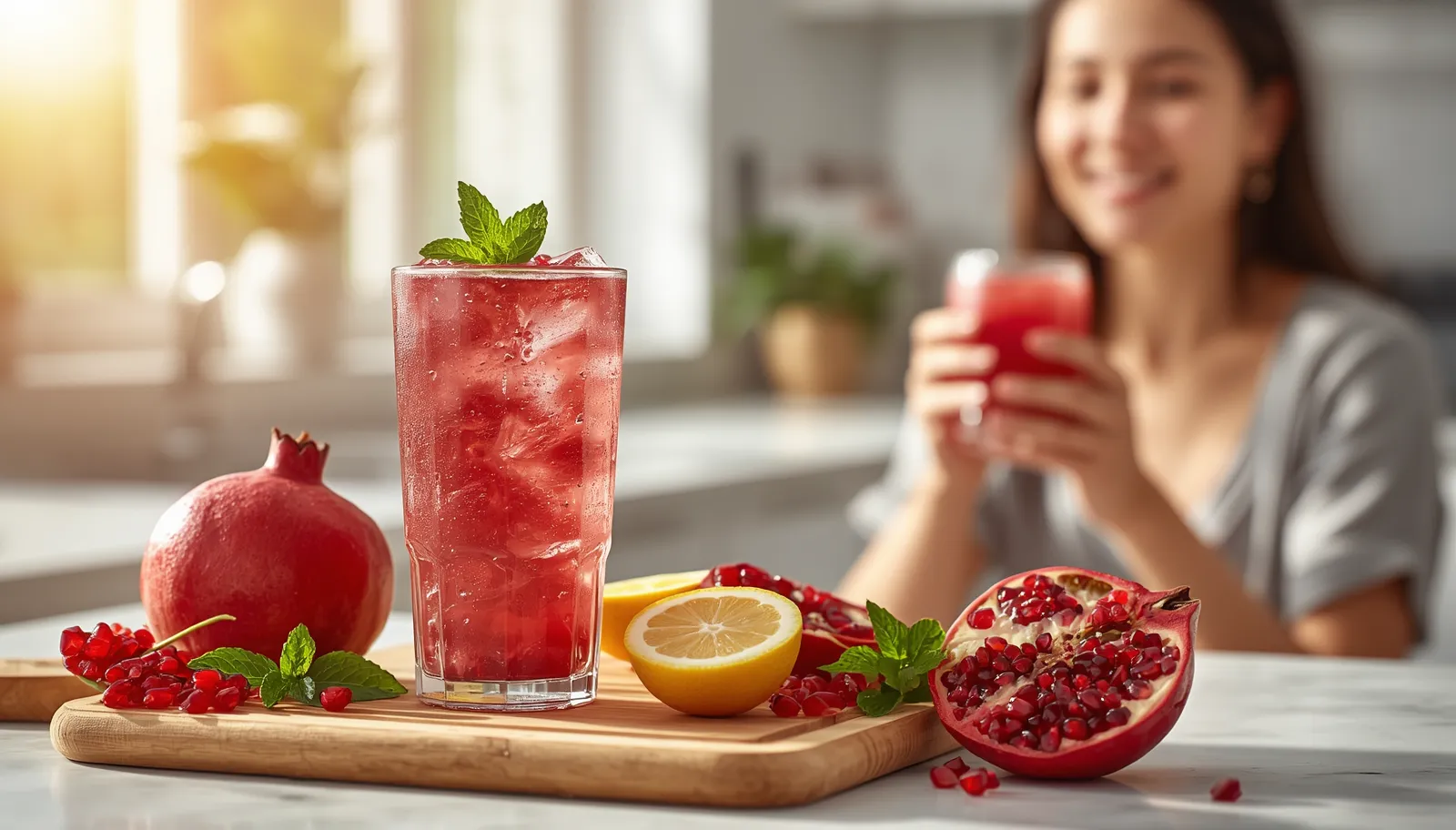
Fresh homemade pomegranate juice prepared with natural ingredients as part of a balanced diet that supports overall skin health.
Pomegranate contains colourful polyphenols, but a glass of juice is not a fairness treatment, sunscreen or acne cure. Here is what human research suggests and how to enjoy it sensibly.
Quick answer: Is pomegranate juice good for skin?
Possibly as one part of a varied diet. Pomegranate provides polyphenols, and one small 12-week trial found that daily juice or extract increased the UVB dose needed to cause redness in healthy women. However, it did not prove that juice prevents skin cancer, replaces sunscreen, treats pigmentation or produces visible “glow.” Whole arils usually provide more fibre than strained juice.
What the skin research actually shows
A randomized open-label study included 74 women aged 30–45 with Fitzpatrick skin types II–IV. Participants consumed 8 ounces of pomegranate juice, an extract or placebo daily for 12 weeks. The juice and extract groups showed increased minimal erythema dose, a laboratory measure of UVB redness.
This is interesting but limited evidence: the study was small, specific to a narrow group, used a particular product and did not show that pomegranate prevents sunburn during everyday exposure. It also did not establish skin whitening or a meaningful reduction in pigmentation.
Do not drink pomegranate juice as “internal sunscreen.” Use shade, protective clothing and broad-spectrum sunscreen according to dermatology guidance.
Five realistic ways it may support a skin-friendly diet
1. Polyphenol intake
Pomegranate supplies ellagitannins and anthocyanins. These compounds are studied for antioxidant and anti-inflammatory activity, but laboratory effects do not guarantee a visible skin result.
2. A colourful fruit option
Using different fruits helps diversify dietary patterns. Skin health depends on the whole diet, not one “superfood.”
3. Fluid with flavour
A small diluted serving can help some people enjoy fluids, but plain water remains a useful default and excessive hydration is unnecessary.
4. A soft-drink replacement
Unsweetened pomegranate juice may replace a sugary drink. Portion still matters because juice naturally contains sugar.
5. Whole-food pairing
Arils work well with curd, oats or salad, adding texture and fibre that strained juice largely lacks.
What it cannot promise
It cannot whiten natural skin, erase acne scars, cure melasma, detox blood or reverse ageing.
Simple pomegranate juice recipe
One small unsweetened serving
Ingredients
- ¾ cup fresh pomegranate arils
- ¼–½ cup safe drinking water
- Fresh mint or a thin piece of ginger, optional
- A squeeze of lemon, optional
Method
- Remove the arils and discard the peel and white membrane.
- Pulse the arils briefly with water. Over-blending may crush harder seed material and make the drink bitter.
- Strain lightly if desired, or keep more pulp for texture.
- Add mint, ginger or lemon. Do not add sugar, honey or jaggery.
- Serve about 120–150 ml with a meal and refrigerate leftovers promptly.
Three balanced variations
Pomegranate–amla
Add a small amount of seeded amla for tartness and vitamin C. This supports normal collagen formation, not fairness.
Pomegranate–cucumber
Blend cucumber, mint and water with a smaller aril portion for a less sweet drink.
Pomegranate curd bowl
Top plain curd with whole arils and seeds. This retains fibre and adds protein.
Frozen aril snack
Freeze clean arils in a single layer and use a small portion in yoghurt or oats.
Whole pomegranate vs juice
| Form | Advantage | Limitation |
|---|---|---|
| Whole arils | Retain fibre, require chewing and are easier to portion | Preparation takes time |
| Unstrained blend | Keeps more pulp than clear juice | Thick texture; still easy to drink quickly |
| Strained fresh juice | Convenient and palatable | Little fibre and concentrated natural sugar |
| Packaged 100% juice | Consistent and convenient | Check portion, pasteurisation and added ingredients |
| Sweetened drink | Long shelf life | May contain added sugar and less actual juice |
Skin claims: fact vs marketing
| Claim | Evidence-based view |
|---|---|
| “Makes skin fair” | No credible evidence that juice lightens genetically determined skin colour. |
| “Cures acne” | No. Acne has multiple causes and often needs tested topical or prescription treatment. |
| “Removes dark spots” | No direct proof. Diagnosis, sunscreen and suitable skincare matter more. |
| “Replaces sunscreen” | False. A small nutrition trial does not provide reliable UV protection outdoors. |
| “Builds collagen” | A nutritious diet supports normal collagen biology, but juice has not been shown to rebuild facial collagen visibly. |
| “Detoxifies skin” | Detox language is misleading; the liver and kidneys handle waste processing. |
What helps pigmentation more reliably?
For melasma and post-inflammatory dark marks, daily sun protection is foundational. A dermatologist may suggest topical treatments based on skin type, cause, pregnancy status and sensitivity. Avoid DIY lemon, bleach or abrasive scrubs, which can irritate skin and worsen pigmentation.
Seek assessment for a rapidly changing patch, a changing mole, bleeding, persistent itching or a non-healing lesion.
Should you apply pomegranate juice to your face?
Kitchen juice is not a standardized skincare product. It can stain, irritate sensitive skin and become contaminated. Mixing it with lemon, baking soda or toothpaste raises irritation risk. If you want a pomegranate-containing serum, choose a properly formulated product and patch-test it; the presence of an ingredient does not prove the finished product works.
How much should you drink?
There is no clinically established “skin dose.” A small food-sized serving such as 120–150 ml is a practical upper portion for many healthy adults, but individual needs differ. The published UVB trial used 8 ounces (about 237 ml) daily; that research amount should not be treated as a universal recommendation.
People managing blood glucose may prefer whole arils with a meal because fibre slows consumption and helps fullness.
Side effects and precautions
Blood sugar
Juice can deliver natural sugar quickly. If you have diabetes or use glucose-lowering medication, discuss portions with your clinician or dietitian and monitor according to your care plan.
Blood pressure
Pomegranate juice may lower blood pressure modestly in some studies. People with low blood pressure or blood-pressure medicines should ask their clinician before drinking it regularly in large amounts.
Medicines
Laboratory studies suggest possible effects on drug-metabolising enzymes, but human evidence is limited and mixed. Because case reports and uncertainties exist, ask a pharmacist or prescriber if you take warfarin, statins, blood-pressure drugs or medicines with narrow safety margins.
Allergy and digestion
Stop and seek care for swelling, wheezing, breathing difficulty or a widespread rash. Large amounts may cause stomach discomfort or diarrhoea in some people.
Peel, root and stem products
Do not consume homemade preparations made from pomegranate root, stem or large amounts of peel. Safety differs from the edible arils and juice.
How to choose packaged juice
- Look for “100% pomegranate juice,” not only “pomegranate-flavoured drink.”
- Check the ingredient list for added sugar, syrups and blended juices.
- Compare serving size and total sugar rather than relying on “natural” claims.
- Choose pasteurised juice during pregnancy or when immunity is reduced.
- Refrigerate after opening and follow the label’s storage window.
A skin-supportive daily pattern
- Use whole fruits and vegetables across several colours.
- Include enough protein from dal, beans, eggs, dairy, fish, meat or suitable alternatives.
- Choose nuts, seeds and other sources of essential fats.
- Drink fluids according to thirst and climate.
- Protect skin from excessive UV exposure.
- Use evidence-based treatment for acne, eczema or pigmentation instead of relying on juice.
The bottom line
Pomegranate juice for skin is best understood as food, not treatment. Its polyphenols are scientifically interesting, and one small trial found greater resistance to laboratory-induced UVB redness. That does not establish skin whitening, visible anti-ageing or sunscreen protection.
Choose whole arils more often, keep juice unsweetened and small, and check medicine or health concerns with a professional. Consistent nutrition and sun protection matter more than any single drink.
Frequently asked questions
Does pomegranate juice make skin glow?
“Glow” is subjective. Juice can contribute to a nutritious diet, but no visible result is guaranteed.
Does pomegranate juice whiten skin?
No. It has not been shown to lighten natural skin colour or bleach melanin.
Can I drink pomegranate juice every day?
Some people can include a small serving, but daily use is unnecessary and may not suit certain medicines or health conditions.
Is whole pomegranate better than juice?
Whole arils retain fibre and are usually more filling than strained juice.
Can pomegranate juice treat acne?
No. It is not a proven acne treatment. Use suitable skincare and seek dermatology advice for persistent or scarring acne.
Can I apply pomegranate juice to my face?
Kitchen juice may stain or irritate and is not a standardized treatment.
Does pomegranate juice replace sunscreen?
No. Food cannot provide dependable outdoor UV protection.
Sources and further reading
- Randomized Trial: Pomegranate and UVB-Induced Erythema
- NCCIH: Pomegranate Usefulness and Safety
- Review: Pomegranate Juice and Drug Interactions
- Human Study: Pomegranate and CYP2C9 Activity
Medical note: General nutrition and skin education only; this article does not diagnose or treat a skin condition.
About the Author