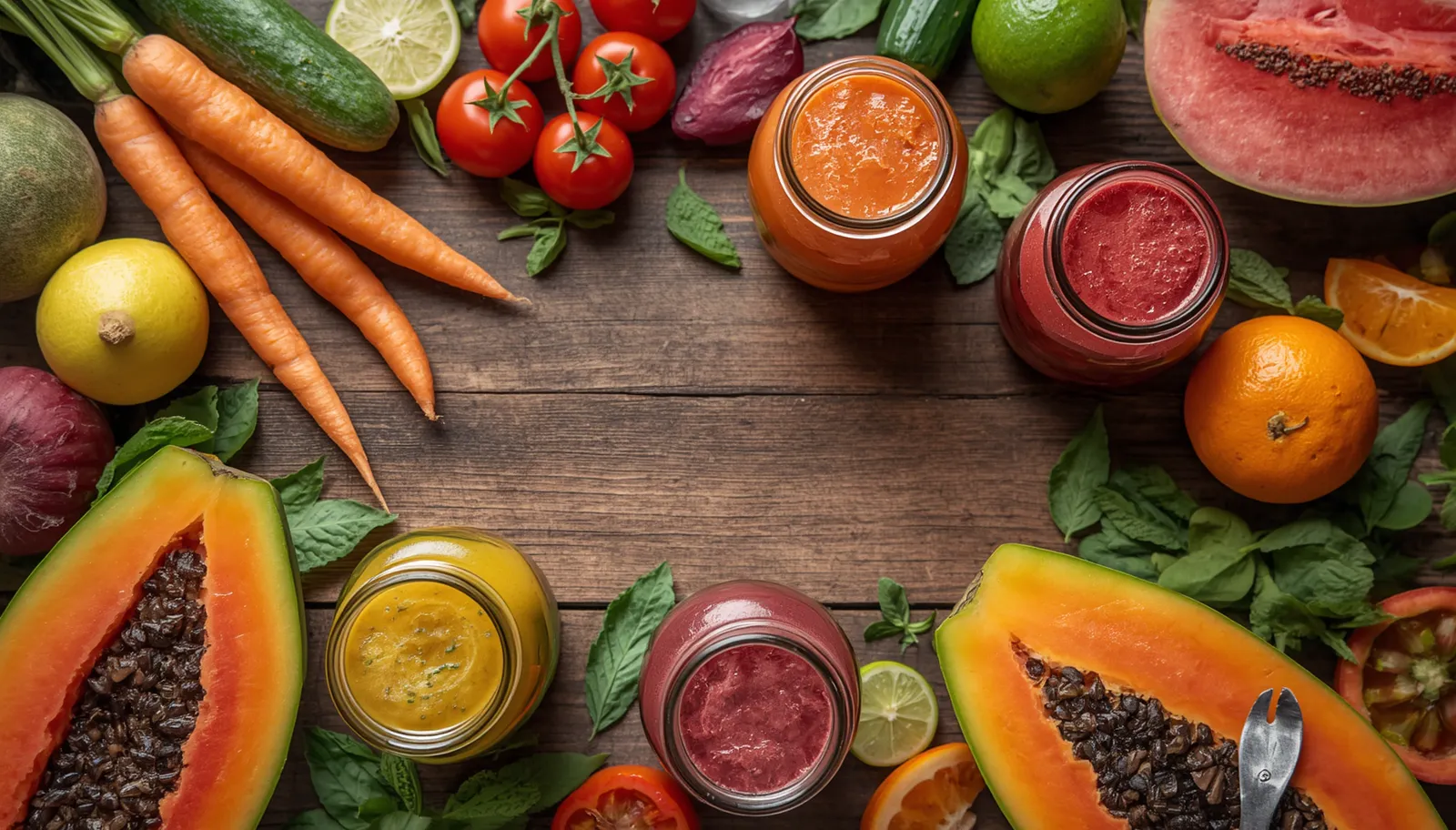
Fresh homemade fruit and vegetable juices made with natural ingredients that can support a balanced diet and overall skin health.
Colourful juices can supply fluid and micronutrients, but no drink guarantees a glow, clears acne or removes pigmentation. Whole fruit, balanced meals, sunscreen and appropriate skincare matter more.
Quick answer: Which juice is best for glowing skin?
There is no single best juice or clinical definition of “glowing skin.” Unsweetened amla, guava, citrus, tomato, carrot and mixed vegetable drinks can contribute vitamin C, carotenoids and fluid. Keep servings small, retain pulp when possible and avoid added sugar. Results depend on the whole diet, hydration status, sleep, skin condition and skincare.
What juice can—and cannot—do
Vitamin C is required for normal collagen formation, while fruits and vegetables provide a variety of vitamins and plant compounds. Correcting a poor diet or dehydration may affect general wellbeing and appearance. However, drinking more than you need does not create unlimited collagen or erase wrinkles.
Juicing breaks down the food structure and often removes fibre. Even unsweetened fruit juice contains free sugars that reach teeth quickly. The NHS advises limiting combined fruit juice and smoothies to one small 150 ml glass daily and having it with a meal.
Evidence boundary: “Glow” is subjective. These recipes are food ideas, not proven treatments for acne, melasma, eczema, scars or premature ageing.
8 juice recipes for variety
1. Amla and mint drink
Blend: 1 fresh amla, ¾ cup water and a few mint leaves. Remove the hard seed. Keep the pulp if possible and dilute to taste.
Why choose it: Amla is vitamin C–rich. It does not have to be consumed on an empty stomach. Read the full guide to amla juice for skin.
2. Guava and lime smoothie-juice
Blend: ½ ripe guava, water and a squeeze of lime. Strain only if seeds or texture are unsuitable.
Why choose it: Guava offers vitamin C and keeping the pulp preserves more fibre. It may be more affordable than imported berries.
3. Tomato, carrot and lemon juice
Blend: 1 small tomato, ½ carrot, water and lemon. Retain pulp or use as a savoury smoothie.
Why choose it: It combines carotenoid-rich vegetables without requiring sweet fruit. Do not add black salt if you need to limit sodium.
4. Orange and carrot small glass
Blend or juice: ½ orange and ½ small carrot with water. Make only a small serving.
Why choose it: It provides vitamin C and carotenoids, but whole orange segments are more filling and retain more fibre.
5. Watermelon and mint cooler
Blend: 1 cup watermelon with mint and ice; do not add sugar. Keep the pulp.
Why choose it: Refreshing in hot weather, although ordinary safe water remains the simplest hydration choice.
6. Cucumber, coriander and lime drink
Blend: ½ cucumber, coriander, lime and water. Use the peel if it is edible and washed thoroughly.
Why choose it: A low-sweetness option that contributes fluid. It does not detox the liver or kidneys.
7. Beetroot, apple and ginger blend
Blend: ¼ small beetroot, ¼ apple, a small ginger piece and water. Keep the portion modest.
Why choose it: It adds variety and colour. Beetroot does not permanently “purify blood” or change skin tone.
8. Papaya and lime smoothie
Blend: ½ cup papaya, lime and water without straining.
Why choose it: The smoothie texture retains more edible pulp than juice. Papaya enzymes do not digest acne from inside the body.
Choose the better format
| Format | Advantage | Limitation |
|---|---|---|
| Whole fruit | Retains fibre and requires chewing | Less convenient as a drink |
| Unstrained smoothie | Keeps more pulp and fibre | Portions can become large |
| Strained juice | Thin and easy to drink | Less fibre; sugars reach teeth readily |
| Packaged juice | Convenient | May contain added sugar and little whole produce |
| Flavoured “detox” drink | May taste pleasant | Often sold with unsupported claims |
Five rules for a sensible juice
- Use mostly vegetables when possible and keep fruit portions modest.
- Do not add sugar, honey, jaggery or syrup by default.
- Retain pulp or choose whole produce more often.
- Have a small serving with a meal rather than sipping it across the day.
- Rinse the mouth with plain water afterward and wait before brushing teeth.
Skin claims checked
“Juice clears acne”
Unsupported. Acne has multiple causes and often needs evidence-based topical or oral treatment.
“Detox creates glow”
Vague toxin claims are not a measurable benefit. Your organs already manage normal waste.
“Beetroot changes complexion”
Food does not safely lighten natural skin tone or erase melasma.
“Results in seven days”
A fixed transformation timeline is not credible; skin concerns have different causes.
Who should be cautious?
- Diabetes: Juice can raise glucose quickly. Prefer whole fruit and follow your individual plan.
- Kidney disease: Potassium, fluid and oxalate limits may apply; ask your renal team.
- Reflux or sensitive teeth: Acidic citrus and amla drinks may worsen symptoms.
- Food allergy: Avoid the relevant ingredient and cross-contact.
- Pregnancy or reduced immunity: Wash produce and equipment carefully; avoid unsafe unpasteurised commercial juice.
- Medicines: Grapefruit can interact with several drugs, so it is intentionally excluded from these recipes.
What supports skin more reliably?
- Use broad-spectrum SPF 30+ sunscreen and protective clothing.
- Eat enough protein, healthy fats and varied produce.
- Avoid smoking and protect sleep.
- Use gentle cleansing and moisturiser suited to your skin.
- See a dermatologist for persistent acne, pigmentation, rash or changing lesions.
For broader habits, read habits that may accelerate ageing and browse our nutrition guides.
When to seek medical care
Seek assessment for painful or scarring acne, a rapidly changing mole, a wound that does not heal, widespread rash, sudden pigment change or persistent itching. Urgent help is needed for facial swelling, breathing difficulty, severe blistering or signs of a serious allergic reaction.
The bottom line
These juices for glowing skin can add flavour, fluid and micronutrients, but none is a beauty treatment. Keep portions small, avoid added sugar and prefer whole fruit or unstrained blends most often.
For lasting skin health, give more attention to sunscreen, balanced meals, sleep, tobacco avoidance and treatment of the actual skin condition.
Frequently asked questions
Which juice is best for glowing skin?
No single juice is best. Small unsweetened vegetable-and-fruit blends can contribute nutrients, but glow cannot be guaranteed.
Can juice clear acne?
No juice has been proven to treat acne. Persistent or scarring acne needs appropriate care.
Can I drink skin juice every day?
A small serving can fit some diets, but whole produce is generally preferable and individual medical needs matter.
Should I drink juice on an empty stomach?
There is no proven skin advantage. Have it with a meal if it causes acidity or nausea.
How much juice should I drink?
A practical public-health limit is one small 150 ml glass of combined juice and smoothies daily.
Is beetroot juice good for skin?
It supplies nutrients but has not been shown to lighten skin, purify blood or cure skin disease.
Is whole fruit better than juice?
Usually yes. Whole fruit retains fibre, requires chewing and is generally more filling.
Sources and further reading
- NIH Office of Dietary Supplements: Vitamin C
- American Academy of Dermatology: Vitamins and Skin
- NHS: Cutting Down on Sugar
- NHS: Water, Drinks and Hydration
Medical note: These recipes provide general food ideas, not treatment for a skin condition or individual nutrition advice.
About the Author