Amla Juice for Skin: Real Benefits, Simple Recipe and Safety
 Mehak
Mehak 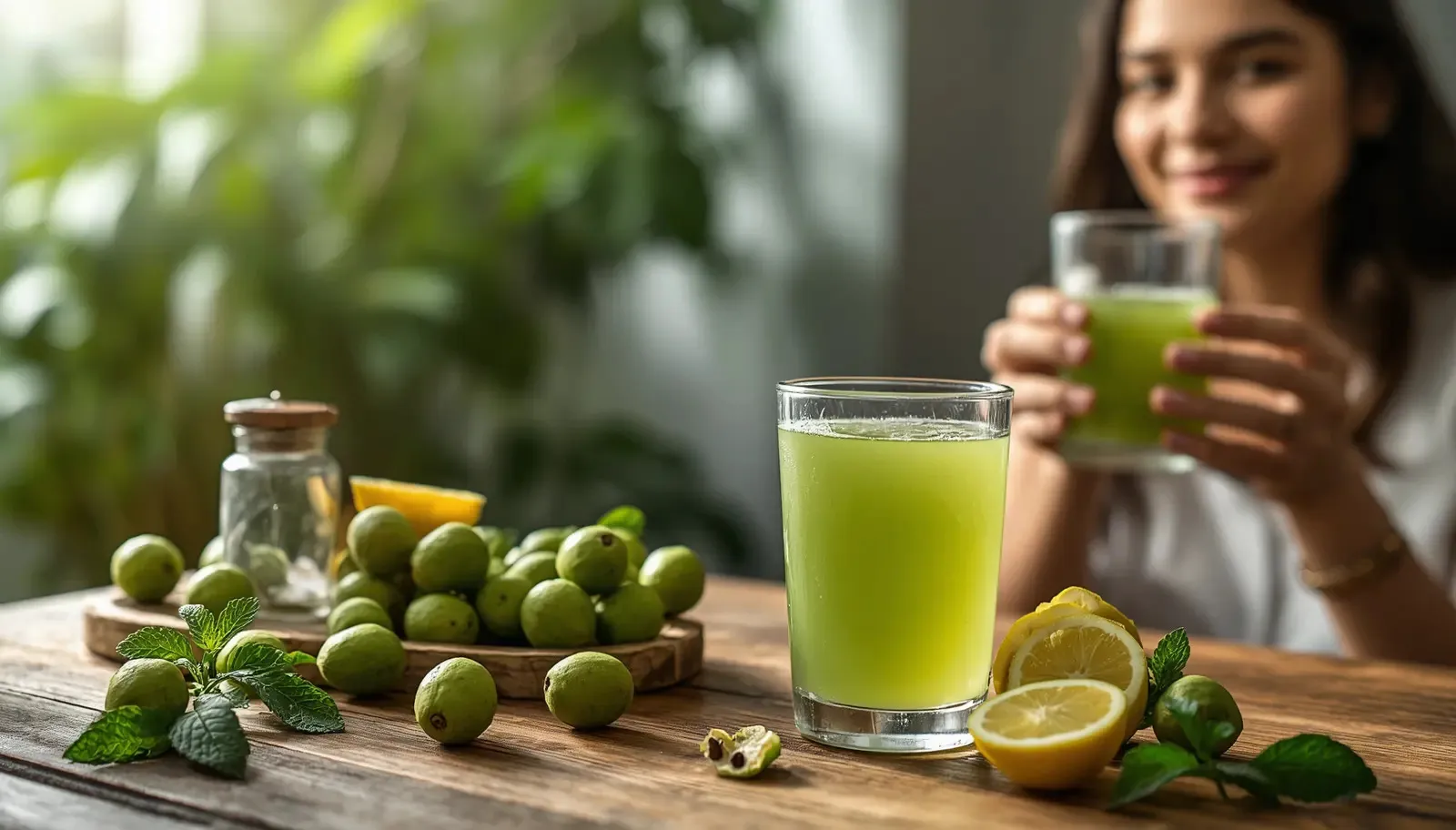
Fresh homemade amla juice made from Indian gooseberries, offering vitamin C as part of a balanced diet to support overall skin health.
Amla is a vitamin C–rich fruit that can contribute to a varied diet. But drinking its juice is not a proven cure for acne, pigmentation, wrinkles or every cause of dull-looking skin.
Quick answer: Is amla juice good for skin?
Amla provides vitamin C and other plant compounds. Vitamin C is required for normal collagen formation and functions as an antioxidant. However, evidence does not show that amla juice by itself clears acne, removes pigmentation, reverses wrinkles or “detoxes” skin. Whole amla retains more fibre than strained juice, and overall diet plus proven skincare matter more than one drink.
Potential benefits—without the hype
1. It contributes vitamin C
Vitamin C is needed for collagen synthesis, wound healing and normal immune function. Amla is recognised as a vitamin C–rich fruit, but the amount varies with variety, freshness, storage and processing. Meeting a nutrient requirement supports normal physiology; consuming extra does not guarantee visibly younger skin.
2. It can replace a sugary drink
Unsweetened diluted amla juice may be a lower-sugar alternative to soft drinks or sweet packaged beverages. The benefit comes partly from what it replaces, not from a unique cleansing effect.
3. It adds variety to the diet
A varied pattern of fruits, vegetables, pulses, whole grains, nuts, seeds and adequate protein supplies many nutrients involved in skin health. Amla can be one part of that pattern alongside guava, citrus, capsicum and other vitamin C sources.
Evidence boundary: A nutrient’s known role in collagen does not prove that a particular juice visibly increases facial collagen or treats a skin condition in people who already get enough vitamin C.
Simple amla juice recipe
Fresh diluted amla drink (1 serving)
Ingredients
- 1–2 fresh amla fruits
- ¾–1 cup safe drinking water
- A small piece of ginger or mint, optional
- A squeeze of lemon, optional
Method
- Wash the amla thoroughly under running water.
- Cut around the hard seed and discard it.
- Blend the flesh with water until smooth.
- For more fibre, keep the pulp. Strain only if you prefer a thinner drink.
- Drink promptly. Refrigerate leftovers in a clean covered container and use within 24 hours.
Avoid routinely adding sugar, honey or jaggery—the body processes these as added sugars even when the source sounds natural. If fresh amla is unavailable, choose an unsweetened product and check the ingredient list for sodium, preservatives and added sugar.
Whole amla vs amla juice
| Option | Advantage | Limitation |
|---|---|---|
| Whole fresh amla | Retains fibre and requires chewing | Very sour taste; hard seed must be removed |
| Unstrained blended amla | Keeps more pulp and fibre | Thicker texture |
| Strained homemade juice | Easy to dilute and drink | Less fibre; hygiene matters |
| Packaged juice | Convenient and available year-round | May contain added sugar, sodium or little actual amla |
| Amla candy or murabba | Palatable | Often high in added sugar |
Popular skin claims checked
“Makes skin glow”
“Glow” has no standard medical definition. Hydration and nourishment may affect appearance, but results cannot be promised.
“Cures acne”
Unsupported. Acne involves blocked follicles, oil, inflammation and other factors; proven treatments may be needed.
“Removes pigmentation”
No convincing evidence shows that drinking amla erases melasma or post-acne marks. Sun protection and diagnosis matter.
“Reverses wrinkles”
Vitamin C supports normal collagen biology, but amla juice has not been shown to reverse established wrinkles.
“Detoxifies the skin”
Unsupported. Skin, liver and kidneys have normal physiological roles; vague toxin claims are not a measurable benefit.
“Works in seven days”
Skin changes over time, and a fixed seven-day transformation claim is not credible.
How much and when?
There is no clinically established dose of amla juice for skin. Treat it as a food, not medicine. A small diluted serving—such as 30–60 ml of concentrated juice diluted with water, depending on the product—or one to two fresh fruits is a practical culinary amount for many adults.
There is no proven skin advantage to drinking it on an empty stomach. Have it with or after food if acidity or nausea occurs. More is not necessarily better, and acidic drinks can affect tooth enamel; dilute, avoid swishing, and rinse the mouth with plain water afterward.
Side effects and precautions
- Stomach symptoms: Sour or concentrated juice may worsen reflux, nausea, cramps or diarrhoea.
- Diabetes medicines: Do not use amla to replace treatment. Monitor glucose as directed when changing diet substantially.
- Blood-thinning or antiplatelet medicines: Ask your clinician before using concentrated amla products daily because interaction evidence is uncertain and bleeding risk matters.
- Kidney disease or restricted diets: Check with your renal team before concentrated juices or supplements.
- Pregnancy and breastfeeding: Food-sized amounts are different from extracts; avoid high-dose products without professional advice.
- Allergy: Stop and seek help for hives, swelling, wheezing or breathing difficulty.
Supplements and powders can vary in dose, purity and added ingredients. A food is not automatically interchangeable with a concentrated extract.
What supports skin more reliably?
- Protect from ultraviolet exposure: Seek shade, wear protective clothing and use broad-spectrum SPF 30+ sunscreen on exposed skin.
- Eat enough protein and varied produce: Skin needs more than vitamin C alone.
- Avoid smoking: Tobacco affects blood vessels and contributes to premature skin ageing.
- Use a gentle routine: Cleanse without harsh scrubbing and moisturise when needed.
- Sleep and manage health conditions: Read how to sleep better.
- Treat the actual diagnosis: Acne, eczema, fungal infection and melasma need different approaches.
For broader food habits, explore nutrition guides. For hair concerns, see evidence-informed hair growth remedies.
When to see a dermatologist
Seek medical care for painful or scarring acne, a rapidly changing mole, a wound that does not heal, widespread rash, persistent itching, sudden pigment change or a skin problem affecting sleep or daily life. Urgent help is needed for breathing difficulty, facial swelling, blistering with fever or a severe medicine reaction.
The bottom line
Amla juice for skin is best understood as a vitamin C–rich food option, not a beauty treatment. It can contribute to a varied diet and replace a sugary drink, especially when unsweetened and safely prepared.
Keep the pulp when possible, use modest portions and judge packaged products by their labels. For visible skin concerns, sunscreen, gentle skincare and appropriate treatment have a clearer role than promises of an overnight glow.
Frequently asked questions
Does amla juice make skin glow?
It can contribute nutrients to a balanced diet, but “glow” is subjective and no specific result can be guaranteed.
Can amla juice clear acne?
No good evidence shows that drinking amla juice treats acne. Persistent or scarring acne should be assessed and treated appropriately.
Can I drink amla juice every day?
Many adults can include a modest food-sized serving, but daily use is unnecessary and may not suit people with reflux, certain medicines or restricted diets.
Should I drink amla juice on an empty stomach?
There is no proven skin benefit from empty-stomach use. Drink it with food if it causes acidity or nausea.
How long does amla juice take to improve skin?
There is no evidence-based timeline because amla juice is not a proven treatment for skin appearance or disease.
Is whole amla better than juice?
Whole or unstrained amla retains more fibre. Juice may be easier to drink but is not nutritionally superior.
Can I apply amla juice directly to my face?
It is acidic and may irritate skin. Do not use homemade amla juice as a substitute for tested skincare products or prescribed treatment.
Sources and further reading
- NIH Office of Dietary Supplements: Vitamin C
- American Academy of Dermatology: Vitamins and Supplements for Skin
- ICMR–National Institute of Nutrition: Indian Food Composition Tables
- American Academy of Dermatology: Skin Care Basics
Medical note: This article is general nutrition and skincare education, not a diagnosis or treatment plan.
About the Author