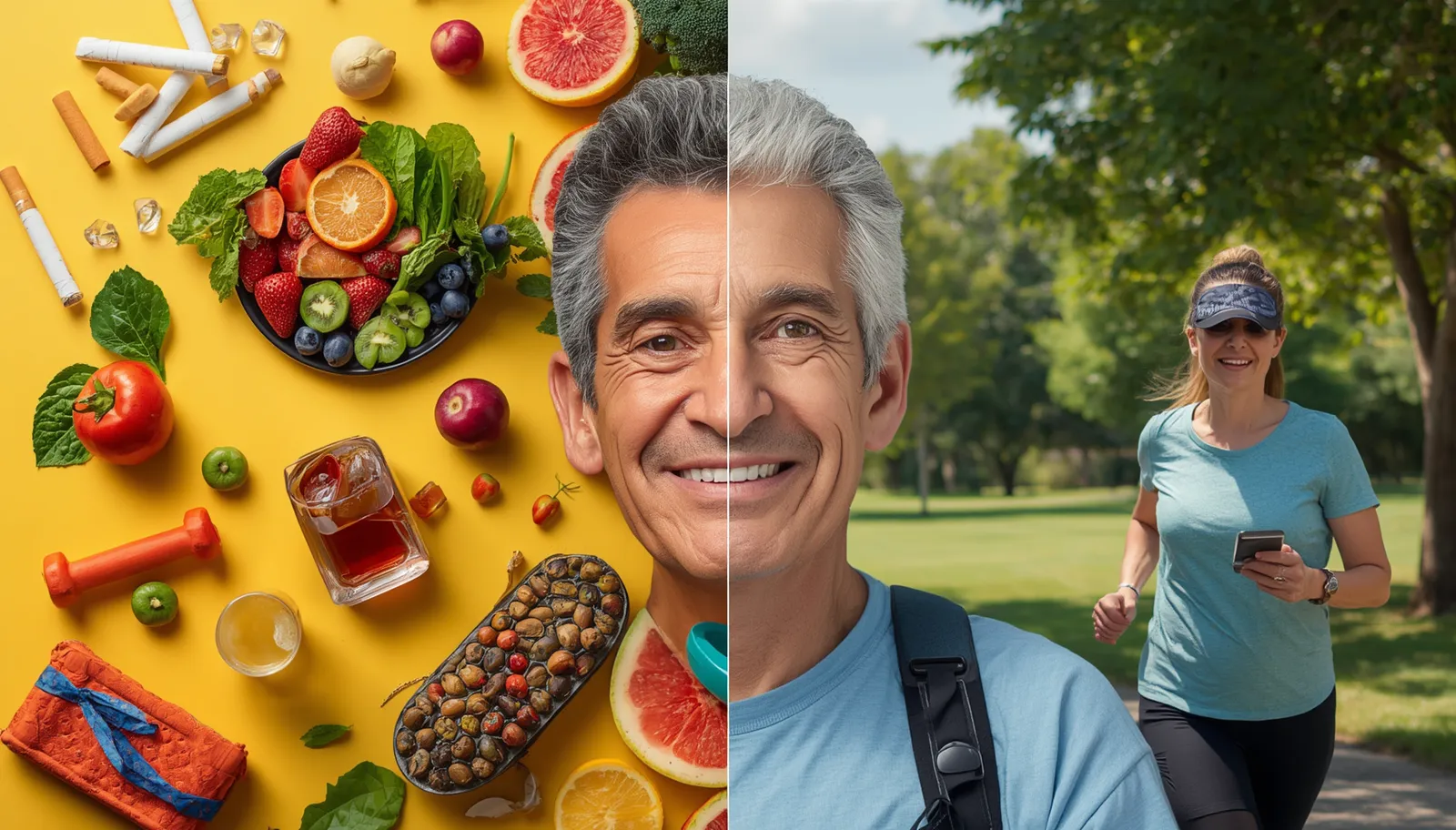
Healthy ageing depends on consistent daily habits such as regular exercise, balanced nutrition, quality sleep, sun protection, and avoiding tobacco.
Ageing is normal, but everyday choices can influence skin damage, physical function and the risk of chronic disease. Here is what matters most—without miracle cures, shame or exaggerated “reverse your age” promises.
Quick answer: What habits can accelerate ageing?
Smoking, repeated unprotected sun exposure, too little sleep, physical inactivity, an unhealthy dietary pattern, excess alcohol and ignoring preventable health risks have the clearest practical importance. Chronic stress, social disconnection and repeated crash dieting may also undermine recovery, strength and wellbeing. These habits change probabilities—not your worth, and not your exact “biological age.”
What does “age faster” actually mean?
Chronological age is the time since you were born; no habit changes it. Skin ageing includes wrinkles, uneven pigmentation and loss of elasticity, strongly influenced by ultraviolet exposure and smoking. Healthy or functional ageing concerns strength, mobility, cognition, independence and disease risk.
Online “biological age” calculators often compress many uncertain measures into one attractive number. A more useful approach is to monitor established markers such as blood pressure, fitness, sleep, tobacco exposure, glucose when appropriate and the ability to perform daily activities.
Important: Genetics, income, environment, healthcare access and chance also shape ageing. This guide supports risk reduction; it does not guarantee a youthful appearance or prevent every illness.
The 12 habits worth changing
1. Smoking or using tobacco
Tobacco damages blood vessels and raises the risk of cancer, heart disease, stroke and lung disease. Smoking also contributes to premature skin ageing. Stopping at any age offers health benefits; professional cessation support and approved medicines can improve the chance of success.
2. Repeated sun exposure without protection
Ultraviolet radiation accelerates visible skin ageing and causes DNA damage that can lead to skin cancer. Seek shade, wear protective clothing and use broad-spectrum, water-resistant SPF 30 or higher on exposed skin. Reapply as directed, especially after sweating or swimming.
3. Treating short sleep as a badge of honour
Regularly inadequate or poor-quality sleep can affect mood, attention, appetite and cardiometabolic health. Most adults need at least seven hours, although individual needs vary. Consistent timing, a dark room and less late caffeine are more useful than chasing perfect sleep scores.
4. Sitting most of the day
Long sedentary periods often coexist with low total activity. Build toward at least 150 minutes of moderate-intensity activity weekly, or the equivalent, and break up sitting with brief movement. Even a 10-minute walk after meals can be an approachable start.
5. Skipping strength and balance work
Muscle mass, power and balance matter for glucose control, bone health and independence. Include muscle-strengthening activity on two or more days each week, adapted to your current ability. A beginner can use a safe 15-minute home workout.
6. Building meals around highly processed foods
No single snack “ages” you overnight. The concern is a repeated pattern high in salt, added sugar and saturated fat while low in vegetables, fruit, pulses, whole grains, nuts and adequate protein. Improve the overall plate instead of labelling foods as toxic.
7. Drinking too much alcohol
Alcohol increases several health risks, including cancer risk, and it is not required for heart health. Less is safer; people who do not drink should not start for an anti-ageing benefit. If stopping causes tremor, sweating or severe anxiety, seek medical help rather than withdrawing alone.
8. Repeated crash dieting
Very restrictive diets can be hard to sustain and may compromise energy, protein or micronutrient intake. Repeated weight cycling is not a youth strategy. Prefer gradual, nutritionally adequate changes and obtain professional advice if you are older, underweight, pregnant or managing a medical condition.
9. Ignoring blood pressure, glucose and cholesterol
High blood pressure and diabetes can cause damage before obvious symptoms appear. Appropriate screening depends on age, family history, pregnancy history and other risks. Use results with a qualified clinician; do not start supplements or medicines based on a social-media range.
10. Living in constant stress without recovery
Stress is not simply “high cortisol,” and one supplement cannot switch it off. Persistent stress can disrupt sleep and make movement, nutritious eating and connection harder. Short recovery practices—walking, slow breathing, scheduled breaks or beginner mindfulness—can support coping.
11. Letting relationships disappear
Social isolation and loneliness are associated with poorer health, although the causes run in both directions. Aim for regular, meaningful contact that fits your personality: a call, shared meal, class, faith group, volunteering or professional support.
12. Delaying preventive care
Dental care, vision and hearing checks, vaccinations and age-appropriate screening protect function as well as lifespan. Persistent symptoms deserve evaluation; “it is just ageing” should not automatically explain pain, breathlessness, memory change or exhaustion.
Which claims have the strongest support?
| Habit or action | Most defensible takeaway | Avoid claiming |
|---|---|---|
| Stop tobacco | Reduces major disease risks and benefits health at any age | That skin or lungs instantly return to a never-smoker state |
| Protect from UV | Helps prevent sun damage and lowers skin-cancer risk | That sunscreen reverses every existing wrinkle |
| Move and strengthen | Supports cardiovascular health, muscle, bone and function | That one workout “adds years” to life |
| Sleep adequately | Supports mental and physical health | That everyone needs exactly eight hours |
| Eat a balanced pattern | Supports nutrient intake and chronic-disease prevention | That a superfood or detox stops ageing |
| Maintain connection | Social health is part of healthy ageing | That loneliness alone proves a disease diagnosis |
A realistic 7-day reset
Change the system, not your entire life
- Day 1: Record sleep, sitting, tobacco, alcohol and usual meals without judging them.
- Day 2: Add a 10-minute walk or another accessible movement break.
- Day 3: Put sunscreen, a hat or an umbrella beside the door.
- Day 4: Add one vegetable, fruit or pulse serving to a familiar meal.
- Day 5: Set a consistent wake time and move caffeine earlier.
- Day 6: Contact one person you value.
- Day 7: Choose one habit to repeat for four weeks and book any overdue health check.
For tobacco dependence or risky alcohol use, replace a willpower-only plan with professional support. For exercise, begin below your maximum and progress gradually—especially if you have chest symptoms, dizziness, major joint problems or a recent medical event.
Common anti-ageing myths
“Detoxes reverse ageing”
Your liver and kidneys already process waste. Cleanses do not erase years of exposure and can be nutritionally inadequate.
“One supplement fixes it”
Deficiencies may need treatment, but supplements do not replace sleep, tobacco cessation, activity or medical care.
“Wrinkles prove poor health”
Appearance is influenced by genetics, expression and sun exposure; it is not a moral score or complete health assessment.
“It is too late to change”
Many changes—including quitting smoking and increasing activity—can benefit health even when started later.
When to speak with a healthcare professional
Seek personalised advice if fatigue, sleep problems, low mood, unplanned weight change or reduced function persists. Get urgent help for chest pain, severe breathlessness, signs of stroke, fainting or thoughts of self-harm. A clinician can also help with tobacco cessation, alcohol dependence, nutrition and a safe activity plan.
The bottom line
The most important bad habits that make you age faster are not obscure. Tobacco, UV exposure, inactivity, inadequate sleep, excess alcohol and poorly managed health risks have far more practical importance than fashionable “anti-ageing” hacks.
Choose one high-impact change you can repeat. Healthy ageing is less about looking permanently young and more about protecting energy, function, connection and independence.
Frequently asked questions
Can bad habits really make you age faster?
They cannot change chronological age, but some habits can accelerate visible skin damage, impair physical function or raise the probability of age-related disease.
What is the number one habit that ages skin?
Repeated ultraviolet exposure is a major preventable cause of premature skin ageing; smoking also contributes significantly.
Does lack of sleep make you look older?
A poor night can temporarily affect the appearance of the eyes and skin. More importantly, chronic inadequate sleep is linked with broader health problems; it does not determine a precise number of “extra years.”
Can drinking more water reverse ageing?
Hydration is important, especially during heat or illness, but extra water does not reverse wrinkles or biological ageing in a normally hydrated person.
Which exercise is best for healthy ageing?
A combination of aerobic activity, muscle strengthening and balance work is more complete than relying on one exercise. The best starting plan is safe and repeatable.
Do anti-ageing supplements work?
No supplement has been shown to stop normal ageing. Treat confirmed deficiencies with professional advice and be cautious of products promising age reversal.
Is it too late to improve my habits after 50?
No. Quitting tobacco, becoming more active, improving diet and managing medical risks can provide meaningful benefits at many ages.
Sources and further reading
- World Health Organization: Ageing and health
- American Academy of Dermatology: Ways to reduce premature skin ageing
- US CDC: Health effects of tobacco
- US CDC: Benefits of physical activity
- US CDC: About sleep
- World Health Organization: Alcohol
Medical note: This article is general education, not diagnosis or individual treatment. Recommendations may need adjustment for age, pregnancy, disability, medication use and medical conditions.
About the Author


