Mindfulness for Beginners: Simple Practices and 7-Day Plan
 Mehak
Posted on 1 week ago
Mehak
Posted on 1 week ago 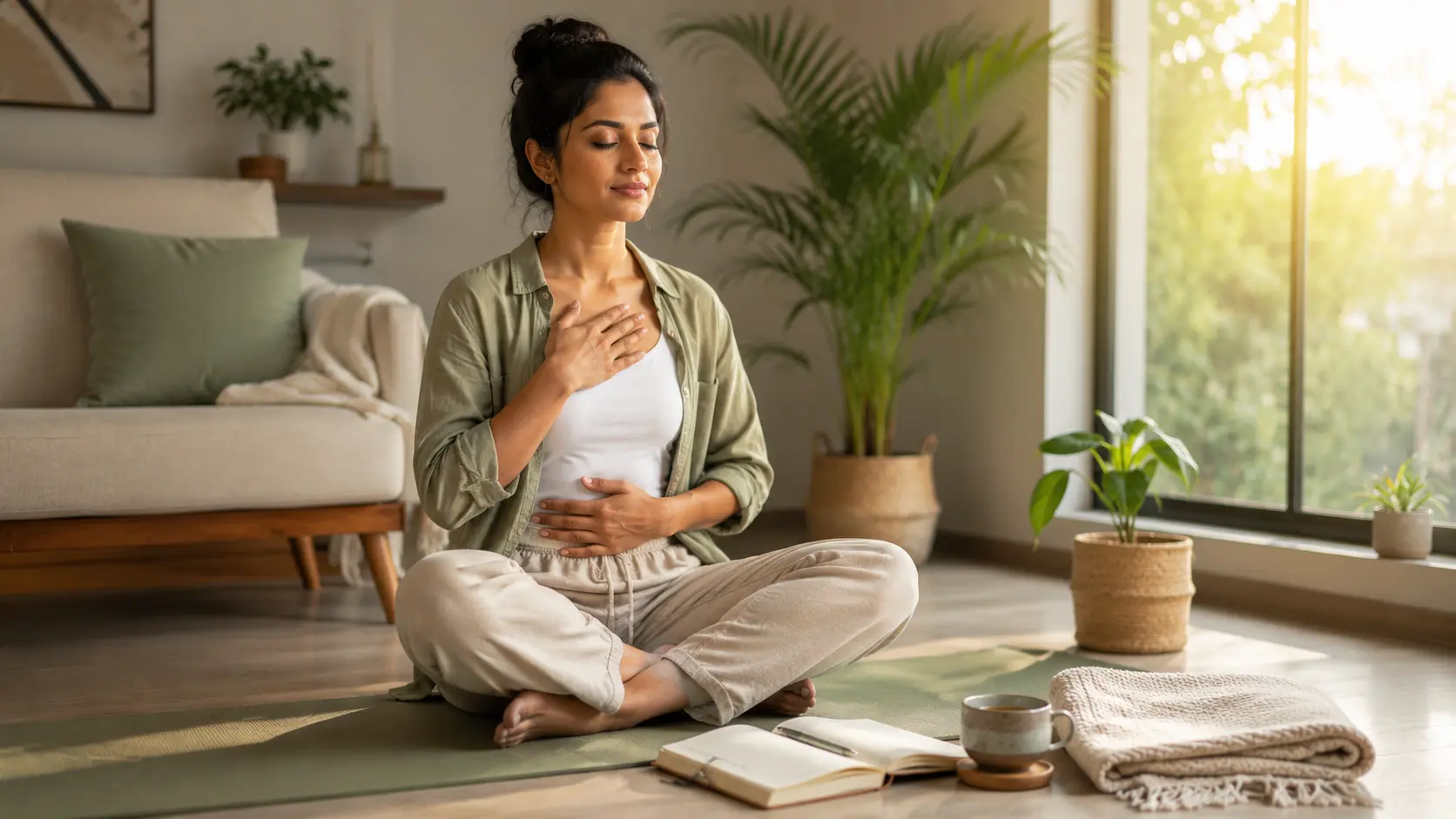
A beginner practicing mindfulness through gentle breathing and present-moment awareness in a peaceful home setting.
Mindfulness for beginners does not require an empty mind, a perfect posture or a long meditation. It begins by noticing present experience—breath, sensations, thoughts or surroundings—and returning gently when attention wanders.
Quick answer: How can a beginner practise mindfulness?
Sit or stand comfortably, choose one present-moment anchor and notice it for one minute. Your anchor could be natural breathing, sounds or the feeling of your feet on the floor. When your mind wanders, acknowledge it and return without criticism. That return is the practice.
Many people assume mindfulness means stopping every thought. That expectation makes the first attempt feel like failure. Minds think, remember, plan and react. Mindfulness asks you to notice that activity rather than eliminate it.
You can practise formally for a few minutes or informally while drinking tea, walking or listening. The aim is not permanent calm. It is greater awareness of what is happening before you respond automatically.
Remember: Wandering attention is not a failed session. Noticing the wandering and returning is the core skill.
What is mindfulness?
Mindfulness involves paying attention to present experience with openness and less automatic judgment. You might notice thoughts, emotions, body sensations, sounds, sights, smell or taste.
Attention
Choose what you are noticing in this moment.
Awareness
Recognise thoughts, sensations and emotions as they appear.
Return
Come back gently whenever attention moves elsewhere.
Choice
Create a small pause before reacting automatically.
Mindfulness can be secular or connected with spiritual and contemplative traditions. You do not need to adopt a particular belief system to practise basic present-moment awareness.
Mindfulness vs meditation
Mindfulness is a quality of awareness. Meditation is a structured practice that may be used to develop it. You can meditate mindfully, but you can also be mindful while washing dishes or speaking with someone.
| Mindfulness | Meditation |
|---|---|
| Can occur during everyday activities | Usually has a defined practice period |
| Focuses on awareness of current experience | May use mindfulness, a mantra, imagery or another technique |
| Can last a few seconds | Often uses a timer or guided session |
| Does not require closing the eyes | May be practised with eyes open or closed |
What benefits can mindfulness offer?
Research has examined mindfulness and meditation for stress, anxiety, depression, pain and sleep. Some people report improved awareness and coping, but results vary across practices, programmes and individuals.
Greater awareness of automatic habits
You may notice that you open an app when bored, tense your shoulders during emails or rush through meals. Awareness creates an opportunity to choose differently.
A pause during stress
Mindfulness may help you notice signs of stress before reacting. It does not remove the deadline or solve an unsafe environment, but it can support a more deliberate response.
Better connection with ordinary moments
Attention to taste, sound, movement or conversation can help you experience activities that normally happen on autopilot.
A different relationship with thoughts
You can learn to recognise “I will fail” as a thought rather than an unquestionable fact. Mindfulness does not require replacing it with forced positivity.
Evidence limit: Mindfulness is not a cure for anxiety, depression, trauma, ADHD, insomnia or chronic pain. It may be one part of appropriate care.
A two-minute mindful breathing practice
- Choose a stable position. Sit, stand or lie down if safe.
- Keep your eyes open with a soft gaze or close them if comfortable.
- Notice where the breath is easiest to feel.
- Let breathing follow its natural rhythm; do not force deep breaths.
- When attention wanders, silently note “thinking” or “wandering.”
- Return to one breath.
- At the end, notice your body and surroundings before moving.
If focusing on breathing increases anxiety, use sounds, colours in the room or the feeling of your feet as the anchor instead.
Six simple mindfulness practices
1. Five-senses check-in
Notice five things you can see, four physical sensations, three sounds, two smells and one taste. Adjust the numbers as needed. This is an attention exercise, not a guaranteed treatment for panic.
2. Mindful tea or water
Before the first sip, notice the cup, temperature, smell and movement of your hand. Taste one sip without checking your phone.
3. Mindful walking
Walk at a safe, natural pace. Feel the contact of each foot with the ground and notice surrounding sounds. Keep visual awareness of traffic, stairs and other hazards.
4. One-minute body scan
Move attention from the feet upward. Notice pressure, warmth, tension or numbness without forcing relaxation. Stop if the practice feels overwhelming.
5. Thought labelling
When a thought appears, use a neutral label such as planning, remembering, worrying or judging. Then return to your anchor.
6. Mindful listening
During one conversation, listen without preparing your reply. Notice the urge to interrupt and return attention to the speaker.
A seven-day mindfulness plan for beginners
Start small
- Day 1: Notice five natural breaths.
- Day 2: Practise one mindful sip of tea or water.
- Day 3: Complete a two-minute breathing or sound practice.
- Day 4: Walk mindfully for three minutes.
- Day 5: Label thoughts for two minutes.
- Day 6: Listen mindfully during one conversation.
- Day 7: Repeat the most useful practice and choose a cue for next week.
You do not need to add time every day. Consistency with a short, tolerable practice can be more useful than forcing a long session you avoid.
How to practise mindfulness in daily life
- Take one aware breath before opening email.
- Feel your feet when waiting in a queue.
- Eat the first three bites without a screen.
- Notice shoulder and jaw tension during work.
- Pause before replying to a difficult message.
- Listen to one familiar song without multitasking.
- Use handwashing as a sensory cue.
Attach mindfulness to something you already do. This removes the need to remember an entirely new routine.
Common mindfulness mistakes
| Mistake | More useful approach |
|---|---|
| Trying to empty the mind | Notice thoughts and practise returning. |
| Forcing slow, deep breathing | Let the breath stay natural or choose another anchor. |
| Expecting instant calm | Measure awareness, not a particular emotion. |
| Starting with 30 minutes | Begin with one to five minutes. |
| Using mindfulness to tolerate harm | Address the unsafe situation and seek support. |
| Judging every distraction | Treat each return as a repetition of the skill. |
Mindfulness when you feel anxious
Closing the eyes and focusing inward can increase distress for some people. Keep your eyes open, shorten the practice and orient to external details such as colours, shapes and sounds.
Do not hold the breath or force large inhalations. If dizziness, panic, dissociation or traumatic memories increase, stop and reconnect with the room. Consider guidance from a trauma-informed mental-health professional.
When mindfulness may need adaptation
Meditation is generally considered low risk, but uncomfortable experiences can occur. A practice may not be appropriate in the same form for everyone.
- Use movement instead of sitting still if stillness feels unsafe.
- Practise with eyes open if closing them increases distress.
- Choose external sounds instead of internal body sensations.
- Use a shorter session or guided professional programme.
- Do not meditate while driving or operating machinery.
- Do not replace prescribed treatment with mindfulness.
Seek professional support for persistent anxiety, low mood, sleep problems, trauma symptoms or impaired daily functioning. In an immediate safety crisis, contact local emergency services and a trusted person.
How to make mindfulness a habit
- Choose one practice rather than several.
- Link it to a reliable cue, such as morning tea.
- Set a minimum of one minute.
- Track completion, not perfect calm.
- Keep the method accessible on busy days.
- Review after two weeks and adjust.
Missing a day does not erase progress. Begin again at the next cue.
The bottom line
Mindfulness for beginners is simple: notice present experience, recognise when attention wanders and return with less judgment. You do not need special equipment, an empty mind or a long session.
Start with one minute and choose an anchor that feels safe. Use mindfulness as a supportive skill, not a substitute for necessary medical, mental-health or practical action.
Related guides: digital detox benefits, burnout vs laziness, how to sleep better and work-life balance tips.
Frequently asked questions
How do I start mindfulness as a beginner?
Choose one anchor such as natural breathing, sounds or your feet on the floor. Notice it for one minute and return gently whenever attention wanders.
How long should a beginner practise mindfulness?
One to five minutes is enough to start. There is no need to force a long session.
Do I need to stop all thoughts?
No. Thoughts are expected. The practice is noticing them and returning attention without excessive judgment.
Can mindfulness reduce anxiety?
Some people find mindfulness helpful for managing stress or anxiety, but it does not replace professional care and can feel uncomfortable for others.
Should I close my eyes?
No. Keep your eyes open with a soft gaze if that feels safer or more comfortable.
What if focusing on my breath makes me anxious?
Stop focusing on breathing and use an external anchor such as sounds, colours or the contact of your feet with the floor.
Is mindfulness the same as meditation?
Mindfulness is present-moment awareness. Meditation is a structured practice that may be used to develop mindfulness.
Sources and further reading
- NCCIH: Meditation and mindfulness effectiveness and safety
- NHS: Mindfulness
- NHS: How to meditate for beginners
Mental-health note: This article provides general education and does not replace individual assessment, diagnosis or treatment.
About the Author