How to Improve Gut Health: 12 Evidence-Based Habits for Better Digestion
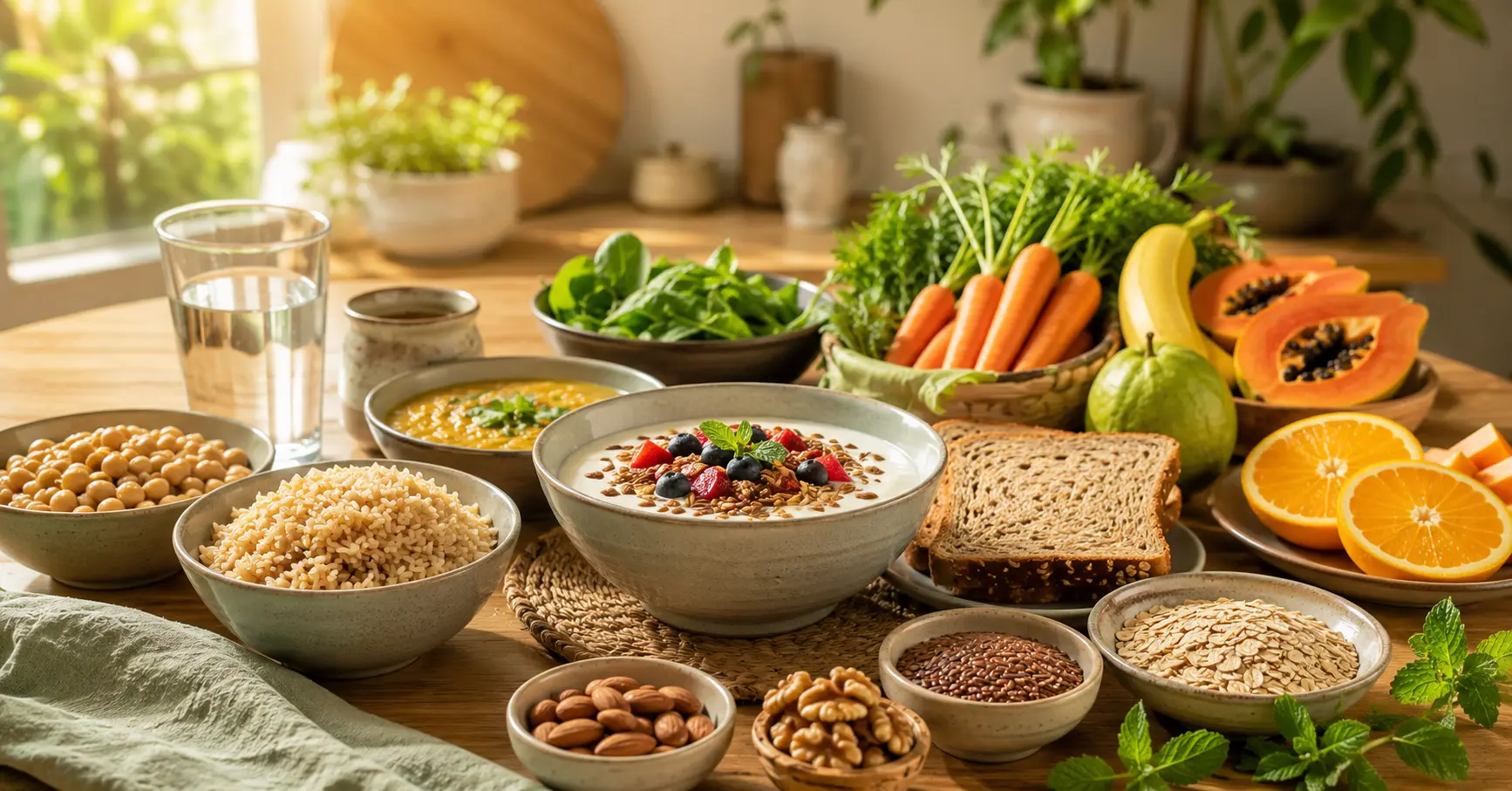
A colourful selection of fibre-rich vegetables, fruits, whole grains, pulses, fermented foods, and healthy Indian ingredients that naturally support gut health and digestion.
Better gut health usually comes from consistent basics: a varied diet, gradually increased fibre, enough fluid, regular movement and appropriate medical care—not a quick detox or one “superfood.”
Quick answer: What improves gut health?
Eat a variety of vegetables, fruit, whole grains, pulses, nuts and seeds; increase fibre slowly; drink enough fluid; include fermented foods if you tolerate them; move regularly; sleep consistently; and avoid unnecessary antibiotics. Persistent digestive symptoms need assessment because “poor gut health” is not a single diagnosis.
Your digestive tract breaks down food, absorbs nutrients and removes waste. It also contains a large community of microorganisms, often called the gut microbiome. There is no single ideal microbiome test result or universal food plan for everyone.
Start gently: A sudden jump in bran, beans or raw vegetables can increase gas and bloating. Add one fibre-rich food at a time and adjust according to symptoms.
What does “gut health” actually mean?
The phrase can refer to comfortable digestion, regular bowel habits, an intact digestive tract and a microbiome that performs useful functions. It does not mean you must have a bowel movement every day or never experience gas.
Digestion
Food is broken down and nutrients are absorbed.
Bowel function
Stools pass without persistent pain, strain or urgency.
Gut barrier
The intestinal lining helps regulate what enters the body.
Microbiome
Microorganisms interact with food, immunity and metabolism.
Online quizzes, stool colours or commercial microbiome scores cannot diagnose most digestive conditions. Symptoms, medical history, examination and targeted tests are more useful when something is wrong.
12 practical ways to improve gut health
1. Increase plant variety
Rotate vegetables, fruit, dals, beans, whole grains, nuts, seeds, herbs and spices. Variety provides different nutrients and types of fibre. Seasonal, local foods count; you do not need imported products.
2. Build fibre gradually
Fibre supports stool bulk and is used by some gut microbes. Adults often need roughly 22–34 grams daily depending on age and sex, but individual needs vary. Increase intake over days or weeks rather than overnight.
3. Choose whole grains more often
Try oats, dalia, whole-wheat roti, brown or hand-pounded rice, barley, millet or other intact grains you tolerate. A whole-grain label is more meaningful than marketing words such as “multigrain.”
4. Eat pulses in tolerable amounts
Moong, masoor, chana, rajma, lobia and other pulses offer fibre and protein. Soaking, rinsing, cooking thoroughly and starting with smaller portions may improve tolerance. Gas is common and does not automatically mean a food is harmful.
5. Drink enough fluid
Fluid helps fibre work and helps prevent dehydration. Needs differ with heat, exercise, pregnancy, illness, kidney or heart conditions. Water is a practical default; people with medical fluid restrictions should follow their clinician’s plan.
6. Try fermented foods if suitable
Curd with live cultures, kefir, idli or dosa batter, kanji and traditionally fermented vegetables can add variety. Not every fermented food contains live microbes at the time you eat it, and none is a guaranteed treatment.
7. Limit ultra-processed foods without demanding perfection
Frequent packaged snacks, processed meats and sugar-sweetened drinks can crowd out fibre-rich foods. Improve the overall pattern rather than labelling occasional foods “toxic.”
8. Move regularly
Walking and other activity can support general health and bowel movement. Start at a level appropriate for your health; even short walks after meals can make a routine easier to maintain.
9. Keep a consistent sleep routine
Sleep and digestive symptoms can influence each other. Keep regular sleep and wake times where possible, reduce late caffeine and seek help for persistent insomnia.
10. Manage stress without blaming yourself
The gut and brain communicate in both directions. Slow breathing, mindfulness, counselling or practical workload changes may help some symptoms, but stress reduction does not replace investigation of disease.
11. Do not ignore the urge to pass stool
Give yourself unhurried toilet time. A small footstool may help some people adopt a more comfortable position. Avoid prolonged straining and repeated unsupervised laxative use.
12. Use antibiotics only when prescribed
Antibiotics can be lifesaving, but unnecessary use contributes to side effects and antimicrobial resistance. Do not start, share or stop them without appropriate medical advice.
India-friendly gut health foods
| Food group | Practical options | Easy use |
|---|---|---|
| Vegetables | Bhindi, lauki, carrot, beans, leafy greens, cauliflower | Add one cooked sabzi at lunch and dinner. |
| Fruit | Guava, papaya, orange, banana, apple, berries when available | Choose whole fruit more often than juice. |
| Pulses | Moong, masoor, chana, rajma, lobia | Start small and increase gradually. |
| Whole grains | Oats, dalia, whole wheat, brown rice, barley, millets | Swap one refined-grain serving. |
| Nuts and seeds | Peanuts, almonds, walnuts, sesame, flax or chia | Add a small handful or spoonful. |
| Fermented foods | Live-culture curd, kefir, fermented batter, kanji | Use a small portion if tolerated. |
No single food repairs the gut. If you have IBS, inflammatory bowel disease, coeliac disease, food allergy, diabetes or kidney disease, generic advice may need modification by a qualified clinician or dietitian.
Probiotics, prebiotics and supplements
Probiotics
Probiotics are live microorganisms intended to provide a benefit in adequate amounts. Benefits are strain- and condition-specific; one product cannot be assumed to work like another. Evidence for many broad “gut health” claims remains limited.
Prebiotics
Prebiotics are substances used by certain microorganisms. Foods such as onions, garlic, banana, oats and pulses contain fermentable fibres, but these may worsen bloating in some people.
Digestive enzymes and detox products
Most healthy people do not need enzyme supplements. Enzymes can be medically indicated for particular conditions, but “colon cleanse,” parasite detox and unverified herbal mixtures may cause diarrhoea, dehydration, interactions or delayed diagnosis.
Supplement safety: Ask a clinician before probiotics or supplements if you are seriously ill, immunocompromised, pregnant, taking medicines or managing a diagnosed digestive disease.
A seven-day gut-friendly starter plan
Change one variable at a time
- Day 1: Note usual meals, bowel pattern and symptoms without judgment.
- Day 2: Add one extra cooked vegetable serving.
- Day 3: Replace one refined grain with a higher-fibre option.
- Day 4: Add a small pulse serving and drink fluid regularly.
- Day 5: Walk for 10–20 minutes at a comfortable pace.
- Day 6: Try a small live-culture fermented food if suitable.
- Day 7: Review tolerance and choose two habits to repeat next week.
A symptom diary may help identify patterns, but avoid eliminating many foods without professional guidance. Restrictive diets can cause nutrient gaps and make eating stressful.
Common gut-health myths
| Claim | Reality |
|---|---|
| “You need a juice detox.” | Your liver, kidneys and digestive tract already process and remove waste. Cleanses are not required. |
| “Everyone needs probiotics.” | Effects depend on the strain, dose, condition and person. |
| “Daily bowel movement is mandatory.” | Normal frequency varies; comfort and a change from your pattern matter. |
| “Bloating always means food intolerance.” | Gas, meal size, constipation, IBS and other causes are possible. |
| “More fibre is always better.” | Rapid increases can worsen symptoms, and some conditions require tailored intake. |
When to see a doctor
Arrange medical assessment for persistent or recurring abdominal pain, diarrhoea, constipation, bloating or a lasting change in bowel habits. Seek prompt care for:
- blood in stool, black tarry stool or rectal bleeding;
- unexplained weight loss, fever or persistent vomiting;
- severe or worsening abdominal pain;
- difficulty swallowing or repeated food sticking;
- ongoing diarrhoea with dehydration;
- anaemia, unusual fatigue or symptoms waking you at night;
- a strong family history of bowel cancer, inflammatory bowel disease or coeliac disease.
Sudden severe pain, fainting, vomiting blood or inability to pass stool or gas with abdominal swelling may require emergency care.
The bottom line
Learning how to improve gut health starts with an inclusive, varied eating pattern and gradual change. Increase fibre slowly, hydrate, move, sleep and observe your own tolerance. Skip extreme cleanses and do not use diet to self-treat persistent symptoms.
Related guides: foods for bloating, nutrition guides, mindfulness for beginners and pineapple health benefits.
Frequently asked questions
What is the fastest way to improve gut health?
There is no instant reset. Start by adding one fibre-rich whole food, drinking adequate fluid and moving regularly, then build variety gradually.
Which foods are best for gut health?
A varied mix of vegetables, fruit, whole grains, pulses, nuts and seeds is more useful than a single best food.
Do I need a probiotic supplement?
Not routinely. Benefits are specific to particular strains and conditions. Ask a clinician if you are treating symptoms or have health risks.
Can curd improve gut health?
Curd with live cultures can be part of a healthy diet if tolerated, but it is not a cure and may not suit people with certain dairy problems.
How much fibre should adults eat?
Needs vary; NIDDK cites roughly 22–34 grams daily depending on age and sex. Increase gradually and seek tailored advice when needed.
Is bloating a sign of poor gut health?
Occasional bloating is common. Persistent, painful or worsening bloating—especially with other warning signs—needs medical assessment.
Should I do a gut detox?
No detox is required for routine digestive health. Some cleanse products can cause side effects and delay proper diagnosis.
Sources and further reading
- NIDDK: Eating, diet and nutrition for constipation
- NIDDK: Diet and nutrition for IBS
- NHS: Eight tips for healthy eating
- World Health Organization: Healthy diet
Medical note: This article is general education and does not replace diagnosis or individual dietary advice.
About the Author


