Best Debloat Foods: 10 Foods That May Help Reduce Bloating Naturally
 Mehak
Mehak 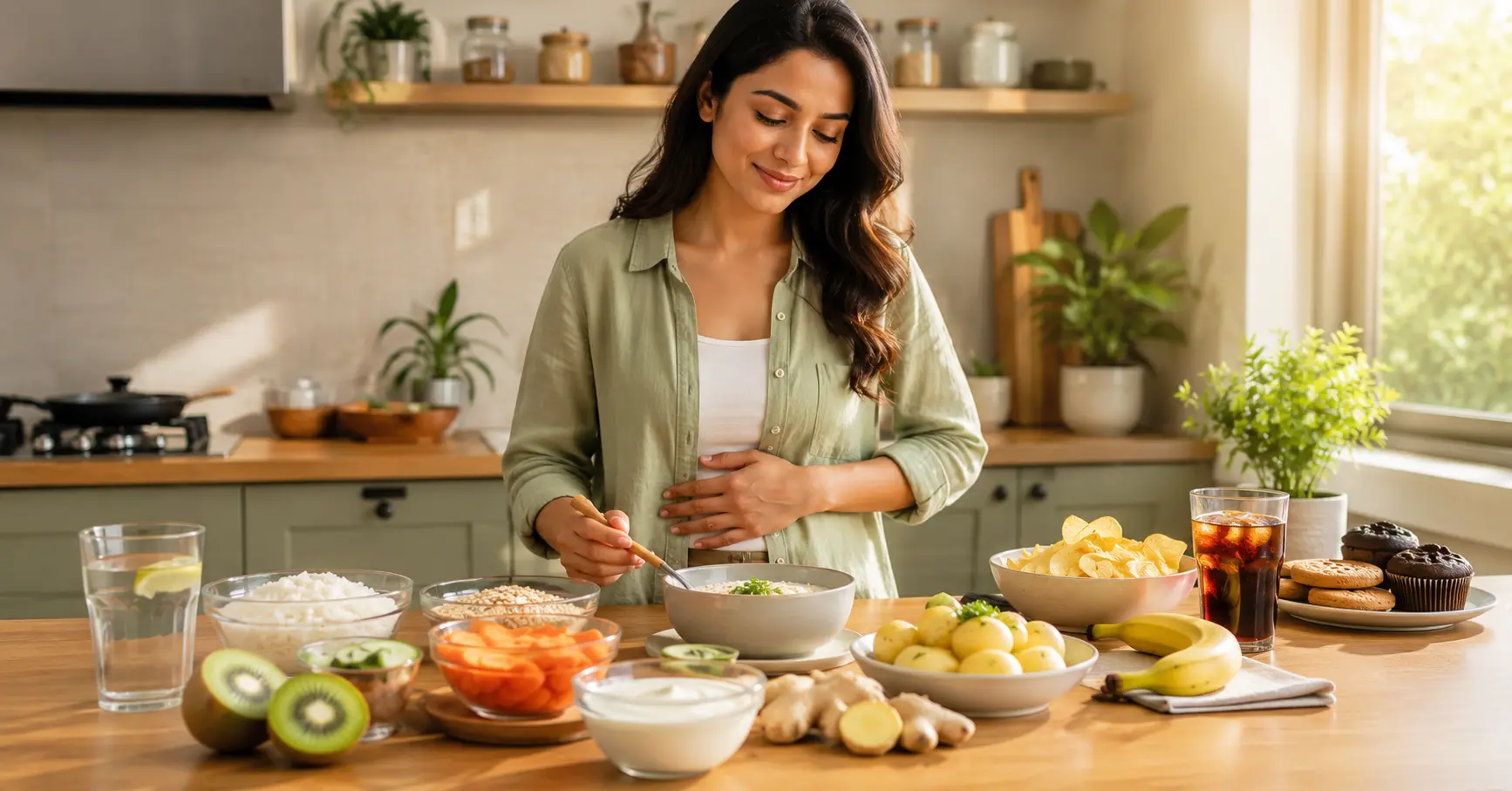
A healthy Indian adult preparing gut-friendly foods such as kiwi, cucumber, ginger, yogurt, oats, and rice in a bright kitchen, highlighting natural dietary choices that may help support digestion and reduce occasional bloating.
The best debloat foods depend on why your stomach feels full, tight or swollen. Smaller meals, slower eating and carefully chosen foods may help occasional pet phoolna, but persistent bloating needs its cause investigated.
Quick answer: What are the best foods for bloating?
For occasional bloating, many people tolerate simple meals containing rice, cooked carrots, cucumber, firm banana, kiwi, ginger or lactose-free curd. However, the right choice depends on whether gas, constipation, lactose intolerance, IBS, a large meal or another issue caused the symptom. No single food “flushes out” bloating.
Pet phoolna may feel like pressure, fullness or tightness in the abdomen. Sometimes the waist also becomes visibly larger; doctors call that distension. You can feel bloated without visible swelling, and some gas after meals is normal.
The useful question is not only “What should I eat?” It is also “What changed before the bloating started?” Meal size, eating speed, constipation, menstrual changes, medicines and individual food tolerance can all matter.
Important: Severe pain, repeated vomiting, blood in stool, fever, unexplained weight loss or inability to pass stool or gas needs prompt medical attention.
Why does pet phoolna happen?
Swallowed air
Eating quickly, fizzy drinks, straws, gum and talking while chewing may increase swallowed air.
Fermentation
Gut bacteria break down certain carbohydrates and create gas.
Constipation
Slower stool movement can contribute to fullness, gas and abdominal pressure.
Food intolerance
Lactose, fructose or other carbohydrates may trigger symptoms in some people.
Other possible causes include irritable bowel syndrome, indigestion, coeliac disease, gastroparesis, hormonal changes and some medicines. A food list cannot diagnose these conditions.
10 foods that may be easier during bloating
1. Plain rice
Plain rice is a simple carbohydrate that many people tolerate well. Pair a modest portion with cooked vegetables and a suitable protein. Avoid turning it into a very large, oily meal, which may worsen fullness.
2. Kiwi
Kiwi provides fibre and has been studied in people with constipation. It may help when bloating accompanies slow bowel movements. Increase fibre gradually because sudden changes can make gas worse.
3. Firm banana
A firm banana may suit some people better than a very ripe banana. Ripeness and portion size can change carbohydrate content and tolerance. Stop if bananas consistently trigger symptoms.
4. Cucumber
Cucumber is light and water-rich. Use a moderate portion and chew well. Raw vegetables can still cause discomfort in sensitive people, so peeled or lightly cooked cucumber may be easier for some.
5. Cooked carrots
Cooked carrots have a softer texture than raw salad and can fit into a simple khichdi, soup or sabzi. Cooking does not guarantee relief, but it may improve tolerance.
6. Ginger
Fresh ginger can add flavour without a heavy sauce. Use it in warm water, tea or cooking. It should not be presented as a cure, and concentrated supplements may interact with medicines.
7. Lactose-free curd or yogurt
Regular dairy may worsen symptoms in people with lactose intolerance. A lactose-free product may be easier. Curd is not suitable for everyone, and “probiotic” does not mean it will immediately remove gas.
8. Oats in a suitable portion
Oats contain soluble fibre. They may support bowel regularity, but a sudden large serving can increase gas. Begin with a modest portion and adequate fluid if fibre intake has been low.
9. Potato
Plain boiled or lightly cooked potato can form part of a simple meal. Fried potato, rich gravies and oversized portions may be harder to tolerate.
10. Suitable fluids
Water supports normal hydration, but drinking excessive amounts does not instantly debloat the stomach. Sip according to thirst and health needs. Limit fizzy drinks when they increase gas.
Food choices: why individual tolerance matters
| Food or habit | Why it may help | Why it may worsen symptoms |
|---|---|---|
| Kiwi | May support constipation management | Extra fibre may initially increase gas |
| Banana | Convenient, simple snack for some people | Ripeness and portion affect tolerance |
| Curd | Lactose-free versions may be tolerated | Regular dairy may trigger lactose symptoms |
| Dal and beans | Nutritious sources of fibre and protein | Fermentable carbohydrates may increase gas |
| Raw salad | Provides fibre and micronutrients | Large raw portions may feel harder to digest |
| Fibre supplements | May help selected constipation patterns | Increasing too quickly can worsen bloating |
Common foods and habits that may trigger bloating
- Fizzy drinks and drinking through straws
- Very large or high-fat meals
- Eating quickly or while talking continuously
- Large portions of beans, chickpeas or rajma
- Onion and garlic in sensitive people
- Milk when lactose is poorly digested
- Apples, pears and some fruit juices
- Sudden increases in bran or other fibre
- Sugar alcohols in “sugar-free” gum and sweets
Do not remove every item at once. Broad restriction can reduce nutrition and make it difficult to identify the actual trigger.
Eating habits that may reduce gas
- Eat slowly and chew food thoroughly.
- Try smaller meals rather than one oversized meal.
- Sit down to eat instead of eating while rushing.
- Reduce gum, hard sweets, straws and fizzy drinks.
- Take a gentle walk after meals when appropriate.
- Keep a short food-and-symptom diary.
- Increase fibre gradually rather than overnight.
A diary should record the food, amount, time, symptoms and bowel pattern. Avoid labelling a food as a trigger after only one episode.
A gentle one-day meal example
Adjust portions to your needs
- Breakfast: Small bowl of oats with firm banana, if tolerated
- Mid-morning: Kiwi or orange
- Lunch: Plain rice, cooked carrot sabzi and egg, fish, tofu or another tolerated protein
- Snack: Lactose-free curd or a simple alternative
- Dinner: Rice-based khichdi adapted to your dal tolerance, with cooked vegetables
- Drinks: Water according to thirst; avoid unnecessary fizzy beverages
This is an example, not a treatment plan. Diabetes, kidney disease, pregnancy, food allergy and other conditions require individual guidance.
Should you try a low-FODMAP diet?
A low-FODMAP diet may reduce bloating, pain and bowel changes in some people with diagnosed IBS. It is not a permanent “healthy foods” list and does not help everyone.
The proper approach has three stages: short restriction, structured reintroduction and personalisation. Long-term unnecessary restriction may reduce food variety. Work with a registered dietitian when possible, especially if you are underweight, pregnant, managing another condition or have a history of disordered eating.
Debloating myths to avoid
- Detox water removes all bloating: Hydration is useful, but water does not treat every cause.
- More fibre is always better: A rapid increase can worsen gas.
- Dairy is bad for everyone: Tolerance differs, and lactose-free options may help some people.
- A flat stomach is required for health: Normal abdominal shape changes during the day.
- One supplement fixes the gut: Treatment depends on the cause and health history.
When to see a doctor
Arrange medical assessment if bloating is frequent, progressively worsening, wakes you at night, affects eating or daily life, or occurs with ongoing constipation or diarrhoea.
Seek prompt care for severe or persistent abdominal pain, repeated vomiting, fever, blood or black stool, unexplained weight loss, a new abdominal lump, marked swelling, or inability to pass stool or gas.
Related guides: best time to eat banana, benefits of drinking water, walking after meals and high-protein breakfast ideas.
The bottom line
The best debloat foods are the foods that address your likely trigger and fit your personal tolerance. Simple rice-based meals, kiwi, cooked vegetables, ginger and lactose-free dairy may suit some people, but they are not universal remedies.
Start with smaller meals, slower eating and a short symptom diary. Avoid extreme restriction. Persistent or concerning pet phoolna deserves medical evaluation rather than repeated detox products.
Frequently asked questions
Which food reduces bloating quickly?
No food reliably works immediately for everyone. A smaller simple meal, avoiding fizzy drinks and gentle movement may help occasional symptoms depending on the cause.
Is banana good for pet phoolna?
A firm banana may suit some people, while others may notice symptoms depending on ripeness, amount and individual tolerance.
Does ginger reduce bloating?
Ginger may be a comfortable flavouring or drink for some people, but it is not a treatment for every cause of bloating.
Can curd help with gas?
Lactose-free curd may be tolerated by some people. Regular dairy can worsen symptoms when lactose is poorly digested.
Should I stop eating dal?
Not automatically. Dal is nutritious but can increase gas in some people. Adjust the type, portion and preparation before removing it completely.
Can constipation cause bloating?
Yes. Slower stool movement can contribute to abdominal fullness, pressure and gas symptoms.
When is bloating serious?
Seek medical care when it is severe, persistent or accompanied by vomiting, fever, bleeding, weight loss, significant pain or inability to pass stool or gas.
Sources and further reading
- NIDDK: Gas in the digestive tract
- NIDDK: Eating, diet and nutrition for gas
- Monash University: FODMAPs and IBS
- Monash University: Kiwi, psyllium and prunes research update
Medical note: This article provides general education and does not diagnose or treat a digestive condition.
About the Author