Mehak
Mehak 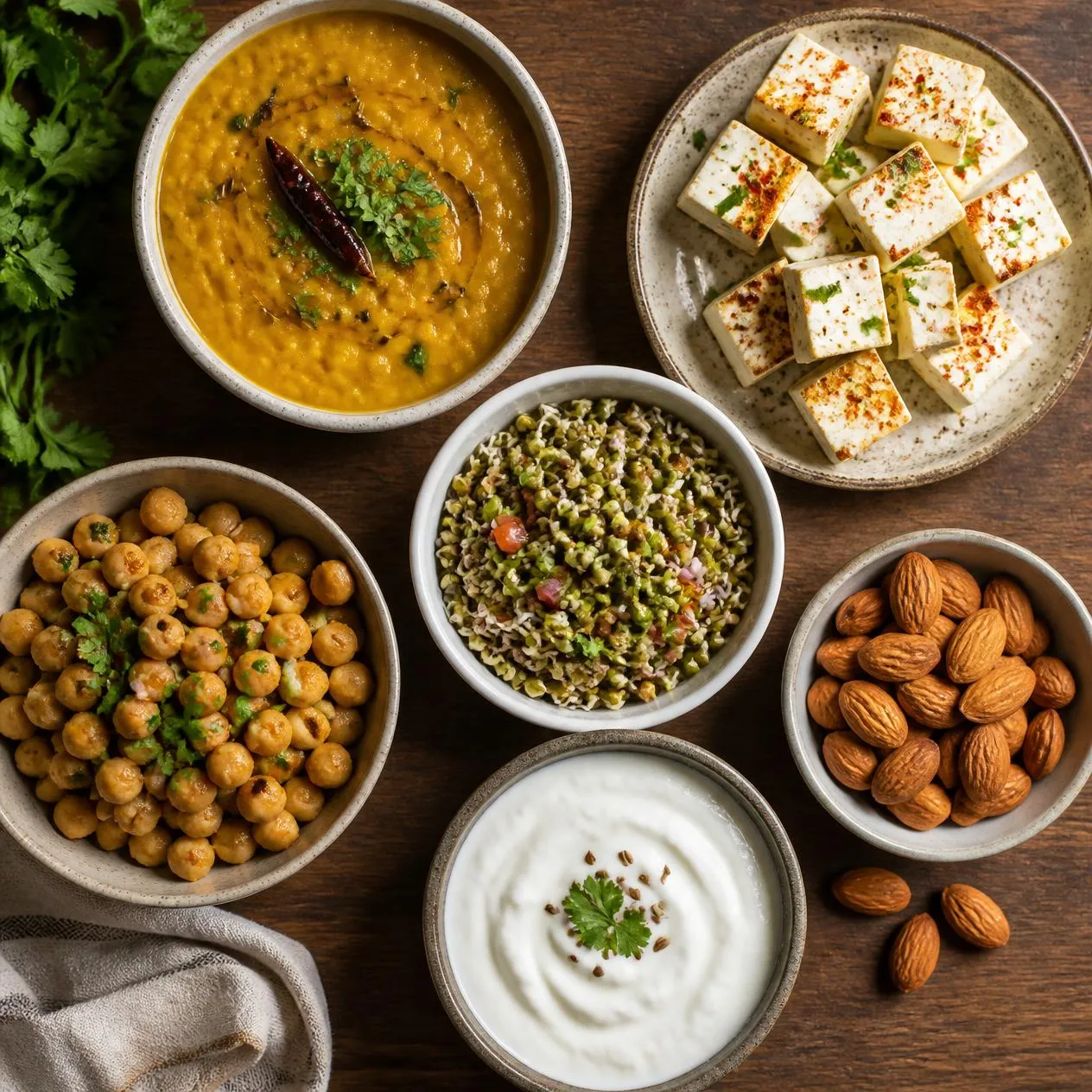
A complete high-protein vegetarian diet plan using everyday Indian foods like dal, paneer, and sprouts.
“Where do vegetarians get their protein?” is one of the most common — and most outdated — nutrition questions. India has one of the largest vegetarian populations in the world, and it’s entirely possible to hit strength-building, muscle-preserving protein targets without eating meat, eggs, or fish. This guide breaks down exactly how much protein you need, the best vegetarian sources available in a typical Indian kitchen, and a complete sample day meal plan you can start using today.
Protein’s role goes well beyond bodybuilding. It’s one of the most satiating macronutrients, meaning protein-rich meals keep you fuller for longer and can reduce unnecessary snacking — useful whether your goal is weight management, weight loss, or simply steadier energy through the day. Protein also plays a direct role in immune function, since antibodies and many immune signalling molecules are built from amino acids, and in tissue repair, from everyday muscle recovery after exercise to wound healing. For women especially, adequate protein alongside calcium supports bone density over time, which becomes increasingly important with age. None of this requires an extreme or restrictive approach — it’s simply a case for making sure protein isn’t the most neglected part of your plate.
How Much Protein Do You Actually Need?
The baseline Recommended Dietary Allowance (RDA) for a sedentary adult is 0.8 grams of protein per kilogram of body weight per day. However, this is a minimum to prevent deficiency — not necessarily an optimal target if you exercise, want to build muscle, or are trying to manage weight.
For vegetarians specifically, some nutrition experts recommend aiming slightly higher — around 1.0 to 1.2 g/kg — because plant proteins are often somewhat less bioavailable than animal protein, meaning your body may not absorb the full amount listed on a label.
| Activity Level | Recommended Protein Intake |
|---|---|
| Sedentary adult | 0.8 g per kg body weight |
| Moderately active (3–5 days/week exercise) | 1.0–1.2 g per kg body weight |
| Strength training / muscle building | 1.2–1.6 g per kg body weight |
| Serious athletes | Up to 1.8–2.0 g per kg body weight |
15 Best Vegetarian Protein Sources (India-Friendly)
These are widely available, affordable, and easy to include in a typical Indian diet:
| Food | Protein (per 100g, approx.) | Notes |
|---|---|---|
| Paneer | 18g | Excellent, easy to cook with |
| Moong dal (cooked) | 7–9g | Easy to digest, great for daily use |
| Chana / chickpeas (cooked) | 8–9g | Also high in fibre |
| Rajma (kidney beans, cooked) | 8–9g | Pairs well with rice for a complete profile |
| Curd / Greek yogurt | 10–11g (Greek), 3–4g (regular curd) | Also supports gut health |
| Soybeans / soy chunks (cooked) | 36g (dry chunks, before soaking) | One of the highest plant protein sources |
| Sprouted moong / mixed sprouts | 7–9g | Low calorie, high nutrient density |
| Tofu | 8g | Versatile, neutral flavour |
| Almonds | 21g | Also rich in healthy fats |
| Peanuts / peanut butter | 25g | Budget-friendly protein source |
| Quinoa (cooked) | 4.5g | Rare complete plant protein on its own |
| Milk (full cream) | 3.4g | Good base for shakes and smoothies |
| Lentils / masoor dal (cooked) | 9g | Everyday staple, very affordable |
| Oats | 13g (dry) | Great high-protein breakfast base |
| Chia seeds | 17g | Small quantity, big nutrient boost |
A closer look at why these particular foods matter: paneer and tofu are especially useful because they’re neutral in flavour and can be added to almost any sabzi, paratha stuffing, or curry without changing the dish’s character. Soybeans and soy chunks deliver one of the highest protein-per-gram ratios of any vegetarian food, making them extremely efficient if you’re trying to hit a high target without eating large food volumes. Lentils and legumes like moong, masoor, chana, and rajma are the backbone of most Indian protein intake — they’re inexpensive, shelf-stable, and already a daily habit in most households, so the real opportunity is simply increasing portion size rather than introducing new foods. Dairy — milk, curd, and paneer — offers a well-absorbed, “complete” protein profile (meaning it contains all essential amino acids in useful proportions), which makes it particularly valuable for vegetarians who don’t eat eggs. Nuts and seeds like almonds, peanuts, and chia are calorie-dense, so they work best as toppings or snacks rather than a primary protein source, but they add useful variety and healthy fats alongside their protein content.
Protein Needs by Life Stage
Protein requirements aren’t static — they shift meaningfully across different life stages, and understanding this helps you set a more accurate personal target instead of using a one-size-fits-all number.
- Growing children and teenagers: need relatively more protein per kilogram than adults to support rapid growth — a paediatrician or dietitian can help set an age-appropriate target.
- Pregnant and breastfeeding women: typically need a noticeably higher intake, often at least 1.1–1.7 g/kg depending on trimester and individual guidance, to support foetal growth and milk production.
- Adults over 50: muscle naturally breaks down faster with age (a process called sarcopenia), so intake in the 1.0–1.2 g/kg range — sometimes higher — helps preserve strength and mobility.
- Athletes and heavy strength trainers: generally benefit from 1.4–1.8 g/kg, spread across 3–5 meals, to support muscle repair and growth from training stress.
If you fall into one of these higher-need groups, treat the general 0.8–1.2 g/kg range in this guide as a starting point, not a ceiling, and adjust upward with professional guidance where relevant.
Why Combining Protein Sources Matters
While you don’t need to combine proteins in every single meal, pairing complementary sources across the day does improve overall amino acid quality. Classic Indian food combinations already do this naturally:
- Dal + rice — a traditional pairing that together forms a more complete amino acid profile
- Chana + roti — legumes plus grains balance out limiting amino acids
- Rajma + chawal — a well-loved combination that’s also nutritionally smart
You don’t need to overthink this. If your diet already includes dal, roti, rice, and vegetables regularly, you’re likely covering your amino acid bases — the bigger opportunity is simply increasing total protein quantity.
Want more practical, doctor-informed nutrition plans delivered simply?
Subscribe for Free Nutrition Tips →Full-Day High-Protein Vegetarian Meal Plan
This sample plan provides roughly 85–95 grams of protein across the day — suitable for a moderately active adult. Adjust portion sizes based on your own target from the table above.
Early Morning
A glass of soaked almonds (6–8) and 1 walnut, or a glass of milk with soaked chia seeds.
Breakfast
Vegetable-stuffed moong dal chilla (2 medium) with mint chutney, or oats cooked in milk topped with peanut butter and banana. Approx. 20g protein.
Mid-Morning Snack
A bowl of mixed sprouts chaat or a small bowl of roasted chana. Approx. 10g protein.
Lunch
2 rotis, a bowl of dal or rajma, a small portion of paneer sabzi, and a side of curd. Approx. 25–30g protein.
Evening Snack
A glass of buttermilk or curd smoothie with a handful of peanuts. Approx. 8–10g protein.
Dinner
Tofu or paneer bhurji with 1–2 rotis or a small bowl of rice, plus a mixed vegetable sabzi. Approx. 20–22g protein.
This structure spreads protein evenly across the day rather than loading it into a single meal, which research suggests helps the body use it more effectively for muscle maintenance and repair.
7-Day Meal Variety Table (No Repetition Fatigue)
Eating the same high-protein meals every day gets boring fast, which is the most common reason people abandon a diet plan. Use this table to rotate breakfast and lunch/dinner protein sources across the week while keeping your overall intake consistent.
| Day | Breakfast Idea | Lunch/Dinner Protein Focus |
|---|---|---|
| Monday | Moong dal chilla with mint chutney | Rajma + rice + curd |
| Tuesday | Oats with milk, peanut butter, banana | Paneer bhurji + roti + salad |
| Wednesday | Besan cheela with vegetables | Chana masala + roti + curd |
| Thursday | Sprouts poha with peanuts | Soya chunk curry + rice |
| Friday | Paneer paratha with curd | Masoor dal + roti + tofu stir-fry |
| Saturday | Greek yogurt with chia and nuts | Mixed dal khichdi + curd + papad |
| Sunday | Vegetable dalia with milk | Paneer curry + roti + sprouts salad |
Notice the pattern: each day pairs one dairy or legume-based breakfast with a distinct dal, paneer, or soy-based main meal. This rotation alone is usually enough to keep a high-protein vegetarian diet from feeling repetitive, while still hitting a consistent daily protein range.
Protein Myths, Busted
Myth: “Vegetarians can never build serious muscle.”
Fact: Muscle growth depends on total protein intake, resistance training, and recovery — not on whether the protein source is animal or plant-based. Many competitive vegetarian and vegan athletes and bodybuilders demonstrate this is entirely achievable with proper planning.
Myth: “More protein always means more muscle.”
Fact: The body can only use so much protein for muscle repair at a given time. Beyond your target range, extra protein is simply used for energy or stored — it won’t accelerate muscle growth further.
Myth: “High-protein diets damage healthy kidneys.”
Fact: For people with normal kidney function, higher protein intake within reasonable ranges hasn’t been shown to cause kidney damage. This concern mainly applies to people who already have existing kidney disease, who should follow personalised medical guidance.
Myth: “Paneer and dairy are automatically unhealthy or fattening.”
Fact: Dairy in reasonable portions is a nutrient-dense, well-absorbed protein source. Weight gain comes from total calorie intake, not from any single food eaten in moderation.
How Cooking Method Affects Protein Quality
How you prepare protein-rich foods can influence both their nutrient retention and how filling they feel:
- Soaking and sprouting lentils and legumes before cooking improves digestibility and nutrient absorption, and slightly increases available protein.
- Steaming or light sautéing paneer and tofu preserves more nutrients than deep-frying, while still being flavourful with the right spices.
- Pressure-cooking dal is efficient and doesn’t meaningfully reduce protein content, making it a practical everyday method.
- Avoid excessive frying of protein-rich foods like paneer pakoras as a primary intake method — the added oil significantly increases calories without adding extra protein value.
7 Practical Tips to Hit Your Protein Target
- Add dal or paneer to at least two meals daily instead of treating it as an occasional side.
- Swap plain roti flour for a mix — adding besan (chickpea flour) or soy flour boosts protein content.
- Keep roasted chana or peanuts as your go-to snack instead of chips or biscuits.
- Add curd to every lunch and dinner — it’s an easy, low-effort protein top-up.
- Use milk-based breakfasts like oats or dalia instead of only bread or plain cereal.
- Batch-cook sprouts and dal at the start of the week so protein-rich food is always ready to grab.
- Track your intake for a week using a free app to see where your actual gaps are — most people underestimate how little protein they’re really eating.
Building consistency around these habits matters more than any single “perfect” meal. If you’re also working on broader diet consistency, our guide on foods for natural liver health pairs well with this plan, since many protein-rich foods here also support liver function.
Recipe Spotlight: High-Protein Moong Dal Chilla
This is one of the easiest ways to add a meaningful protein boost to breakfast without special ingredients.
- Ingredients: 1 cup soaked yellow moong dal, 1 small onion (chopped), 1 green chilli, a handful of chopped coriander, salt and cumin powder to taste, a little water.
- Method: Blend the soaked moong dal with a small amount of water into a smooth, thick batter. Stir in the chopped onion, chilli, coriander, and spices. Pour a ladleful onto a lightly greased hot tawa, spread into a thin round, and cook both sides until golden.
- Why it works: A single serving delivers roughly 12–15 grams of protein, is naturally gluten-free, and takes under 15 minutes to prepare — making it one of the most efficient high-protein breakfasts you can make at home.
Common Mistakes Vegetarians Make With Protein
- Relying only on rice, roti, and vegetables: these are carbohydrate-dominant, not protein-dense.
- Skipping breakfast protein: most traditional Indian breakfasts (poha, plain paratha) are low in protein — add curd, sprouts, or eggs-alternative sources.
- Underestimating portion sizes: a small spoon of dal doesn’t come close to meeting daily needs — aim for a full katori per meal.
- Not adjusting for activity level: someone doing regular strength training needs meaningfully more protein than a sedentary target.
- Fearing dairy or soy unnecessarily: unless you have a specific intolerance or allergy, both are excellent, well-studied protein sources.
Do You Need Protein Supplements?
Most people following a well-planned vegetarian diet with dal, paneer, curd, and legumes at every meal can meet their protein needs through food alone. Protein powder can be a convenient top-up if you’re strength training intensely, have a very high target, or struggle to eat large food volumes — but it’s a supplement to a good diet, not a replacement for one. If you do use one, look for a vegetarian-certified pea, soy, or whey-based protein (whey is vegetarian, though not vegan, since it comes from milk).
When to Consult a Dietitian
If you have a medical condition such as kidney disease, are managing diabetes, are pregnant, or have specific fitness goals like significant muscle gain or fat loss, it’s worth consulting a registered dietitian. They can personalise your protein target and food choices based on lab work and individual health history, rather than relying on general guidelines alone.
Final Thoughts
Getting enough protein on a vegetarian diet isn’t complicated — it just requires being intentional. Include a protein source at every meal, spread your intake evenly across the day, and lean on affordable Indian staples like dal, paneer, curd, and sprouts. Small, consistent changes to your plate will get you to your protein target far more reliably than any single “high-protein” recipe ever could.
Frequently Asked Questions
How much protein does a vegetarian need per day?
A general target is 0.8 to 1.2 grams per kilogram of body weight, with active individuals and those strength training aiming toward the higher end or beyond.
Which Indian foods are highest in vegetarian protein?
Paneer, soybeans, moong dal, chana, rajma, curd, and almonds are among the most protein-dense options commonly available in Indian kitchens.
Can I build muscle on a vegetarian diet?
Yes. With sufficient total daily protein, spread across meals from varied plant and dairy sources, vegetarians can build and maintain muscle effectively.
Do I need to combine proteins at every meal?
No. The body pools amino acids from meals eaten across the day, so a varied diet over 24 hours is sufficient — you don’t need to combine complementary proteins in a single meal.
Is paneer a good protein source for weight loss?
Yes, in moderate portions. Paneer is protein-dense and can help with satiety, though portion control matters since it’s also calorie-dense due to its fat content.
Are protein supplements necessary for vegetarians?
Not usually. Most people can meet their protein needs through food. Supplements are optional and most useful for very high targets or convenience, not a requirement.
What’s a good high-protein vegetarian breakfast in India?
Moong dal chilla, besan cheela, sprouts poha, or oats cooked in milk with peanut butter are all practical, protein-dense breakfast options using common Indian pantry staples.
Is soy protein safe to eat daily?
Yes, for most healthy adults, moderate daily soy consumption is considered safe and is backed by decades of research showing it’s a high-quality, complete protein source with no established harm at typical dietary intake levels.
Reference: Examine.com – Optimal Protein Intake Guide | Mayo Clinic Health System – Protein Intake Guidance
About the Author