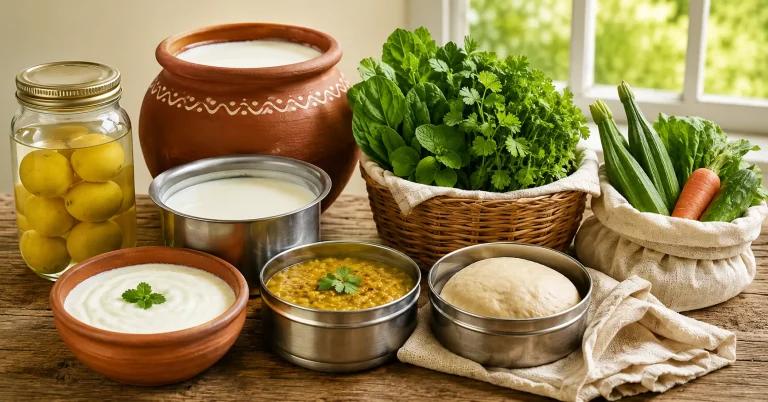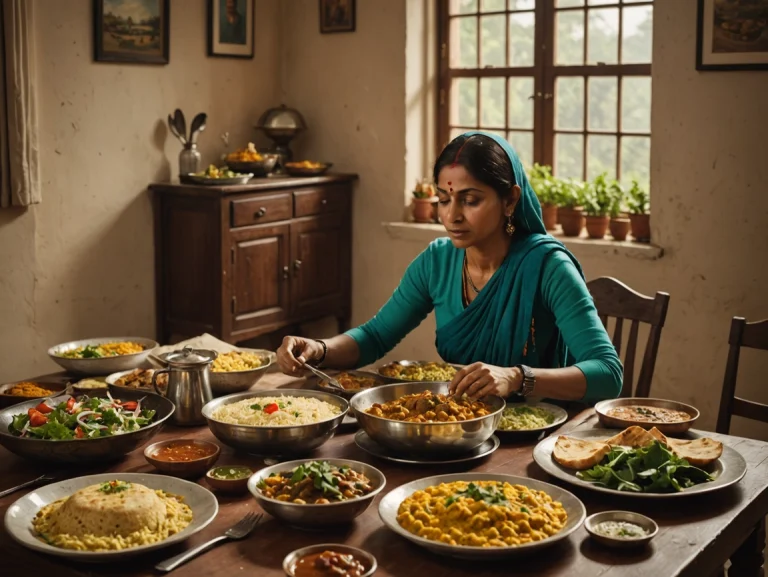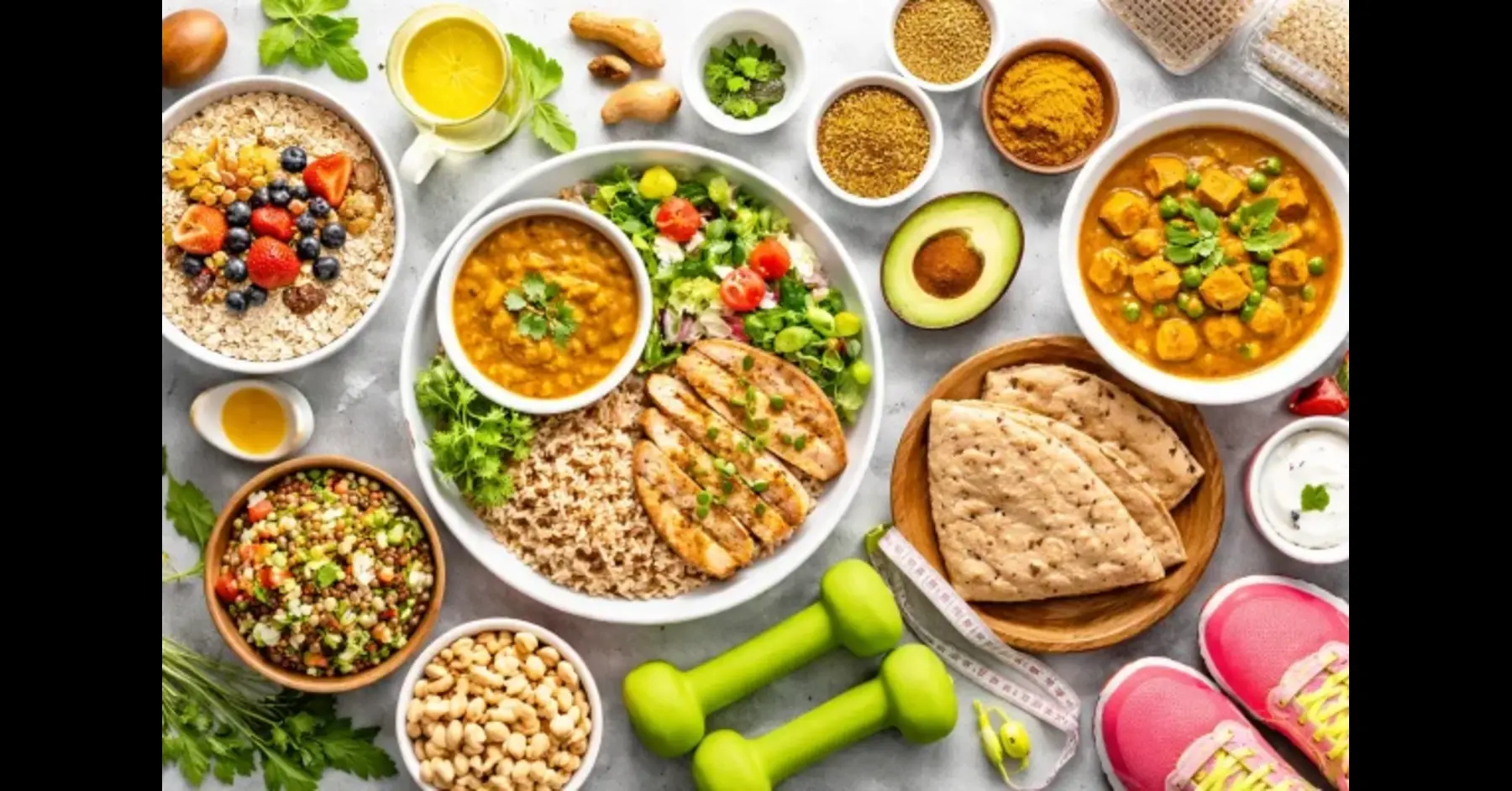
A balanced Indian meal showing portion control and nutritious foods for sustainable weight loss
Diet, Workouts, Food Choices, and Daily Habits That Actually Work
This Indian weight loss diet guide covers everything you need to lose weight eating real Indian food.An Indian weight loss diet does not mean giving up roti, dal, rice, or the food your family eats every day. This guide builds your Indian weight loss diet around real Indian ingredients. — controlling portions, reducing oil, increasing protein, and cutting foods that add calories without adding nutrition. Whether you are looking for a 7-day meal plan, home workouts, or the best Indian foods for fat loss, everything here is practical and built for real Indian kitchens
Before going further: weight loss comes down to one principle — eat slightly less than your body burns, consistently, over weeks and months. Every section below is built on top of that foundation.
1. 7-Day Indian Weight Loss Diet Plan
A proper Indian diet plan for weight loss works with Indian ingredients, not against them. Dal, sabzi, curd, roti, and rice are all acceptable — the problem is usually excess oil, large portions, and too many refined carbs like maida. The plan below fixes those problems without making your meals unrecognisable.
General Rules for Your Indian Weight Loss Diet for Weight Loss
- Eat 3 meals a day. Do not skip meals — it increases cravings and leads to overeating later.
- Keep dinner the lightest meal of the day.
- Cut cooking oil to 2-3 teaspoons per meal, not per dish.
- Replace maida items with whole wheat, jowar, bajra, or ragi wherever possible.
- Limit sugar to less than 5 teaspoons per day, including what is in chai, mithai, and packaged foods.
Sample 7-Day Indian Diet Plan
Day 1 — High Protein Start
- Breakfast: 2 egg whites + 1 whole egg scrambled with vegetables, or 2 moong dal chillas with green chutney
- Lunch: 1 cup brown rice or 2 small rotis + 1 cup dal + 1 cup sabzi + salad
- Snack: 1 small bowl of roasted chana or a handful of peanuts
- Dinner: 1 bowl vegetable soup + 1 roti + 1 cup curd
Day 2 — Fibre Focus
- Breakfast: Oats cooked in water or low-fat milk with nuts and no added sugar
- Lunch: 2 rotis + rajma or chole (moderate oil) + salad with cucumber and tomato
- Snack: 1 fruit — apple, pear, or guava
- Dinner: Grilled chicken or paneer (100g) + 1 cup stir-fried vegetables
Day 3 — South Indian Option
- Breakfast: 3 idlis with sambar and coconut chutney (minimal oil)
- Lunch: 1 cup brown rice + rasam + 1 cup rajma + cucumber raita
- Snack: Roasted makhana (fox nuts) — 1 small bowl
- Dinner: Vegetable daliya (broken wheat) with curd
Day 4 — Vegetarian Protein Day
- Breakfast: Besan chilla with green chutney + 1 glass buttermilk
- Lunch: 2 bajra rotis + 1 cup yellow moong dal + palak sabzi + salad
- Snack: 1 small bowl of sprouts chaat
- Dinner: 1 cup paneer bhurji (minimal oil) + 1 roti
Days 5-7
Rotate the above patterns. Swap brown rice with jowar roti or quinoa, alternate between dal varieties (moong, masoor, chana), and cycle protein sources between paneer, chicken, fish, eggs, and legumes. The structure stays the same — protein at every meal, vegetables in bulk, moderate carbs, minimal oil and sugar.
The single biggest change most Indians need to make: reduce oil. The average Indian household uses 4-6 teaspoons of oil per person per meal. Cut that in half and you are already saving 200-300 calories daily — without changing anything else.
2. 15-Minute Home Workout for Beginners
You do not need a gym. A 15-minute bodyweight workout done 5 days a week produces visible results within 6-8 weeks — provided your Indian diet plan for weight loss is also consistent. Exercise alone is not enough, but combined with a caloric deficit it accelerates results significantly.
The Workout — No Equipment Needed
Do each exercise for 40 seconds, rest for 20 seconds. Complete the circuit twice for a full 15 minutes.
- 1. Jumping Jacks: Raises heart rate, warms up the body.
- 2. Squats: Works the largest muscle groups. Keep back straight, knees behind toes.
- 3. Push-ups (on knees if needed): Builds upper body strength, burns calories.
- 4. Reverse Lunges: Easier on knees than forward lunges. Alternate legs.
- 5. Plank Hold: Core strength. Start at 20 seconds, build to 60 seconds.
- 6. Mountain Climbers: Full body. Combines core work with cardio.
- 7. Glute Bridges: Lying on back, feet flat, push hips up.
Key Points
- Rest at least one day between sessions.
- Increase difficulty over time — add reps, reduce rest, or add a third circuit.
- This workout burns roughly 100-150 calories. Diet accounts for 80% of weight loss results.
Exercise is important for health, muscle, and mood — but you cannot out-exercise a bad diet. The workout supports your Indian diet plan for weight loss. It does not replace it.
3. Best Foods for an Indian Weight Loss Diet
There is no food that specifically targets belly fat. Belly fat reduces when total body fat reduces. What matters is choosing foods that make your Indian diet plan for weight loss easier to stick to — foods that keep you full, control blood sugar, and provide nutrients without excess calories.
Best Indian Foods for Weight Loss
- High-protein foods: Eggs, dal, paneer, chicken, fish, curd, moong sprouts. Protein keeps you full and requires more energy to digest.
- Fibre-rich vegetables: Lauki, tinda, tori, palak, methi, cauliflower, cabbage. Add volume to meals with very few calories.
- Whole grains: Brown rice, oats, jowar roti, bajra roti. Digest slowly and prevent blood sugar spikes.
- Healthy fats in moderation: A small portion of nuts, seeds, or ghee — 1 teaspoon per meal is acceptable and supports digestion.
- Green tea: Modest evidence for supporting fat metabolism. A useful swap for sugary drinks.
Foods That Work Against Your Weight Loss Diet Plan
- Refined carbs: white bread, maida rotis, biscuits, namkeen
- Sugary drinks: packaged juices, cold drinks, sweetened chai
- Deep-fried snacks eaten daily: samosas, pakoras, bhujia
- Late-night heavy meals
4. Morning Routine for Weight Loss
A structured morning reduces poor food decisions later in the day and creates the consistency that makes any Indian diet plan for weight loss work long-term.
Effective Morning Routine
- 6:00 AM — Wake up: Consistent sleep and wake time regulates cortisol and hunger hormones.
- 6:05 AM — Drink water: 400-500ml of plain water. Rehydrates after sleep, helps with appetite control.
- 6:15 AM — Move: Walk, yoga, or the 15-minute workout. Do this before checking your phone.
- 7:00 AM — High-protein breakfast: Do not skip this. Skipping breakfast leads to overeating by lunchtime.
- 7:30 AM — Plan your meals: Knowing what you will eat for lunch and dinner removes willpower from the equation.
5. Detox Water for Weight Loss
Detox water serves one genuinely useful purpose: it makes plain water more appealing, which helps people drink more of it. Your liver and kidneys handle detoxification on their own — they do not need lemon or cucumber to do their job. That said, replacing sugary drinks with infused water saves significant calories and supports your weight loss diet plan.
Simple Recipes
- Cucumber-Mint Water: Refreshing, zero calories, easy to make.
- Lemon Water: Mild digestive support. Fine as a morning habit.
- Jeera Water (cumin): Some evidence for digestive benefits. Commonly used across India.
- Saunf Water (fennel): Reduces bloating. Useful after heavy meals.
Detox water will not lose the weight for you. If you are drinking 2 litres of plain water daily, you are already doing the important part.
6. How to Boost Metabolism Naturally
Metabolism is the rate at which your body burns calories. You cannot dramatically change it, but you can optimise it — and doing so makes your Indian diet plan for weight loss more effective.
What Actually Moves the Needle
- Build muscle: Strength training is the most effective way to increase resting metabolism long-term.
- Eat enough protein: Digesting protein uses more energy than digesting carbs or fat. Aim for 0.8-1g per kg of body weight daily.
- Sleep 7-8 hours: Poor sleep raises hunger hormones and lowers fullness signals, directly impacting how much you eat the next day.
- Avoid crash dieting: Eating too little causes your body to reduce its metabolic rate as a survival response. Moderate deficits work better.
- Stay active throughout the day: Walking, cleaning, and climbing stairs can account for 300-500 calories daily — do not spend 8 hours sedentary.
What Does Not Help Much
- Green coffee extract, fat burner supplements, metabolism-boosting teas
- Eating 6 small meals a day — no better than 3 regular meals for most people
- Ice cold water — the calorie burn from warming it is negligible
7. Indian Weight Loss Diet: Best Breakfast Ideas
A good breakfast is the foundation of any Indian diet plan for weight loss. It keeps you full until lunch, reduces mid-morning snacking, and sets the nutritional tone for the day. The key is protein — most Indian breakfasts are carb-heavy and protein-light.
High-Protein Indian Breakfasts for Weight Loss
- Moong Dal Chilla: Quick, high protein, can be stuffed with paneer or vegetables.
- Besan Chilla: Pair with green chutney instead of sugary sauce.
- Egg Bhurji with 1 Roti: High protein, satisfying. Use minimal oil.
- Curd with Fruit and Nuts: No cooking needed. High protein from curd, fibre from fruit.
- Poha with Peanuts: Made with 1 teaspoon oil and enough peanuts for protein.
- Oats Upma: Add vegetables generously. Better than plain oats if you prefer savoury.
- Idli with Sambar: Steamed, not fried. Good protein from sambar dal.
Breakfasts to Reduce
- Paratha made with excess ghee or butter daily
- White bread with jam or processed cheese
- Packaged cereals and granola — usually high in sugar
- Puri-bhaji as a daily habit
8. How to Lose Face Fat
You cannot spot-reduce fat from any specific area, including your face. Face fat reduces when your total body fat percentage goes down through a consistent Indian diet plan for weight loss and regular exercise.
What Actually Works
- Follow a consistent caloric deficit — your face leans out as you lose overall body fat. Most people notice facial changes after losing 4-5 kg.
- Reduce sodium — excess salt causes water retention and facial puffiness. Cut pickle, papad, and packaged snacks.
- Drink more water — staying hydrated reduces water retention.
- Reduce alcohol — it causes significant facial bloating.
- Sleep well — poor sleep causes cortisol-driven water retention and puffiness.
Anyone selling you a face fat loss exercise or cream is misleading you. Face fat is a consequence of overall fat — fix the overall fat first.
9. Walking vs Running for Fat Loss
Both work. A 70 kg person burns approximately 240-280 calories walking briskly for 45 minutes, and 400-450 calories running for the same duration. Running burns more per minute but requires higher fitness levels and is harder on joints.
Practical Comparison for Indian Beginners
- Walking advantages: Sustainable, low injury risk, can be done daily, good for long-term consistency.
- Running advantages: Higher calorie burn per minute, improves cardiovascular fitness faster.
- Best approach: Start with 45 minutes of brisk walking. Once easy, introduce jogging intervals. Build towards running over 8-12 weeks.
For most sedentary Indians, walking 8,000-10,000 steps daily is the realistic starting point. Jumping into running causes shin splints and dropout within weeks. Build the base first.
10. Best Time to Eat for Weight Loss
Meal timing matters less than what you eat and how much — but it does matter. Pairing smart timing with a solid Indian diet plan for weight loss produces better results than diet alone.
What the Evidence Suggests
- Eat more earlier in the day: Larger breakfast, smaller dinner — even with identical total calories — produces better weight loss outcomes.
- Finish eating 2-3 hours before bed: Late-night eating is consistently linked to higher body weight.
- Do not skip breakfast: People who skip breakfast tend to compensate with more calories at lunch and dinner.
- Consistent meal times: Eating at roughly the same times daily regulates hunger hormones and reduces random snacking.
Intermittent Fasting in Indian Context
Intermittent fasting — a 16-hour fast with an 8-hour eating window — works only because it reduces total calorie intake. It is not magic. If you eat the same or more calories in the 8-hour window, you will not lose weight. It is also practically difficult with Indian family meal schedules and social eating. Use it only if it genuinely fits your lifestyle.
Sources and Further Reading
The dietary recommendations in this guide are based on established nutritional guidelines. For further reading:
1. WHO Healthy Diet Guidelines: who.int/news-room/fact-sheets/detail/healthy-diet
2. ICMR Dietary Guidelines for Indians: icmr.gov.in
3. NIH — Protein Intake and Weight Management: nih.gov
What Actually Matters in Any Weight Loss Diet Plan
Any Indian diet plan for weight loss works when you are honest about your current habits and consistent over months, not weeks. Before trying any trick or shortcut, confirm you are doing these basics:
- 1. Are you eating roughly 300-500 calories less than your body burns daily?
- 2. Are you getting 0.8-1g of protein per kg of body weight?
- 3. Are you sleeping 7-8 hours?
- 4. Are you walking at least 6,000-8,000 steps daily?
- 5. Have you done this consistently for at least 6-8 weeks?
If the answer to any of those is no, fix that before worrying about meal timing, detox water, or face fat. The fundamentals of any Indian diet plan for weight loss produce results. The extras are noise until the fundamentals are solid.
Expect to lose 0.5-1 kg per week on a reasonable deficit. Sustainable fat loss is slow. That is not a problem — that is how it works.
— Consistency beats perfection, every time —
See also our guide on high-protein Indian snacks“
About the Author