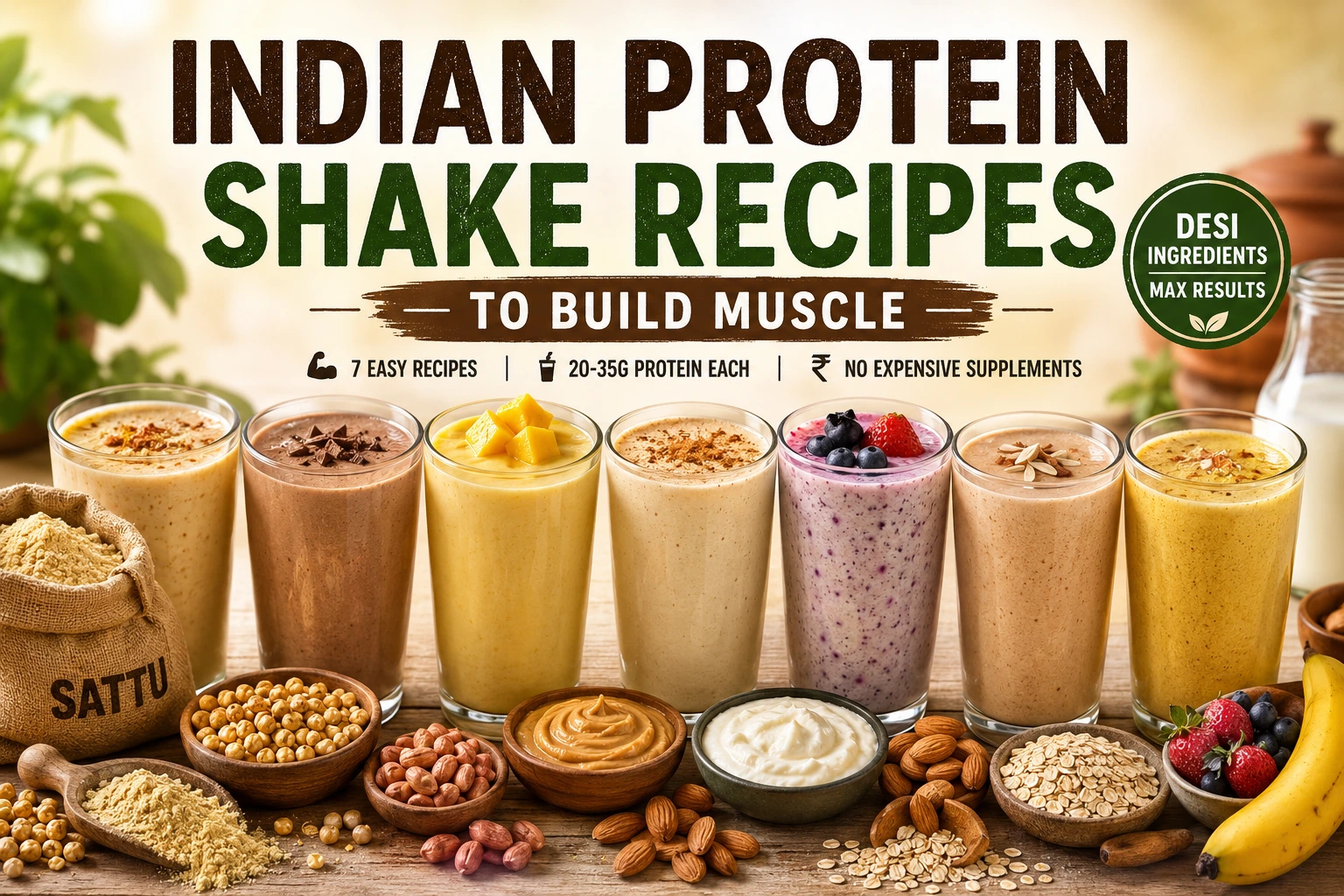
7 easy Indian protein shake recipes using affordable desi ingredients like sattu, curd, banana, and peanuts — no supplements needed.
High-Protein Shakes Using Indian Ingredients — No Expensive Supplements Needed
Indian protein shake recipes are a simple and affordable way to increase your daily protein intake without relying on expensive supplements. These Indian protein shake recipes use common desi ingredients like sattu, curd, peanut butter, banana, and milk to support muscle building, fat loss, and faster recovery. Whether you are trying to gain muscle or improve your overall diet, Indian protein shake recipes offer a practical solution that fits easily into everyday Indian lifestyles.
However, before jumping into the recipes, it helps to understand why protein matters, when to drink these shakes, and what ingredients work best in the Indian context. As a result, this guide covers all of that — so you get the most out of every shake you make.
Why Indian Protein Shake Recipes Matter for Muscle Building
When you exercise — especially during strength training — you create tiny tears in your muscle fibres. Consequently, your body needs protein to repair these tears and rebuild the muscle stronger than before. This process is called muscle protein synthesis, and it is the foundation of all muscle growth.
Moreover, protein does more than just build muscle. It also keeps you full longer, supports metabolism, and helps with fat loss. Therefore, whether your goal is to gain muscle, lose fat, or simply stay fit, getting enough protein daily is non-negotiable.
How Much Protein You Need from Indian Protein Shake Recipes
- For muscle building: 1.6-2.2g of protein per kg of body weight daily
- For weight loss with muscle preservation: 1.2-1.6g per kg of body weight
- For a 70 kg person trying to build muscle: roughly 112-154g of protein per day
- Most Indians get only 40-50g of protein daily from food — a significant shortfall
Indian protein shake recipes bridge this gap efficiently. One well-made shake can add 25-35g of protein to your day with ingredients that cost less than 50 rupees per serving.
When to Drink Your Protein Shake
- Post-workout (best time): Drink within 30-60 minutes after exercise. Additionally, this is when your muscles are most receptive to protein for repair and growth.
- Morning breakfast: A protein shake alongside or instead of a low-protein breakfast helps hit daily targets early.
- Between meals: Furthermore, if you struggle to eat enough protein through food alone, a shake between lunch and dinner fills the gap.
- Before bed (casein-based): A curd or milk-based shake before sleep provides slow-digesting protein that supports overnight muscle repair.
Best Indian Ingredients for Protein Shakes
Before listing the Indian protein shake recipes, here is a breakdown of the best desi protein sources and what they contribute. Understanding this helps you mix and match ingredients confidently beyond just following recipes.
Top Indian Protein Ingredients
- Sattu (roasted chana flour): 20-25g protein per 100g. One of the most underrated protein sources in India. Widely available, cheap, and easy to blend. Particularly popular in Bihar, UP, and Bengal.
- Curd (dahi): 3-4g protein per 100g, but Greek-style hung curd has 8-10g. Adds creaminess, probiotics, and calcium. Moreover, it makes shakes thick and filling.
- Peanut butter: 25g protein per 100g. Also high in healthy fats. Use natural peanut butter without added sugar where possible.
- Milk (full fat or toned): 3.4g protein per 100ml. The base for most shakes. Alternatively, use soy milk for a plant-based option with similar protein content.
- Eggs (whites): 3.6g protein per white. Can be added raw to shakes if using pasteurised eggs, or blended after boiling.
- Peanuts: 26g protein per 100g. Cheaper than peanut butter. Blend directly into shakes for texture and protein.
- Banana: 1.1g protein per 100g — low in protein but essential for carbohydrates, potassium, and natural sweetness. Furthermore, it improves shake texture significantly.
- Oats: 13g protein per 100g. Adds fibre, slow-release carbs, and thickness to shakes.
- Almonds/nuts: 21g protein per 100g. Add healthy fats and protein. Soak overnight for easier blending.
- Whey protein powder (optional): Roughly 24g protein per scoop. Not required for these recipes, but can be added to any shake for an additional protein boost.
What to Avoid
- Added sugar, honey in large amounts, or flavoured syrups — they add calories without nutrition
- Packaged fruit juices as a base — high sugar, low fibre
- Too much ghee or cream — adds unnecessary saturated fat
7 Indian Protein Shake Recipes to Build Muscle
Each of the following Indian protein shake recipes is designed to deliver 20-35g of protein per serving using ingredients available across India. Moreover, all recipes are blender-friendly and take under 5 minutes to prepare.
Recipe 1: Classic Sattu Protein Shake
Sattu is the most underrated ingredient in Indian protein shake recipes. It is cheap, widely available, and packs more protein per gram than most commercial protein powders on a cost-per-gram basis. Furthermore, it has a pleasant nutty flavour that works well with milk and banana.
Classic Sattu Protein Shake
Ingredients:
- 4 tablespoons sattu (roasted chana flour) — approx 60g
- 1 ripe banana
- 250ml full-fat or toned milk
- 1 teaspoon honey (optional)
- A pinch of cardamom (elaichi) for flavour
- 4-5 ice cubes
Method:
- Add all ingredients to a blender.
- Blend on high for 45-60 seconds until smooth.
- Taste and adjust sweetness if needed.
- Drink immediately for best results.
Macros (approx): Protein: 28g | Calories: 380 | Carbs: 52g | Fat: 7g
Sattu-based Indian protein shake recipes are particularly effective because sattu also contains fibre, iron, and B vitamins — making it a complete nutritional option, not just a protein source.
Recipe 2: Peanut Butter Banana Shake
This is one of the most popular Indian protein shake recipes for muscle building because it combines high protein from peanut butter with fast-acting carbohydrates from banana. Consequently, it is ideal as a post-workout shake when your muscles need both protein and glycogen replenishment.
Peanut Butter Banana Muscle Shake
Ingredients:
- 2 tablespoons natural peanut butter (32g)
- 1 large ripe banana
- 250ml milk
- 1 tablespoon oats
- 1 teaspoon honey
- 4-5 ice cubes
Method:
- Soak oats in milk for 5 minutes if time allows — this improves blending.
- Add all ingredients to a blender.
- Blend for 60 seconds until completely smooth.
- Pour into a glass and drink within 30 minutes of your workout.
Macros (approx): Protein: 22g | Calories: 420 | Carbs: 48g | Fat: 16g
Recipe 3: Curd and Mango High-Protein Shake
This shake uses hung curd as the protein base, making it one of the best Indian protein shake recipes for those who prefer a vegetarian, whey-free option. Additionally, mango adds natural sweetness, vitamins, and antioxidants. However, use mango in moderation if you are on a calorie deficit — it is calorie-dense.
Curd and Mango Protein Shake
Ingredients:
- 200g hung curd (chakka dahi) or thick Greek-style curd
- 1 cup fresh mango chunks (or frozen)
- 150ml milk
- 1 tablespoon chia seeds
- 1 teaspoon honey (optional)
- A pinch of black salt (kala namak)
Method:
- If using fresh mango, peel and cube it first.
- Add all ingredients to a blender.
- Blend until completely smooth — about 60 seconds.
- Add ice if desired and serve immediately.
Macros (approx): Protein: 20g | Calories: 340 | Carbs: 42g | Fat: 6g
Recipe 4: Besan and Milk Power Shake
Besan (gram flour) is another excellent base for Indian protein shake recipes that most people overlook. Furthermore, unlike sattu, besan needs to be lightly roasted before use to improve digestibility and remove the raw flavour. Therefore, prepare it in advance and store it — it lasts well in an airtight container.
Besan Power Protein Shake
Ingredients:
- 3 tablespoons lightly roasted besan (45g)
- 250ml full-fat milk
- 1 banana
- 1 tablespoon peanut butter
- 1 teaspoon jaggery powder (gud)
- A pinch of cinnamon
Method:
- Dry roast besan in a pan on low heat for 3-4 minutes until fragrant. Cool completely.
- Add roasted besan and all other ingredients to a blender.
- Blend for 60-90 seconds until smooth.
- Taste and adjust sweetness with jaggery as needed.
Macros (approx): Protein: 24g | Calories: 400 | Carbs: 50g | Fat: 12g
Jaggery is a better sweetener than sugar for Indian protein shake recipes — it provides iron and trace minerals that refined sugar lacks, and it has a lower glycemic impact than white sugar.
Recipe 5: Banana Oat and Almond Shake
This is one of the most filling Indian protein shake recipes — ideal as a meal replacement breakfast or a pre-workout shake. Moreover, the oats provide slow-release energy that sustains you through a workout, while almonds add healthy fats and additional protein.
Banana Oat and Almond Meal Shake
Ingredients:
- 1 large banana
- 4 tablespoons rolled oats (40g)
- 10-12 almonds (soaked overnight)
- 250ml milk
- 1 tablespoon honey
- 1 teaspoon vanilla essence (optional)
- 4 ice cubes
Method:
- Soak almonds overnight and peel them for smoother blending.
- Add oats to the blender first and pulse briefly to break them down.
- Add remaining ingredients and blend for 90 seconds until completely smooth.
- Drink within 20 minutes for best freshness.
Macros (approx): Protein: 18g | Calories: 390 | Carbs: 56g | Fat: 11g
Recipe 6: Berry and Curd Antioxidant Shake
Berries are relatively new to Indian kitchens but are increasingly available in supermarkets and online. However, if fresh berries are not available, frozen berries work equally well and are often cheaper. In addition, this shake combines the antioxidant power of berries with the protein density of curd and flaxseeds.
Berry and Curd Antioxidant Protein Shake
Ingredients:
- 1 cup mixed berries — strawberry, blueberry, or raspberry (fresh or frozen)
- 150g thick curd
- 200ml milk
- 1 tablespoon flaxseeds (alsi)
- 1 tablespoon oats
- 1 teaspoon honey
Method:
- If using frozen berries, thaw for 5 minutes before blending.
- Add flaxseeds to blender first and pulse to break them down.
- Add all remaining ingredients and blend for 60 seconds.
- Pour and serve immediately — the colour will be vibrant purple-pink.
Macros (approx): Protein: 17g | Calories: 290 | Carbs: 38g | Fat: 7g
Recipe 7: Night-Time Casein Shake for Muscle Recovery
This is one of the most strategic Indian protein shake recipes — designed specifically for drinking 30-60 minutes before sleep. Milk and curd contain casein protein, which digests slowly over 6-8 hours. Consequently, your muscles receive a steady supply of amino acids throughout the night while you sleep and recover.
[IMAGE] Night protein shake with milk, curd and nuts in a glass before bedtime | Alt: Indian protein shake recipes for muscle recovery
Night-Time Muscle Recovery Shake
Ingredients:
- 200ml warm full-fat milk
- 100g hung curd
- 1 tablespoon almond butter or peanut butter
- 1 teaspoon honey
- A pinch of turmeric (haldi)
- A pinch of cardamom
Method:
- Warm the milk gently — do not boil.
- Add all ingredients to a blender.
- Blend for 30-45 seconds until smooth.
- Drink warm, 30-60 minutes before sleep.
Macros (approx): Protein: 22g | Calories: 310 | Carbs: 22g | Fat: 14g
Turmeric in this shake is not just flavour — curcumin, the active compound in turmeric, has anti-inflammatory properties that support muscle recovery after training. Furthermore, combining it with fat (from peanut butter) improves absorption significantly.
How to Optimise Your Indian Protein Shake Recipes
Making Indian protein shake recipes work for your goals requires more than just blending ingredients together. Moreover, small adjustments based on your goal — muscle gain, fat loss, or recovery — can significantly improve your results.
For Muscle Gain
- Increase calorie content by adding an extra tablespoon of peanut butter or a handful of oats
- Use full-fat milk instead of toned or skimmed milk
- Add a banana to every shake for additional carbohydrates and potassium
- Drink your shake within 30 minutes of finishing your workout
For Fat Loss
- Use toned or skimmed milk to reduce fat content
- Skip honey and rely on banana for natural sweetness
- Add more curd or sattu — high protein, relatively lower calories
- Drink the shake as a meal replacement for breakfast rather than as an addition to your regular meals
For Better Taste
- A pinch of cardamom (elaichi) improves almost any Indian protein shake
- Vanilla essence adds depth without adding calories
- Frozen banana instead of fresh gives a thicker, creamier texture
- Soaking oats and almonds overnight before blending removes graininess
Common Mistakes with Indian Protein Shake Recipes
Even well-intentioned Indian protein shake recipes can go wrong. Therefore, knowing these common mistakes helps you avoid them from the start.
Mistakes to Avoid
- Using too much fruit: Fruit adds natural sugar and calories. However, one banana or one cup of mango per shake is sufficient. More than that tips the calorie balance without adding proportional protein.
- Not measuring ingredients: Eyeballing peanut butter or sattu leads to inconsistent protein and calorie counts. As a result, use a kitchen scale or measuring spoon for accuracy.
- Drinking shakes instead of fixing diet: Protein shakes supplement your diet — they do not replace whole meals. Consequently, if your meals are poor quality, shakes alone will not produce results.
- Expecting results in days: Muscle building takes 8-12 weeks of consistent training and nutrition. Therefore, do not judge your Indian protein shake recipes by results in the first week.
- Skipping post-workout nutrition: The 30-60 minute window after training is when your muscles most need protein. Furthermore, missing this window consistently slows recovery and progress.
Do You Need a Commercial Protein Powder?
This is the most common question people have when exploring Indian protein shake recipes. The honest answer: no, you do not need commercial protein powder to build muscle. Moreover, for most Indians who are just starting out, whole food sources like sattu, curd, peanut butter, and milk provide sufficient protein at a fraction of the cost.
When Protein Powder Makes Sense
- You are training seriously — 4-5 days a week with progressive overload — and struggling to hit 1.6g protein per kg through food alone
- You have a very busy schedule and cannot prepare whole food shakes consistently
- You want the convenience of a single-ingredient, pre-portioned protein source
When to Skip It
- You are a beginner — whole food Indian protein shake recipes will give you all the protein you need at this stage
- Budget is a concern — whey protein costs Rs 3,000-6,000 per kg; sattu costs Rs 80-120 per kg with comparable protein density
- You have kidney issues — high protein intake needs medical supervision regardless of source
Start with whole food Indian protein shake recipes for the first 3-6 months. If you are training hard and consistently hitting your sessions but still not progressing, then consider adding whey protein as a supplement — not before.
Sources and Further Reading
The nutritional information and recommendations in this guide are based on established research and dietary guidelines. For further reading:
1. Snap Fitness — Protein Shake Recipes for Muscle Building: snapfitness.com/us/blog/3-protein-shake-recipes-to-build-muscle
2. WHO — Protein and Amino Acid Requirements: who.int
3. NIH — Dietary Protein and Muscle Mass: nih.gov
4. ICMR Dietary Guidelines for Indians: icmr.gov.in
Internal links to add in WordPress: link to your Indian weight loss diet post, your Indian breakfast ideas post, and your home workout guide.
Final Word: Start Simple, Stay Consistent
The best Indian protein shake recipes are the ones you actually make and drink consistently. Therefore, start with one or two recipes from this list — the sattu shake and the peanut butter banana shake are the easiest starting points. Moreover, both use ingredients that are cheap, widely available, and nutritionally effective.
In addition, remember that Indian protein shake recipes work best as part of a broader fitness plan — consistent training, adequate sleep, and a balanced diet that includes dal, paneer, eggs, curd, and vegetables at every meal. Furthermore, no shake compensates for poor training or poor overall diet.
However, if you are training consistently and eating well, these Indian protein shake recipes will meaningfully accelerate your muscle building and recovery. Consequently, your results over 8-12 weeks will reflect both your effort in the gym and the quality of nutrition you provide your body.
Protein is not a supplement — it is a fundamental nutrient. These Indian protein shake recipes simply make it easier and cheaper to get enough of it every day.
— Train hard. Eat right. Recover well. —
About the Author