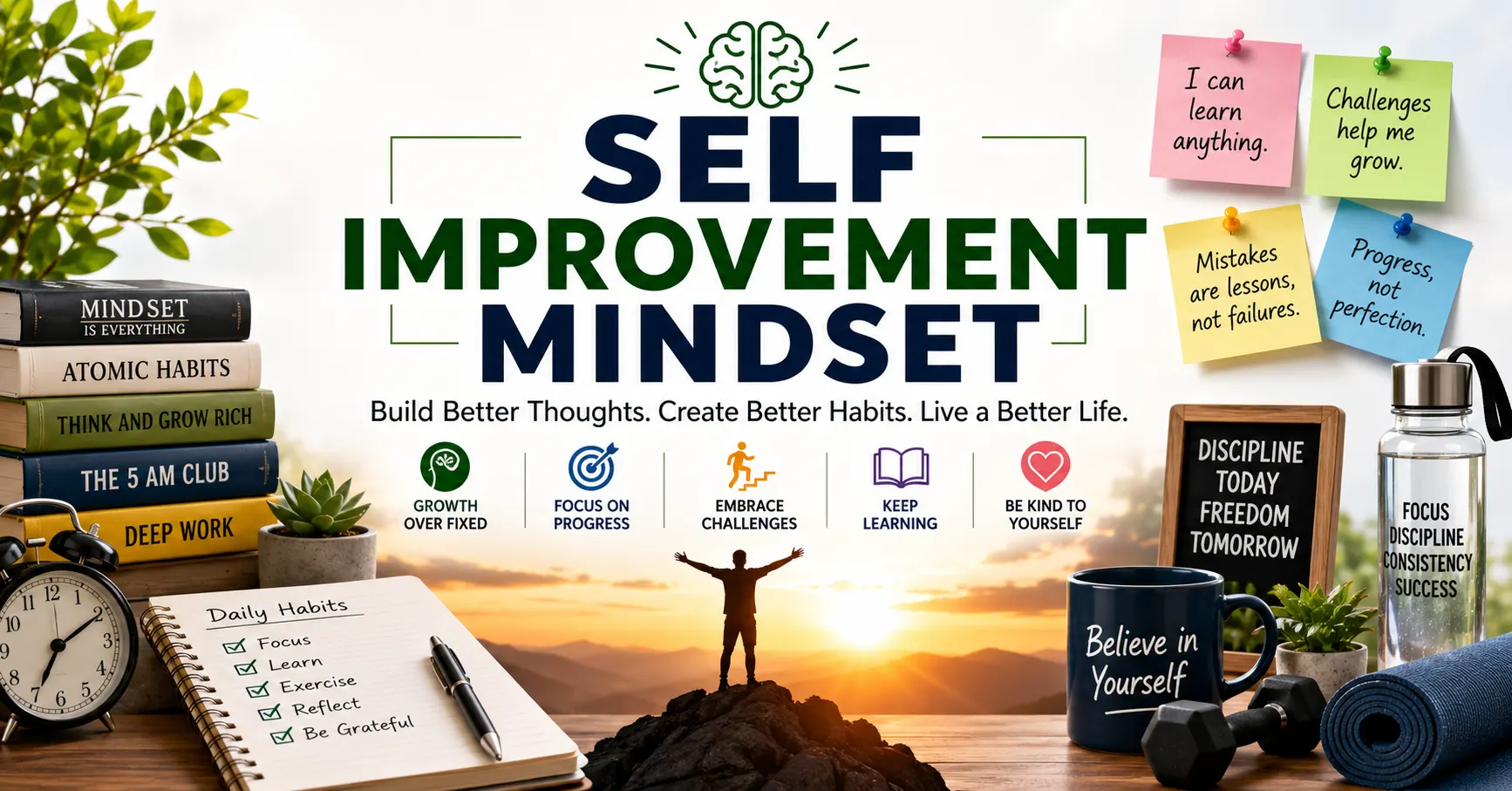
Self improvement begins with self-awareness, better habits, discipline, confidence, and continuous learning.
Self-improvement is the process of becoming more aware, capable, confident, disciplined, and purposeful in everyday life. It is not about becoming perfect. Instead, it is about making steady progress in the areas that matter most, such as mindset, habits, communication, emotional intelligence, productivity, relationships, career growth, and personal goals.
Many people start personal development with big motivation. However, motivation alone rarely creates lasting change. Real growth happens when you build systems, repeat small actions, and learn from your daily experiences. As a result, self-improvement becomes a lifestyle rather than a temporary challenge.
This guide is designed as a cornerstone article for personal growth. It avoids repeating detailed health topics already covered in related articles, such as mental health, sleep, stress, nutrition, and daily lifestyle habits. Instead, it focuses on deeper personal development skills that help you become more consistent, emotionally mature, confident, and successful.
Quick Answer: What Is Self-Improvement?
Self-improvement means intentionally developing your mindset, habits, skills, confidence, emotional intelligence, communication, discipline, productivity, and life direction. It helps you become a better version of yourself through small daily actions, reflection, learning, and long-term personal growth. The best approach is to start with one clear goal, build simple habits, track progress, and improve consistently over time.
What Is Self-Improvement?
Self-improvement is the continuous process of learning, growing, and making better choices. It includes personal development, self-awareness, emotional growth, skill building, behaviour change, and purposeful living.
However, self-improvement does not mean criticising yourself constantly. Instead, it means understanding your strengths, noticing weak areas, and choosing practical actions that help you grow. For example, you may improve communication skills, become more disciplined, manage time better, develop confidence, or set healthier boundaries.
In other words, personal growth is not one single habit. It is a combination of mindset, behaviour, emotional awareness, and consistent practice.
Why Self-Improvement Matters
Self-improvement matters because daily choices shape your future. When you improve your habits, your confidence grows. When you improve your mindset, your ability to handle challenges becomes stronger. Likewise, when you improve your communication, your relationships often become healthier.
Moreover, personal growth helps you respond better to change. Life includes pressure, uncertainty, competition, failure, and unexpected challenges. Therefore, developing resilience, discipline, and self-awareness can make you better prepared for difficult situations.
Too much change creates pressure. Instead, choose one habit and build from there.
Depending Only on Motivation
Motivation changes often. Systems, routines, and accountability are more reliable.
Ignoring Rest
Rest supports productivity and emotional balance. For better recovery.
Repeating Content Instead of Linking
When a topic is already covered in detail, summarise it briefly and link to the dedicated guide. This prevents duplicate content and strengthens internal linking.
30-Day Self-Improvement Plan
Week
Focus Area
Daily Action
Week 1
Self-Awareness
Journal for 5 minutes daily
Week 2
Discipline
Complete one small habit daily
Week 3
Confidence
Take one courageous action daily
Week 4
Growth
Review progress and set next goals
AI Overview Summary
Self-improvement is the ongoing process of developing better habits, mindset, confidence, emotional intelligence, communication, discipline, productivity, relationships, and life direction. It starts with self-awareness and grows through small daily actions. The best self-improvement strategy is to set clear goals, build simple habits, learn continuously, manage emotions, communicate better, and review progress regularly.
Self-improvement is the process of developing better habits, mindset, skills, confidence, emotional intelligence, relationships, and life direction.
How do I start self-improvement?
Start with self-awareness. Choose one area to improve, set a small goal, build one daily habit, and track your progress.
What are the best self-improvement habits?
Helpful habits include journaling, reading, exercising, setting goals, practising discipline, improving communication, learning new skills, and reviewing progress.
How long does self-improvement take?
Self-improvement is a lifelong process. However, small improvements can become noticeable within weeks when practised consistently.
Can self-improvement improve confidence?
Yes. Confidence grows when you take action, keep promises to yourself, learn from mistakes, and build skills through practice.
Is self-improvement the same as self-care?
No. Self-care focuses on protecting well-being, while self-improvement focuses on growth. However, both support a healthier and more balanced life.
Self-improvement is not about becoming perfect. It is about becoming more aware, disciplined, confident, skilled, and intentional over time. The most powerful growth often begins with small daily actions.
Start with one area. Build one habit. Track your progress. Then, keep improving step by step. Over time, better mindset, stronger discipline, clear goals, healthier relationships, emotional intelligence, and continuous learning can help you become a stronger version of yourself.
For the best results, use this pillar guide as a roadmap and explore the related articles linked throughout the page. This will help you grow without repeating the same advice across multiple topics.