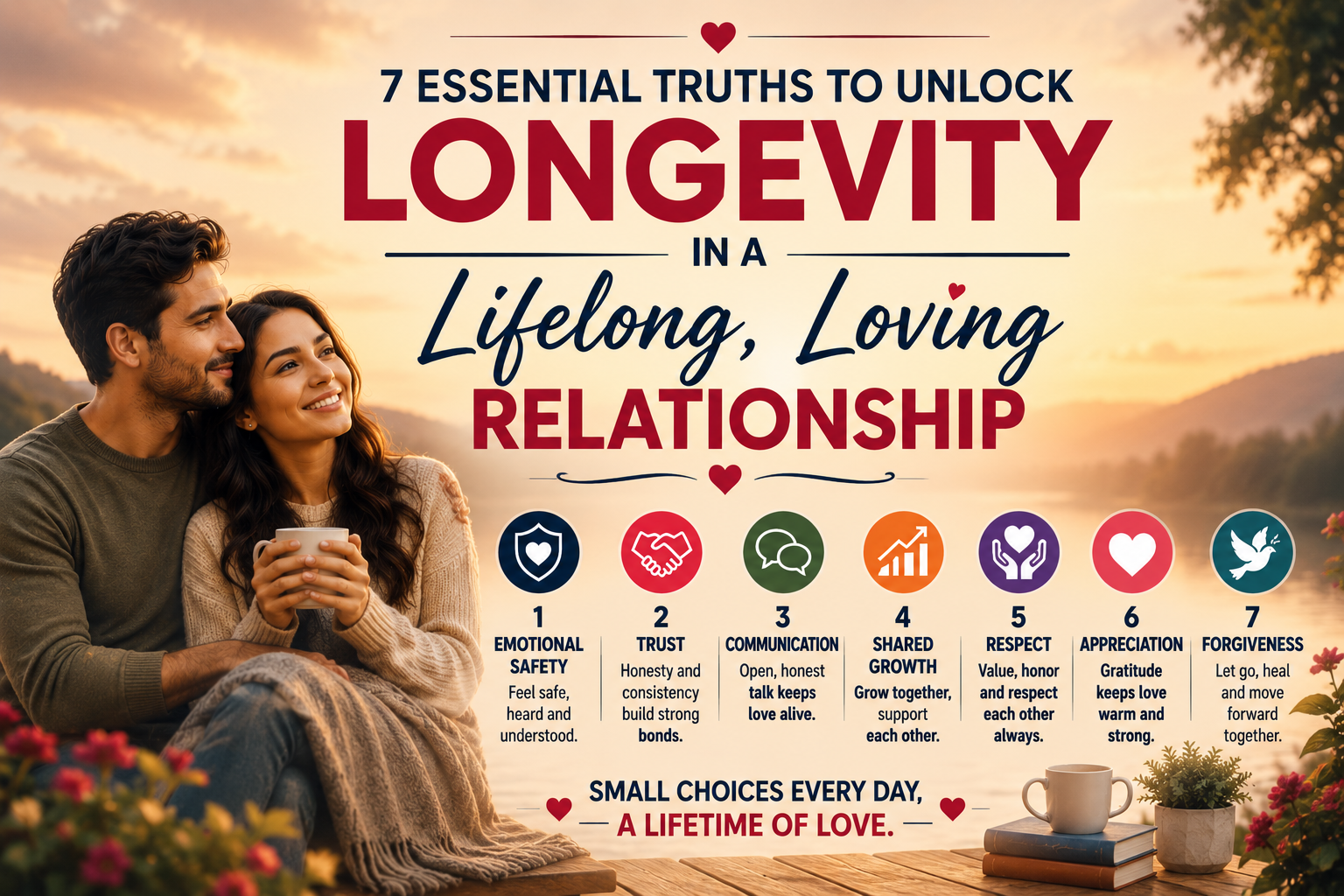
Strong relationships thrive through trust, honest communication, emotional safety, appreciation, forgiveness, and shared growth. Small daily choices create a lifetime of love.
A lifelong loving relationship is not built by luck. It grows through daily choices, honest communication, emotional safety, respect, forgiveness, and shared growth. Many couples want lasting love, but only a few understand that love needs consistent care, not just strong feelings.
Long-term love becomes stronger when both partners choose each other again and again. If you want to build a healthier bond, start with Daily Life Journal’s relationship guides on Healthy Relationships
1. A Lifelong Loving Relationship Needs Emotional Safety
Emotional safety means both partners feel free to speak honestly without fear of insult, rejection, or judgment. In a lifelong loving relationship, both people should feel heard, respected, and understood.
When emotional safety is missing, small issues turn into big conflicts. Partners stop sharing feelings. They hide pain. They avoid difficult conversations. Over time, distance grows. The Gottman Institute explains many research-backed ideas around trust, conflict, and emotional connection in relationships.
To create emotional safety, listen before reacting. Avoid harsh words. Ask questions with care. If stress affects your emotional balance.
2. Trust Is the Foundation of Relationship Longevity
Trust is one of the strongest pillars of relationship longevity. Without trust, love becomes stressful. With trust, love feels peaceful. Trust is built through honesty, consistency, loyalty, and emotional reliability.
A partner builds trust by keeping promises, telling the truth, respecting boundaries, and showing up during difficult times. Trust also grows when both people take responsibility for their actions instead of blaming each other.
Personal confidence also supports trust. When both partners value themselves, they do not depend on control or insecurity. For this, read How to Build Self-Confidence
3. Communication Keeps a Loving Relationship Alive
A lifelong loving relationship cannot survive on silence. Communication keeps love fresh, clear, and emotionally connected. Strong couples do not expect each other to guess everything. They speak with honesty and listen with patience.
Good communication is not only about talking. It is also about listening, timing, tone, and empathy. Instead of saying, “You never understand me,” say, “I feel unheard when this happens.” This small shift reduces blame and opens space for connection.
The American Psychological Association offers helpful resources on stress, emotional health, and human behavior. You can also improve your daily communication through .
4. Long-Lasting Relationships Need Shared Growth
Love becomes stronger when both people grow together. A couple may start with attraction, but a lifelong loving relationship needs shared values, emotional maturity, and a growth mindset.
Shared growth does not mean both partners must become the same person. It means they support each other’s goals, health, dreams, career, learning, and emotional development. When one partner grows, the other should not feel threatened. They should feel proud.
Every couple faces difficult seasons. There may be financial stress, work pressure, family problems, health issues, or emotional burnout. During these moments, respect becomes more important than romance.
Respect means you do not insult your partner during arguments. You do not use their weakness against them. You do not dismiss their feelings. You protect the relationship even when you disagree.
6. Appreciation Keeps a Lifelong Loving Relationship Warm
Appreciation is a small habit with a big impact. Many couples stop appreciating each other after years together. They assume love is understood. But appreciation keeps emotional warmth alive.
Say thank you for small things. Notice effort. Praise your partner’s patience. Celebrate progress. A simple “I appreciate you” can make your partner feel seen and valued.
The Greater Good Science Center shares useful research-backed ideas on gratitude, kindness, empathy, and human connection. These habits can make long-term love feel more secure and meaningful.
7. Forgiveness Helps Love Last Longer
No relationship is perfect. Both partners will make mistakes. A lifelong loving relationship needs forgiveness, but forgiveness does not mean ignoring harmful behavior. It means repairing what can be repaired and learning from the pain.
Healthy forgiveness includes honesty, apology, changed behavior, and emotional healing. If one person keeps repeating the same hurtful action, forgiveness alone will not fix the relationship. Real repair needs accountability.
Couples who forgive well do not keep score forever. They discuss the issue, understand the hurt, rebuild trust, and move forward with better choices.
Daily Habits for a Lifelong Loving Relationship
Lasting love is built in ordinary moments. It grows through morning greetings, kind messages, shared meals, honest talks, evening walks, and emotional check-ins.
A lifelong loving relationship is not about perfect chemistry every day. It is about choosing trust when life feels uncertain, communication when silence feels easier, respect when conflict appears, and appreciation when routines become normal.
These seven truths can help couples build relationship longevity with more emotional safety, deeper love, and stronger daily connection. Start small. Listen better today. Appreciate more today. Repair one weak area today. Long-lasting love is built one choice at a time.