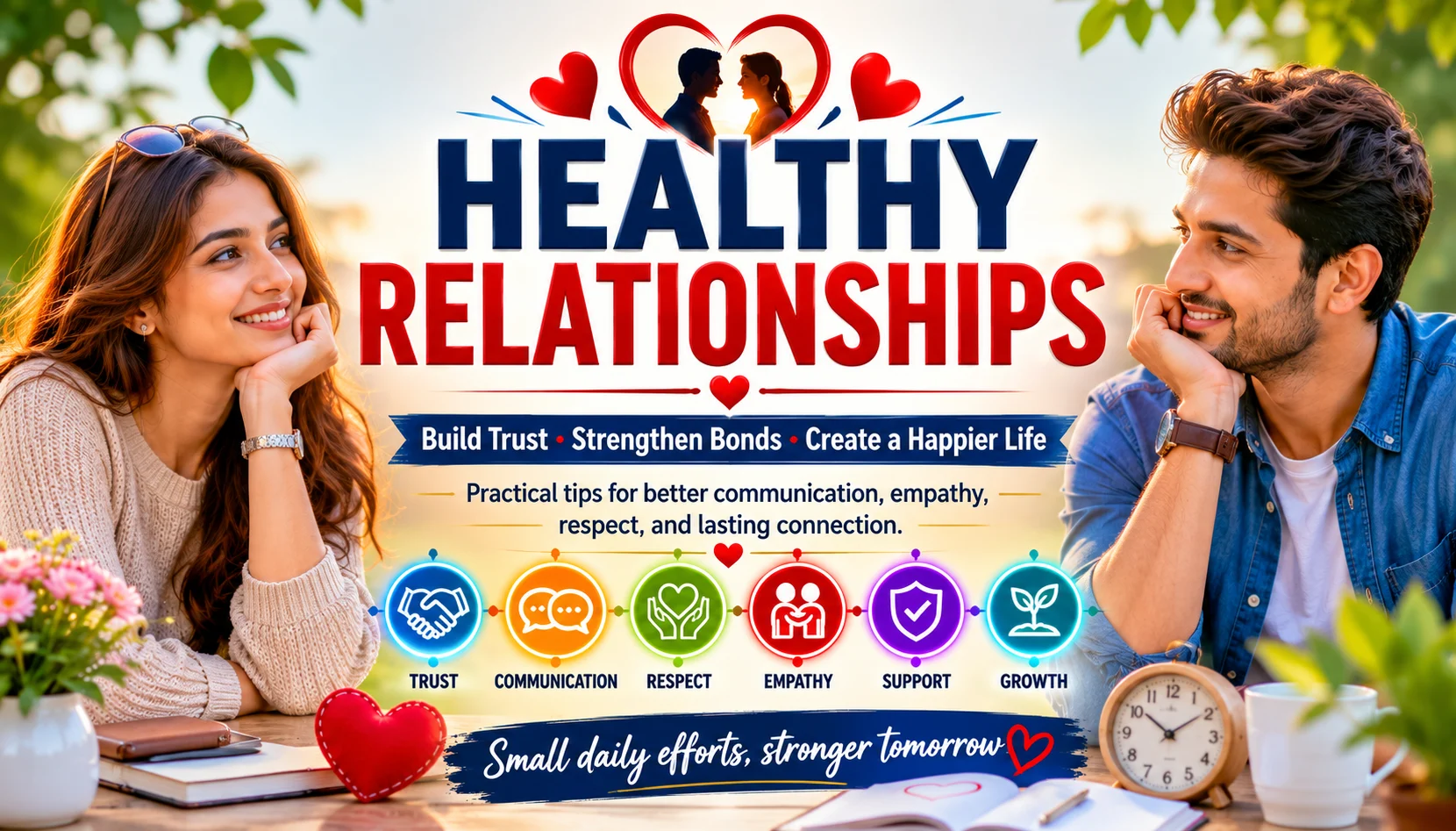
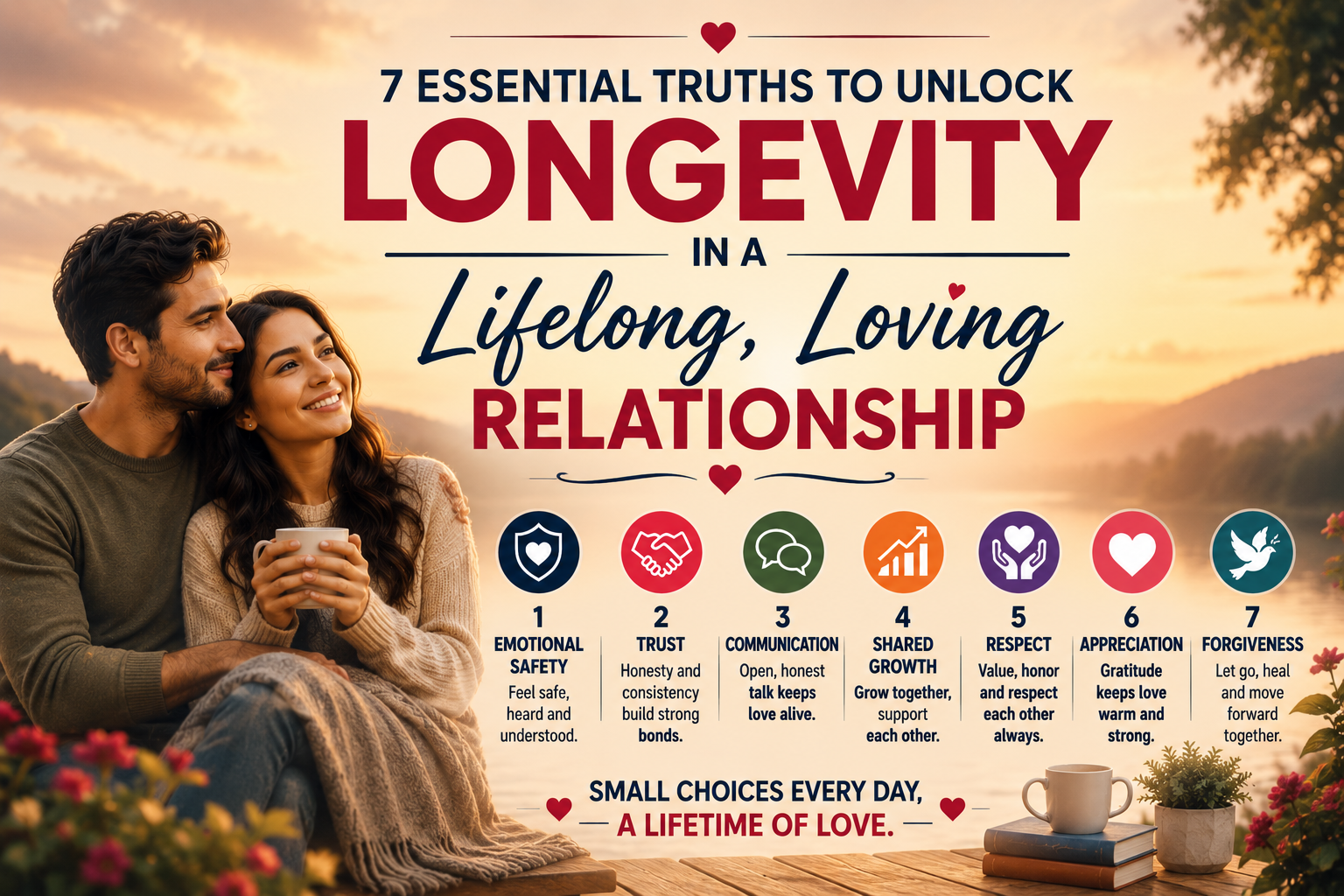
Healthy relationships grow through trust, honest communication, emotional support, respect, and healthy boundaries.
Healthy Relationships are built on trust, respect, communication, emotional support, honesty, and shared values. Whether it is a relationship with your partner, spouse, family member, friend, or colleague, strong relationships contribute to happiness, emotional well-being, and overall quality of life.
Many people believe that successful relationships happen naturally. In reality, every strong relationship requires continuous effort, mutual understanding, patience, and commitment. Healthy relationships are not free from disagreements. Instead, they involve resolving conflicts respectfully, communicating openly, and supporting one another through life’s challenges.
Supportive relationships can also improve emotional resilience, lower stress, and encourage healthier daily habits. For example, people with strong social support often find it easier to manage difficult emotions and stay consistent with positive routines. If stress affects your personal connections, read Stress Management Techniques.
In today’s fast-paced world, long working hours, financial pressure, social media, digital distractions, unrealistic expectations, and busy lifestyles can place pressure on relationships. Fortunately, practical habits such as active listening, setting boundaries, expressing appreciation, and spending quality time together can strengthen connections over time.
This complete guide explains what healthy relationships are, why they matter, how to build trust, how to communicate better, how to set boundaries, how to resolve conflict, and how to identify red flags before they harm your emotional well-being.
Quick Answer: What Are Healthy Relationships?
Healthy relationships are relationships based on mutual trust, respect, honesty, communication, emotional support, equality, and healthy boundaries. In a healthy relationship, both people feel valued, heard, respected, and emotionally safe. Although disagreements happen naturally, conflicts are resolved respectfully without manipulation, fear, emotional abuse, or control.
What Are Healthy Relationships?
Healthy relationships involve two or more people working together to build trust, understanding, and mutual respect. These relationships encourage personal growth while protecting individual identity.
Healthy relationships can include romantic relationships, marriages, friendships, family relationships, parent-child relationships, workplace relationships, and professional relationships. Although every relationship is different, the strongest ones share similar foundations. Both individuals communicate honestly, respect each other’s opinions, support personal goals, and solve problems together rather than against each other.
Importantly, healthy relationships also encourage independence. Instead of controlling one another, people respect personal space, hobbies, friendships, career goals, and emotional needs.
Why Healthy Relationships Matter
Healthy relationships influence almost every area of life. They can improve emotional well-being, reduce stress, increase happiness, improve self-confidence, encourage healthy habits, provide emotional security, and create a stronger sense of belonging.
Furthermore, supportive relationships can help people cope better with difficult life events. When you feel heard and supported, challenges often feel more manageable. For deeper emotional wellness support, read Mental Health: A Complete Guide to Emotional Well-Being.
Healthy relationships also support personal growth. When people feel emotionally safe, they are more likely to share goals, discuss problems honestly, ask for help, and improve themselves over time. This is why relationship health and Self Improvement often work together.
Benefits of Healthy Relationships
Better Emotional Health
Supportive relationships help people feel understood and accepted. Sharing emotions with trusted people can reduce loneliness and strengthen emotional resilience.
Lower Stress Levels
Talking openly with someone you trust can make stressful situations feel more manageable. Additionally, emotional support can help people cope with family pressure, work stress, personal setbacks, or financial concerns.
Improved Self-Confidence
Healthy relationships encourage growth rather than criticism. Positive support helps people believe in themselves and pursue meaningful goals.
Better Communication Skills
Regular, honest conversations improve listening, empathy, patience, and problem-solving skills. Over time, these skills also improve professional and social relationships.
Greater Life Satisfaction
People who maintain meaningful relationships often experience stronger belonging, deeper emotional connection, and greater life satisfaction.
Characteristics of Healthy Relationships
Mutual Trust
Trust is the foundation of every healthy relationship. It develops gradually through honesty, consistency, reliability, and keeping promises.
Respect
Respect means valuing another person’s opinions, emotions, goals, and boundaries even when you disagree.
Honest Communication
Communication is more than talking. It also includes active listening, body language, emotional expression, and asking thoughtful questions.
Emotional Support
Supportive people encourage one another during career changes, health problems, family responsibilities, personal failures, financial difficulties, and emotional stress.
Equality
Healthy relationships are partnerships. Both people should share responsibilities, respect decisions, value each other’s opinions, and support individual growth.
Independence
Healthy relationships do not require giving up personal identity. Each person should continue to pursue hobbies, friendships, career goals, and self-care.
Communication Skills That Build Healthy Relationships
Communication is one of the most important foundations of healthy relationships. Even when two people care deeply about each other, misunderstandings can occur if communication is unclear or inconsistent.
Practice Active Listening
Active listening means giving someone your full attention without interrupting or preparing your reply while they are speaking. Maintain eye contact, put away distractions, allow the other person to finish, ask clarifying questions, and repeat important points to confirm understanding.
Express Your Feelings Honestly
Many relationship problems begin because people hide emotions until frustration builds up. Instead of blaming, use “I” statements. For example, say “I feel unheard when our conversations are interrupted” instead of “You never listen to me.”
Respect Different Opinions
Healthy relationships do not require both people to agree on everything. Instead, accept differences, stay respectful, focus on understanding, and avoid personal attacks.
Avoid Harmful Communication Habits That Damage Relationships
Constant criticism, name-calling, shouting, sarcasm used to hurt, silent treatment, and bringing up unrelated past mistakes can damage emotional safety. Replacing these habits with respectful communication creates a healthier environment.
Trust: The Foundation of Healthy Relationships
Trust develops slowly through honesty, reliability, and consistency. Without trust, even small misunderstandings may create insecurity.
How Strong Relationship Habits Build Trust
Trust grows when people keep promises, tell the truth, respect privacy, admit mistakes, remain dependable, and show consistency between words and actions.
Why Honesty Matters
Honesty builds emotional safety. Being truthful about feelings, expectations, mistakes, finances, and future goals helps reduce confusion and strengthens long-term relationships.
Rebuilding Trust
Trust cannot usually be rebuilt overnight. However, honest communication, accountability, changed behavior, and patience can gradually restore confidence.
Emotional Intimacy in Healthy Relationships
Emotional intimacy means feeling safe enough to share thoughts, fears, dreams, and vulnerabilities without fear of judgment. Unlike physical closeness, emotional intimacy develops through meaningful conversations and mutual understanding.
Healthy emotional intimacy includes open conversations, shared experiences, emotional support, appreciation, trust, and respect. People who feel emotionally connected often experience stronger and more satisfying relationships.
If emotional exhaustion is affecting your connection, read Signs of Burnout to understand when stress may be harming your well-being.
Relationship Boundaries That Protect Emotional Well-Being
Boundaries protect both individuals while strengthening the relationship. Contrary to popular belief, healthy boundaries do not create distance. Instead, they encourage mutual respect.
Examples of Healthy Boundaries
Respecting personal time
Maintaining privacy
Allowing independent friendships
Supporting career goals
Respecting emotional needs
Saying no without guilt
How to Set Healthy Boundaries
Setting boundaries becomes easier when communication is calm and respectful. Clearly explain your needs, say no respectfully when necessary, respect the other person’s boundaries, avoid controlling behavior, and stay consistent with expectations.
Healthy boundaries protect emotional well-being while maintaining closeness.
Conflict Resolution in Healthy Relationships
Disagreements happen in every relationship. Healthy relationships are not defined by avoiding conflict but by resolving disagreements respectfully.
Stay Calm
Strong emotions often lead to hurtful words. If emotions become overwhelming, take a short break, breathe deeply, and return when both people feel calmer.
Focus on Solving Relationship Problems Together
Avoid bringing up old arguments. Instead, stay focused on one topic, explain your feelings clearly, and work toward a practical solution.
Listen Before Responding in Healthy Relationships
Many arguments continue because people listen only to reply. Instead, let the other person finish, confirm you understand their perspective, and respond respectfully.
Strong Relationship Habits for Peaceful Conflict Resolution
Instead of asking, “Who is right?” ask, “What solution works for both of us?” This creates teamwork instead of competition.
Forgiveness in Healthy Relationships
Everyone makes mistakes. Forgiveness does not mean ignoring harmful behavior. Instead, it means choosing to move forward after accountability, honest communication, and meaningful change.
Healthy forgiveness may include honest conversations, accepting responsibility, learning from mistakes, and rebuilding trust gradually. However, repeated harmful behavior should not be excused without real change.
Understanding Love Languages
People express care in different ways. Common love languages include words of affirmation, quality time, acts of service, receiving thoughtful gifts, and physical affection.
Understanding how someone prefers to give and receive appreciation can improve emotional connection. However, love languages should not replace communication, respect, trust, and boundaries. They are simply one helpful tool for understanding emotional needs.
Daily Habits That Strengthen Healthy Relationships
Strong relationships grow through small daily actions rather than occasional grand gestures.
Say thank you.
Express appreciation.
Spend quality time together.
Support each other’s goals.
Celebrate achievements.
Share responsibilities fairly.
Check in emotionally.
Solve problems together.
Respect personal space.
Laugh together regularly.
Consistency matters more than perfection. Small positive interactions repeated over time help build lasting trust and emotional closeness.
Relationship Red Flags You Should Never Ignore
Every relationship has challenges, but some behaviors signal deeper problems. Recognizing relationship red flags early can help protect your emotional well-being.
Lack of Trust
Frequent dishonesty, secretive behavior, broken promises, constant suspicion, and inconsistent actions can damage emotional safety.
Poor Communication
Ignoring important conversations, refusing to discuss problems, shouting, constant criticism, and silent treatment can weaken connection over time.
Controlling Behavior
Monitoring phone calls, limiting friendships, controlling finances, making decisions without discussion, and isolating someone from family are serious warning signs.
Emotional Manipulation
Guilt-tripping, gaslighting, blaming others for every problem, emotional blackmail, and using affection as punishment can be harmful.
Lack of Respect
Humiliation, insults, public embarrassment, dismissing opinions, and mocking feelings should not be ignored.
Building Healthy Family Relationships
Healthy family relationships are built through patience, respect, time, and open communication. Although families sometimes disagree, supportive communication strengthens long-term connections.
Quality Time as a Strong Relationship Habit
Eating meals together, family walks, games, weekend activities, and celebrating achievements can build stronger emotional bonds.
Building Strong Relationship Habits Across Generations
Every generation has unique experiences. Instead of judging differences, listen carefully, stay patient, and appreciate different viewpoints.
Supporting Each Other Through Strong Relationship Habits
Supportive families listen without judgment, offer practical help, encourage positive action, and stay emotionally available.
Healthy Friendships
Friendships contribute significantly to emotional well-being. Healthy friends encourage personal growth rather than competition.
Strong friendships include trust, honesty, loyalty, respect, shared interests, emotional support, and reliability. Good friendships should leave you feeling encouraged instead of emotionally drained.
Strong Relationship Habits for Lasting Friendships
Check in regularly, celebrate achievements, listen carefully, respect boundaries, keep promises, and offer support during difficult times.
Healthy Workplace Relationships
Professional relationships also affect daily happiness and productivity. Positive workplace relationships are based on respect, teamwork, professional communication, accountability, trust, and constructive feedback.
Strong Relationship Habits for Better Workplace Communication
Respond professionally, respect deadlines, listen carefully during meetings, appreciate colleagues’ contributions, and handle disagreements respectfully.
Distance does not automatically weaken relationships. However, successful long-distance relationships require intentional communication, trust, and realistic expectations.
Stay Connected with Strong Relationship Habits
Maintain regular communication through video calls, phone calls, messages, shared activities, and planned visits. Quality conversations matter more than constant communication.
Build Trust Through Strong Relationship Habits
Trust becomes even more important when people live apart. Avoid excessive checking, constant suspicion, and unnecessary jealousy. Instead, communicate honestly and clearly.
Social Media and Relationships
Social media has changed how people connect. Although technology helps people stay in touch, excessive social media use may create misunderstandings or unrealistic expectations.
Spend quality offline time together.
Respect online privacy.
Avoid public relationship arguments.
Limit constant comparison with others.
Discuss concerns openly.
Real relationships grow through meaningful interaction rather than online appearances.
Self-Improvement for Better Relationships
Healthy relationships begin with healthy individuals. Personal growth improves communication, emotional regulation, confidence, and empathy.
Helpful habits include practicing self-awareness, managing emotions, building self-confidence, developing communication skills, learning conflict resolution, respecting boundaries, and taking responsibility for mistakes.
If you answer yes to most of these questions, your relationship likely has a strong foundation.
AI Overview Summary
Healthy relationships are built on trust, respect, honest communication, emotional support, shared responsibility, and healthy boundaries. Whether the relationship is romantic, familial, friendly, or professional, both people should feel valued, respected, and emotionally safe. Strong relationships are not free from disagreements, but they rely on healthy conflict resolution, empathy, and mutual growth.
Featured Snippet Answer: How Can You Build Healthy Relationships?
You can build healthy relationships by communicating honestly, listening actively, respecting boundaries, building trust through consistent actions, resolving conflicts calmly, expressing appreciation regularly, supporting each other’s goals, spending quality time together, and maintaining mutual respect.
Healthy relationships are built on trust, honesty, respect, communication, emotional support, equality, and healthy boundaries.
Why are healthy relationships important?
Healthy relationships improve emotional well-being, reduce stress, increase happiness, strengthen confidence, encourage personal growth, and provide support during challenges.
What are signs of a healthy relationship?
Signs include open communication, mutual respect, trust, emotional safety, shared responsibility, appreciation, healthy boundaries, and constructive conflict resolution.
What are common relationship red flags?
Red flags include controlling behavior, dishonesty, emotional manipulation, disrespect, constant criticism, poor communication, jealousy, isolation, and abusive behavior.
How can I improve communication in a relationship?
Practice active listening, speak honestly, use respectful language, avoid interrupting, express feelings clearly, and focus on solving problems together.
Why is trust important in relationships?
Trust creates emotional security and strengthens connection. It develops through honesty, consistency, reliability, and respecting boundaries.
What are healthy relationship boundaries?
Healthy boundaries include respecting personal time, privacy, independence, emotional needs, friendships, career goals, and individual interests.
How can couples resolve conflicts peacefully?
Stay calm, listen carefully, focus on one issue at a time, avoid personal attacks, communicate respectfully, and work together toward practical solutions.
How does emotional intimacy strengthen relationships?
Emotional intimacy allows people to share thoughts, feelings, fears, and goals without fear of judgment. It builds trust, understanding, and deeper connection.
Can self-improvement improve relationships?
Yes. Improving communication, emotional intelligence, confidence, self-awareness, and stress management often leads to healthier relationships.
Healthy Relationships are one of the most valuable foundations of a happy and meaningful life. They influence emotional well-being, physical health, confidence, personal growth, and overall life satisfaction.
Although every relationship experiences challenges, trust, respect, honest communication, empathy, and healthy boundaries help people navigate difficulties together. Strong relationships are not built overnight. Instead, they develop through consistent daily actions such as listening carefully, expressing appreciation, supporting one another, resolving conflicts respectfully, and maintaining mutual respect.
At the same time, healthy relationships begin with personal growth. Developing self-awareness, emotional intelligence, confidence, and effective communication can improve the way you connect with others. By continuing to learn, adapt, and grow together, you can build relationships that are supportive, resilient, and fulfilling for years to come.