How to Manage Anxiety: Practical Coping Strategies and Support
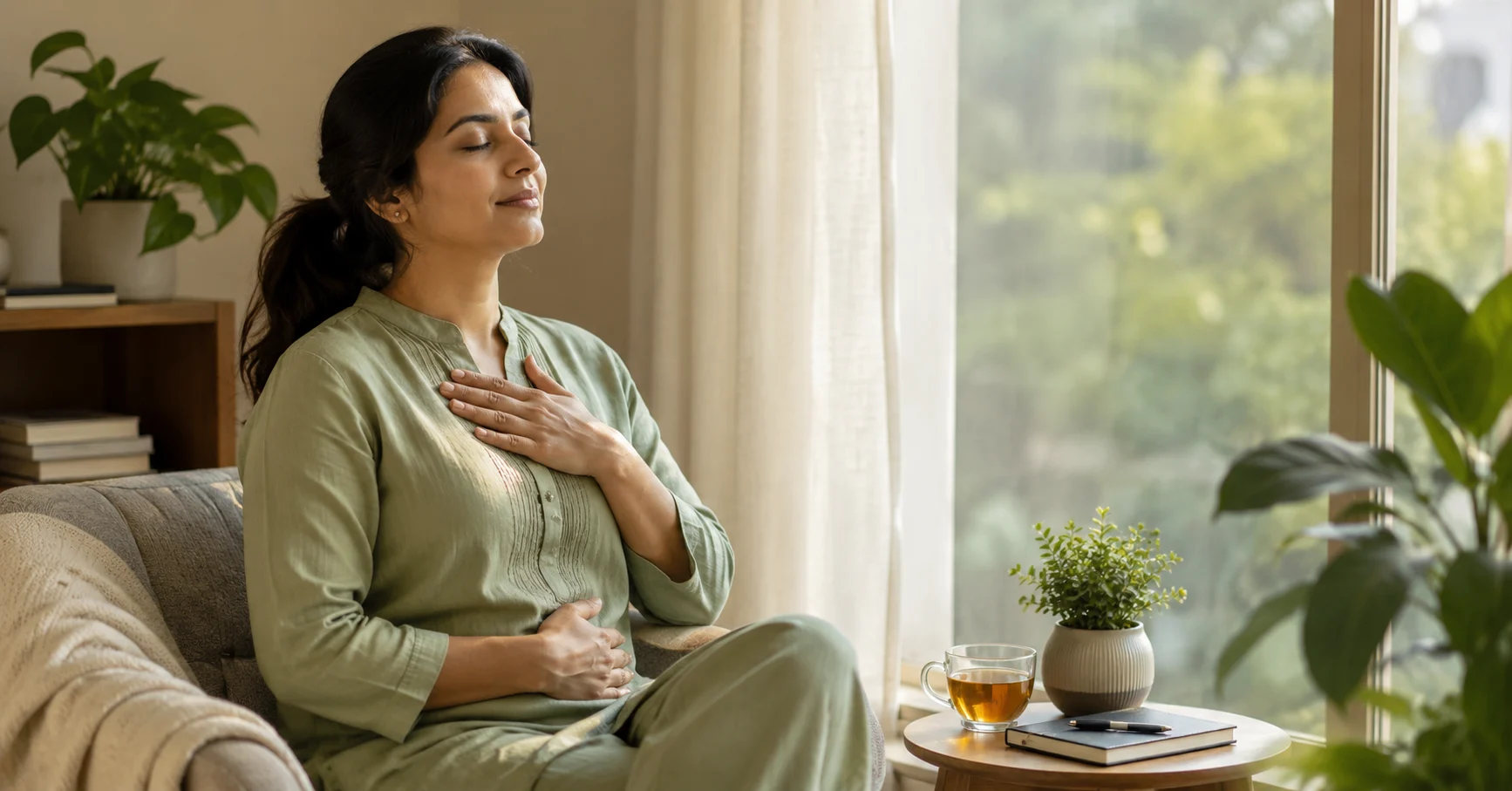
Slow breathing and mindful relaxation may help reduce anxiety intensity and restore a sense of calm.
Learning how to manage anxiety does not mean eliminating every anxious feeling. The goal is to respond more safely, reduce its impact and get professional help when anxiety disrupts daily life.
Quick answer: How can you manage anxiety?
Slow your breathing, orient yourself to the present, reduce avoidable stimulants and take one manageable action. Over time, regular sleep, movement, supportive relationships and evidence-based therapy can help. Seek professional care when anxiety persists, worsens or interferes with work, study, sleep or relationships.
Everyone feels anxious sometimes. Anxiety can alert you to risk and prepare your body to act. However, intense or persistent fear and worry may become difficult to control. It can also affect concentration, sleep, relationships and everyday decisions.
This guide offers coping tools rather than a cure. Physical conditions and medicines can also cause anxiety-like symptoms, so a qualified professional should assess new, severe or unexplained symptoms.
What anxiety can feel like
Thoughts
Repeated worry, worst-case predictions, difficulty concentrating or a sense that something bad will happen.
Body sensations
A racing heart, sweating, trembling, nausea, tense muscles, dizziness or shortness of breath.
Emotions
Fear, irritability, restlessness, dread or feeling constantly on edge.
Behaviour
Avoiding people, places or tasks; repeatedly seeking reassurance; or using alcohol to cope.
These symptoms can occur in anxiety, but they are not specific to it. Chest pain, fainting, severe breathing difficulty or new neurological symptoms need urgent medical assessment.
How to manage anxiety in the moment
1. Slow the exhale
Breathe gently rather than taking large, forceful breaths. Try inhaling comfortably and making the exhale slightly longer. Repeat for one or two minutes. Stop if the exercise makes you dizzy or more distressed.
2. Use a grounding exercise
Name five things you can see, four you can feel, three you can hear, two you can smell and one you can taste. Grounding redirects attention to your current surroundings. It does not need to make anxiety disappear to be useful.
3. Label the experience
Say, “I am noticing anxiety” instead of “I am in danger.” This creates a little distance between the feeling and the conclusion your mind is drawing.
4. Choose one small next step
Drink water, sit somewhere safe, message a trusted person or complete the first two minutes of the task you are avoiding. Small action can interrupt helplessness.
Remember: A coping technique can reduce intensity, but it does not prove that every symptom is harmless. Seek medical help when symptoms are severe, unusual or accompanied by warning signs.
Daily habits that may reduce anxiety symptoms
Keep a regular sleep routine
Use a steady waking time, create a short wind-down routine and reduce late caffeine if it affects sleep. Anxiety and poor sleep can reinforce each other. Persistent insomnia deserves professional advice.
Move your body regularly
Walking, cycling, dancing, yoga and other activities can support mental and physical health. Start gradually, especially if you have a health condition or have been inactive.
Eat regularly and notice caffeine
Long gaps between meals can feel uncomfortable for some people. Large amounts of caffeine may increase palpitations, restlessness and sleep problems. Reduce it gradually if you use it heavily.
Limit alcohol and avoid recreational drugs
Alcohol may feel calming briefly, but it can worsen sleep and anxiety later. Do not use alcohol, sedatives or unprescribed medicines as anxiety treatment.
Maintain supportive contact
Tell one trusted person what you are experiencing and what would help. You can ask for listening, company at an appointment or support with a practical task.
How to manage anxious thoughts
Trying to suppress every worry often makes it return more strongly. Instead, write the worry down and separate problems you can act on from possibilities you cannot resolve today.
A simple worry check
- Name it: What exactly am I predicting?
- Check it: What evidence supports and challenges that prediction?
- Plan it: Is there one useful action I can take?
- Release it: If no action is possible now, return attention to the present task.
You can also schedule a short “worry period” earlier in the evening. When worry appears outside that time, note it and postpone reviewing it. This approach takes practice and may work best with guidance from a therapist.
Reduce avoidance carefully, not abruptly
Avoidance brings short-term relief, yet it can teach the brain that the situation is dangerous. Evidence-based exposure therapy helps people face fears gradually and safely. It should follow a structured plan.
Do not force yourself into overwhelming situations or attempt trauma exposure alone. A trained mental-health professional can help set a suitable pace, particularly for panic disorder, obsessive-compulsive disorder, trauma or severe phobias.
Professional treatment for anxiety
Effective treatment is available. A clinician may assess symptoms, duration, medical history, medicines, substance use and how anxiety affects functioning. Treatment depends on the type of anxiety and individual preferences.
Psychological therapy
Cognitive behavioural therapy has strong evidence across several anxiety disorders. It can teach people to examine thinking patterns, change coping behaviours and approach feared situations gradually. Other approaches may also help, depending on the diagnosis.
Medication
A qualified prescriber may recommend medication. Some antidepressants can treat anxiety disorders, although benefits and side effects vary. They often take time to work and should not be started, stopped or changed without medical guidance.
Benzodiazepines can cause dependence and are generally unsuitable for routine long-term treatment. Never combine sedating medicines with alcohol, and never use another person’s prescription.
When to seek professional help
Arrange an appointment with a doctor, psychologist or psychiatrist when anxiety lasts for weeks, keeps returning, causes substantial distress or interferes with sleep, study, work, relationships or leaving home.
Also seek help if you experience repeated panic attacks, use substances to cope, have intrusive thoughts, develop restrictive eating patterns or cannot manage important responsibilities. Early support can prevent symptoms from becoming more disruptive.
Urgent help and crisis support
Get immediate help if you may harm yourself or someone else, feel unable to stay safe, have made a suicide plan or attempt, experience severe confusion, or cannot complete essential daily activities. Call India’s emergency number 112, go to the nearest emergency department, or ask a trusted person to stay with you. India’s Tele-MANAS mental-health helpline can be reached at 14416 or 1-800-891-4416. If you are outside India, use your local emergency or crisis service.
Do not remain alone while immediate help is being arranged. Move away from weapons, medicines or other items you could use to hurt yourself, and share honestly what is happening.
How to support someone with anxiety
- Listen without telling them to “just relax.”
- Ask what support would be useful.
- Offer help finding a qualified professional.
- Encourage small steps without forcing exposure.
- Take threats of self-harm seriously and contact urgent support.
- Maintain your own boundaries and wellbeing.
Common mistakes to avoid
- Expecting instant control: Anxiety skills improve through repetition.
- Avoiding every trigger: Avoidance can strengthen fear over time.
- Using alcohol or sedatives: They can worsen symptoms and create new risks.
- Stopping medication suddenly: Always consult the prescriber.
- Assuming every symptom is anxiety: New or severe physical symptoms require assessment.
- Waiting for a crisis: You can seek care before symptoms become unbearable.
A seven-day starter plan
- Day 1: Record triggers, thoughts, sensations and responses.
- Day 2: Practise gentle breathing for two minutes while calm.
- Day 3: Take a short walk or choose suitable movement.
- Day 4: Reduce one avoidable source of caffeine.
- Day 5: Use the four-step worry check.
- Day 6: Speak with a trusted person.
- Day 7: Review the effect on daily life and decide whether to arrange professional support.
This plan is not treatment for an anxiety disorder. Use it to build awareness and identify the kind of support you may need.
The bottom line
Learning how to manage anxiety takes time, practice and appropriate support. Slow breathing, grounding exercises and small practical actions may reduce anxiety during difficult moments. However, persistent or severe symptoms may require therapy, medication or support from a qualified mental-health professional.
You do not need to wait until anxiety becomes a crisis. A qualified professional can help you understand the symptoms and build a personalised plan.
Frequently asked questions
Can anxiety be cured permanently?
No responsible source can promise a permanent cure. Many people manage anxiety effectively with therapy, lifestyle support and, when appropriate, medication.
How can I calm anxiety quickly?
Try gentle breathing, grounding and one small practical action. Seek medical help for severe or unfamiliar physical symptoms.
What is the 5-4-3-2-1 grounding method?
Notice five things you see, four you feel, three you hear, two you smell and one you taste.
Does caffeine make anxiety worse?
It can increase restlessness, palpitations and sleep problems in some people. Reduce heavy intake gradually.
When should I see a therapist?
Seek support when anxiety persists, causes distress, drives avoidance or interferes with daily life.
Should I stop anxiety medication when I feel better?
No. Discuss any dose change with the prescriber because sudden stopping can cause withdrawal or returning symptoms.
Is a panic attack dangerous?
Panic attacks feel frightening, but similar symptoms can have physical causes. Seek urgent assessment for new chest pain, fainting or severe breathing difficulty.
Sources and further reading
- World Health Organization: Anxiety disorders
- National Institute of Mental Health: Anxiety disorders
- NHS: Generalised anxiety disorder
Medical disclaimer: This content provides general education. It does not diagnose an anxiety disorder or replace individual care from a qualified professional.
About the Author