Benefits of Drinking Water: Hydration, Daily Needs and Safety
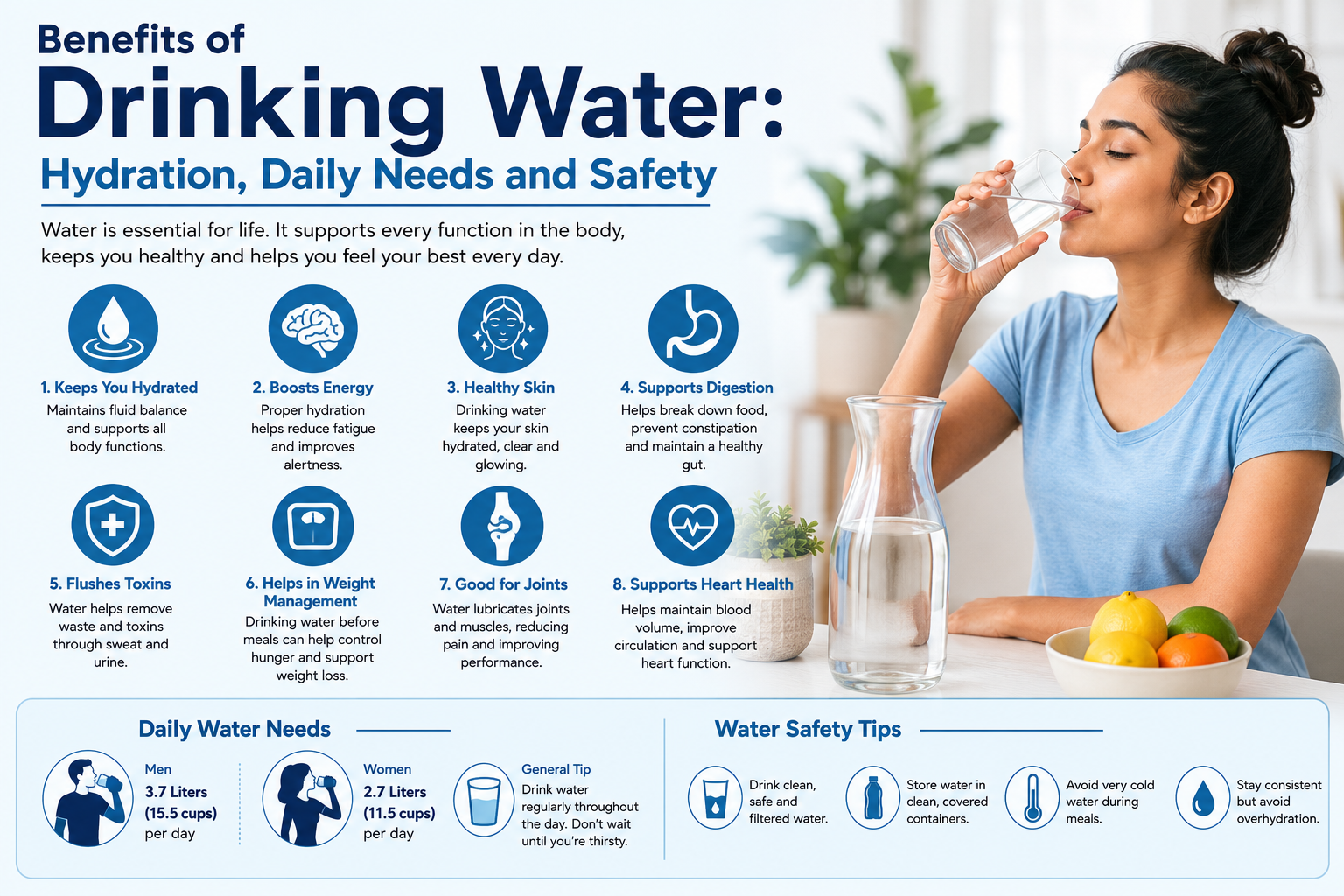
Drinking enough water every day supports hydration, digestion, energy levels, healthy skin, and overall well-being while helping maintain proper body function.
Benefits of drinking water include supporting temperature control, circulation, digestion, waste removal and normal physical and mental performance. The right amount, however, varies from person to person.
Quick answer: What are the benefits of drinking water?
Water helps regulate body temperature, maintain blood volume, transport nutrients, form saliva and joint fluid, support digestion, and remove waste through urine and sweat. Drinking enough also helps prevent the headache, tiredness and reduced concentration that dehydration may cause.
Your body contains water in every cell. It forms much of your blood, saliva, sweat, urine and the fluid around joints. You continually lose it through breathing, sweating, urination and bowel movements, so regular replacement matters.
More is not always better. Hydration means maintaining balance—not forcing a fixed number of litres or drinking until urine stays completely colourless.
How water supports normal body functions
Temperature control
Sweat carries heat away from the skin as it evaporates. Hot weather and exercise increase fluid loss.
Circulation
Water contributes to blood volume, helping the circulatory system transport oxygen and nutrients.
Digestion and stools
Fluid helps food move through the digestive tract. Adequate fluid works with dietary fibre to support softer stools.
Waste removal
The kidneys use water to make urine and regulate fluid and electrolyte balance.
Other benefits of drinking water come from what it replaces. Choosing water instead of sugary beverages can reduce added sugar and calorie intake without relying on a special “detox” product.
How much water should you drink each day?
No single target suits everyone. The NHS uses six to eight cups or glasses of fluid a day as a general guide, not a strict prescription. Total hydration also comes from food and drinks such as milk, tea and coffee.
Your needs may rise during hot or humid weather, prolonged physical activity, fever, pregnancy, breastfeeding, vomiting or diarrhoea. Body size, diet, medicines and medical conditions also affect the appropriate amount.
A practical check: Thirst and pale-yellow urine often suggest adequate hydration. Urine colour can also change because of vitamins, medicines and foods, so it is a clue rather than a diagnostic test.
People with heart failure, kidney disease, advanced liver disease or certain hormone disorders may receive an individual fluid limit. Follow that advice instead of a general online target.
Signs you may not be drinking enough water
Early dehydration can cause thirst, a dry or sticky mouth, darker urine, less frequent urination, headache, tiredness or muscle cramps. Children and older adults may not communicate thirst clearly, so caregivers should also watch behaviour and urine output.
Seek urgent medical care for confusion, fainting, inability to keep fluids down, very little or no urine, rapid breathing, a weak rapid pulse, or signs of severe illness. Babies with markedly fewer wet nappies, no tears or unusual sleepiness need prompt assessment.
Hydration, energy and concentration
Dehydration can make exercise feel harder and may reduce attention, mood or alertness. Replacing lost fluid can restore normal function, but water is not a stimulant and does not create unlimited energy.
For ordinary daily activity, water usually works well. During long, intense exercise or heavy sweating, people may also lose sodium and other electrolytes. The correct replacement depends on duration, conditions and individual risk.
Benefits of drinking water for digestion
Adequate fluid supports normal digestion and helps fibre do its job. Increasing fibre without enough fluid may worsen bloating or constipation for some people. Increase both gradually if your usual intake is low.
Water does not “flush toxins” from the bowel. Your liver, kidneys, lungs and digestive system manage waste continuously. Persistent constipation, blood in stool, severe pain or unexplained weight loss needs medical assessment.
Water, tea, coffee and flavoured drinks
| Drink | Practical guidance |
|---|---|
| Plain water | A low-cost, sugar-free default for most people. |
| Tea and coffee | They contribute fluid. Moderate caffeine according to tolerance and pregnancy guidance. |
| Milk | Provides fluid plus nutrients; choose a suitable type for your needs. |
| Juice and sugary drinks | They provide fluid but may add substantial free sugar; keep portions limited. |
| Lemon or infused water | Useful if flavour helps you drink, but it is not a detox or fat-burning treatment. |
| Sports drinks | Usually unnecessary for short or light activity; may help in selected prolonged-exercise situations. |
Simple ways to drink enough
- Drink with meals and when thirsty.
- Carry a clean reusable bottle when away from home.
- Drink before, during and after activity according to heat and sweat loss.
- Add mint, cucumber or citrus if you prefer flavour.
- Offer fluids regularly to children and older adults during hot weather.
- Increase intake gradually rather than consuming a large volume at once.
The most useful benefits of drinking water come from consistent, appropriate intake. A bottle with time markings can serve as a reminder, but its schedule should not override thirst, comfort or medical advice.
Hydration during vomiting or diarrhoea
Vomiting and diarrhoea remove water and electrolytes. Take small, frequent sips if larger drinks trigger nausea. An oral rehydration solution contains a measured balance of glucose and salts and may work better than plain water when losses are significant.
Use a properly prepared commercial oral rehydration product or follow local clinical advice. Young children, older adults and anyone with ongoing symptoms can deteriorate quickly.
Can you drink too much water?
Yes. Drinking excessive water faster than the kidneys can remove it may dilute sodium in the blood, causing hyponatraemia. Symptoms can include nausea, headache, confusion, weakness or seizures.
Safety note: Do not force litres of water rapidly for a cleanse, challenge or weigh-in. Confusion, seizures or severe headache after heavy fluid intake requires emergency care.
Common hydration myths
“Everyone needs exactly eight glasses”
It is a memorable guide, not a universal biological requirement. Climate, activity, food and health alter needs.
“Clear urine always means perfect hydration”
Persistently colourless urine may simply reflect high intake. Pale yellow is a more practical general aim for many healthy adults.
“Water detoxes the body and burns fat”
Water supports organs that process waste, but it does not perform a special cleanse. Replacing caloric drinks may support weight management; water itself does not melt fat.
“Caffeinated drinks always dehydrate you”
Tea and coffee still contribute to fluid intake. Large caffeine doses can cause side effects, so moderation remains sensible.
The bottom line
The main benefits of drinking water involve maintaining normal physiology and preventing dehydration. Use thirst, pale-yellow urine, activity and weather as everyday guides, while recognising that illness and medical conditions can change the plan.
Choose water often, increase fluids when losses rise, and avoid forcing excessive amounts. Seek personalised advice when symptoms persist or a clinician has prescribed a fluid restriction.
Frequently asked questions
Does drinking water improve skin?
Correcting dehydration may improve dryness related to low fluid intake, but drinking extra water has not been shown to cure acne, pigmentation or other skin conditions.
Is warm water better than cold water?
Both hydrate. Choose the temperature that feels comfortable and encourages appropriate intake.
Does lemon water have extra benefits?
It adds flavour and a small amount of nutrients, but it does not detox the body or cause meaningful fat loss by itself.
Can tea and coffee count toward hydration?
Yes. They contribute fluid, although caffeine tolerance and pregnancy limits still matter.
Should I drink water even when I am not thirsty?
Regular access and routine drinking help during heat, exercise, pregnancy, illness and older age. Do not force excessive volumes.
When should I use an electrolyte drink?
It may help after significant vomiting, diarrhoea or prolonged heavy sweating. Use the right product and seek clinical advice for vulnerable people or ongoing symptoms.
Sources and further reading
- NHS: Water, drinks and hydration
- NIH: Hydrating for health
- MedlinePlus: Dehydration
- MedlinePlus: Fluid and electrolyte balance
Medical note: This article provides general education and does not replace diagnosis or individual medical care.
About the Author


