Mehak
Mehak 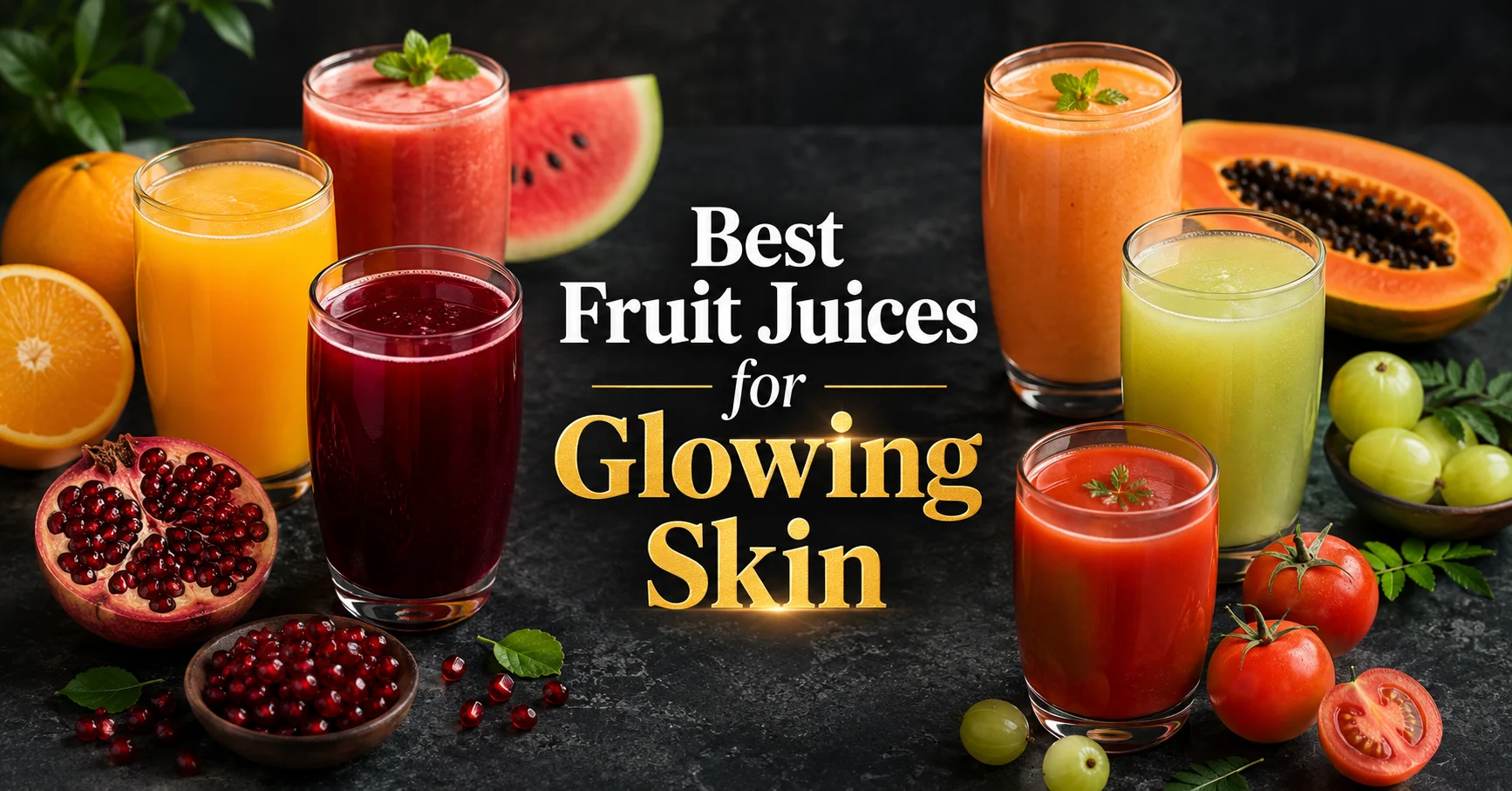
Six nutrient-rich fruit and vegetable juices that can complement a balanced diet for healthy-looking skin.
Fruit juice can provide fluid and nutrients, but it cannot whiten your natural skin tone or erase pigmentation. Here is a realistic guide to choosing juice while protecting your teeth, blood sugar and overall health.
Quick answer: fruit juices for glowing skin
The best fruit juices for glowing skin can contribute water, vitamin C and other plant nutrients, but no juice can safely whiten your natural skin colour. Orange, amla, pomegranate, watermelon and papaya drinks may complement a balanced diet. However, juice alone does not treat dark spots, melasma or acne marks. Whole fruit and daily sun protection are more important.
Searches for the “best fruit juice for skin whitening” often lead to dramatic promises. A glass of orange or pomegranate juice may be nutritious, but it cannot switch off melanin production or produce a guaranteed lighter complexion in a few weeks.
A better goal is healthy-looking, well-supported skin. Nutrition can contribute to normal collagen production, hydration and antioxidant intake. However, skin appearance also reflects genetics, sun exposure, sleep, stress, hormones, medical conditions and skincare.
Can fruit juice whiten your skin?
No good evidence shows that drinking a particular juice changes a person’s natural skin tone. Melanin is the pigment that gives skin, hair and eyes their colour. Its production is influenced by genetics, hormones, inflammation and ultraviolet exposure—not by a single morning drink.
People sometimes use “whitening” when they actually mean reducing dullness or improving uneven pigmentation. These are different goals. Hydration and nutrient intake may help skin look healthier, but dark spots or melasma need appropriate assessment and care.
Important distinction: Supporting healthy skin is not the same as bleaching skin. The World Health Organization warns that some skin-lightening products contain hazardous mercury. Avoid unregulated products and seek dermatological advice for pigmentation concerns.
How fruit juices for glowing skin support nutrition
Vitamin C and normal collagen production
Vitamin C is required for collagen synthesis and also functions as an antioxidant. Citrus fruits, peppers, kiwi, strawberries and broccoli are recognised food sources. Juice can contribute vitamin C, but more juice is not automatically better.
Fluid intake
Juice contains water and can contribute to total fluid intake. Still, plain water is usually a better everyday hydration choice because it contains no free sugars and does not expose teeth to fruit acids.
A varied dietary pattern
Skin cannot be nourished by one “beauty drink.” A varied diet supplies protein, essential fats, vitamins and minerals. Whole fruits, vegetables, pulses, nuts, seeds, dairy or suitable alternatives, eggs, fish and other protein sources can all play a role according to your dietary preferences.
Six best fruit juices for glowing skin nutrition
These fruit juices for glowing skin are not ranked as treatments. Instead, they are examples of nutrient-containing drinks that can fit into a balanced diet in modest portions.
Orange juice
Orange juice supplies vitamin C. Choose unsweetened juice, keep the serving small and drink it with a meal rather than sipping it throughout the day.
Amla drink
Amla is naturally tart and contains vitamin C. Commercial amla drinks may contain added sugar, salt or concentrated ingredients, so check the label and dilute when appropriate.
Pomegranate juice
Pomegranate contains polyphenols and other plant compounds. That does not make its juice a proven treatment for pigmentation or skin disease.
Watermelon blend
Watermelon has a high water content and can make a refreshing unsweetened blend. Eating the fruit preserves more of its natural structure and fibre.
Papaya smoothie
Papaya provides vitamin C and carotenoid compounds. Blend the edible fruit rather than straining it if you want to retain more fibre.
Tomato juice
Tomatoes contain vitamin C and lycopene. Choose a low-salt version and do not treat it as a replacement for sunscreen.
What each drink can and cannot do
| Drink | Realistic contribution | Claim to avoid |
|---|---|---|
| Orange | Vitamin C and fluid | “Erases dark spots” |
| Amla | Vitamin C and tart flavour | “Permanently whitens skin” |
| Pomegranate | Plant compounds and fluid | “Fights pigmentation from within” |
| Watermelon | Water and food nutrients | “Deeply hydrates skin cells” |
| Papaya | Vitamin C and carotenoids | “Exfoliates skin when you drink it” |
| Tomato | Vitamin C and lycopene | “Replaces sun protection” |
Whole fruit or fruit juice: which is better?
Whole fruit is usually the stronger everyday choice because it retains fibre and requires chewing. Juice is easier to consume quickly, so portions can become large without feeling filling.
The NHS advises limiting the combined total of fruit juice and smoothies to 150 ml a day. Juicing releases sugars from the fruit’s cellular structure. Even unsweetened juice is sugary and frequent exposure can contribute to tooth decay.
- Choose whole fruit most often.
- Keep juice to one small glass.
- Drink it with a meal.
- Avoid added sugar, syrup and excessive honey.
- Do not sip acidic juice over several hours.
- Rinse your mouth with plain water afterwards.
Can juice remove dark spots, acne marks or melasma?
Diet alone is not a recognised treatment for hyperpigmentation. Dark patches can follow acne, irritation, sun exposure, hormonal changes or another skin condition. The right approach depends on the cause.
The American Academy of Dermatology explains that effective dark-spot care begins with sun protection. It recommends broad-spectrum, water-resistant SPF 30 or higher. Tinted sunscreen containing iron oxide can also help protect darker skin tones from visible light, which may worsen dark spots.
See a dermatologist when pigmentation is new, rapidly changing, widespread, itchy, painful or persistent. Professional evaluation can distinguish melasma and post-inflammatory hyperpigmentation from other conditions.
How to drink fruit juices for glowing skin safely
- Keep the portion modest: Use approximately 150 ml or less.
- Skip added sweeteners: The fruit already contributes sugar.
- Have it with food: This is kinder to teeth than prolonged sipping and may fit better into a balanced meal.
- Rotate foods: Do not rely on the same juice for all nutrients.
- Watch symptoms: Citrus and acidic drinks may worsen reflux or mouth sensitivity.
- Consider personal needs: People managing diabetes, kidney disease, medicine interactions or digestive conditions should seek individual guidance.
Small papaya-orange smoothie
- ½ cup ripe papaya
- ¼ cup peeled orange segments
- ¼ cup plain water
- Optional: a small piece of fresh ginger
- Blend until smooth without straining.
- Serve a small portion with breakfast.
- Do not add sugar or honey unless specifically needed.
Why this version? It retains more fruit pulp than clear juice. It is still not a skin treatment, and portion size matters.
Common mistakes to avoid
Promising results in four to eight weeks
No responsible source can guarantee that a juice will lighten skin or remove marks within a fixed timeframe.
Drinking juice on an empty stomach
There is no proven skin advantage. People with acidity or reflux may feel worse when drinking tart juice without food.
Applying lemon juice directly to skin
Do not turn a nutrition article into a topical DIY recommendation. Lemon juice may irritate skin, and citrus exposure combined with sunlight can cause reactions in some people.
Replacing meals with “beauty juice”
Juice lacks the balanced protein, fat, fibre and energy that a complete meal can provide. Repeated meal replacement may reduce rather than improve nutritional quality.
The bottom line
There is no best fruit juice for skin whitening because juice cannot safely change your natural skin tone. When people search for fruit juices for glowing skin, the realistic goal should be better overall nutrition—not a lighter complexion. A small unsweetened serving can contribute fluid and nutrients, particularly vitamin C, but whole fruit is generally the better everyday choice.
For healthier-looking skin, focus on a varied diet, adequate sleep, appropriate hydration and consistent sun protection. Seek dermatological advice for persistent pigmentation instead of relying on a drink.
Practical takeaway: Choose one small serving with a meal, avoid added sugar and measure success by overall nutrition—not by promises of lighter skin.
Frequently asked questions
Which fruit juice is best for glowing skin?
No single juice is best. A small unsweetened serving of orange, amla, pomegranate or a pulpy fruit blend can contribute nutrients. A varied diet and whole fruit matter more.
Can orange juice remove dark spots?
Orange juice provides vitamin C but is not a treatment for dark spots. Sun protection and cause-specific dermatological treatment are more relevant.
Can fruit juice whiten natural skin colour?
No reliable evidence shows that fruit juice safely changes natural skin colour. Avoid products or content promising permanent whitening.
How much fruit juice can I drink daily?
A practical upper limit is one small 150 ml serving of juice and smoothies combined, preferably with a meal.
Is whole fruit better than juice?
Usually, yes. Whole fruit retains fibre and is more filling. Juice is easier to overconsume and exposes teeth to free sugars and acids.
Should I drink juice on an empty stomach?
There is no proven skin benefit. Drink it with a meal if that feels more comfortable, especially if you experience reflux or acidity.
Sources and further reading
- American Academy of Dermatology: How to fade dark spots
- NHS: Fruit juice portions and free sugars
- NIH Office of Dietary Supplements: Vitamin C
- WHO: Mercury in skin-lightening products
Medical note: This article provides general nutrition information and does not replace advice from a dermatologist, doctor or registered dietitian.
About the Author