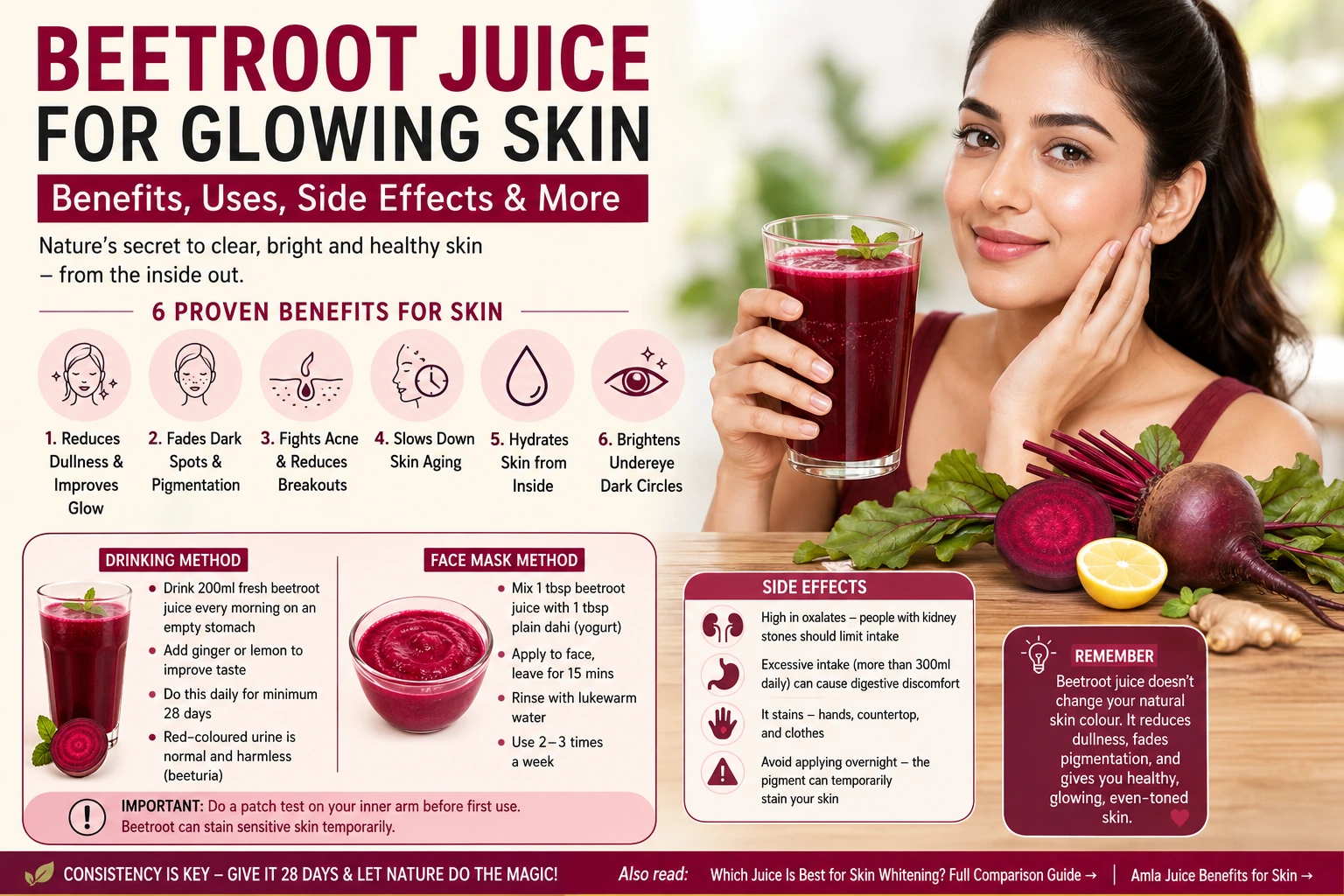
A detailed visual guide explaining how beetroot juice supports healthy, glowing skin.
Beetroot juice for skin whitening is a natural remedy widely used for improving skin glow and reducing dullness. Many people use beetroot juice for skin whitening to achieve brighter, healthier-looking skin. This red vegetable is rich in antioxidants that help support skin clarity from within.
Beetroot juice is one of the most searched home remedies for glowing skin in India — and for good reason. It works. But not in the way most people think.
This guide covers exactly what beetroot juice does for your skin, what it cannot do, and the right way to use it to actually see results.
What Makes Beetroot Juice Good for Skin?
Beetroot (chukandar) is packed with nutrients that directly affect how your skin looks and feels:
- Betalains — powerful antioxidants that reduce inflammation and fight acne
- Vitamin C — helps fade dark spots and boosts collagen production
- Iron — improves blood circulation, giving your face a healthy flush
- Folate — supports cell repair and regeneration
- Water content (87%) — keeps skin hydrated from inside
These aren’t just marketing claims. Research published in dermatology journals confirms that betalains have measurable anti-inflammatory effects on skin cells.
6 Proven Benefits of Beetroot Juice for Skin
1. Reduces Dullness and Improves Glow
The iron and folate in beetroot improve blood circulation. Better circulation = more oxygen reaching skin cells = natural rosy glow. Drink 200ml of fresh beetroot juice every morning on an empty stomach for 3–4 weeks to notice a visible difference.
2. Fades Dark Spots and Pigmentation
Vitamin C in beetroot helps reduce melanin overproduction — the root cause of dark spots, uneven tone, and post-acne marks. It doesn’t bleach your skin. It corrects pigmentation caused by inflammation and sun damage.
3. Fights Acne and Reduces Breakouts
Beetroot has natural antibacterial and anti-inflammatory properties. Its betalain content calms existing breakouts and stops new ones from forming. If you have oily or acne-prone skin, this is especially useful.
4. Slows Down Skin Aging
Free radicals break down collagen — the protein that keeps your skin firm. The antioxidants in beetroot (betalains + vitamin C + polyphenols) neutralise free radicals before they cause damage. Consistent daily consumption can reduce fine lines over time.
5. Hydrates Skin from Inside
Beetroot is 87% water. One glass of fresh beetroot juice contributes to your daily hydration needs. Dehydrated skin looks dull, flaky, and shows wrinkles more clearly. Hydration from within is more effective than any moisturiser alone.
6. Brightens Undereye Dark Circles
The improved blood circulation from beetroot juice helps reduce puffiness and the bluish-purple tint under your eyes. This takes consistent use — expect results after 4–6 weeks, not overnight.
Does Beetroot Juice Actually Whiten Skin?
This needs a straight answer: No, beetroot juice does not bleach or permanently lighten your skin tone.
Your skin colour is determined by genetics and melanin. No food or juice can change that permanently.
What beetroot juice can do is reduce dullness, fade pigmentation caused by sun or acne, and improve clarity. The result looks like brighter, more even skin — which is often what people mean when they say “whitening.”
How to Use Beetroot Juice for Best Results
Drinking method (most effective):
- Drink 200ml of fresh beetroot juice every morning on an empty stomach
- Add a small piece of ginger or half a lemon to reduce the earthy taste
- Do this daily for a minimum of 28 days (one full skin cycle)
- Expect red-coloured urine — this is called beeturia and is completely harmless
Face mask method (for faster visible results):
- Mix 1 tablespoon of fresh beetroot juice with 1 tablespoon of plain dahi (yogurt)
- Apply to face, leave for 15 minutes, rinse with lukewarm water
- Use 2–3 times a week
- The lactic acid in dahi combined with beetroot’s vitamin C exfoliates gently and brightens skin
Important: Do a patch test on your inner arm before applying to your face for the first time. Beetroot can stain sensitive skin temporarily.
Side Effects of Beetroot Juice for Skin Whitening
- Beetroot is high in oxalates — people with kidney stones should limit intake to small amounts
- Excessive consumption (more than 300ml daily) can cause digestive discomfort
- It stains — your hands, countertop, and clothes. Handle carefully.
- Avoid applying overnight — the pigment can temporarily stain your skin
FAQ
How long does beetroot juice take to show results on skin? Visible improvement in glow and texture takes 3–4 weeks of daily consumption. Skin cells renew every 28 days — so give it at least one full cycle.
Can I apply beetroot juice directly on my face every day? No. Use it as a face mask 2–3 times a week, not daily. Daily application can dry out skin due to its acidic nature.
Which is better for skin — beetroot juice or carrot juice? Both work differently. Beetroot is better for pigmentation and blood circulation. Carrot juice is better for anti-aging and UV protection.
Can I mix beetroot juice with other juices for skin? Yes. Beetroot + carrot + amla is a powerful skin combination. The vitamin C from amla amplifies the effect of beetroot’s antioxidants.
Is beetroot juice safe during pregnancy? Beetroot is generally safe in moderate amounts during pregnancy. Consult your doctor before making it a daily habit.
Also read: Beetroot Juice for Skin → | ABC Juice for Skin → | Indian Diet Plan for Glowing Skin |→|8 Smart and Easy Home Methods|→| Amla Juice Benefits for Skin|→| Full Comparison Guide
→|Which Juice Is Best for Skin Whitening?
About the Author