
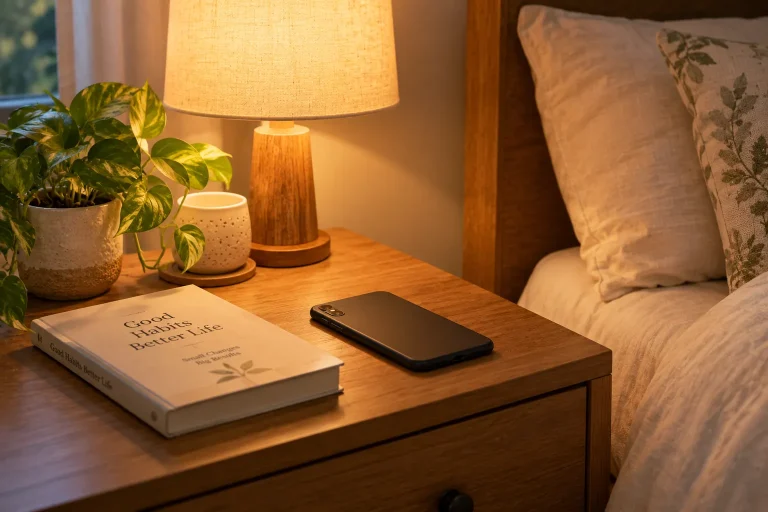
A calm morning moment with water, journaling, and a phone kept face-down.
Most morning routine advice describes an idealized hour and a half of journaling, cold plunges, and green juice — and most people abandon it within a week because it doesn’t fit real life.
A morning routine that actually sticks is smaller, more flexible, and built around your existing schedule rather than an Instagram version of one. Here’s how to build one that survives past day three.
A sustainable morning routine needs only 3–5 small, consistent actions — not an elaborate hour-long ritual. Focus on one habit that wakes up your body, one that centers your mind, and one that sets your priorities for the day.
Start with a routine that takes 15–20 minutes, keep it flexible enough to survive a bad night’s sleep, and build up gradually only after the basics have become automatic.
Why Most Morning Routines Fail
Too Many Habits at Once
Trying to add meditation, exercise, journaling, and reading all in the same week overwhelms willpower, which is limited, especially early in the day.
Copied From Someone Else’s Life
A routine designed for someone without kids, with flexible work hours, or with a different energy pattern rarely transfers directly to your own schedule.
No Room for Bad Days
A rigid all-or-nothing routine collapses the first time you oversleep or have a rough night, often leading people to abandon it entirely.
Starting With the Hardest Habit
Leading with the most difficult change, like an early workout, before the habit of simply waking up consistently is established sets the routine up to fail.
How to Build a Routine Step by Step
Anchor Your Wake-Up Time First
Before adding any habits, focus on waking up at a consistent time, even on weekends. This single change often has the biggest impact on how mornings feel.
Pick One Habit for Your Body
A glass of water, a short stretch, or a few minutes outside in natural light. The goal is simply to signal to your body that the day has started.
Pick One Habit for Your Mind
A few minutes of quiet, deep breathing, or writing down three priorities for the day. This doesn’t need to be lengthy to be effective.
Delay Your Phone by 15–20 Minutes
Checking notifications first thing often pulls your attention into other people’s priorities before you’ve set your own for the day.
Build In a “Minimum Version”
Decide in advance what the routine looks like on a rushed or rough morning — even just the wake-up time and one habit — so a bad day doesn’t mean skipping it entirely.
Add One New Habit Only After Two Weeks
Once the first few habits feel automatic, layer in one more. Adding habits gradually makes the whole routine far more likely to last.
A Simple 20-Minute Morning Routine Template
| Time | Activity | Purpose |
|---|---|---|
| 0–2 min | Wake up, drink a glass of water | Rehydrate after sleep, signal the day has started |
| 2–5 min | Open a window or step outside briefly | Natural light helps regulate your body clock |
| 5–10 min | Gentle stretch or a few slow breaths | Eases physical tension from sleep |
| 10–15 min | Write down 1–3 priorities for the day | Sets intention before external demands take over |
| 15–20 min | Get ready, first check of phone/messages | Transition into the rest of the day on your own terms |
A calm, consistent morning is much easier to sustain when it’s paired with consistent sleep. If mornings feel exhausting no matter what routine you try, it’s worth reading our guide on why you’re tired all the time, which covers sleep and nutrition factors that affect morning energy.
Adapting Your Routine to Your Life Stage
- If you have young children: Build your routine around whatever quiet window exists, even if it’s just 5–10 minutes before they wake.
- If you work night shifts: Apply the same principles to whenever your “morning” actually falls in your schedule.
- If you’re not a morning person: Focus on consistency in wake time first; energy and mood often improve gradually as the body adjusts.
- If your mornings are unpredictable: Keep your “minimum version” routine to just one or two habits that take under 5 minutes total.
Morning Habits Worth Adding Later
Light Movement or Yoga
Gentle movement in the morning can improve alertness and mood. Our guide on gentle yoga poses offers a low-intensity option that fits well into a calm morning routine.
A Nutrient-Rich Breakfast
Once the basics are automatic, adding a consistent, balanced breakfast can further support steady energy through the morning.
Brief Journaling
A few lines about how you’re feeling or what you’re grateful for can add a reflective element once the core routine feels solid.
Planning Tomorrow, Tonight
Deciding on tomorrow’s top priority the night before can make mornings feel less reactive and more intentional.
How to Build a Morning Routine: The Bottom Line
A morning routine that lasts is small, flexible, and built gradually — not copied wholesale from someone else’s hour-long ritual. Start with a consistent wake time and one or two simple habits, then build from there.
Design a “minimum version” for rough days so one bad morning doesn’t turn into abandoning the whole routine.
Frequently Asked Questions
How long should a morning routine be?
There’s no universal length. A routine of 15–20 minutes is often sustainable for most people, though it can be shorter or longer depending on your schedule and goals.
What’s the most important habit to start with?
A consistent wake-up time is generally the most impactful single change, since it stabilizes the foundation that other habits build on.
Is it bad to check my phone first thing in the morning?
It’s not inherently harmful, but many people find that delaying phone use by even 15 minutes helps them start the day with more intention rather than reacting to notifications immediately.
How do I stay consistent with a morning routine?
Keep the routine small enough to complete even on a bad day, and build a simplified “minimum version” in advance so you have a fallback instead of skipping it entirely.
Can a morning routine help with low energy or fatigue?
A consistent morning routine can support better sleep-wake regulation over time, though persistent fatigue may have other causes worth investigating separately.
Sources & Evidence
Research note: This article provides general lifestyle information and is not a substitute for personalized medical or professional advice.
Build Mornings You Look Forward To
Start small, stay consistent, and let your routine grow naturally over time.
About the Author







2 thoughts on “How to Build a Simple Morning Routine That Actually Sticks”