Why “Brain Rot” Became the Internet’s Most Relatable Mental Health Term
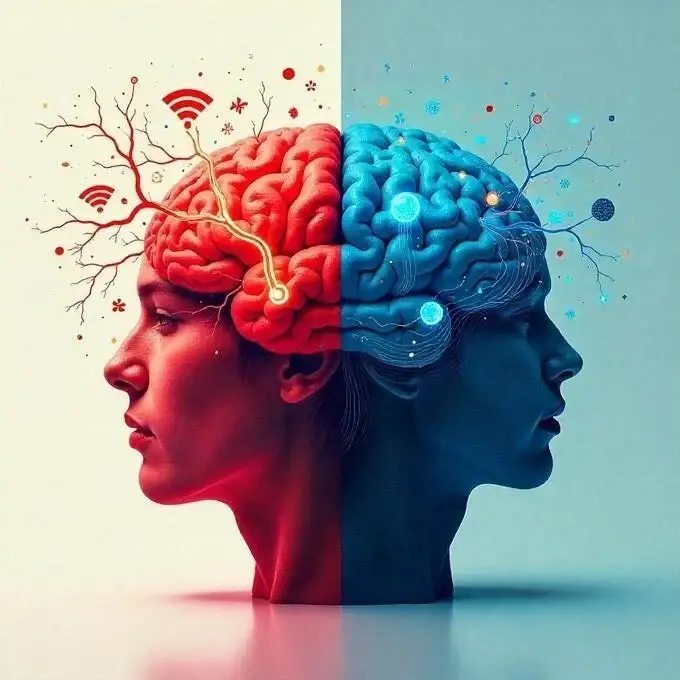
“Brain rot” became the internet’s most relatable term for mental fatigue caused by endless scrolling, short-form videos, and digital overload.
You open Instagram for “just five minutes.” An hour later, you’re watching a cat video for the sixth time. That feeling has a name — and it’s everywhere. The brain rot meaning is simple: mental decline from too much low-quality internet content. And in 2024, Oxford made it their Word of the Year.
That feeling has a name now — and the whole world has agreed on it.
Brain rot is no longer just slang. In 2024, Oxford University Press named it their Word of the Year, after its usage jumped by 230% in a single year. But what does brain rot actually mean, why does it resonate with so many people, and should we take it seriously?
Brain Rot Meaning: What Does It Actually Mean?
Oxford defines brain rot as “the supposed deterioration of a person’s mental or intellectual state, especially viewed as the result of overconsumption of material considered to be trivial or unchallenging” — particularly online content.
In plain language: it’s the mental fog, lack of focus, and general dullness you feel after spending too much time consuming low-quality content on the internet. Think endless TikTok scrolling, YouTube shorts, meme loops, and Instagram reels that offer zero mental stimulation but somehow keep pulling you back.
It is not a medical diagnosis. No doctor will write “brain rot” on a prescription pad. But that doesn’t mean what it describes isn’t real.
This Term Is Older Than the Internet
Here’s something most people don’t know: brain rot didn’t start with TikTok or Gen Z.
The phrase was first used in 1854 by Henry David Thoreau in his book Walden. Thoreau used it to criticize a society that increasingly preferred simple, shallow ideas over complex, meaningful ones. He worried that the human mind was being “rotted” by the preference for easy consumption over deep thought.
That was 170 years ago — long before smartphones, social media, or 60-second videos of people doing the “skibidi” dance.
The fact that this word survived for over a century and then exploded in relevance says something important: the problem Thoreau identified didn’t go away. It scaled.
Why Did “Brain Rot” Go Viral in 2024?
A few things happened at once:
1. Gen Z and Gen Alpha made it their own
Younger generations didn’t use brain rot as a complaint. They used it as self-aware humor — a way to acknowledge, often jokingly, that they were deep in the cycle of consuming pointless content. Phrases like “skibidi toilet gave me brain rot” or “I have full brain rot at this point” became a badge of digital belonging.
2. The content got genuinely harder to defend
Viral content in 2024 reached new levels of absurdity — Skibidi Toilet, “only in Ohio” memes, and increasingly bizarre short-form videos that made no logical sense but racked up millions of views. Even the people watching couldn’t explain why they were watching. Brain rot was the most honest word for it.
3. The mental health conversation was already open
People were already talking about doomscrolling, phone addiction, shortened attention spans, and digital burnout. Brain rot gave all of that a single, punchy label that felt accurate without being clinical or alarming.
Is Brain Rot Actually Harmful?
This is where it gets serious.
The term is used humorously, but the effects it describes are not entirely a joke. Research and mental health professionals have linked excessive low-quality screen time to:
- Reduced attention span — difficulty focusing on tasks that require sustained thinking
- Cognitive fatigue — mental tiredness that isn’t caused by doing anything productive
- Lower motivation — the dopamine cycle from short-form content makes longer, harder tasks feel unrewarding
- Sleep disruption — late-night scrolling disrupts sleep quality, which worsens cognitive function
- Social withdrawal — spending time with screens instead of people reduces real-world connection
It also has a physical side. Time spent on passive scrolling is time not spent moving, which has downstream effects on physical health as well.
None of this means your brain is literally rotting. But it does mean the behavior the term describes has measurable consequences — especially in young people whose brains are still developing.
The Double-Edged Nature of the Term
Here’s what makes brain rot culturally interesting: the people using it most are the same people consuming the content it describes.
Gen Z didn’t reject brain rot culture — they named it, memed it, and made it part of their identity. There’s a self-awareness in that which older generations didn’t have. When someone says “I have brain rot” they’re not asking for help. They’re making a joke about their own digital habits while continuing those habits.
This raises a real question: does naming a problem make it easier to ignore?
Possibly. Calling something “brain rot” keeps it light and humorous. It takes the edge off what might otherwise feel like a real concern about how we spend our time and attention. The label normalizes the behavior at the same time it mocks it.
What You Can Actually Do About It
You don’t need a digital detox retreat or a full phone ban. Small, consistent changes are more realistic:
- Set app time limits — most phones have built-in screen time controls. Use them.
- Replace, don’t just remove — when you feel the urge to scroll, replace it with something slightly more engaging: a podcast, a book, a short walk.
- Create before you consume — start your day by doing something, writing, planning, creating, before you open social media.
- Notice how you feel after — brain rot content usually leaves you feeling empty or restless. That feeling is data. Use it.
- Batch your scrolling — instead of checking your phone 40 times a day, give yourself two dedicated windows.
None of this is about becoming a productivity monk. It’s about being more intentional with where your attention goes, because your attention is genuinely valuable.
Brain rot meaning, at its core, is simple: too much low-quality input, not enough mental engagement. The word is funny, it’s relatable, and it spread because it captured something real about modern digital life.
But the best thing about a word becoming mainstream is that it creates a shared language for a shared problem. Now that we have a name for it, the next step is deciding what to actually do about it — or at least, being honest with ourselves when we’re deep in hour three of watching strangers react to other strangers reacting to memes.
Your brain is not rotting. But it might be worth asking what you’re feeding it.
Read this
Oxford Word of the Year mention
How to Create a Peaceful Morning Routine
About the Author