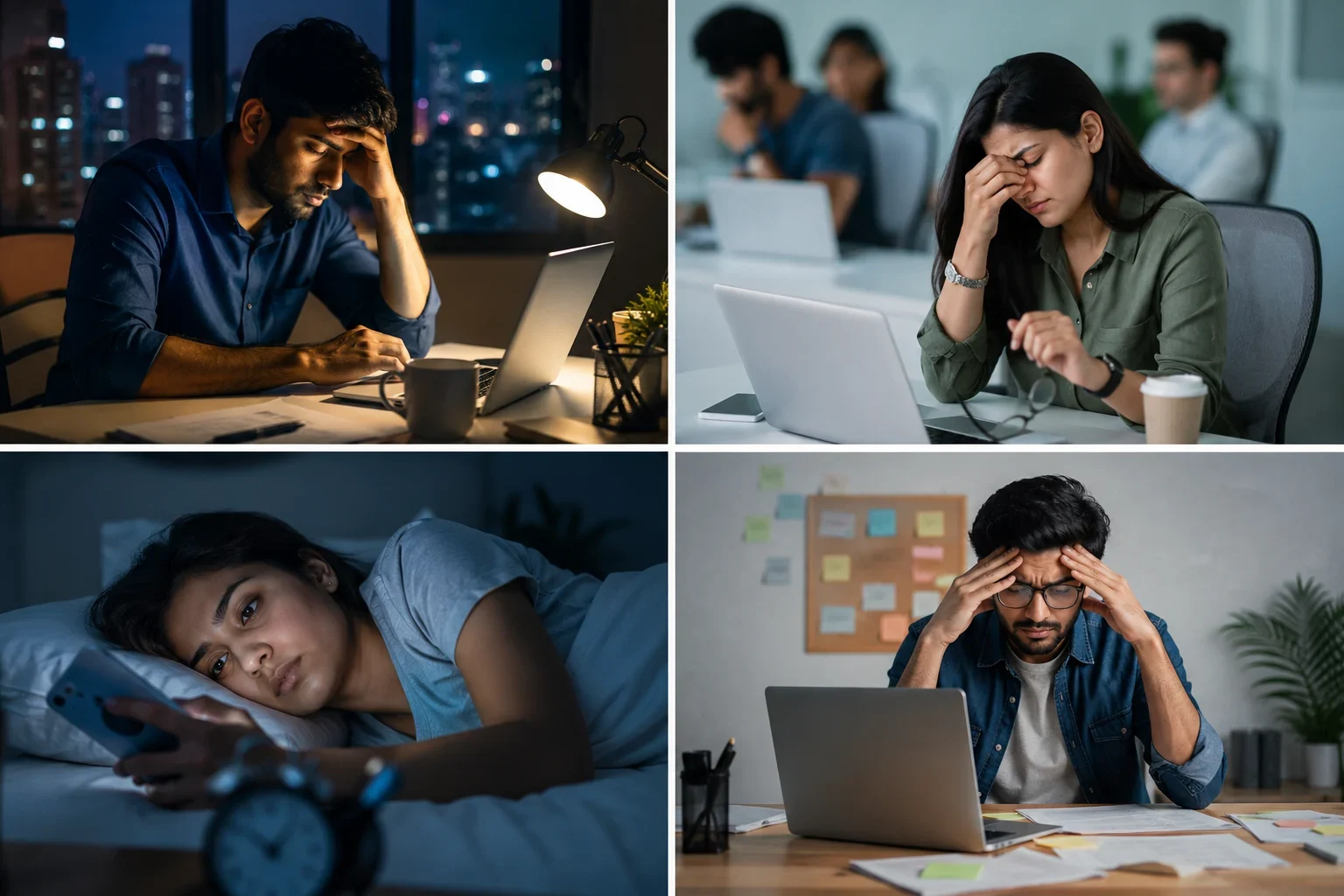
Silent burnout is quietly affecting the emotional wellbeing and mental health of young professionals across India.
Silent burnout symptoms are quietly becoming one of the biggest mental wellness concerns among young Indians in 2026. A decade ago, burnout was easier to identify. People openly described feeling overworked, emotionally drained, or physically exhausted. Today, the experience is often far more hidden.
Many young Indians continue functioning normally while silently struggling internally. They wake up, attend meetings, respond to notifications, complete deadlines, maintain social media activity, and appear emotionally stable in public spaces. Yet privately, they feel disconnected, mentally tired, and emotionally overwhelmed.
This is one reason silent burnout symptoms are becoming increasingly difficult to recognize in 2026.
Unlike dramatic emotional breakdowns, silent burnout develops slowly. It often hides beneath productivity, routine, and digital busyness. People learn how to continue functioning while emotionally depleted.
In major Indian cities like Delhi, Bengaluru, Mumbai, Hyderabad, and Pune, many young professionals now live in a state of continuous cognitive engagement. Work notifications never fully stop. Social media algorithms constantly demand attention. The pressure to remain productive follows people long after office hours end.
Over time, emotional recovery disappears quietly.
And because this lifestyle has become normalized, many individuals no longer realize they are mentally exhausted until symptoms begin affecting their health, relationships, motivation, or emotional stability.
The Dangerous Rise of Silent Burnout Symptoms
One of the most concerning aspects of modern burnout is that people can remain outwardly “successful” while internally struggling.
Psychologists increasingly refer to this as high-functioning burnout.
A person may:
- perform well professionally
- maintain deadlines
- continue socializing
- stay physically active
- appear motivated online
Yet internally, they may feel:
- emotionally detached
- mentally exhausted
- constantly overstimulated
- unable to truly relax
- disconnected from enjoyment
This disconnect creates confusion.
Many people assume burnout only exists when someone completely stops functioning. In reality, emotional exhaustion often begins much earlier.
For example, someone may continue working efficiently while simultaneously:
- losing emotional excitement toward achievements
- feeling anxious during rest
- struggling with concentration
- becoming increasingly irritable
- experiencing persistent mental fatigue
Because they are still “managing life,” their symptoms often go unnoticed.
This is why silent burnout can continue for months — sometimes years — before individuals fully recognize what is happening.
Why Silent Burnout Symptoms Are Increasing in Urban India
Modern city life creates a constant state of sensory and psychological stimulation.
For many young Indians, the day begins with screen exposure and ends with screen exposure. The mind rarely experiences true stillness.
A Typical Overstimulated Daily Routine
- checking notifications immediately after waking up
- commuting through traffic stress
- attending back-to-back virtual meetings
- multitasking throughout the day
- consuming short-form content during breaks
- late-night scrolling before sleep
Even leisure time often involves stimulation rather than recovery.
This matters because the brain requires low-stimulation periods to regulate stress properly.
Without recovery, stress becomes chronic.
Mental health professionals increasingly warn that modern overstimulation may contribute to:
- attention fatigue
- emotional numbness
- reduced stress tolerance
- poor sleep quality
- anxiety symptoms
- concentration difficulties
Many people no longer feel rested because their nervous systems remain continuously activated.
The Emotional Cost of “Always Being Available”
Technology improved convenience, but it also removed psychological boundaries.
In previous generations, work typically stayed inside physical workplaces. Today, work follows people everywhere.
A late-night message can instantly shift someone back into work mode.
Even when individuals are technically resting, many remain mentally alert because they anticipate:
- emails
- updates
- notifications
- deadlines
- calls
- workplace expectations
This constant anticipation creates low-level psychological stress throughout the day.
Many professionals describe feeling unable to “switch off” mentally.
That inability to disconnect plays a major role in silent burnout symptoms.
The nervous system needs moments where it no longer feels responsible for immediate performance.
Without those moments, emotional exhaustion slowly accumulates.
Why Social Media Makes Burnout Worse
Social media has fundamentally changed how people measure success, productivity, beauty, and achievement.
In 2026, comparison is no longer occasional. It is algorithmically continuous.
What People Constantly See Online
- career promotions
- startup success stories
- luxury lifestyles
- fitness journeys
- relationship highlights
- productivity routines
- self-improvement trends
Even when users intellectually understand that online content is curated, emotional comparison still happens subconsciously.
This creates a persistent feeling that:
- others are progressing faster
- everyone else is more productive
- rest equals laziness
- slowing down means falling behind
Many individuals feel guilty during rest because they associate stillness with unproductivity.
Over time, this mindset damages emotional wellbeing.
Why Gen Z and Millennials Are Especially Vulnerable
Young adults today are navigating unique psychological pressures.
Unlike previous generations, Gen Z and younger millennials grew up during:
- social media expansion
- economic uncertainty
- digital dependency
- hypercompetitive work culture
- constant information exposure
The Pressure Modern Young Adults Face
- remain productive
- stay digitally active
- build careers quickly
- maintain personal branding
- improve continuously
- remain emotionally resilient
The pressure is relentless.
At the same time, many young professionals also face:
- rising living costs
- unstable job markets
- housing pressure
- relationship stress
- future uncertainty
This combination creates chronic psychological overload.
For many individuals, burnout no longer comes from a single stressful event. It develops from sustained emotional pressure without enough recovery.
How Silent Burnout Changes Personality Over Time
One overlooked aspect of burnout is how gradually it can change emotional behavior.
People experiencing prolonged exhaustion may slowly become:
- less patient
- emotionally distant
- socially withdrawn
- less enthusiastic
- more reactive
- mentally disengaged
Because these changes happen gradually, individuals often assume:
- they are becoming lazy
- they lost ambition
- they are “bad at coping”
- something is wrong with their personality
In reality, chronic stress may be affecting emotional regulation.
Many people do not realize how much mental exhaustion influences:
- mood
- motivation
- memory
- emotional tolerance
- social energy
This is why burnout recovery often requires more than simply taking one weekend off.
The nervous system itself may need long-term recovery support.
Can Silent Burnout Lead to Anxiety and Depression?
Mental health experts increasingly warn that untreated burnout may contribute to more serious emotional difficulties over time.
Chronic emotional exhaustion may increase vulnerability to:
- anxiety symptoms
- sleep disorders
- panic attacks
- emotional detachment
- depressive symptoms
- persistent hopelessness
This does not mean burnout automatically causes clinical mental illness. However, prolonged stress significantly affects emotional wellbeing.
One reason burnout becomes dangerous is that many people normalize their symptoms for too long.
Common Thoughts People Tell Themselves
- “everyone feels this way”
- “I just need to work harder”
- “I’ll rest later”
- “this phase will pass”
But emotional exhaustion rarely disappears without meaningful recovery.
How Silent Burnout Symptoms Affect Sleep Quality
Sleep and burnout are deeply connected.
Mental exhaustion often disrupts sleep quality, while poor sleep increases emotional stress.
Many individuals experiencing silent burnout report:
- racing thoughts at night
- difficulty falling asleep
- waking up tired
- inconsistent sleep cycles
- late-night scrolling habits
- increased nighttime anxiety
Modern digital behavior worsens this problem.
Blue light exposure, overstimulation from short-form content, and late-night productivity habits all affect the brain’s ability to transition into deep recovery.
Experts Recommend These Sleep Recovery Habits
- reducing screen exposure
- avoiding work discussions late at night
- calming the nervous system
- maintaining consistent sleep timing
Quality rest is one of the strongest protective factors against chronic burnout.
Why Early Silent Burnout Symptoms Often Go Unnoticed
Burnout often develops slowly enough that people adapt to it.
At first, symptoms seem manageable:
- occasional fatigue
- mild irritability
- reduced focus
- emotional tiredness
But over time, these symptoms intensify.
The problem is that modern culture frequently rewards overworking.
People who constantly push themselves are often praised for:
- dedication
- ambition
- discipline
- hustle mentality
As a result, many individuals ignore emotional warning signs because exhaustion has become socially normalized.
In some workplaces, being overwhelmed is almost treated like proof of productivity.
This mindset creates long-term mental health risks.
The Growing Shift Toward Sustainable Living
One positive trend emerging in 2026 is the increasing conversation around sustainable wellness.
Many young adults are beginning to reject:
- toxic productivity
- endless hustle culture
- constant online availability
- overwork without recovery
Instead, people are becoming more interested in:
- slower living
- mindful productivity
- emotional wellbeing
- healthier routines
- work-life boundaries
- digital detox habits
- nervous system recovery
This shift reflects a growing awareness that productivity without mental wellbeing eventually becomes unsustainable.
People are beginning to realize that success loses meaning when emotional exhaustion becomes permanent.
Practical Daily Habits That May Reduce Burnout Risk
Prioritize Mental Recovery, Not Just Physical Rest
Watching content endlessly is not always true recovery.
Real recovery often includes:
- silence
- walking
- journaling
- reading
- deep conversation
- mindfulness
- screen-free time
The brain needs reduced stimulation to recover emotionally.
Stop Measuring Self-Worth Through Productivity
One of the biggest psychological shifts people can make is separating personal worth from constant achievement.
Rest does not reduce value.
Recovery improves long-term resilience.
Protect Sleep Aggressively
Good sleep hygiene is not a luxury anymore.
It has become essential for:
- emotional regulation
- cognitive function
- stress management
- energy levels
- mental clarity
Even small sleep improvements may significantly improve emotional wellbeing.
Rebuild Offline Moments
Modern lifestyles often eliminate emotional stillness.
Simple offline moments help regulate mental overload:
- morning walks
- device-free meals
- nature exposure
- quiet evenings
- limited notifications
Small behavioral changes often create meaningful psychological relief over time.
Why This Conversation Matters in India Right Now
India is experiencing rapid digital growth, urbanization, and workplace transformation simultaneously.
While these changes create opportunity, they also increase psychological pressure.
Young professionals today are balancing:
- competitive careers
- financial responsibilities
- family expectations
- social comparison
- digital dependency
- uncertain futures
This environment makes emotional exhaustion increasingly common.
Mental health conversations in India are growing, but burnout still remains under-discussed compared to physical health.
That needs to change.
Because silent burnout symptoms rarely appear suddenly. They develop quietly through daily habits, chronic stress, emotional suppression, and overstimulation.
And in many cases, people only recognize the damage after reaching severe exhaustion.
Final Thoughts
Silent burnout is not simply about working too hard. It is about living too long without emotional recovery.
In 2026, many young Indians are functioning continuously without ever feeling mentally restored. Their schedules remain full, but their emotional energy keeps shrinking.
The modern world rewards speed, responsiveness, and constant activity. But the human mind still requires:
- rest
- stillness
- sleep
- emotional safety
- recovery
- meaningful connection
Without those things, even highly motivated people eventually begin running on exhaustion instead of purpose.
The growing awareness around burnout may ultimately become one of the most important mental wellness conversations of this generation.
Because surviving daily pressure is not the same as living well.
World Health Organization mental health resources
Harvard Health burnout research
Mayo Clinic stress management guide
About the Author