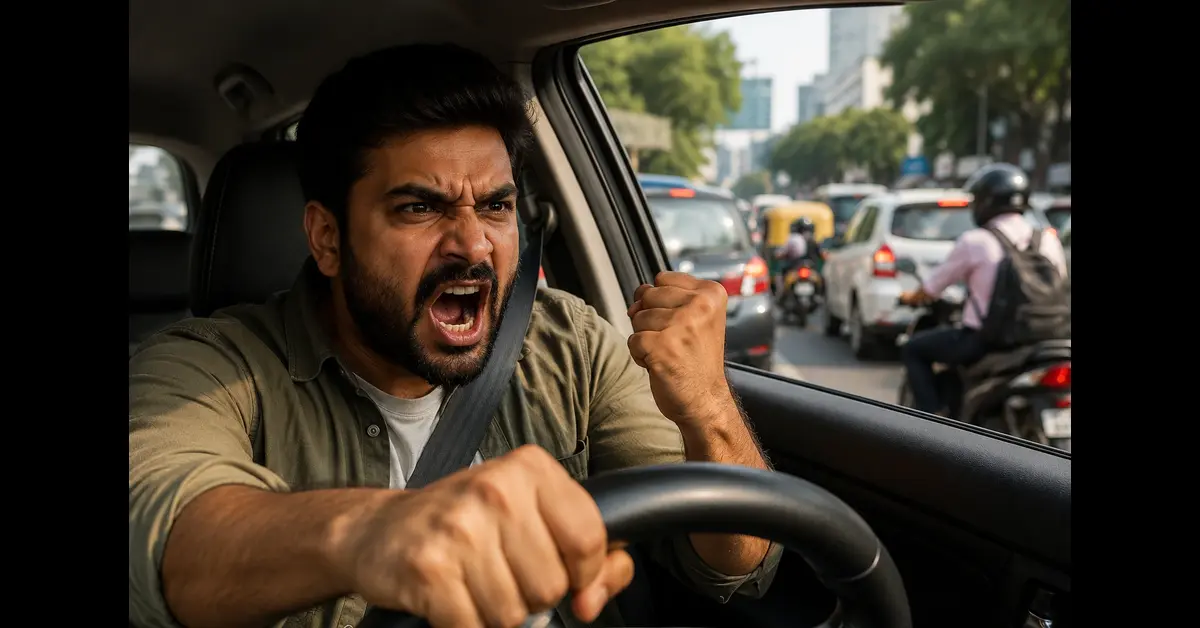
A driver expressing intense anger during heavy traffic, illustrating common road rage triggers
If you’ve ever wondered what causes road rage, the answer isn’t just “bad drivers.” Road rage is a complex mix of psychology, stress, and human behavior, especially in high-pressure driving environments like India.
From sudden anger at a minor mistake to aggressive reactions in traffic, road rage often feels automatic—but it’s actually driven by identifiable mental and emotional triggers.
Understanding these triggers is the first step to controlling them.
What Is Road Rage Psychology?
At its core, road rage psychology is about how the brain reacts under stress.
When you’re driving:
- You’re constantly making quick decisions
- You’re surrounded by unpredictable behavior
- You feel a need for control and safety
When something disrupts that control—like someone cutting you off—your brain may interpret it as a threat, not just an inconvenience.
The Real Causes of Road Rage
Let’s break down the main triggers behind driving anger.
1. The Fight-or-Flight Response
One of the biggest answers to why people get road rage lies in biology.
When triggered:
- Your brain activates a survival response
- Adrenaline increases
- You react instantly, not logically
This is why even small incidents can feel intense.
👉 Internal link suggestion: Learn more in our guide on road rage in India and why it’s rising.
2. Stress and Emotional Overload
Daily life stress doesn’t stay at home—it follows you into your car.
Common sources:
- Work pressure
- Financial stress
- Personal conflicts
When combined with traffic, this creates a perfect storm for stress and aggressive driving.
👉 Internal link suggestion: Read about the connection between road rage and anxiety.
3. Time Pressure and Urgency
Running late changes how you think and react.
You’re more likely to:
- Take risks
- Get irritated quickly
- Blame others for delays
This urgency reduces patience and increases impulsive behavior.
4. Ego and Personalization
Many drivers take things personally.
Examples:
- “He disrespected me by cutting me off”
- “Why is this person blocking my way?”
This mindset turns neutral situations into emotional conflicts.
5. Lack of Emotional Regulation
Some people struggle to control emotional reactions.
This leads to:
- Quick anger spikes
- Difficulty calming down
- Repeated aggressive behavior
👉 Internal link suggestion: Check signs you have a road rage problem to self-assess.
6. Driving Environment in India
Indian roads add unique triggers:
- Heavy congestion
- Frequent honking
- Lane indiscipline
- Mixed traffic (cars, bikes, pedestrians)
These factors increase sensory overload and frustration.
👉 Internal link suggestion: See how this plays out in aggressive driving in India.
Common Road Rage Triggers (Real-Life Situations)
Here are everyday scenarios that cause reactions:
- Someone cuts into your lane
- A driver honks repeatedly
- Sudden braking in traffic
- Not giving way
- Parking disputes
These situations are common—but your reaction determines whether it becomes road rage.
Personality Traits Linked to Road Rage
Certain personality patterns make road rage more likely.
High-risk traits:
- Impulsiveness
- Low patience
- High competitiveness
- Need for control
These don’t mean someone is a bad person—but they increase emotional reactivity while driving.
👉 Internal link suggestion: Explore more about road rage personality types.
Is Road Rage a Mental Disorder?
This is a common question.
Road rage itself is not always a mental illness, but in some cases, it may be linked to conditions like:
- Anger management issues
- Intermittent explosive disorder
- Chronic stress disorders
👉 Internal link suggestion: Read our detailed article on is road rage a mental illness.
How Road Rage Affects Your Brain and Body
Repeated anger while driving can have real effects.
Brain Impact:
- Reduced decision-making ability
- Increased emotional reactivity
Physical Impact:
- High blood pressure
- Increased heart rate
- Fatigue
👉 Internal link suggestion: Learn more about road rage effects on health.
How to Prevent Road Rage Before It Starts
Prevention is more effective than control.
Simple Strategies:
1. Change Your Mindset
Expect delays—it reduces frustration.
2. Give Yourself Extra Time
Removes urgency and pressure.
3. Don’t Assume Intent
Most mistakes are not personal.
4. Stay Focused on Your Own Driving
Not others’ behavior.
5. Use Calming Techniques
Breathing, music, or silence.
👉 Internal link suggestion: Try these calm driving tips that actually work.
Why Understanding Road Rage Matters
When you understand what causes road rage, you:
- React less impulsively
- Stay safer on the road
- Improve overall mental well-being
It’s not about becoming emotionless—it’s about becoming aware.
Road rage isn’t random—it’s predictable. It comes from stress, biology, environment, and mindset.
By recognizing triggers and understanding your reactions, you can take control before anger takes over.
At Daily Life Journal, we focus on practical insights that improve everyday life—and staying calm behind the wheel is one of the most powerful habits you can build.
FAQs
1. What is the main cause of road rage?
Stress, frustration, and perceived threats while driving are the biggest causes.
2. Why do I get so angry in traffic?
Traffic increases stress and triggers emotional responses like impatience and irritation.
3. Can road rage be controlled?
Yes, with awareness, mindset changes, and simple calming techniques.
About the Author