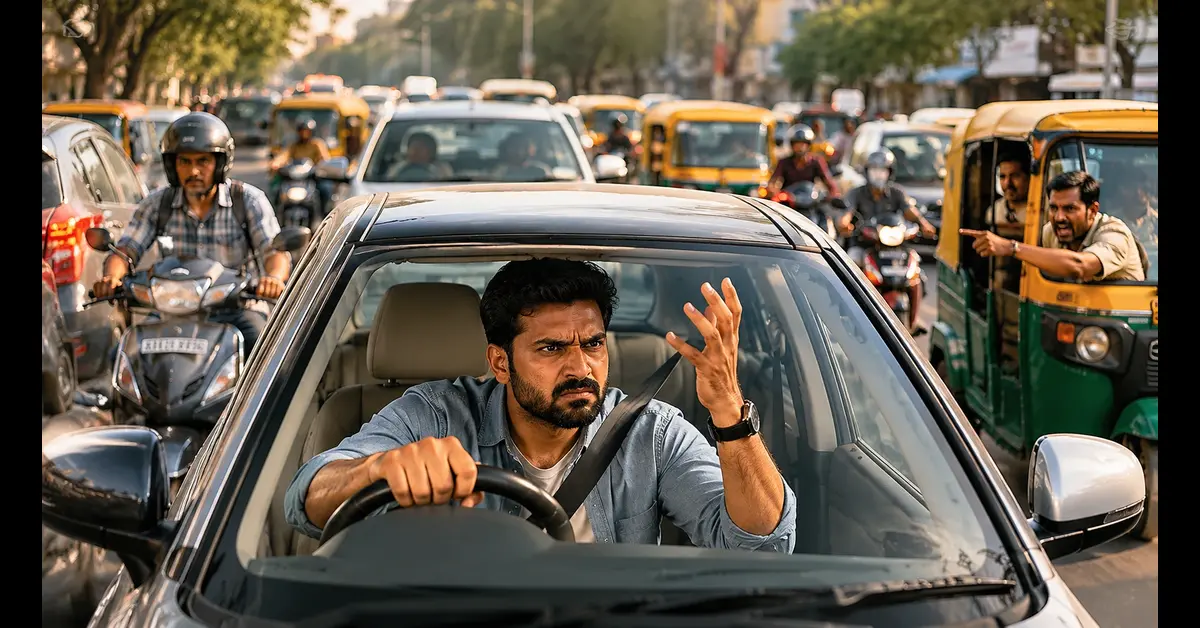
A driver reacting angrily during heavy traffic congestion on a busy Indian road
Road rage in India is no longer a rare incident—it’s becoming a daily reality on busy roads, from metro cities to smaller towns. Whether it’s sudden shouting, reckless overtaking, or physical confrontations, aggressive driving behavior is increasing at an alarming rate.
If you’ve ever felt your anger rise in traffic, you’re not alone. But understanding why road rage happens and how to control it is the key to staying safe—not just for yourself, but for everyone on the road.
What Is Road Rage?
Road rage refers to extreme aggressive behavior by drivers, often triggered by stress, frustration, or perceived mistakes by others.
It can include:
- Shouting or abusing other drivers
- Dangerous overtaking
- Intentional blocking
- Physical fights in extreme cases
👉 Internal link suggestion: Read our detailed guide on what causes road rage to understand the psychology behind it.
Road Rage in India: The Rising Problem
India’s roads are among the busiest in the world, and that pressure shows in driver behavior.
Key Trends:
- Increasing vehicle density in cities
- Longer commute times
- Lack of strict enforcement in some areas
- Rising stress levels among drivers
While exact reporting varies, road rage cases in India have seen a noticeable rise over recent years, especially in urban regions.
Why Smaller Cities Are Also Affected
Even cities like Ludhiana, once considered relatively calm, are seeing more aggressive driving due to:
- Rapid urbanization
- Increased vehicle ownership
- Changing lifestyle stress
This shift makes aggressive driving in India a nationwide concern, not just a metro issue.
What Causes Road Rage in Indian Traffic?
Understanding triggers helps you prevent escalation.
1. Traffic Congestion
Constant stopping, honking, and delays create frustration.
2. Time Pressure
Running late increases impatience and impulsive reactions.
3. Lack of Driving Discipline
Lane cutting, signal jumping, and wrong-side driving trigger anger.
4. Emotional Stress
Personal stress (work, finances, family) often spills onto the road.
👉 Internal link suggestion: Explore road rage and anxiety to see how stress directly affects driving behavior.
The Psychology Behind Road Rage
Road rage is closely linked to the fight-or-flight response—a natural survival reaction.
When triggered:
- Heart rate increases
- Adrenaline spikes
- Rational thinking decreases
This is why small incidents—like a horn or a cut-off—can feel like a personal attack.
Some drivers also show traits linked to:
- Low emotional regulation
- High impulsivity
- Ego-driven reactions
👉 Internal link suggestion: Learn more in road rage psychology and triggers.
Real-Life Triggers on Indian Roads
In India, certain situations commonly spark road rage:
- Honking aggressively
- Close overtaking
- Not giving way
- Arguments at traffic signals
- Parking disputes
These everyday scenarios can quickly escalate if not handled calmly.
Road Rage Laws in India (Basic Overview)
Many people don’t realize that road rage can have serious legal consequences.
Depending on the situation, actions may fall under:
- Dangerous driving
- Assault
- Criminal intimidation
Penalties can include:
- Fines
- License suspension
- Jail time in severe cases
👉 Internal link suggestion: Read our full guide on road rage laws in India and IPC sections.
👉 Outbound link suggestion: Refer to official Indian traffic rules or legal portals for updated laws.
Effects of Road Rage on Health
Road rage doesn’t just affect safety—it impacts your health too.
Physical Effects:
- Increased blood pressure
- Headaches
- Fatigue
Mental Effects:
- Anxiety
- Irritability
- Reduced focus
Over time, frequent anger while driving can become a habit that affects daily life.
How to Stay Calm While Driving in India
Controlling road rage is not about suppressing anger—it’s about managing it.
Practical Tips:
1. Leave Early
Avoid unnecessary time pressure.
2. Don’t Take It Personally
Most drivers aren’t targeting you—it’s just poor driving.
3. Avoid Eye Contact During Conflict
This reduces escalation.
4. Use Music or Podcasts
Keeps your mind relaxed during traffic.
5. Practice Deep Breathing
Simple breathing techniques can calm your nervous system quickly.
👉 Internal link suggestion: Try these breathing techniques for driving anger.
What To Do If You Face Road Rage
Your safety comes first.
- Stay inside your vehicle
- Avoid arguing or reacting
- Do not engage physically
- Move to a safe, public area if needed
- Contact authorities if the situation escalates
👉 Internal link suggestion: Read what to do if someone road rages at you for a full safety guide.
The Role of Awareness and Responsibility
Improving road behavior in India requires:
- Better awareness
- Responsible driving habits
- Emotional control
Even small changes—like giving way or staying calm—can reduce conflict significantly.
Road rage in India is rising, but it’s not unavoidable. By understanding its causes, recognizing triggers, and practicing simple control techniques, you can protect yourself and contribute to safer roads.
At Daily Life Journal, we believe that small daily habits—like staying calm while driving—can create a big difference in overall well-being.
FAQs
1. Why is road rage increasing in India?
Due to traffic congestion, stress, and lack of driving discipline.
2. Is road rage a crime in India?
Yes, depending on the behavior, it can fall under multiple legal sections.
3. How can I control road rage?
Practice calm driving techniques, manage stress, and avoid reacting impulsively.
About the Author