30 Grams of Protein Cheat Sheet: Easy Guide to High-Protein Foods for Daily Nutrition
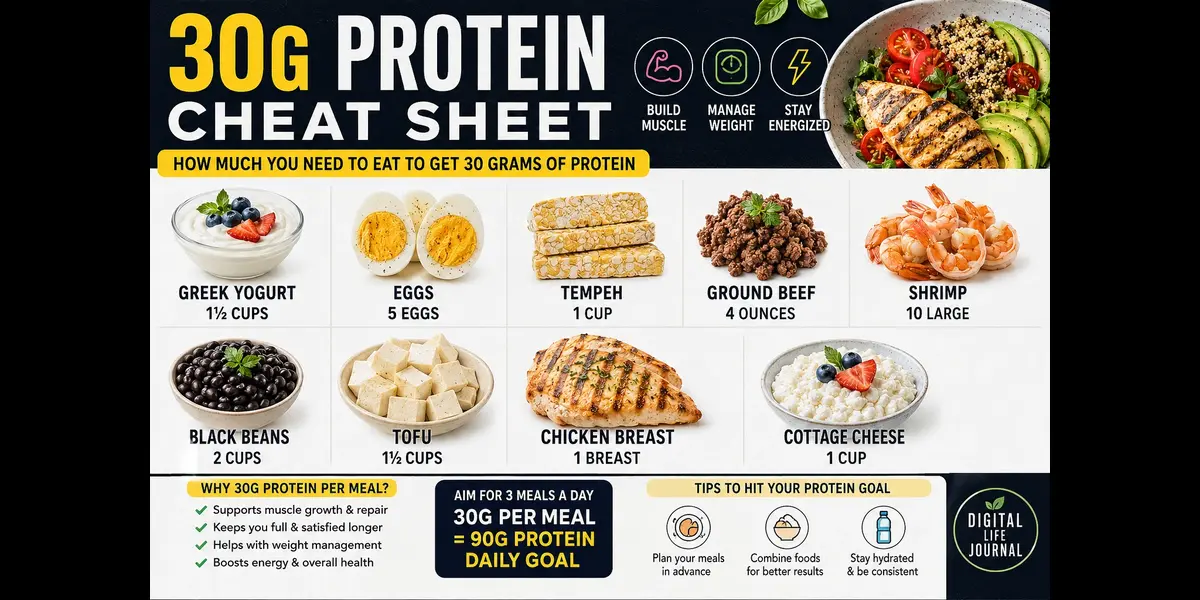
A simple 30g protein cheat sheet showing how much food you need to meet your daily protein goals.
The 30g protein cheat sheet is one of the easiest ways to improve your daily diet and meet your nutrition goals. At Digital Life Journal, we simplify healthy eating, and this method helps you get enough protein without complicated tracking. By following a 30g protein cheat sheet, you can build balanced meals, stay full longer, and support weight loss or muscle growth.
At Digital Life Journal, we focus on practical and sustainable health habits. Therefore, this 30 grams of protein cheat sheet helps you simplify your diet while improving your overall nutrition.
Instead of worrying about numbers all day, you can break your meals into easy targets. For example, aiming for 30 grams of protein per meal allows you to stay consistent without stress. As a result, you build a healthier lifestyle step by step.
What Does 30 Grams of Protein Really Mean?
Many people hear nutrition experts talk about protein goals. However, they often struggle to apply those numbers in real life.
So, what does 30 grams of protein actually look like?
In simple terms, it’s a portion of food that provides enough protein to support your body functions. Moreover, this amount works well for most meals because your body absorbs protein efficiently in this range.
Why 30 Grams Per Meal Works
First of all, spreading protein across meals improves absorption. In addition, it keeps your energy levels stable throughout the day.
For example:
- Breakfast → 30g protein
- Lunch → 30g protein
- Dinner → 30g protein
As a result, you can reach 90g daily without complicated tracking.
30 Grams of Protein Cheat Sheet (Simple Food Portions)
Now, let’s break it down into real foods you can eat daily.Animal-Based Protein Sources
- Greek yogurt → 1½ cups
- Eggs → 5 whole eggs
- Chicken breast → 1 medium piece
- Ground beef → 4 ounces
- Shrimp → 10 large
- Cottage cheese (paneer) → 1 cup
Plant-Based Protein Sources
- Tempeh → 1 cup
- Tofu → 1½ cups
- Black beans → 2 cups
Although these values are approximate, they provide a strong starting point. However, keep in mind that protein content may vary depending on cooking methods and brands.
Why This Cheat Sheet Makes Life Easier
Many diet plans fail because they feel too restrictive. On the other hand, this cheat sheet keeps things simple and flexible.
First, it removes the need for constant tracking. Second, it allows you to mix different foods based on your taste.
Moreover, it helps you stay consistent, which is the most important factor in long-term success.
Benefits of Eating 30 Grams of Protein Per Meal
1. Supports Muscle Growth
Protein provides essential amino acids. Therefore, your body uses them to repair and build muscles.
If you exercise regularly, this becomes even more important. In addition, proper protein intake improves recovery after workouts.
2. Helps with Weight Loss
Protein keeps you full for longer. As a result, you naturally eat fewer calories.
Moreover, it reduces cravings, especially for unhealthy snacks. Therefore, you can maintain a calorie deficit more easily.
3. Boosts Metabolism
Your body burns more calories while digesting protein. This process is known as the thermic effect of food.
Consequently, higher protein intake can support fat loss over time.
4. Stabilizes Energy Levels
Carbohydrates can cause energy spikes. However, protein helps maintain steady energy throughout the day.
As a result, you feel more focused and less tired.
5. Improves Overall Health
Protein supports:
- Hair and skin health
- Hormone balance
- Immune function
Therefore, it plays a key role in your overall well-being.
Animal vs Plant Protein: Which One Should You Choose?
Many people wonder which type of protein is better. However, the answer depends on your lifestyle and preferences.
Animal Protein
Animal sources provide complete protein. That means they contain all essential amino acids.
Examples include:
- Chicken
- Eggs
- Fish
- Dairy
Therefore, they are highly effective for muscle growth.
Plant Protein
Plant-based protein offers additional benefits. For example, it contains fiber and antioxidants.
Examples include:
- Lentils
- Beans
- Tofu
- Tempeh
However, some plant proteins lack certain amino acids. Therefore, combining foods becomes important.
👉 For best results, include both types in your diet.
Easy 30g Protein Meal Ideas
Now that you understand the basics, let’s look at practical meal ideas.
🍳 Breakfast Ideas
- Eggs with milk and nuts
- Paneer paratha with curd
- Protein smoothie with fruits
These meals provide a strong start to your day. Moreover, they keep you full for longer.
Lunch Ideas
- Chicken curry with rice
- Dal, roti, and salad
- Tofu stir-fry with vegetables
In addition, these meals balance protein with carbs and fats.
Dinner Ideas
- Paneer bhurji with roti
- Fish with vegetables
- Lentil soup
As a result, you end your day with proper nutrition.
High-Protein Indian Foods (Budget-Friendly)
Eating healthy doesn’t have to be expensive. In fact, many Indian foods are rich in protein and affordable.
Best Options
- Paneer
- Milk and curd
- Moong dal
- Chana
- Rajma
- Soy chunks
- Peanuts
Smart Combinations
- Dal + rice → complete protein
- Roti + paneer → balanced meal
- Chana + salad → high fiber + protein
Therefore, you can meet your goals even on a budget.
Common Mistakes to Avoid
Even with a good plan, people often make mistakes.
1. Skipping Protein at Breakfast
Many people eat carb-heavy breakfasts. As a result, they feel hungry quickly.
2. Eating Too Much Processed Protein
Protein bars and powders are convenient. However, whole foods should always come first.
3. Ignoring Portion Sizes
Small portions won’t meet your needs. Therefore, follow the cheat sheet carefully.
4. Relying on One Source
Eating only eggs or chicken can become boring. Instead, include variety in your meals.
How Much Protein Do You Actually Need?
Protein requirements vary based on your lifestyle.
- Sedentary → 0.8g per kg
- Active → 1.2–1.6g
- Muscle gain → up to 2.2g
Example
If you weigh 60kg:
- You need around 80–100g protein daily
Therefore, 30g per meal works perfectly.
Sample 1-Day High-Protein Plan
Breakfast
Eggs + milk → 25g
Lunch
Chicken + rice → 35g
Snack
Greek yogurt → 15g
Dinner
Dal + paneer → 30g
As a result, you reach your daily target easily.
Is 30g Protein Per Meal Enough?
Yes, for most people, it is ideal.
Research suggests that your body uses 20–40g protein efficiently per meal. Therefore, 30g is a balanced choice.
Can You Eat Too Much Protein?
Although protein is essential, too much can cause issues.
For example:
- Digestive discomfort
- Nutrient imbalance
However, this usually happens only with extreme intake.
Best Time to Eat Protein
Timing also matters.
- Morning → boosts metabolism
- Post-workout → aids recovery
- Evening → supports muscle repair
Therefore, spread your intake throughout the day.
To improve rankings, connect this article with:
- Mindful eating guide
- Weight loss tips
- Healthy lifestyle habits
As a result, users stay longer on your site.
The 30 grams of protein cheat sheet simplifies healthy eating. Instead of following strict diets, you can build flexible habits.
Start small. For example, add protein to one meal at a time. Then, gradually improve your routine.
In the long run, consistency matters more than perfection. Therefore, focus on progress, not extremes.
At Digital Life Journal, we believe simple habits create powerful results.
FAQs
What is 30 grams of protein in food?
It refers to a portion size that provides around 30g of protein.
Is 30g protein per meal too much?
No, it is ideal for most people.
Can vegetarians reach 30g protein?
Yes, by combining dal, paneer, tofu, and legumes.
Is protein important for weight loss?
Yes, it reduces hunger and supports fat loss.
According to the Healthline protein guide, daily protein intake depends on body weight and activity level.
The World Health Organization also highlights the importance of balanced nutrition.
About the Author