Best Vitamin D Foods and Sunlight Habits for Winter (Without Supplements)
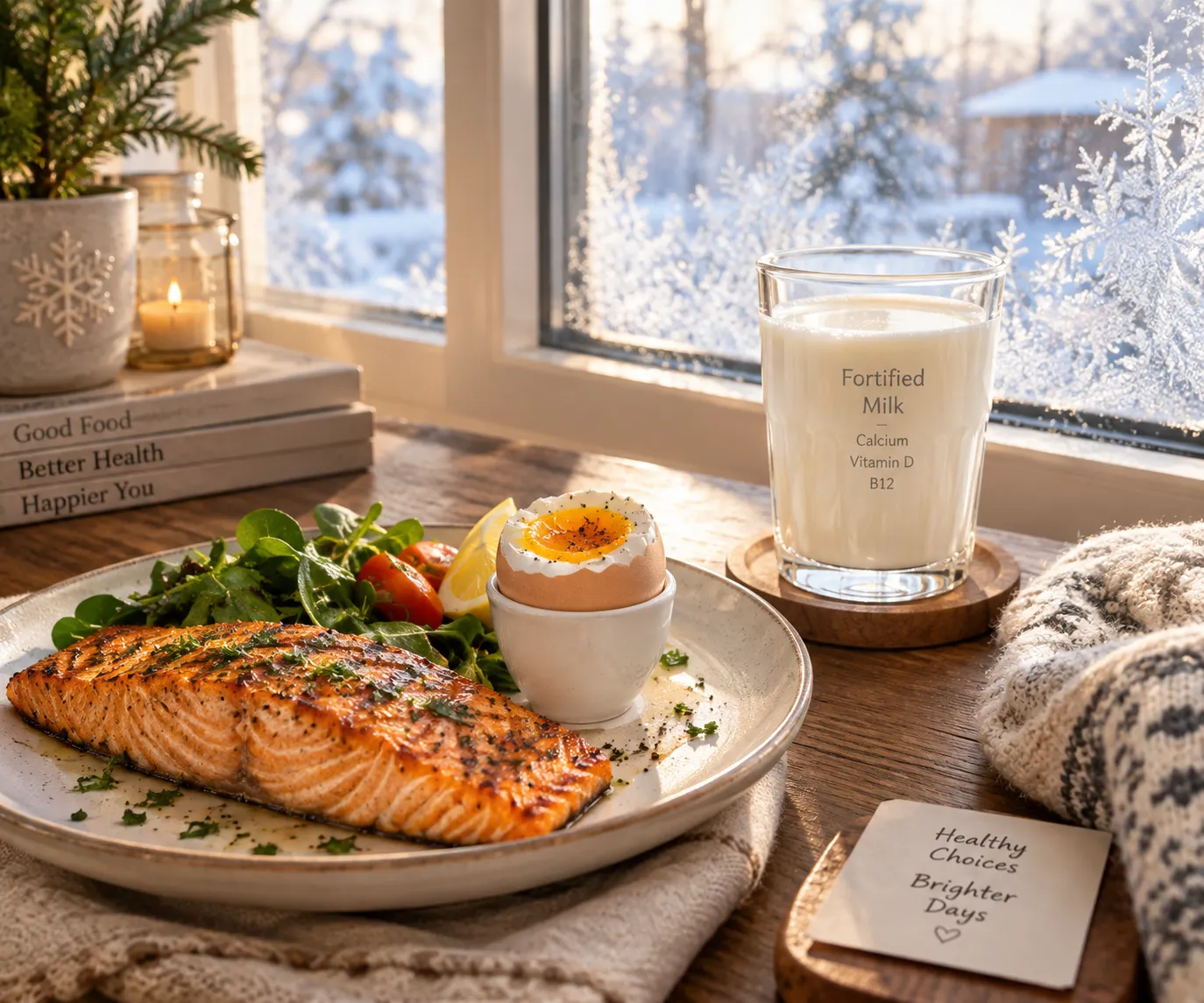
Vitamin D-rich foods like salmon, eggs and fortified milk can support winter nutrition alongside healthy sunlight habits.
Shorter days and colder weather often mean less time outdoors — and less sunlight is one of the biggest reasons vitamin D levels dip during winter months.
Before reaching for a supplement bottle, it’s worth knowing which foods and daily habits can help support your vitamin D levels naturally, and when sunlight alone may not be enough.
You can support vitamin D levels in winter through fatty fish, egg yolks, fortified dairy or plant milk, mushrooms exposed to UV light, and brief, safe midday sun exposure when possible.
However, winter sunlight is often too weak at higher latitudes to produce meaningful vitamin D, especially in the early morning or late afternoon. For many people, food sources alone may not fully close the gap, which is why some healthcare professionals recommend supplementation during winter months — talk to your doctor about whether that applies to you.
This article focuses on food- and sunlight-based approaches. If you have a diagnosed vitamin D deficiency, follow your doctor’s specific treatment recommendations, which may include supplements.
Why Vitamin D Drops in Winter
Vitamin D is unique among vitamins because the body can produce it when skin is exposed to ultraviolet B (UVB) rays from sunlight. In winter, several factors reduce this natural production:
- The sun sits lower in the sky, so UVB rays travel through more atmosphere and weaken
- Shorter daylight hours mean less overall opportunity for sun exposure
- Cold weather leads to more time indoors and more covered skin
- Cloud cover, common in winter, further blocks UVB rays
According to the Harvard T.H. Chan School of Public Health, people living farther from the equator may produce little to no vitamin D from sunlight during winter months, making diet and lifestyle habits more important during this time of year.
Top Food Sources of Vitamin D
| Food | Why It Helps | Serving Tip |
|---|---|---|
| Fatty fish (salmon, mackerel, sardines) | One of the richest natural food sources of vitamin D | Aim for 2 servings per week |
| Egg yolks | Contain a modest but useful amount of vitamin D | Choose pasture-raised eggs when possible for slightly higher levels |
| Fortified milk or plant-based milk | Many brands add vitamin D during processing | Check the nutrition label to confirm fortification |
| Fortified orange juice | A common fortified source for those who avoid dairy | Look for “vitamin D fortified” on the label |
| UV-exposed mushrooms | Mushrooms treated with UV light can produce vitamin D2 | Look for “UV-treated” or “vitamin D” on packaging |
| Cod liver oil | Very high in vitamin D per serving | A small daily amount goes a long way |
For more on building a nutrient-dense plate, see our guide on vitamin deficiencies, types, and treatment and our related piece on immune-boosting foods.
Safe Sunlight Habits for Winter
Go Out Around Midday
When the sun is highest, UVB rays are strongest. Even 10–15 minutes of midday exposure on exposed skin, weather permitting, can help.
Expose Skin Where Possible
Face and hands alone produce less vitamin D than larger areas like arms or legs. Dress for the weather, but don’t feel you need full coverage for a brief walk.
Take Walking Breaks
A short outdoor walk during a lunch break combines light activity with sun exposure — a simple habit to build into a winter routine.
Balance Sun and Skin Safety
Skin cancer risk exists year-round. Keep exposure brief and avoid sunburn; sunlight-based vitamin D production doesn’t require prolonged or unprotected exposure.
At higher latitudes, winter sun may not provide meaningful vitamin D synthesis even with skin exposed, particularly from November through February in many regions. Don’t rely on sunlight alone if you live somewhere with limited winter sun.
A Simple Winter Vitamin D Routine
- Morning: Add fortified milk or a fortified plant-based alternative to breakfast.
- Midday: Take a short outdoor walk when the sun is highest, if weather allows.
- Lunch or dinner: Include a vitamin D food source like salmon, sardines, or UV-treated mushrooms at least twice a week.
- Ongoing: Choose eggs and fortified cereals regularly as easy, low-effort additions.
- Check-in: If you have risk factors for deficiency, ask your doctor about testing your vitamin D level before winter ends.
Who Is Most at Risk of Low Vitamin D in Winter?
People With Limited Sun Exposure
Those who work indoors most of the day or live in northern latitudes get fewer opportunities for natural vitamin D production.
Older Adults
Skin becomes less efficient at producing vitamin D with age, increasing reliance on dietary sources.
People With Darker Skin Tones
Higher melanin levels reduce the skin’s vitamin D production from a given amount of sunlight.
People Who Cover Skin for Cultural or Religious Reasons
Reduced skin exposure to sunlight naturally lowers vitamin D synthesis, making dietary sources more important.
When Food and Sunlight Aren’t Enough
For many people, food and winter sunlight alone don’t fully maintain healthy vitamin D levels, especially in regions with long, cloudy winters. If you have symptoms such as bone pain, muscle weakness, or persistent low mood during winter months, it’s worth discussing a vitamin D blood test with your doctor. Supplementation, when recommended by a healthcare professional, is a safe and effective way to close the gap.
You have a history of vitamin D deficiency, limited sun exposure, darker skin, a malabsorption condition, or you’re over 65 — supplementation guidance is often more appropriate than food alone in these cases.
Vitamin D in Winter: The Bottom Line
Fatty fish, fortified dairy or plant milk, egg yolks, and UV-treated mushrooms are practical food sources to help support vitamin D levels when sunlight is limited. Brief, safe midday sun exposure adds another layer of support, though it may not be enough on its own during the darkest winter months.
If you have risk factors for deficiency, ask your doctor about testing your vitamin D level rather than guessing based on food and habits alone.
Frequently Asked Questions
Can I get enough vitamin D from food alone in winter?
It’s possible for some people, but many find it difficult to meet their full needs from food alone, especially without regularly eating fatty fish or fortified products. A blood test can clarify whether your levels are adequate.
Does cloudy weather block vitamin D production completely?
Cloud cover significantly reduces UVB rays reaching the skin, though some production can still occur on overcast days. Clear, sunny days provide considerably more opportunity for natural synthesis.
Is a sunlamp a good substitute for winter sunlight?
Standard indoor lighting and most tanning lamps don’t produce the specific UVB wavelength needed for vitamin D synthesis, and unsupervised UV lamp use carries skin risks. Speak with a doctor before using any specialized light therapy device.
How much sun exposure do I need for vitamin D in winter?
This varies by skin tone, latitude, and time of day, and in many regions winter sun may not provide meaningful vitamin D regardless of exposure time. There’s no universal number that applies to everyone.
Can vitamin D from food cause toxicity like supplements can?
Vitamin D toxicity from food alone is extremely rare. It’s much more commonly associated with excessive, unsupervised supplement use.
Related Reads
Sources & Evidence
Research note: This article provides general health information and is not a substitute for personalized medical advice, diagnosis, or treatment.
Build a Winter-Ready Nutrition Routine
Small, consistent food choices and safe outdoor habits can help support your vitamin D levels through the darker months. If you’re concerned about your levels, ask your doctor about testing.
About the Author