How Ultra-Processed Foods Are Affecting Urban Lifestyles
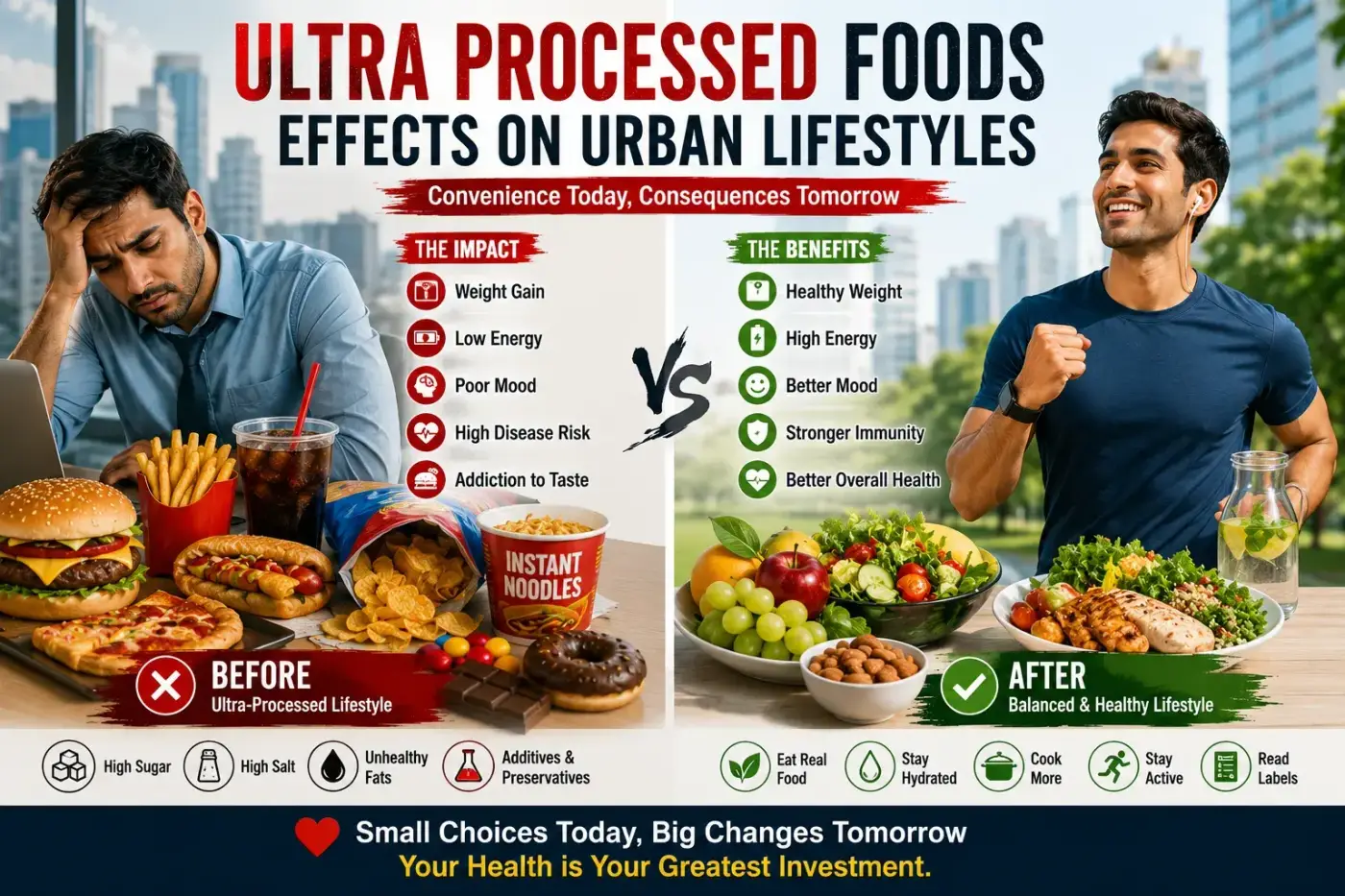
Modern urban lifestyles increasingly rely on ultra-processed foods, affecting energy, mood, nutrition, and long-term health habits.
The effects of ultra-processed foods are becoming increasingly visible in modern urban lifestyles, where convenience eating, food delivery apps, and busy schedules dominate everyday routines. From packaged snacks and sugary drinks to instant meals and fast food, ultra-processed foods have become deeply connected with city living. While these foods save time and offer quick comfort, growing research suggests they may negatively affect physical health, energy levels, mood, and long-term lifestyle habits.
The effects of ultra-processed foods are becoming a major concern in modern urban life as busy schedules, food delivery apps, and convenience-based eating habits continue to grow. From packaged snacks and sugary drinks to instant meals and fast-food combos, ultra-processed foods have become deeply connected with city lifestyles.
In fast-moving urban environments, people often choose foods that are quick, cheap, and easily available. However, while these products save time, growing research suggests they may negatively affect physical health, mental well-being, energy levels, and long-term lifestyle habits.
Ultra-processed foods ka issue sirf obesity ya junk food tak limited nahi hai. Aaj urban lifestyle me convenience eating normal ban chuka hai. Office deadlines, late-night work culture, online delivery apps, aur hectic routines ki wajah se log increasingly packaged aur ready-to-eat foods par depend kar rahe hain. Problem ye hai ki ye foods often high sugar, excess salt, unhealthy fats, artificial additives, aur low nutritional quality ke saath aate hain.
Is article me hum practical aur balanced way me samjhenge ki ultra processed foods effects urban lifestyles ko kaise impact kar rahe hain, science kya kehti hai, daily habits kis tarah change ho rahe hain, aur healthier balance kaise create kiya ja sakta hai.
What are ultra-processed foods?
Ultra-processed foods wo products hote hain jo heavily industrial processing se guzarte hain aur jinme multiple additives, preservatives, artificial flavors, refined ingredients, aur stabilizers use kiye jaate hain.
Examples include:
- Packaged chips
- Sugary breakfast cereals
- Instant noodles
- Soft drinks
- Frozen ready meals
- Processed meats
- Packaged desserts
- Fast-food burgers and fries
- Sweetened energy drinks
Ye foods usually convenience aur long shelf life ke liye design kiye jaate hain. Inka goal sirf nutrition provide karna nahi hota — taste, texture, cravings, aur repeat consumption bhi major factor hota hai.
Important point ye hai ki “processed” aur “ultra-processed” same cheez nahi hain. Simple processed foods jaise yogurt, paneer, roasted nuts, ya frozen vegetables harmful category me automatically nahi aate. Concern mainly heavily modified food products ko lekar hota hai.
Why urban lifestyles depend on ultra-processed foods
Urban lifestyles aur ultra-processed foods ka connection kaafi strong hai. Iske peeche multiple practical reasons hain.
1) Busy schedules and lack of time
Cities me long work hours aur commuting ka pressure common hai. Bahut logon ke paas proper cooking ka time nahi hota. Isliye instant foods convenient option ban jaate hain.
Agar kisi person ko office se late return karna ho, to ready-to-eat food naturally attractive lagta hai because it saves effort and time.
2) Food delivery culture
Online delivery apps ne fast food access ko extremely easy bana diya hai. Ab cravings satisfy karne ke liye ghar se bahar bhi nahi jaana padta.
Late-night ordering aur impulse eating urban routine ka normal part ban chuke hain.
3) Marketing and social influence
Urban consumers constantly food advertising se surrounded rehte hain. Social media influencers, food reels, discounts, combo offers, aur branding heavily processed foods ko attractive banate hain.
Particularly younger audiences heavily influenced hote hain visual food culture se.
4) Stress-based eating
Modern city life me stress levels high hote hain. Stress aur emotional eating ka connection well-known hai.
Ultra-processed foods often hyper-palatable hote hain — yani unka taste aisa design kiya jata hai jo cravings trigger kare. Isliye stressed people frequently comfort food ki taraf attract hote hain.
Ultra processed foods effects on physical health
Ab practical health impact ko detail me samajhte hain.
1) Weight gain and overeating
Ultra-processed foods usually high calories aur low satiety ke combination ke saath aate hain. Iska matlab ye hai ki aap quickly zyada calories consume kar sakte ho without feeling fully satisfied.
Soft drinks, packaged snacks, aur sugary foods especially overeating encourage kar sakte hain.
Urban sedentary lifestyle ke saath combine hone par weight gain risk aur increase ho sakta hai.
2) Energy crashes and fatigue
Bahut processed foods refined carbs aur added sugar se rich hote hain. Ye short-term energy spike de sakte hain, but later energy crash feel ho sakta hai.
Isi wajah se kai log afternoon fatigue, sluggishness, ya constant snacking cycle experience karte hain.
3) Poor nutritional quality
Convenient foods calories provide kar sakte hain, but often fiber, vitamins, minerals, aur protein me low hote hain.
Result:
- Less balanced nutrition
- Reduced satiety
- More frequent cravings
- Poor eating patterns
4) Higher risk of lifestyle diseases
Research increasingly suggest karti hai ki excessive ultra-processed food consumption long-term health risks ke saath linked ho sakta hai.
These may include:
- Obesity
- Type 2 diabetes
- High blood pressure
- Heart disease risk
- Metabolic problems
Important point ye hai ki overall lifestyle bhi matter karta hai. Sirf ek food item alone disease create nahi karta, but long-term dietary patterns important role play karte hain.
Effects on mental well-being and mood
Ultra processed foods effects sirf physical health tak limited nahi hain. Mental wellness bhi impact ho sakti hai.
1) Emotional eating cycle
Stressful urban routines emotional eating ko increase kar sakte hain. Temporary comfort milta hai, but later guilt aur low energy feel ho sakti hai.
Ye cycle repeat hone lagta hai:
Stress → junk food → temporary relief → crash → repeat craving.
2) Concentration and productivity
Highly sugary meals aur heavy fast food consumption kuch people me sluggishness aur reduced focus create kar sakta hai.
Office workers aur students especially notice karte hain ki unhealthy eating ke baad concentration maintain karna difficult ho sakta hai.
3) Mood fluctuations
Research ab gut health aur brain connection par bhi focus kar rahi hai. Balanced nutrition mood stability support kar sakta hai, while poor-quality diets some people me mood fluctuations se linked ho sakte hain.
Lekin yahan exaggerated claims avoid karna important hai. Ultra-processed foods ko directly “mental illness cause” bolna oversimplification hoga.
How urban habits are changing because of processed foods
Ultra-processed foods gradually daily lifestyle behavior bhi change kar rahe hain.
Snacking culture
Traditional meal patterns ki jagah constant snacking culture grow ho raha hai.
People now:
- Eat while working
- Snack during scrolling
- Consume meals during commuting
- Replace proper meals with packaged foods
Reduced cooking habits
Home cooking gradually decline ho raha hai, especially younger urban populations me.
Cooking skill aur meal planning ka reduction long-term nutrition quality ko affect kar sakta hai.
Eating without awareness
Urban eating increasingly distracted eating ban gaya hai:
- Watching screens while eating
- Fast eating
- Late-night eating
- Stress eating
Ye habits hunger aur fullness awareness ko weaken kar sakti hain.
What science says
Scientific research ultra processed foods effects ko seriously examine kar rahi hai.
Researchers commonly point out:
- Excess added sugar
- High sodium
- Refined ingredients
- Low fiber
- Artificial additives
- Overconsumption patterns
Studies suggest high ultra-processed food intake poorer health outcomes ke saath associated ho sakta hai. However, experts ye bhi emphasize karte hain ki lifestyle context important hai.
A physically active person with otherwise balanced eating habits occasional processed food consume kare to outcome different ho sakta hai compared to someone with sedentary lifestyle and consistently poor nutrition.
Balanced interpretation important hai because fear-based messaging long-term helpful nahi hoti.
Are all processed foods bad?
Nahi.
Ye bahut important clarification hai.
Some processed foods practical aur healthy bhi ho sakte hain, such as:
- Frozen vegetables
- Plain yogurt
- Peanut butter
- Whole grain bread
- Canned beans
- Oats
Issue mainly highly engineered foods ke excessive dependence ka hai.
Goal perfection nahi hona chahiye. Balanced eating zyada realistic aur sustainable approach hai.
Simple ways to reduce ultra-processed food intake
Extreme diet changes usually long-term sustain nahi hote. Small practical improvements zyada effective hote hain.
1) Start with one home-cooked meal daily
Agar full healthy routine difficult lagta hai, to sirf ek balanced homemade meal daily se start karo.
2) Read ingredient lists
Generally, extremely long ingredient lists heavily processed foods indicate kar sakte hain.
3) Keep healthy convenience options
Healthy eating complicated nahi hona chahiye.
Useful options:
- Fruits
- Nuts
- Curd
- Boiled eggs
- Roasted chana
- Simple sandwiches
4) Reduce sugary drinks
Soft drinks aur sweetened beverages hidden calories ka major source ho sakte hain.
5) Avoid perfection mindset
Occasional fast food normal hai. Real goal overall balance improve karna hai, not guilt-based eating.
Urban lifestyle and the future of food habits
Urbanization continue hone ke saath convenience foods aur bhi common ho sakte hain. Isliye awareness increasingly important ban rahi hai.
Future me healthier urban eating ke liye kuch major areas important ho sakte hain:
- Better nutrition education
- Workplace wellness
- Smarter food labeling
- Healthier convenience foods
- More realistic lifestyle balance
Modern life completely slow nahi ho sakta, but smarter eating habits definitely possible hain.
Common myths about ultra-processed foods
Myth 1: All packaged food is unhealthy
Reality: Nahi. Some packaged foods nutritious bhi ho sakte hain.
Myth 2: Healthy eating is always expensive
Reality: Basic whole foods often expensive restaurant meals se cheaper ho sakte hain.
Myth 3: One burger ruins health
Reality: Long-term patterns matter more than occasional meals.
Myth 4: Ultra-processed foods are addictive for everyone
Reality: Cravings aur eating behavior individual factors par depend karte hain.
FAQs
What are ultra processed foods?
Ultra-processed foods are heavily industrially modified food products containing refined ingredients, additives, preservatives, and artificial flavors.
What are the main ultra processed foods effects?
Possible effects include overeating, weight gain, energy crashes, poor nutrition quality, and increased lifestyle disease risk.
Are ultra-processed foods harmful?
Excessive consumption may negatively affect health over time, especially when combined with sedentary urban lifestyles.
Can I completely avoid processed foods?
For most people, complete avoidance practical nahi hota. Balanced moderation zyada realistic approach hai.
Why are ultra-processed foods common in cities?
Busy schedules, stress, convenience culture, food delivery apps, and aggressive marketing make them highly popular in urban environments.
Ultra processed foods effects modern urban lifestyles me increasingly visible ho rahe hain. Convenience aur speed ne eating habits ko dramatically change kiya hai, lekin uske saath health-related concerns bhi grow hue hain.
Processed foods completely avoid karna realistic nahi ho sakta, but awareness aur balance important hain. Small changes — jaise more home-cooked meals, mindful eating, aur better food choices — long-term me meaningful impact create kar sakte hain.
Urban life already stressful hai. Food ideally body aur mind ko support kare, not continuously drain energy and health. Isi balanced mindset ke saath modern eating habits ko approach karna sabse sustainable strategy ho sakta hai.
Read This
World Health Organization (WHO) Healthy Diet Guide
Harvard Nutrition Source on Processed Foods
Stop Overthinking at Night
About the Author