Work From Home Productivity Tips India & Student Study Habits: Complete Hinglish Guide
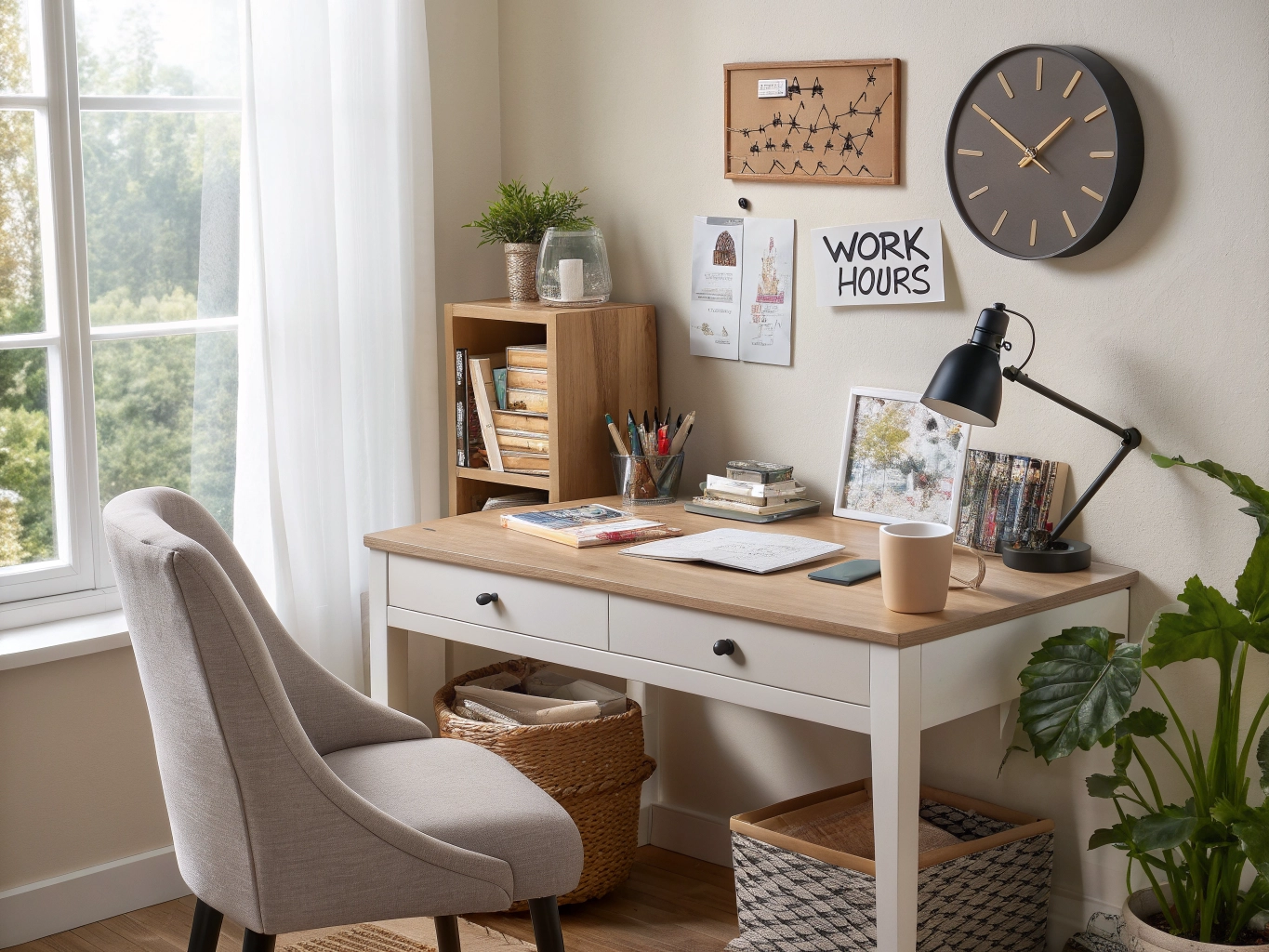
WFH Productivity improve karne ke liye dedicated workspace, time management aur study techniques ka use karein.
WFH Productivity aaj har remote worker aur student ke liye essential skill ban chuki hai. India mein 1.5 crore se zyada professionals work from home kar rahe hain aur lakhon students ghar se padhai kar rahe hain. Lekin distractions ke beech high WFH Productivity maintain karna aasaan nahi hota.
Result? WFH workers report karte hain ki unki productivity office se 23% kam hai — agar unke paas system nahi hai. Students bolte hain 4 ghante desk pe baithe the lekin “kuch hua nahi lagta.”
Yeh guide dono ke liye hai — working professionals ke liye work from home productivity tips India context mein, aur students ke liye science-backed study habits jo genuinely kaam karti hain. Dono ke liye practical, actionable, aur Indian household reality ke hisaab se design ki gayi hai.
Quick Answer: WFH mein productive rehne ke liye:
fixed work hours + dedicated workspace + morning routine maintain karna — yeh teen cheezein 80% problem solve karti hain.
Students ke liye: active recall + spaced repetition + Pomodoro — yeh teen methods passive reading se 3x zyada effective hain.
Dono cases mein environment design willpower se zyada powerful hai.
WFH Productivity Challenges for Remote Workers and Students
WFH Challenges
- Work-life boundary blur ho jaati hai
- Family interruptions during calls
- Dedicated workspace nahi hoti
- Zoom fatigue — back-to-back calls
- Over-working ya under-working
- Social isolation — loneliness
- Career visibility concern
Study Challenges
- Phone distraction — constant pull
- Passive reading — padha, samjha nahi
- Exam ke time panic aur cramming
- Motivation crash mid-session
- Noise aur family disturbance
- Sleep deprivation se focus loss
- Social media FOMO during study
Dono situations mein common thread hai: environment control nahi hai aur system nahi hai. Willpower se yeh problems solve nahi hoti — environment design aur structure se hoti hain.
WFH Productivity: Complete System for Indian Professionals
WFH Productivity Foundation: Office Mode Create Karo
Brain context ko strongly respond karta hai. Office mein jaane ka ek ritual tha — tayaar hona, travel, office enter karna — yeh sab brain ko “work mode” mein switch karta tha. Ghar pe yeh cue absent hai, isliye focus struggle karta hai.
Solution: Artificial “office mode” create karo. Work start hone se pehle: proper kapde pehno (pyjamas mein kaam mental performance 15% girata hai — research), desk set karo, ek cup chai/coffee banaao, aur ek 2-minute intention set karo. Yeh ritual brain ka “now we work” signal ban jaata hai.
WFH Productivity Rule #1: Fixed Work Hours Set Karo
WFH mein sabse dangerous trap hai boundary blur hona. “Bas ek email aur” syndrome — din ke 10 baje se raat ke 11 baje tak kaam. Yeh sustainable nahi hai aur paradoxically productivity girata hai.
Fixed Start + End Time — Non-Negotiable
E.g., 9 AM start, 6 PM hard stop. Calendar mein “Work End” block create karo. Is time ke baad laptop band. Physical act hai — psychological boundary banata hai. Family ko bhi batao yeh times — unhein pata ho ki 9–6 serious work time hai.
Daily Shutdown Ritual
Din khatam hone se pehle: (1) Kal ki MIT list likhein, (2) Inbox zero ya inbox processed, (3) Desk clear karo, (4) Notebook close karo. Yeh ritual brain ko signal deta hai ki kaam khatam — evening genuinely relax hoti hai.
WFH Productivity Rule #2: Workspace Design Optimize Karo
Dedicated workspace ka matlab bada office nahi hai — ek corner, ek table, ek specific chair bhi kafi hai. Important hai ki:
- Sirf kaam ke liye use ho: Us jagah pe social media, entertainment, casual browsing bilkul nahi. Brain spatial association banata hai.
- Ergonomics: Screen eye level pe, chair support kare lower back. Body discomfort focus kill karta hai.
- Natural light: Window ke paas baitho agar possible — natural light alertness 2x improve karta hai vs. artificial light.
- Clutter-free: Table pe sirf wahi ho jo abhi ke kaam ke liye chahiye. Visual clutter cognitive load badhata hai.
Rule 3: Meeting Hygiene — Zoom Fatigue Se Bachao
Microsoft Research ki 2021 study ke anusaar, back-to-back video calls brain ke frontal lobe mein stress build-up create karte hain — physical meetings se zyada. Indian WFH context mein meetings ka overload ek real problem hai.
5-Minute Break Between Every Call
Meetings 55 minute ke schedule karo — 60 ki jagah. 5 min buffer deta hai transition time, notes likhne ka time, aur brief mental reset.
Camera-Off Meetings Normalize Karo
Jab meeting mein sirf listening/passive participation hai, camera off karo. Yeh cognitive load 20% reduce karta hai. Appropriate hai — normalize karo team mein.
“Is This Meeting Necessary?” Culture
Har meeting invite ke liye poochho: (1) Kya yeh email ya Slack message se ho sakta hai? (2) Kya meri presence actually required hai? (3) Kya clear agenda hai? Agar answer no hai — politely decline karo ya ask for notes.
Rule 4: Communication Boundaries — Instant Response Myth
WFH mein sabse badi productivity killer hai instant response expectation. Har ping pe turst karna matlab continuous partial attention — koi bhi kaam properly complete nahi hota.
System: Din mein 3 email/Slack check times set karo — e.g., 9 AM, 1 PM, 5 PM. Baaki time focused work. Team ko clearly communicate karo: “I check messages 3x daily. For urgent matters, please call.” Pehle awkward lagega — 2 weeks mein everyone adjusts.
Rule 5: Lunch Break Sacred Hai
Desk pe lunch khaana ek of worst WFH habits hai. Brain ko genuine break chahiye din mein — visual aur cognitive. Lunch table pe jao, phone screen se break lo, 10 min walk karo baad mein. Afternoon focus is directly linked to proper lunch break. Ek study shows ki proper lunch break lene wale workers afternoon mein 30% zyada productive hote hain.
Rule 6: Social Isolation Counter Karo — Intentionally
WFH mein loneliness aur social isolation underrated problem hai — especially Indian professionals jo office culture ke aadat the. Iski counter-measures:
- Weekly virtual coffee/tea with 1 colleague — work ke alawa baat karo
- Weekly ek face-to-face social interaction — friend, colleague, family member
- Co-working space occasional use — community feeling milti hai
- Online communities — industry-relevant Discord/Slack groups
WFH Productivity for Students: Science-Backed Study Methods
Sabse Pehle Samjho: Passive vs Active Learning
80% students padhai ka matlab passive activities samajhte hain — notes padhna, highlighting karna, textbook scan karna. Yeh comfortable feel hoti hai lekin retention almost zero hoti hai.
| Activity | Type | Retention (after 1 week) |
|---|---|---|
| Lecture sunna / padhna | Passive | 5–10% |
| Highlighting / notes copy | Passive | 10–15% |
| Summarizing in own words | Semi-active | 40–50% |
| Practice problems / questions | Active | 65–75% |
| Active recall (self-testing) | Active | 75–85% |
| Teaching / explaining to others | Active (peak) | 85–90% |
“The most effective learning is effortful. If it feels easy, you’re probably not learning as much as you think.” — Dr. Robert Bjork, UCLA Memory & Cognitive Control Lab
Method 1: Active Recall — Sabse Powerful Study Technique
Active recall ka matlab hai: padhne ke baad book band karo aur khud se poochho — yeh topic pe main kya jaanta/jaanti hoon? Phir answer likhein ya bolein. Phir check karein.
Yeh uncomfortable lagta hai — aur yahi iska power hai. Brain struggle karta hai → stronger neural pathways banate hain → long-term memory mein store hota hai. Yeh technique passive reading se 3x zyada effective hai (Karpicke & Roediger, 2008 — landmark study).
Practical application: Har topic padhne ke baad: ek blank page pe sab kuch likho jo yaad hai. Gaps identify karo. Wapas jaao sirf gaps ke liye. Repeat.
Method 2: Spaced Repetition — Memory Ka Superpower
Ek topic ek baar deeply padhna zyada effective nahi hai. Optimal hai: multiple shorter sessions spreading over time. Hermann Ebbinghaus ka “Forgetting Curve” show karta hai ki hum 24 ghante mein 70% bhool jaate hain — agar repeat nahi karte.
Spaced Repetition Schedule (Ek Topic Ke Liye)
- Day 0: Topic pehli baar padhna + active recall session (30 min)
- Day 1: Quick active recall — sirf yaad karna (10 min)
- Day 3: Recall again — gaps fill karo (15 min)
- Day 7: Full review session (20 min)
- Day 21: Final reinforcement session (10 min)
After this schedule, retention 90%+ hoti hai months baad bhi. Anki (free app) yeh automatically schedule kar deta hai.
Method 3: Pomodoro Technique for Students
Students ke liye Pomodoro especially effective hai kyunki yeh urgency + breaks ka combination deta hai:
- 25 minutes: Ek specific task/topic pe focused study — nothing else
- 5 minutes: Hard break — phone check, stretch, paani — genuinely rest karo
- 4 cycles ke baad: 15–30 minute lamba break
Students ke liye modification: Difficult topics ke liye 25/5. Revision ke liye 50/10 (50 min study, 10 min break) — slightly longer sessions better for revision flow.
Method 4: The Feynman Technique — Deep Understanding
Richard Feynman (Nobel Prize physicist) ka method: kisi topic ko aise explain karo jaise aap ek 10-saal ke bacche ko samjha rahe ho. Jahan explanation toot jaaye — wahi actually aap nahi samjhe hain.
Steps: (1) Topic choose karo. (2) Blank paper pe explain karo — apne words mein, jargon ke bina. (3) Jahan stuck ho wapas source pe jao. (4) Simplify karo further — analogies use karo. Yeh technique exam mein application-based questions ke liye especially powerful hai.
Method 5: Study Environment — Students Ke Liye
Research consistently show karta hai ki study spot ka brain pe strong effect hota hai. Kuch key points:
- Dedicated spot: Bed pe padhai mat karo — brain wahan sleep associate karta hai. Table/desk mandatory.
- Phone doosre kamre mein: Same room mein rakha phone — even face-down — focus 20% reduce karta hai (Adrian Ward, UT Austin, 2017). Physical distance banana.
- Background noise: Complete silence ya lo-fi/brown noise best hai. Music with lyrics significantly reduces comprehension.
- Lighting: Natural light ya bright white light for studying. Dim warm light sleep mode trigger karta hai.
Method 6: Sleep — Students Ka Most Underrated Study Tool
All-nighter karna worst study strategy hai — science clearly prove karta hai. Sleep ke doran brain memories consolidate karta hai — hippocampus se neocortex mein transfer hoti hain. Ek raat ki poor sleep 40% memory consolidation reduce kari hai (Matthew Walker, UC Berkeley).
🧠 Sleep Study Hack: Ek topic padho, 20 minute review karo, phir so jao. Neend ke doran woh topic consolidate hoga. Subah dobara quick recall karo. Yeh sequence 8 ghante padhai se zyada effective hai — overnight consolidation magic hai.
Common WFH Productivity Mistakes to Avoid
Mistake 1: “Main Multitask Kar Sakta/Sakti Hoon”
Multitasking exist nahi karta — sirf rapid context switching hai. Har switch pe cognitive switching cost hai. WFH mein calls pe reply karte hue email likhna — dono poorly kiya jaata hai. Students jo music suntey hue padhte hain — comprehension significantly drops. Single task focus = 2x output.
Mistake 2: No Breaks = More Productive Nahi Hai
Brain sustained focus ke baad mandatory recovery time maangta hai. Breaks skip karna mental fatigue accelerate karta hai — pehle ghante mein jo kaam 1 ghante mein hota tha, 4th ghante mein 2 ghante lagta hai. Scheduled breaks = overall more done.
Mistake 3: Starting With Easy Tasks — Warm-Up Illusion
Subah emails respond karna, Instagram check karna, easy tasks pehle — yeh “warm up” lagta hai. Actually yeh willpower aur peak energy waste karna hai. Most difficult, most important task FIRST karo — jab energy max ho.
Mistake 4: Students — Highlighting = Learning Nahi Hai
Textbook highlight karna satisfying lagta hai. Neuroscience bol raha hai — yeh one of least effective study strategies hai. Recognition (dekh ke pehchanna) memory test mein fail karta hai. Active recall (khud se yaad karna) karo — uncomfortable hai, effective hai.
Mistake 5: WFH — Always Available Rehna
“Main ghar pe hoon toh available hoon” — yeh mental model burnout ki recipe hai. WFH mein explicitly boundaries set karna aur communicate karna — team ke liye, family ke liye — zyada zaruri hai office se. Boundaries set karna professional weakness nahi hai — sustainable performance ki foundation hai.
Best WFH Productivity Tools and Apps
| Best WFH Productivity Tools and Apps |
WFH Professionals Ke Liye
- Notion: All-in-one workspace — tasks, notes, projects. Free tier sufficient.
- Google Calendar: Time blocking ke liye best. Color-code different work types.
- Loom: Async video messages — unnecessary meetings replace karo.
- Freedom app: Specific websites/apps block karo scheduled time mein.
- Forest: Phone lock karo gamification ke saath — productivity streak banata hai.
Students Ke Liye
- Anki: Spaced repetition flashcards — free, powerful, scientifically proven.
- Notion / Obsidian: Second brain — sab kuch ek jagah organized.
- Focusmate: Virtual co-working — accountability partner globally. Free tier available.
- Khan Academy / NPTEL: Free, high-quality learning — active engagement ke liye.
- Brain.fm / myNoise: Focus-specific audio — neuroscience-designed.
Frequently Asked Questions — WFH & Study Productivity
Related Articles — Productivity Series
- 📌 Productivity Tips: 25 Daily Life Hacks for Better Time Management
- 📌 Micro-Habits: Bade Goals Ko Choti Daily Actions Mein Todein
- 📌 How to Build Self-Discipline: Meaning, Daily Habits & Practical Tips
- 📌 Sleep Optimisation: 7 Habits Jo Sleep Quality 10x Badha De
- 📌 Degree Value in 2026 India: Kyun Padhai Ke Baad Bhi Job Nahi Mil Rahi?
Conclusion: System > Willpower
WFH ho ya student life — productivity ka secret willpower nahi, system hai. Jo log most effective hain wo zyada “motivated” nahi hote — unke paas better environment, clearer priorities, aur smarter systems hote hain.
Aaj se ek cheez implement karo — sirf ek:
- WFH professionals: Kal se fixed work end time set karo. Laptop band karo us time pe — no exceptions pehle ek hafta.
- Students: Aaj se ek topic padhne ke baad book band karo aur blank page pe sab kuch likho jo yaad hai. Uncomfortable lagega — yahin change hai.
Daily Life Journal pe regularly aate rehein — har hafta practical, science-backed tips milti hain jo actually kaam karti hain Indian life mein.
Daily Life Journal Subscribe Karein
Productivity tips, study hacks aur wellness advice — weekly, free, straight to inbox.
Students spaced repetition ke liye Anki use kar sakte hain.
About the Author