Diabetes Plate Guide: Simple Way to Manage Blood Sugar Naturally
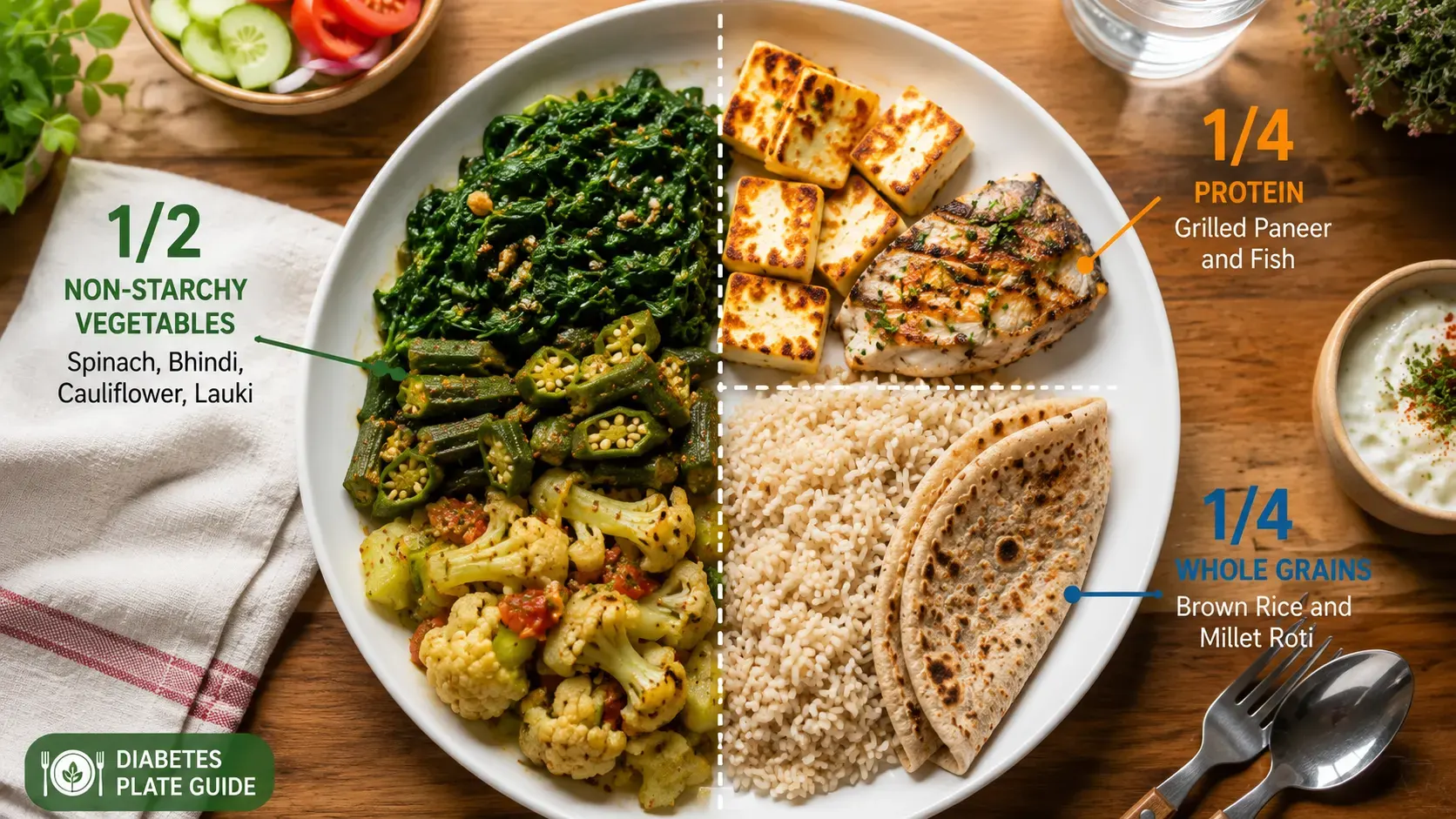
A balanced Indian diabetes-friendly meal plate featuring vegetables, protein, and whole grains for better blood sugar management and healthy eating.
The Diabetes Plate Guide is one of the easiest and most effective visual tools available for managing blood sugar levels. Also known as the Plate Method for Diabetes, this approach uses a simple 9-inch plate to create balanced meals without the need for complex calculations. will discover how the balanced diabetes plate works, practical Indian meal plans, delicious recipes, scientific backing, and real-life success stories.
Whether you have type 2 diabetes, prediabetes, or simply want better metabolic health, the Diabetes Plate Guide offers a sustainable solution that fits perfectly into Indian households.
This visual portion control plate method has been widely recommended because it is practical, flexible, and delivers consistent results.
What is the Diabetes Plate Method?
The Diabetes Plate Guide divides a standard dinner plate into three parts: half filled with non-starchy vegetables, one quarter with lean proteins, and one quarter with quality carbohydrates. This visual Plate Method for Diabetes helps control portions naturally while ensuring nutritional balance.
Science Behind the Diabetes Plate Guide
Clinical studies and diabetes management organizations strongly support this approach. According to the American Diabetes Association, the plate method is an effective first-line strategy for blood sugar management. It helps slow carbohydrate absorption through high fiber intake and promotes satiety with adequate protein and vegetables.
Research shows that people following the balanced diabetes plate consistently experience better A1C levels, improved energy, and easier weight management compared to more restrictive diets.
How to Build Your Balanced Diabetes Plate
1. Half Plate: Non-Starchy Vegetables
These low-carb, high-fiber vegetables should dominate your plate. Indian options include palak, methi, lauki, karela, bhindi, cauliflower, cabbage, tinda, parwal, and drumstick.
2. One Quarter: Lean Protein
Good choices are paneer, soya chunks, fish, skinless chicken, eggs, and measured dals.
3. One Quarter: Quality Carbohydrates
Opt for millets (ragi, jowar, bajra), brown rice, quinoa, or 1–2 small whole wheat rotis.
7-Day Indian Meal Plan Using Diabetes Plate Guide
Day 1
- Breakfast: Moong dal chilla loaded with spinach, tomatoes & onions + low-fat curd
- Lunch: 1-2 jowar rotis + large bhindi-cauliflower sabzi + moong dal + cucumber salad
- Dinner: Palak paneer with extra greens + 1 millet roti + lauki sabzi
Day 2
- Breakfast: Vegetable oats upma + boiled egg or paneer
- Lunch: Brown rice (½ cup) + grilled chicken/soya curry + methi-tinda sabzi
- Dinner: Ragi roti + baked fish or tofu + broccoli stir-fry
Day 3
- Breakfast: Besan chilla with fenugreek leaves + small apple
- Lunch: Quinoa khichdi with extra vegetables + low-fat paneer bhurji
- Dinner: Vegetable sambhar loaded with drumstick & beans + 1 small idli
Day 4 to Day 7 Summary
Rotate between cauliflower rice pulao, karela sabzi, tandoori paneer, ragi porridge, and mixed vegetable dalia. Always keep vegetables as the largest portion.
Popular Diabetes-Friendly Recipes
1. Methi Thepla (Adapted for Diabetes Plate Guide)
Ingredients: 1 cup whole wheat + besan, 2 cups fresh methi leaves, spices, 1 tsp oil. Method: Knead with low-fat curd, roll thin, cook on tawa. Serve with curd and sabzi.
2. Low-Carb Cauliflower Rice Pulao
Grate cauliflower, stir-fry with mixed vegetables, soya chunks or paneer, and mild spices. Excellent replacement for regular pulao.
3. Bharwa Karela (Stuffed Bitter Gourd)
Stuff with paneer-spice mix and cook with minimal oil. One of the best options for blood sugar control.
Benefits of the Plate Method for Diabetes
This method improves glycemic control, supports heart health, promotes sustainable weight loss, and is easy to follow long-term.
Success Stories
Many Indians have improved their health using the Diabetes Plate Guide. Rajesh from Delhi lowered his HbA1c from 8.7 to 6.4 in four months. Priya from Bangalore successfully managed gestational diabetes with this approach.
Frequently Asked Questions (FAQs)
1. Can vegetarians follow the Diabetes Plate Guide?
Yes, it works very well using paneer, soya chunks, and legumes.
2. How much rice is allowed?
Limit to half cup cooked brown rice or replace with millets/cauliflower rice.
Important Resources
For detailed guidelines, refer to the American Diabetes Association’s eating healthy section. Another excellent resource is the Mayo Clinic’s diabetes nutrition guide for practical tips.
The Diabetes Plate Guide (or Plate Method for Diabetes) is a powerful, practical, and culturally suitable tool for long-term blood sugar management. Start with one meal today and gradually make it a habit. Consistent use of this balanced diabetes plate can bring significant improvements in energy and health.
Share your experience with the Diabetes Plate Guide in the comments below!
Related Articles
Morning Routine for Women in India
About the Author