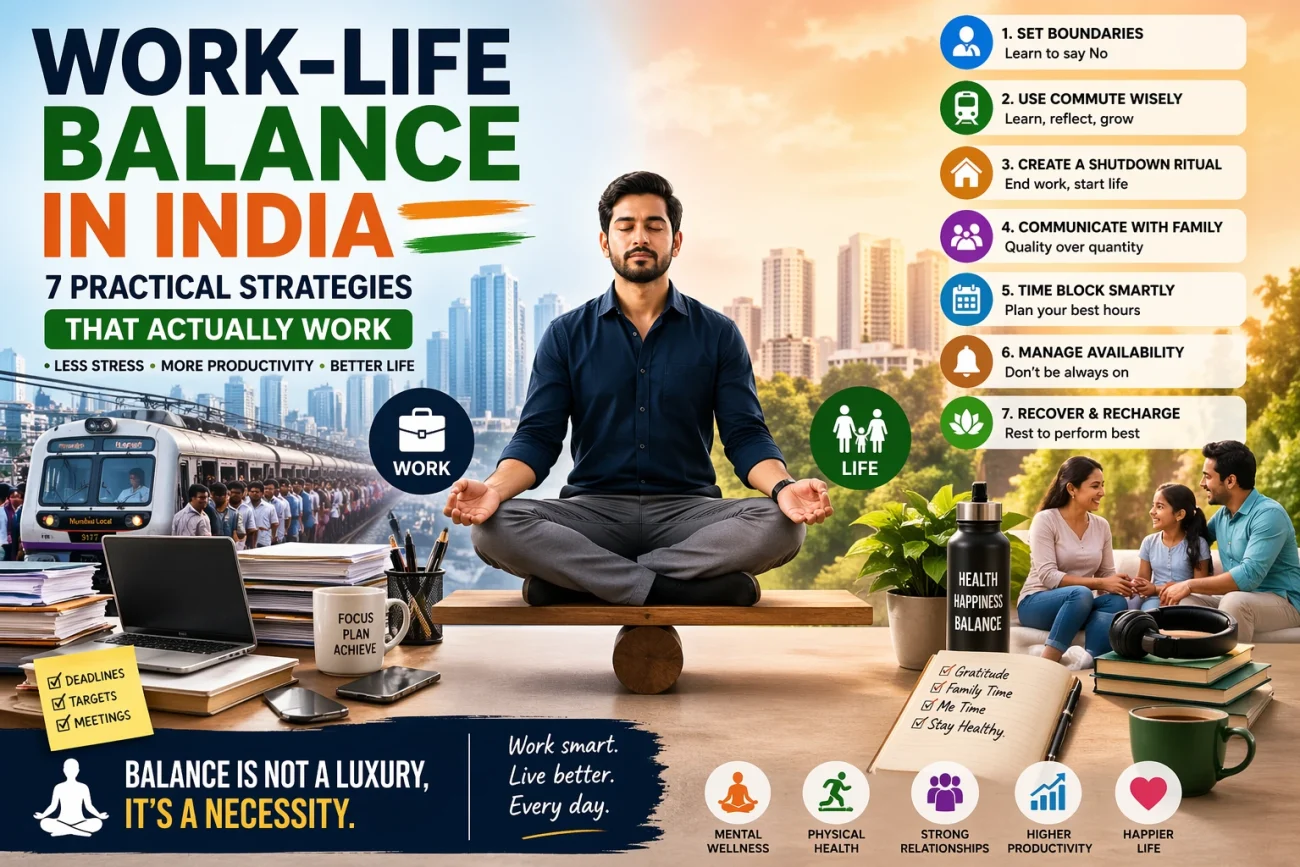
Work life balance in India often feels like a luxury for professionals dealing with long commutes, heavy workloads, and constant pressure.. McKinsey Global Institute ki report ke according, Indian professionals average 48-50 hours weekly kaam karte hain—OECD average se significantly zyada.
Lekin yeh “hustle culture” ka cost kya hai? Indian Council of Medical Research (ICMR) ke data ke according, 35% urban Indians chronic stress ke symptoms experience karte hain, aur cardiovascular diseases ka age of onset 10 saal pehle aa gaya hai compared to previous generations.
Work-life balance sirf “time pass” nahi hai—yeh aapki productivity, creativity, relationships, aur mental health ke liye essential hai. Harvard Business Review ke study ke according, jo employees sustainable work pace maintain karte hain, unka long-term output actually zyada hota hai compared to burnout-prone overworkers.
Is guide mein, hum 7 practical, culturally-sensitive strategies discuss karenge jo Indian work environment mein actually work karti hain.
Strategy 1: Boundary Setting with Indian Bosses (Scripts Included)
Indian workplace culture hierarchical hai—boss ko “no” bolna difficult lagta hai. Lekin boundaries bina, burnout guaranteed hai.
The “Professional Yes” Technique:
Instead of immediate “Yes sir, abhi karta hoon,” yeh try karein:
“Sir, yeh task important hai. Main already X project par hoon jo aaj deadline hai. Kya main kal subah 10 AM tak yeh deliver kar sakta hoon? Ya phir aap batayein ki in dono mein se priority kaunsi hai?”
Why this works: Aap “no” nahi bol rahe, aap “negotiation” kar rahe hain—jo Indian management culture mein acceptable hai.
The 7 PM Rule: Ghar jaane ke baad phone silent pe rakhna manyata hai, lekin India mein unrealistic lagta hai. Alternative: The “Emergency Only” Protocol.
- Colleagues ko clearly bol dein: “7 PM ke baad sirf urgent calls uthaaunga, baaki messages next morning reply hoga.”
- WhatsApp status pe yeh mention karein.
- Agar boss persistent hain, toh ek simple auto-reply set karein: “Thank you for your message. I am currently offline and will respond tomorrow by 9 AM.”
Strategy 2: The “Commute Transformation” (Travel Time Utilization)
Average Indian urban professional 2-3 hours daily commute karta hai—yeh “dead time” nahi hona chahiye.
For Metro/Train Commuters:
- Active Recovery: Agar sitting seat mili toh audiobooks sunna (Blinkist for summaries) ya meditation apps (Calm ka “Commute” feature)
- Micro-Learning: Duolingo se language seekhna, ya professional certification ka audio course
- Social Connection: Agar aapka commute fixed timing ka hai, toh same time travel karne walon se dosti kar lein—yeh “community” feel deta hai isolation kam karta hai
For Car/Bike Commuters:
- Podcasts over Music: Comedy shows (stress relief) ya industry news (The Ken, Mint Primer)
- Voice Journaling: Google Keep ya voice recorder mein din ki planning—office pahunchte hi clear mind ke saath kaam start
The Psychological Trick: Commute ko “buffer zone” maaniye—not office, not home. Is transition mein “role switching” mentally prepare karein: Office mein “professional mode,” ghar par “personal mode.”
Strategy 3: The “Shutdown Ritual” for Work From Home
Pandemic ke baad hybrid work common ho gaya hai, lekin iska result yeh hai ki boundaries aur blur ho gayi hain—bed par laptop lekar kaam karna, midnight ko emails check karna.
The 5-Step Shutdown Ritual (Kam se kam 30 minutes before dinner):
- Inbox Zero: Pending emails ka quick scan, urgent ko reply, baaki ko “Tomorrow” tag karein
- Tomorrow’s Top 3: Notebook mein likhein—kal subah kya priority hai (decision fatigue kam hota hai)
- Physical Shutdown: Laptop ko bag mein rakh dein, desk ko saaf karein (visual cue ki kaam khatam)
- The “Commute Walk”: Ghar mein 5-minute walk karein—balcony se kitchen tak—yeh “virtual commute” brain ko signal karta hai ki office time khatam
- Change of Clothes: Office wale kapde change karke comfortable clothes pehnein (even if you didn’t go out)—yeh psychological association toot jaata hai
Strategy 4: Family Communication Strategies
Indian families mein “work” ko leke guilt common hai—especially agar aap parents ke saath rehte hain. “Beta poora din computer mein ghuse rehte ho” yeh sunna common hai.
The “Quality over Quantity” Approach: Ghar walon ko samjhayein ki presence physical nahi, mental matter karti hai.
The Daily 30-Minute Ritual: Dinner time “no phone” zone banayein. Agar yeh difficult hai toh:
- Morning chai: 15 minutes parents/children ke saath bina distraction ke
- Weekend “Tech Sabbath”: Saturday subah se Sunday dopahar tak phone minimum use—yeh family ko signal karta hai ki aap unke liye time nikaal sakte hain
For Married Professionals: Spouse ke saath “State of the Union” weekly meeting rakhein—Sunday ko 30 minutes baatein karein upcoming week ki expectations, household division of labor, aur personal needs. Yeh resentment buildup ko rokta hai.
Strategy 5: Time Blocking for Indian Schedules
“To-Do Lists” fail kyun hoti hain? Kyunki unmein time allocation nahi hota. Time blocking specific hours dedicate karta hai specific tasks ko.
The Indian Corporate Template:
8:00 AM – 9:00 AM: Deep Work (Sabse difficult task—brain fresh hota hai)
9:00 AM – 10:30 AM: Meetings/Collaboration
10:30 AM – 10:45 AM: Break (Chai sutta—social bonding bhi zaroori hai)
10:45 AM – 12:30 PM: Focused Work
12:30 PM – 1:30 PM: Lunch (Screen se dur rahein—digestion ke liye better)
1:30 PM – 3:00 PM: Administrative tasks (Email, reports—post-lunch energy low hoti hai)
3:00 PM – 4:00 PM: Deep Work
4:00 PM – 4:15 PM: Break
4:15 PM – 6:00 PM: Wrap up aur next day planning
The “Sacred Hours”: Subah 8-9 AM aur shaam 4-5 PM ko “meeting-free” zone declare karein. Calendar mein block kar dein—yeh visible signal hai colleagues ke liye.
Strategy 6: Managing the “Always Available” Culture
Indian workplaces mein “instant response” expectation hai, jo toxic hai.
The “Response Time” Framework:
- Urgent: 1 hour (true emergencies only)
- Important: 4 hours (same working day)
- Normal: 24 hours
- Low Priority: 48 hours
Yeh framework aapko har notification ka immediate jawab dene se bachata hai.
The “Deep Work” Sign: Agar aap office jaate hain, toh desk par ek simple sign rakhein: “Focus Mode: 9-11 AM. Emergency ke liye hi disturb karein.” Initially log weird react karenge, lekin eventually respect develop hogi.
For WhatsApp Groups: Office groups mute kar dein except for mentions (@yourname). Har forward message ka jawab dene ki zaroorat nahi hai—yeh “reply pressure” anxiety ka major cause hai.
Strategy 7: Recovery Protocols (Burnout Prevention)
Sustained performance ke liye recovery zaroori hai—yeh sirf “weekend mein so ke” nahi hota.
The 90-Minute Rule: Ultradian rhythms ke according, human brain 90 minutes focus kar sakta hai uske baad 20-minute break zaroori hai. Pomodoro technique (25 min work, 5 min break) bhi effective hai.
Micro-Recovery Daily:
- Lunch walk: 10 minutes office building ke bahar—vitamin D aur movement
- Eye exercises: 20-20-20 rule (Har 20 minutes mein, 20 feet door, 20 seconds dekhein)
- Breathing: Before meetings, 3 deep breaths—cortisol instant reduce hota hai
Macro-Recovery Weekly:
- Digital Detox: Saturday subah se Sunday dopahar tak no work email (Article 4 jaisa)
- Nature Exposure: Week mein kam se kam 2 hours “green space” mein—park, garden, ya balcony gardening. Japanese “Shinrin-yoku” (forest bathing) research ke according stress hormones significantly reduce hote hain.
Legal Rights: Know Your Boundaries
Indian labor laws mein:
- Shops and Establishments Act: Most states mein 9 hours daily, 48 hours weekly se zyada kaam illegal hai (IT sector ko exemptions hain lekin “reasonable” hours concept hai)
- Right to Disconnect: European countries jaise France mein implemented hai, India mein private sector mein abhi nahi, lekin aapka right hai ki non-working hours mein aapko harass na kiya jaaye
Documentation: Agar consistently unreasonable hours demand ho rahe hain toh email chain document karein. HR se constructive discussion ke liye evidence zaroori hai.
Conclusion: Redefining “Success”
Indian society mein success ko “package” se measure kiya jaata hai, lekin true success sustainability hai. Agar aap 45 ki age mein burnout ho jaate hain, toh koi bhi package worth nahi.
Your Action Plan:
- Iss hafte sirf ek boundary implement karein (jaise 7 PM ke baad no email)
- Calendar mein “Personal Time” block karein—jaise ki meeting schedule karte hain waise hi
- Family se conversation karein ki aapka work schedule kaisa hai taaki expectations manage ho sakein
Question: Aapka office culture kaisa hai—supportive hai ya “always on” expectation hai? Aap kaise boundaries set karte hain? Share karein!
